Moody’s Investors Service recently released a report bluntly entitled, “Private equity exposure increases credit risk for universities with limited wealth.”
Credit risk will replace interest-rate risk as the market’s “big fear” next year, according to Mohamed El-Erian.
Federal Reserve Chair Jerome Powell said the US central bank will continue to move carefully but won’t hesitate to tighten policy further if appropriate.
It’s the buzz word on Wall Street and in the hallways of the Federal Reserve and Treasury Department. It’s blamed for triggering bond selloffs, shifts in debt auctions and interest-rate policy.
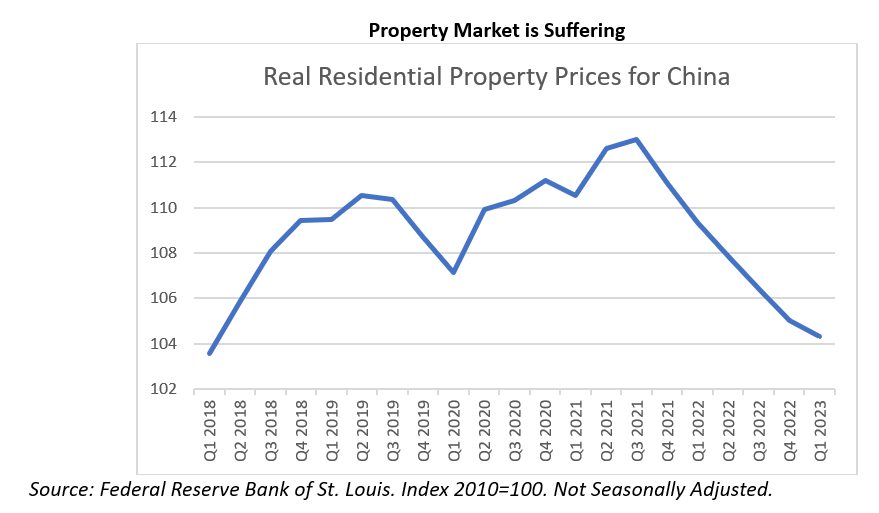
Whether or not you’re investing directly in China, there’s a possibility that what happens there will reverberate in your clients’ portfolios.
The S&P 500’s best week in a year was driven by investors locking in profits on bearish bets, suggesting little room for further gains, according to Citigroup Inc. strategists.
The inflation scare is barely behind us, and it is already time for the Federal Reserve to focus on recession risks. The recent trajectory of job growth means policymakers can no longer rule out unemployment snowballing in 2024, which should force a shift in how they think about managing their dual mandate.
Several ex-Cantor Fitzgerald executives started a crypto lending platform with the expectation that it will serve operators of spot Bitcoin exchange-traded funds once they gain US regulatory approval.
Federal Reserve Chair Jerome Powell said the central bank must be willing to think beyond the complex mathematical simulations it traditionally uses to forecast the economy.
For years, Americans have been giving their banking data to financial apps such as Venmo, YNAB and Rocket Mortgage. And for years, banks have been trying to figure out how to deal with the security risks. A new proposal from the Consumer Financial Protection Bureau suggests a better way.
Given the likelihood that economists are again myopic in their inflation forecasts and bond traders are betting on such projections, I see a day soon when a disinflationary or deflationary reality hits the bond market and bond yields plummet.
A recent study found significant differences in how our brains process in-person meetings and Zoom calls versus in-person meetings.
I’ll share some important insights gleaned from many decades of working in the advisory profession and being both an insider and an outsider.
Alarm bells sounded Friday when we learned that the US unemployment rate rose to 3.9% for October, well above the 50-year low of 3.4% that it hit earlier in the year. The latest reading is still very low, so what’s with the doomsayers telling us a recession has arrived?
Here are six key trends for HNW donors to consider during your giving season conversations.
Everything in the world is relative, including Warren Buffett’s cash position.
The average 30-year mortgage rate plunged last week by the most in more than a year, helping generate the biggest advance in home purchase applications since early June.
Hoisington Investment Management Co. was pummeled by its bullish stance on US bonds in recent years, driving its Treasury fund to some of the industry’s biggest losses as the Federal Reserve’s rate hikes sent prices tumbling.
User engagement is up on LinkedIn. How can you capitalize on it? Here are six steps to cultivate a LinkedIn network.
The team responsible for assembling BlackRock Inc.’s model portfolios is favoring the stock market’s largest companies, potentially unleashing a flood of billions of dollars into technology shares.
Few prospects have the mental bandwidth to plan ahead five weeks, let alone five to 20 years.
Sergio Ermotti promised ruthlessness in reshaping Credit Suisse Group AG, and the chief executive officer of UBS Group AG has been true to his word.
With the race to year-end now upon us, I share my thoughts on why, despite the recent reset and higher rates, I still see several reasons for market optimism for the remainder of the year.
Billionaire Stan Druckenmiller isn’t letting up on his criticism of US Treasury Secretary Janet Yellen. Druckenmiller says Yellen committed an epic mistake by failing to meaningfully term out America’s debt when rates were ultra-low — a missed opportunity he’s characterized as “the biggest blunder in the history of the Treasury.”
For years, Dutch payments fintech Adyen NV’s founders and management ran things their own way, thanks to some blowout growth.
The S&P 500 Index’s best week in a year has brought the broad equities benchmark to a decisive point where stocks can make a significant break higher or find their gains capped.
A record flood of cash has poured into opposite ends of the US Treasury yield curve this year, seeking either to seize on the highest short-term interest payments in over two decades or profit from a long-bond rally once rates finally peaked.
Let’s break down three key principles when designing or selecting illustrations to support your client communications outreach.
Well-run advisory practices have job descriptions for key roles, from planners to administrators to client service. But here’s a description that I bet few firms have yet to fill.
Being left solely responsible for wealth through divorce or widowhood later in life comes with its own set of responsibilities, opportunities, and challenges. As with so many financial life events, it is often the emotional challenges that are the hardest.
The so-called dividend aristocrats have an impressive track record. But much of that outperformance can be attributed to its exposure to certain factors.
Sam Bankman-Fried’s widely anticipated guilty verdict has been rendered. But Michael Lewis’ book raises many questions, including the existence and extent of an actual crime.
Michael Lewis’ book on SBF is woefully incomplete, rather like a canvas that Rembrandt inexplicably left half blank, for the book elides three major questions.
One consistent overhang in an otherwise pretty good year for the US economy has been tightening credit standards at banks.
Many commentators are struck by the disconnect between the US economy’s impressive performance of late and the dismal popular view of the very same economy.
What’s the most important price in the global economy? The price of oil? The price of semiconductors? The price of a Big Mac? More important than any of these is the price of money. For more than three decades it was falling.
A prospect that might have seemed unthinkable just a couple short weeks ago is coming into view for bond traders: The potential for US Treasuries to post an annual gain for the first time since 2020.
The S&P 500’s pitch is simple. Own it and get exposure to the biggest of the big among US firms. Lately, it’s gotten harder to maintain that point of distinction.
You have nothing to lose when you increase your fees to match the value you deliver. Advisors chronically undercharge for the value they provide.
A measure of foreign investment into China turned negative for the first time since records began in 1998, highlighting how foreign companies are pulling money out of the country due to geopolitical tensions and higher interest rates elsewhere.
US job growth slowed in October by more than expected and the unemployment rate rose to an almost two-year high of 3.9%, indicating that employers’ strong demand for workers is beginning to cool.
Cathie Wood says she would unambiguously wager on Bitcoin — rather than gold or cash — to safeguard against the possibility of deflation in the coming decade.
Capital Group is seeing an opportunity for investors to load up on global equities after the Federal Reserve held rates on Wednesday, signaling an end to its aggressive tightening cycle.
I remember the exact moment in 2007 when I knew the financial industry was headed for a reckoning. There was no data point that tipped me off, no great insight about the housing market.
The selloff in US debt appears close to being over as the Federal Reserve nears winding up its most aggressive rate hikes in a generation.
Yields on 10-year Treasury notes plummeted 20 basis points on Wednesday, the most since the banking crisis in March. For all the macroeconomic news of the day, it was hard to pinpoint exactly what changed so meaningfully from one trading session to the next.
Signs of recovery in smartphone and computer demand have yet to provide the next tailwind for chip stocks as they languish below the heights of this year’s artificial intelligence rally.
Companies with healthy balance sheets are some of the best performing stocks this year, and their shares could keep rising, according to Piper Sandler & Co. strategists led by Michael Kantrowitz.
The US economy just enjoyed its strongest quarterly growth outside of the pandemic era since 2014, expanding at a 4.9% annualized rate in the three months ended Sept. 30.
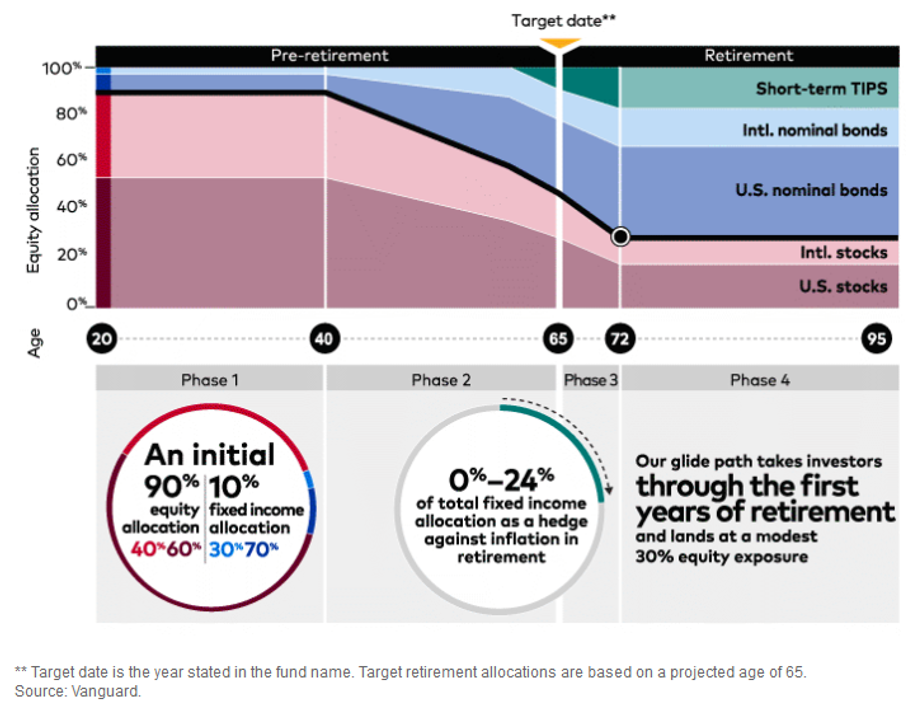
Whether retirement savers in TDFs know it or not, and I presume most don't, they are mindlessly investing their wealth.