Private real estate fundraising plunged in the third quarter as higher interest rates cooled investor appetites for risk.
Less than a third of Gen Z feels financially secure while just more than half feels “very or extremely worried about not having enough money,” according to a recent study by consulting firm EY. “Welcome, the water’s warm!” says every American millennial.
The US Federal Reserve thinks it can take a break. As Fed officials see it, they need only sit back and wait while the monetary tightening they’ve already done gradually takes hold, slowing the economy and pushing inflation back down to the central bank’s 2% target.
Washington seems determined to ignore the country’s rapidly worsening fiscal picture, but sooner or later policymakers will be forced to pay attention. When they do, they’ll find that changes to Social Security are unavoidable.
MicroStrategy Inc. Chairman Michael Saylor’s strategy of buying Bitcoin may be coming into question as the advent of exchange-traded funds holding the largest cryptocurrency appears imminent.
The US Treasury increased its planned sales of longer-term securities by slightly less than most major dealers expected in its quarterly debt-issuance plan, in a move that signals officials may be concerned about the surge in yields over the past several months.
The typical American is a lot richer now than they were just before the pandemic — and this improvement is at least partially due to government support for families and businesses in 2020 and 2021.
The significant outperformance of US stocks over the last decade is unlikely to repeat over the coming 10 years, according to Goldman Sachs Group Inc.’s chief global equity strategist.
Small businesses account for close to half of US private sector employment, so there’s always considerable focus on their prospects, especially during periods of rising interest rates and contracting credit.
US employment costs unexpectedly accelerated in the third quarter, heightening concerns that a strong labor market risks keeping inflation above the Federal Reserve’s target.
Here’s a sobering truth you’re seeing more of every day: Your unique status, as an advisor, is declining at a rapid pace.
Is there a graceful way to explain to clients I’m not the person making these decisions, and that I understand the impact, without betraying my firm and aligning fully with clients?
Harness the power of neuroscience and psychology to help your clients reach their long-term planning goals.
Contrary to popular belief, “women” and “pre-retirees” are not niches. Here are tips for narrowing a niche that is too broadly defined.
Much of our technology is complex and confusing. How can we fix that?
Recently, a newly divorced woman in her 50s asked me if I knew of any good books for middle-aged, single woman of wealth.
To have a shot at taming inflation, the Federal Reserve is intent on tightening financial conditions across the economy. But they haven’t made much of a dent in corporate America yet.
The US Treasury reduced its estimate for federal borrowing for the current quarter thanks to stronger-than-expected revenues, offering some relief for investors concerned about the rapidly widening fiscal deficit.
A Federal Reserve pause, seasonal tailwinds, an earnings-led rally. Many of the reasons that got Wall Street strategists increasingly bullish coming into the end of the year now look like wishful thinking.
The world’s auto industry is accelerating in two directions at once. Unless those contradictions are resolved, carmakers risk running themselves off the road.
All of a sudden there is a flurry of activity around artificial intelligence policy. President Joe Biden is scheduled to issue an executive order on the topic today. An AI safety summit is being held in the UK later this week. And last week, the US Senate held a closed-door forum on research and development in AI.
Like many advisory firms, we work with many multi-generational families and use a team approach that matches our younger advisors with clients in the same demographic to help them prepare to be good stewards of assets they earn and inherit.
Forging connections with beneficiaries sends the message that you not only safeguard the individual's interests but genuinely care about the long-term prosperity of their family. Here’s how this benefits your client and your firm – and how to do it effectively.
The world is a cold, hard, mean place and you are going to suffer if you allow bullying comments from a tough prospect to derail you.
While getting your loans wiped out in one fell swoop can seem like a lifesaver, it may come with some negative financial implications. I cover what you need to know.
US blue-chip companies unleashed a wave of bond sales on Monday as borrowers look to sell new debt in a week jam-packed with bond auctions, central bank meetings and fresh economic data.
The financial world’s computer-loving crowd is preparing for the dawn of a new AI-powered era — but that doesn’t mean they’re ready to fully embrace the technology just yet.
Goldman Sachs Group Inc. lifted its long-term growth estimates for the US and many other major economies as generative artificial intelligence is set to boost productivity over the next decade.
New research found that the stocks of companies that have invested heavily – especially if that was not financed through organic growth – underperformed an appropriate benchmark.
Of all the negative articles written about Amazon.com Inc. through the years, one piece in particular stung the company more than most. Claiming that Amazon’s aggressive pursuit of growth had come at the expense of a good shopping experience for its customers, New York magazine this January criticized what it called “The Junkification of Amazon.”
Ryan Russell passed away, following a 17-month battle with cancer.
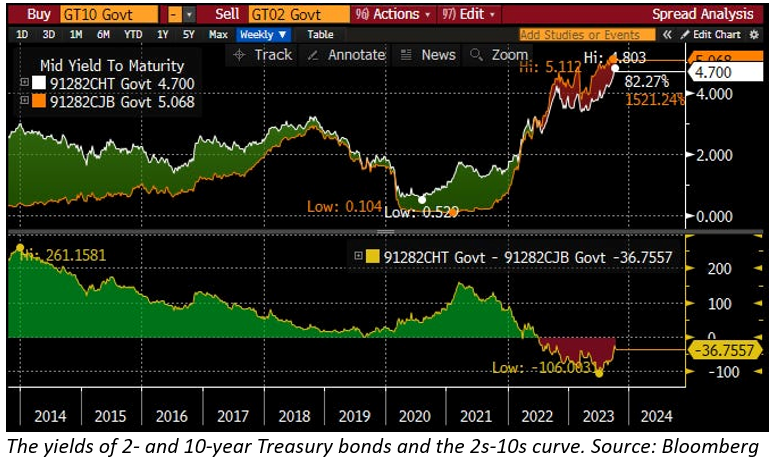
The yield on 10-year Treasuries went above 5% last week for the first time since July 2007, when the first Transformers movie was topping the box office and the Dow Jones Industrial Average surpassed 14,000 for the first time in history.
If you believe that an easy solution to improve lower-class standards of living is to raise the minimum wage, or you are curious about what university presidents spend their time on, Angus Deaton’s new book provide insightful answers to those and many more questions that, taken together, challenge the relevance of modern economics and the capitalism it supports.
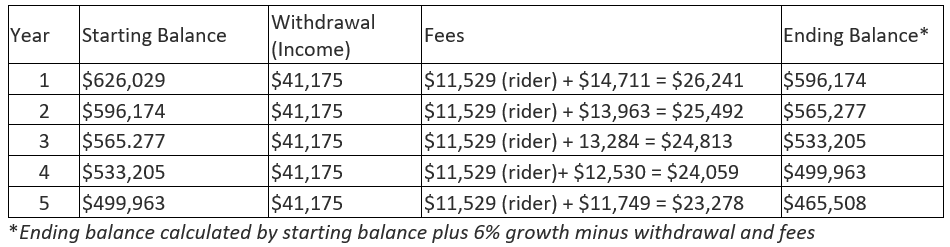
I analyze the math of annuity income riders and how you pay the insurance company to draw down your own assets. It is highly unlikely the insurers will pay a dime, which makes those riders questionable.
Many entry-level jobs, especially those in education and social services, do not pay well enough for recent graduates to balance their student loan payments with rent and other expenses. This is where income-based repayment plans for student loans come in.
US stocks carry too much risk and buying Treasuries will pay off, according to M&G Plc as the $402 billion fund house navigates the brutal selloff in global markets.
Bitcoin has jumped on bets that the first US exchange-traded funds investing directly in the token are set to be approved. The question now is whether an actual green light for the products would spur some profit-taking.
Amazon.com Inc. Chief Executive Officer Andy Jassy gave investors much of what they wanted this earnings season: robust sales and profit growth along with a hint that the cloud division earnings machine is regaining momentum.
Momentum has turned in tech stocks and investors awakening from dreams of artificial-intelligence nirvana are back to a less grandiose concern: When will the selling stop?
US consumers have kept buying these things despite high inflation and the contractionary policy of the Federal Reserve, and they deserve thanks not only for the recession that still has not come, but for the fast pace of recent economic growth.
You won’t find this term in any serious economics textbook, but the only clinical way to describe the US housing market is bananas. Affordability is at record lows and mortgage rates are the highest since 2000.
Morgan Stanley’s incoming chief executive officer, Ted Pick, said investment banking will lead the next business cycle, and that hiring for that business will help the firm compete with rivals.
The rout in US stocks has brought the S&P 500 Index to a crucial inflection point. It’s teetering near a correction after breaching 4,200 for the first time since May — a key technical level that may point to a longer-term selloff.
Embattled debt investors like the look of 5% Treasury yields as they weigh the risk-versus-reward scales for the world’s biggest bond market.
Amazon.com Inc.’s run as one of the best stocks this year will likely come down to the performance of a single business line: cloud computing.
Since taking a big leap upward in the 1940s and 1950s, the homeownership rate in the US has been remarkably steady since the 1960s, with close to two-thirds of households owning their homes.
Before we get carried away anew with declarations about how “the investing world is forever changing,” it’s worth remembering how fluid the relationship has proved over the past couple of years — and how another twist is always just around the corner.
The US economy grew at the fastest pace in nearly two years last quarter, fueled by a surge in consumer spending.
As 2023 enters the home stretch, I reflect on asset class performance for the year and discuss what my firm’s models are saying for the next 12 months.
Banks are taking a cautious approach in the investment-grade bond market amid some of the wildest swings in Treasuries in recent memory, waiting for pockets of calm to emerge as they seek to borrow before US officials can raise interest rates or tighten regulations further.