 He was on the receiving end of the passes from Drew Brees that led the New Orleans Saints to victory in the 2009 Super Bowl. But what distinguishes Marques Colston from his fellow ex-NFL players and other retired athletes is his successful post-professional career.
In a world where 78% of former NFL players face bankruptcy or extreme financial distress within two years of retirement, Colson has been a successful investor and entrepreneur.
And he is showing other players how to replicate that success. Colston is educating current and retired professional athletes to avoid the well-travelled road to bankruptcy so prevalent among his former colleagues.
Colston has just launched a program at Columbia Business School in venture investing and entrepreneurship to help professional athletes preserve their wealth, develop due-diligence processes for investment decisions and raise capital to launch businesses. His work with a financial advisory team during his playing years set him up for the financial success he is achieving in his post-NFL career.
Colston had an impressive career as an NFL wide receiver, playing for New Orleans from 2006 to 2015. As a 6’ 4” and 225 lb. wide receiver, he helped the Saints to victory in Super Bowl XLIV with seven receptions for 83 yards against the Indianapolis Colts. He is the Saints' all-time franchise leader in receiving yards (9,759), yards from scrimmage (9,766), receiving touchdowns (72), total touchdowns (72), and total receptions (711). For a short Colston NFL education, check out his highlight reel here.
As a full time entrepreneur, he spoke with ease, confidence and determination about his successful transition from star NFL player to successful entrepreneur and educator as I interviewed him by phone on March 15.
Early in his NFL career, with a $5,000,000 signing bonus in his pocket and a lucrative contract ahead of him, Colston sought help from professional financial advisors. Colston hired a Merrill Lynch advisor team that included two ex-NFL players. One was his friend and mentor, retired Oakland Raider defensive end Lance Johnstone, who had successfully transitioned to the advisory world after retiring from the NFL.
As Colston described it, his advisors saw things from his own perspective and had successful careers in the NFL and afterwards as financial advisors. Colston said that they “lived the blueprint that set the stage” for his own success after his retirement. His advisors taught him “the ins and outs of where his money was, along with asset allocation and other fundamentals.” But they also supported and guided his entrepreneurial and investment ventures rather than solely focusing on traditional portfolio investments. With those foundations, Colston bought into a professional indoor football League (PIFL) team in his hometown of Harrisburg, PA, the Stampede, and ran the operations for two years.
He described that as the best learning experience. “I would literally play my season down in New Orleans in the fall and then in the off-season,” he said. “I would fly back to Harrisburg and run that team” including managing “sponsorships, marketing, ticket sales, helping them put the roster together, and literally every aspect of the business of that organization.”
More recently, he has joined the ownership of the Philadelphia Soul in the Arena Football League. In addition, Colson founded and serves as CEO of Dynasty Digital, which provides companies and individuals with digital marketing and business development, IT services and education solutions.
Colston is bucking the trend of high bankruptcy rates among NFL players whose careers provide them with short-term income windfalls. A 2015 study by the National Bureau of Economic Research in Cambridge, MA found that initial bankruptcy filings amongst retired NFL athletes begin soon after retirement and continue at least through the first 12 years of retirement. The study showed that nearly 16% of retired NFL players had filed for bankruptcy by year 12 of retirement. Moreover, bankruptcy rates are not affected by a player’s total earnings or career length. The study further concludes that having played for a long time and been well-paid does not provide much protection against the risk of going bankrupt.
In response to those statistics, Colston said it is very challenging to manage your finances when all your effort, energy and everything in your life is pointed in a single direction toward succeeding athletically, and, in doing so “you don't necessarily lend yourself to learning skillsets outside of that end goal.” Colston differentiated himself from so many other players by focusing as much on his financial future as he did on his NFL career.
The NFL has made an active effort to improve upon and provide financial education to its players through its Financial Education Program (FEP), which includes training from Money Management International (MMI) on basic financial management including income, expenses, wealth building, debt management, and building savings; FINRA Investor Education for making informed investment decisions and avoiding fraud; and Equifax and TransUnion for providing credit management training. In addition the NFL just completed its fourth annual personal finance camp, where current and former players participate in a four-day program in partnership with Arizona State University to help participants gain an understanding of the financial world and establish habits to help maintain long-term financial stability.
In 2012 Colston was introduced to Columbia Business School graduate Erica Duignan Minnihan. Duignan is a managing partner at 1000 Angels, an angel investment firm focused on athletes and entertainers. The two worked on several projects together and have teamed up with the Columbia Business School executive education to offer two one-month courses, Venture Investing for Professional Athletes and Entrepreneurship for Professional Athletes.
On the venture side, the program is focused on wealth preservation and developing a due-diligence process to objectively evaluate investment deals. On the entrepreneurship side, the program is focused on launching a venture and raising outside capital to both mitigate financial risk and offer third-party validation as other people are investing capital in the deal.
Colston said athletes are not satisfied with the prospects of a single-digit return from the typical retirement portfolio and seek opportunities with greater upside. They are approached often and have high access to a wide range of investment opportunities, according to Colston. The goals of the Columbia programs are to arm athletes with the tools to make the right decisions to both preserve and grow their wealth. Colson said that financial advisors could also benefit from attending the program as an “opportunity to learn the other side of the house and be able to answer questions more effectively and be able to service your clients even at a higher level.” The program launches in May 2018.
For financial advisors aspiring to work with professional athletes, Colson offered the advice to be open-minded to their desires to pursue nontraditional venture and entrepreneurial opportunities and to then be able to educate and guide them in making the right decisions in these ventures.
Justin Kermond is the vice president of business development for Advisor Perspectives.
Read more articles by Justin Kermond
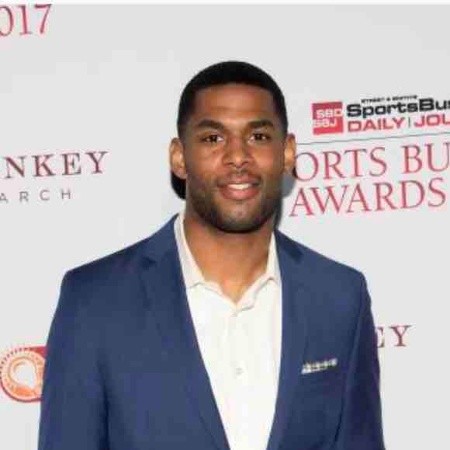 He was on the receiving end of the passes from Drew Brees that led the New Orleans Saints to victory in the 2009 Super Bowl. But what distinguishes Marques Colston from his fellow ex-NFL players and other retired athletes is his successful post-professional career.









