 Endowments and foundations routinely allocate capital to a diverse portfolio of alternative investments, including hedge funds, private equity and venture capital. But most struggle to beat a passive index. That reality – the futility of the strategy pursued by many supposedly sophisticated investors – was painfully illustrated by the “Buffett bet.”
The bet was a $1 million wager made almost 10 years ago, and put the 10-year performance of the S&P 500 against a selection of five hedge fund-of-funds from 2008-2017. You can read more about how Protégé ended up on the losing side of the bet with Buffett in my recent article featuring an interview with Seides.
Jeff Tarrant delivered a keynote speech at the MIT Sloan 2018 Investment Conference on March 16, where he discussed why Protégé lost the bet but still considers it a win. Our readers can judge whether Tarrant is justified in his rationalizing of losing the bet, but everyone should question whether a diversified fund of hedge funds, with its high fees, can beat a low-cost index over a 10-year time horizon.
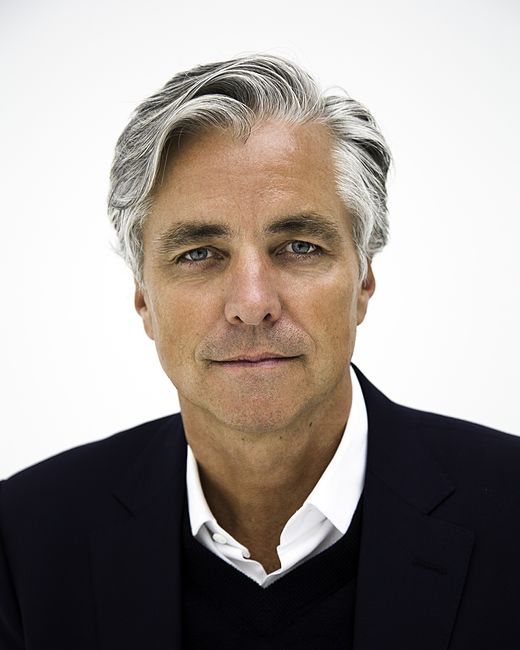
He is the founder and chairman of Protégé Partners LLC, a fund of hedge funds, and of MOV37, which specializes in machine-learning investment strategies. Tarrant’s reputation as an investor came into the limelight when he worked with John Paulson to use credit-default swaps to successfully bet that the housing bubble would collapse during the financial crisis.
I’ll explain why Tarrant claimed that losing to Buffett was a win for him, but first let’s look at how the wager was set up.
How the bet played out
“I actually didn’t make the bet with Buffett,” Tarrant said, “it was my partner, Ted Seides, who took Buffett up on it when he was at Protégé.”
“Buffett was saying ‘I want to bet hedge funds against the S&P 500,’ so we took him up on it,” Tarrant recalled, explaining how the pair’s newly founded firm, Protégé, ended up backing the wager.
“Originally, the bet was supposed to be 10 hedge funds, but then Buffett found out we were a fund of funds,” Tarrant said.
“So [Buffett] said we should pick five funds of funds, which was actually a really smart thing for Warren Buffett to do,” according to Tarrant. “Because that means you end up with five funds of funds, each having 25 managers – so you end up with something like an index of hedge funds,” he said.
Presumably – and logically – Buffett reasoned that the more diversified were Protégé’s investments, the less likely it would be that one or two strong performers could deliver the returns that would beat an index. That is essentially the same logic followed by endowments and foundations in their pursuit of alpha.
Tarrant explained that the bet was prefunded 10 years ago, when Buffett and Protégé anted approximately $320,000 each. That amount grew to $2.2 million, which went to Girls Inc. of Omaha, Buffett’s charity of choice, when he won.
“But I like to look at the positive things in life, and I feel like we kind of won,” Tarrant said.
Why losing to Buffett was a win
Tarrant explained that there’s an existing charity where you can bid to have lunch or dinner with Buffett. Using those auctions as a reference, Tarrant said, “you would have had to pay $24 million over the 10-year period to have lunches and dinners with Warren Buffett.”
“I got that for $330,000, so I think that’s good value investing,” he said jokingly. Presumably, Tarrant was able to have an occasional meal with Buffett, but he did not reveal that during his talk.
Tarrant’s firm’s reputation benefited from the recognition in other ways.
“When everything ended and Girls, Inc. of Omaha got the $2.2 million, I got an email from the president of the charity,” Tarrant said.
“It said ‘we’re so happy, Warren is coming to our annual meeting, will you come and spend some time with us,’” he said. Then, he explained, the message from Girls Inc. stated that it was writing to request permission to call a new building the Protégé building.
“I immediately sent an email to Warren saying ‘Let me get this straight, I lose a bet and get a building named after my company?,’” Tarrant asked.
“Warren was so supportive about it, he is a great guy,” Tarrant said, “and that’s how we got a building named after us for losing the bet.”
Lastly, Tarrant highlighted, “the charity won big.”
This was because of how the bet was designed, according to Tarrant. “The nominated charity didn’t just get $1 million, it got $2.2 million.”
“What would you have wanted to own on January 1 2008, when the bet started?”, Tarrant asked rhetorically. “Remember, that year, the S&P 500 was down over 30%.”
“So you wanted to own a long-dated bond,” he said, “which is exactly what we owned.” The proceeds from Buffett and Protégé’s antes were invested in a long-maturity bond.
“The bond was up 18% that year, the spread between the bonds and the stocks was fantastic,” according to Tarrant.
Then the collateral grew even more remarkably, Tarrant explained. “Warren gives us credit for this in his recent annual letter, but this was all him,” Tarrant said.
“Buffett called us up in the third quarter of 2012 saying ‘look at this bond, it’s supposed to mature at $500,000 and we’re already at $492,000, it’s not going to go up that much so let’s sell it and buy Berkshire stock’,” Tarrant explained. “So we did, and that’s why it grew to $2.2 million,” he said.
Tarrant feels like a winner despite the loss, but he did add that the wager he agreed to ended up changing in an unexpected and significant way.
Originally, Tarrant explained, it was also supposed to be a wager where Protégé was betting against the S&P 500.
“When Seides came into my office and said we were taking this bet against Buffett, I asked ‘are we betting against Berkshire Hathaway, or against the stock market?,’” Tarrant said.
But three years later, Tarrant and Seides found themselves having lunch with Buffett when Berkshire had just been entered into the S&P 500.
“Think about that, for every dollar that goes [into the S&P 500], about 1.5-2 cents goes into [Buffett’s] stock,” Tarrant said. “It was kind of like his self-fulfilling prophecy.”
At this lunch, Tarrant recalled, he turned to Buffett and said: “You know what, I didn’t want to bet against you (Berkshire Hathaway), I took the market, but now you’re part of the market. It’s a different bet now.”
Buffett responded, “Do you give up yet?,” according to Tarrant.
“I probably should have,” Tarrant said humorously, neglecting to recognize the bet as a reminder that passive allocations often outperform alternative investment strategies.
Tarrant spent the rest of his presentation acknowledging that the hedge fund industry has declined in the last decade, but he clearly has no intention to shift assets out of it. In fact, he explained that his new fund is positioning itself as an early investor in machine-learning investment strategies.
Whether Tarrant is right or wrong about the promise of his artificial intelligence investments remains to be seen. However, one thing is certain – to attract asset flows, he will have to compete in a market where passive investments are generating attractive risk-adjusted returns relative to a high cost, highly diversified pool of alternatives.
Marianne Brunet is a financial market analysis with Advisor Perspectives.
Read more articles by Marianne Brunet
 Endowments and foundations routinely allocate capital to a diverse portfolio of alternative investments, including hedge funds, private equity and venture capital. But most struggle to beat a passive index. That reality – the futility of the strategy pursued by many supposedly sophisticated investors – was painfully illustrated by the “Buffett bet.”









