Advisor Perspectives welcomes guest contributions. The views presented here do not necessarily represent those of Advisor Perspectives
There’s an incredible paradox in wealth management: Successful advisors help clients plan for retirement. But many of those same advisors lack a solid retirement plan for themselves.
I’ll explain how that challenge, which centers on the fiduciary principle, can be met by looking at an important episode in the history of one of America’s iconic companies – Nordstrom.
“We’re never worked harder for even business.”
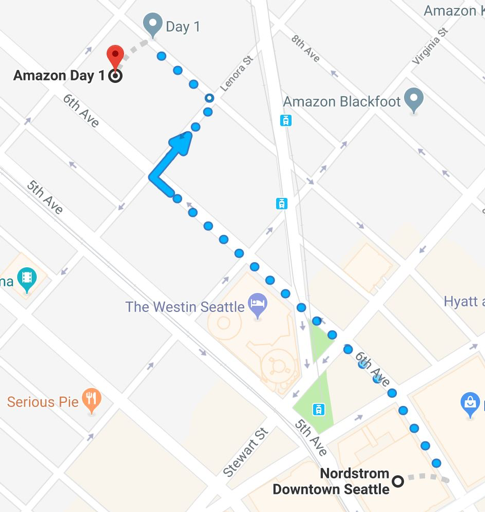
In one simple statement, Blake Nordstrom outlined the landscape of retail. As one of three co-presidents, Blake and his brothers, Erik and Peter, face a mounting set of challenges in the transforming retail industry. Four blocks away from Nordstrom’s flagship store is the headquarters of the company leading the disruption: Amazon. The internet continues to transform the way people buy goods and services and Amazon’s growing empire is rewriting the rules for success.
Blake and his brothers are the fourth generation of Nordstroms to lead the organization. His great-grandfather, John W. Nordstrom, partnered with Carl Wallin to open the first store named Wallin & Nordstrom in 1901. Over 117 years, Nordstrom has established a brand known for high-quality products and legendary customer service. Books have been written about the “Nordstrom Way,” a mantra that exemplifies the very best in a customer-driven culture.
Nordstrom went public in 1971 and successfully navigated the rigors of being a public company for 47 years; but in 2018, the retail landscape is transforming at an accelerated rate. The scrutiny of quarterly earnings are stifling the agility required to compete within the rapidly changing retail environment.
The Nordstrom family recognized these challenges, announced a plan to take the company private, and eventually floated a target price of $50/share to its board of directors. Sounds like the next chapter in a great American business story, right?
Wrong.
The board of directors rejected the float price, deemed it “inadequate,” and threatened to “terminate discussions.”
Let’s recap:
- Three Nordstrom brothers, great-grandsons of the founder, are co-presidents. As co-presidents, they know all facets of the organization, including the strategic vision, competitive landscape and the best path forward to succeed.
- Their name is on the door. They grew up in the business with first-hand experience in a culture and brand that is truly world class.
- They partnered with other family members, who also grew up in the business, to take the company private.
The board has a fiduciary responsibility to act in the best interest of the shareholders. Despite many compelling reasons (legacy, engaged executives and most likely, the optimal strategic plan), the Nordstrom board felt that $50 per share wasn’t sufficient for shareholders.
Where’s your board?
As the average age of the financial advisor increases, so does concern about the strategic plan (or lack thereof) for the advisor’s personal retirement. Where’s the independent, objective voice representing the shareholders’ best interest in the typical advisory firm? For most, the “board” is the person looking them in the mirror.
Advisors entering the final stage of their career face an impending conflict in the decisions impacting shareholder wealth (i.e., their own wealth, and that of the firms’ partners and other owners). How do you remove the subjectivity of your financial, physical and emotional investment from a decision that requires objectivity for fiduciary best interest?
Boards provide the governance to ask the tough questions that drive the difficult decisions. When one person has both CEO and board roles, there is a high probability for mediocre-to-poor decision making. For example, if Blake Nordstrom was the sole decision-maker on taking the company private at $50/share, then Nordstrom would now be private, and some shareholders would be upset. The board intervened on behalf of the shareholders.
As advisors move down the final stretch of their career, it’s important to find an objective, independent voice to evaluate the landscape while providing strategic perspective on value optimization. The independent voice can take many forms: study group, mentor or executive coach. Ultimately, the business and its owners will be best served with someone capable of telling them the cold, hard truth.
“Fiduciary”
When referencing the retail industry, Blake Nordstrom said “Today’s fast is tomorrow’s slow.” That statement is true in all industries, including wealth management. Many advisors are challenged by the transition from advisor-to-CEO, a step that requires growth, scale and business rigor. Making the leap from CEO- to-board is an even greater feat. This transition forces the advisor/CEO to embrace the idea that shareholder value, their shareholder value, may be best served by defining a path to their ultimate exit from the business. That’s a tough conversation.
Inertia is a powerful force. Advisors planning to retire within the next 10 years need to fight it and build a plan for both themselves and their business. The first step is to acknowledge that the two plans, personal and business, may not be synonymous. Need a reminder? The term “fiduciary” will inevitably enter an upcoming prospect/client conversation about your role as a financial advisor. When it does, think about the wider application of the word, including your responsibility to make decisions in the best interest of the shareholders in your wealth management business.
Sam Ushio is the founder of GvG17, a change management firm dedicated to increasing valuation for business owners. He writes a monthly post titled, “Monday Morning Joe” delivered on the first Monday of the month.
To subscribe to Monday Morning Joe, click here.
To learn more about GvG17, click here.
Read more articles by Sam Ushio
 Advisor Perspectives welcomes guest contributions. The views presented here do not necessarily represent those of Advisor Perspectives