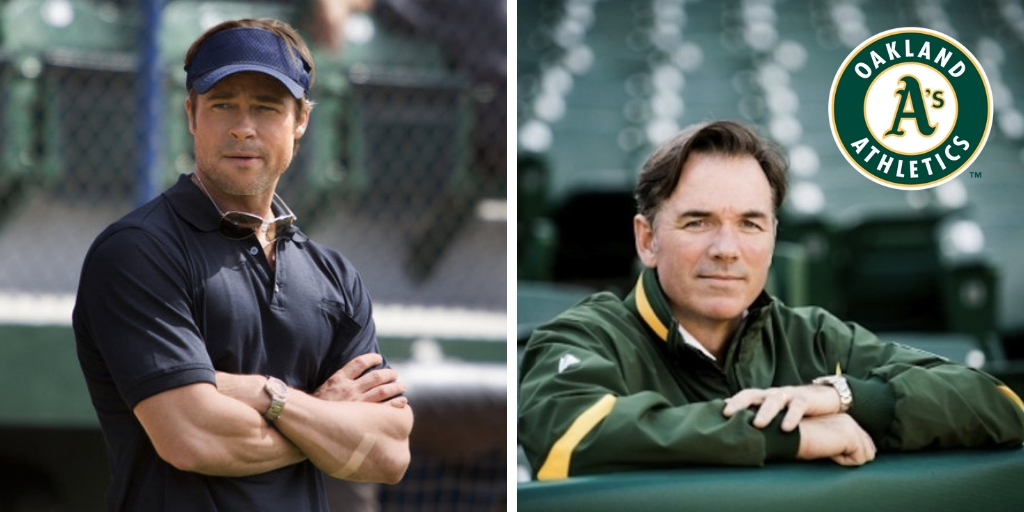
How did Billy Beane come up with the “moneyball” approach to evaluating baseball players? Though Brad Pitt’s depiction of him in the film Moneyball suggests he was an overconfident maniac, it was Beane’s failed career as a baseball player that led him to transform the way teams construct their rosters.
Beane is the executive VP of baseball operations for the Oakland Athletics and a former first-round draft pick. He was the subject of Michael Lewis’ bestselling book, Moneyball: The Art of Winning an Unfair Game, which was made into a 2011 film starring Brad Pitt as Beane.
Beane delivered a keynote speech at the Orion Ascent National Conference in Miami on September 7. This year, Orion’s Ascent user training conference was combined with their FUSE financial services technology gathering.
Under Beane’s leadership, the Oakland Athletics have established themselves as one of professional baseball’s most consistent winners. His leadership transformed professional baseball, and you can read more here about how sabermetrics have since been used to win the World Series.
Today, Beane’s moneyball philosophy has been adopted by businesses across all industries as a way to more efficiently manage assets and profitably leverage big-data analytics.
I will review three main ways Beane’s executive leadership led to Major League Baseball’s (MLB's) analytics revolution. But first, let’s look at how Beane came up with moneyball by learning from his failures as a MLB player.
How Beane’s “bankrupt” MLB player career led him to moneyball
Beane started his keynote address by highlighting failures from his career as a baseball player, modestly sharing the personal experiences that led him to come up with moneyball.
Before Beane worked in the Oakland A’s front office, he had a 10-year career as a professional baseball player.
He explained that he was drafted second in 1980 as one of the top high-school baseball players in the country, and then showed his major league baseball (MLB) player career performance statistics.
Billy Beane's MLB Player Career Stats
| Stats |
AB |
R |
H |
HR |
RBI |
SB |
AVG |
OBP |
OPS |
| MLB Player Career |
301 |
30 |
66 |
3 |
29 |
5 |
.219 |
.246 |
.542 |
Source: Major League Baseball
After being a first-round pick in the MLB draft by the Mets, he said, he went on to underperform throughout his 10-year player career. “For non-baseball fans, that’s essentially ‘Chapter 11’ if you’re an MLB player,” Beane said with a smile
“I played in the major leagues but by no means should I have been drafted that high,” he said. “That was what really started my thinking.”
As a draft pick out of high school standing tall at 6’4 and 185 lbs., “I passed ‘the eye test,’” Beane said.
“I had a great vertical jump, I looked terrific in a baseball uniform, and I was the homecoming king of my high school,” he said. “All things that have absolutely nothing to do with being a baseball player.”
Beane explained that he looked like an athlete and ran fast. Those measures might apply to being a good football player, he said, but aren’t good predictors for baseball.
Every team in MLB was investing multi-million dollar payroll budgets into players based on biases. “We invested in assets that looked the part,” Beane said. They ignored what data, collected on baseball players for 150 years, was saying about skills.
“I’m proud of the fact that I played in the major leagues, but the matter of fact is that I was not the second-best player in that draft,” he said. “They were measuring the wrong things.”
Beane said his MLB career had a huge impact on how he viewed the business when he took over the Oakland A’s.
“The first thing we did was stop losing money”
In 1992, the Oakland A’s were a competitive team with the second highest payroll in MLB. Beane’s MLB career as a player ended after the season in 1989, when the Oakland A’s won a World Series Championship. He then joined the front office as a scout for the A’s in 1990.
“There was a direct correlation between how much money you spent on players, and how many games you won,” Beane explained.
“But we were also losing a lot of money,” Beane said. The high player costs stemmed financial troubles for the A’s that would burdened the franchise in subsequent years.
By the time Beane took over as general manager following the 1997 season, the A’s were one of the worst teams in baseball, with one of the lowest payrolls.
“The first thing we did was stop losing money,” Beane said.
“We essentially went from the highest payroll, to the lowest payroll [in the league] in two years, and we became a functioning business.”
The biggest area where the A’s were making business decisions, Beane said, was in the draft. But Beane needed to reduce business risk and find a way to make the franchise profitable again.
From his personal experience as a top draft pick who passed “the eye test” that failed to deliver results on the field that the As, Beane knew his predecessors were hindered by biases.
Based on the baseball academic books Beane read during his off-seasons as a player, he came up with a risk-based strategy that would limit losses. Beane wanted to rationally invest in players to assemble a winning baseball team using statistics.
“When there is no bankruptcy, it perpetuates bad management”
Front-office positions were generally filled with people with an existing close connection to MLB, according to Beane. “We didn’t hire from the outside, it was very incestuous.”
“Most guys who run baseball teams are guys like myself,” Beane said.
“In the off-season, when I wasn’t playing, I went and took a couple economics classes at UC San Diego,” he said. “Which qualified me to run a billion-dollar business, right?”
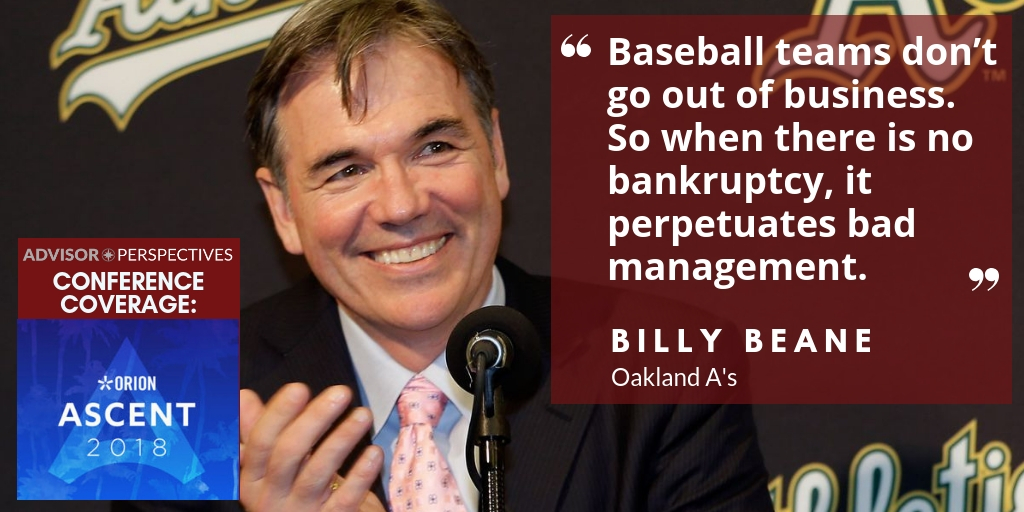
“The reason we didn’t hire from the outside is because we didn’t have to,” Beane said, “baseball teams don’t go out of business.”
“So when there is no bankruptcy, it perpetuates bad management,” he said.
According to Beane, the most important business decision he ever made was hiring his assistant general manager. By bringing in a Harvard economics graduate who loved sports as his right-hand man, Beane was able to challenge conventional thinking that plagued the A’s management.
Still, Beane continues to be successful by investing in human capital and bringing in analysts that can make sense of baseball data.
Walking into meetings at his office Beane said, "You know, I'm the dumbest guy in this entire room.”
“The skill that I bring is hiring the best and the brightest,” he said.
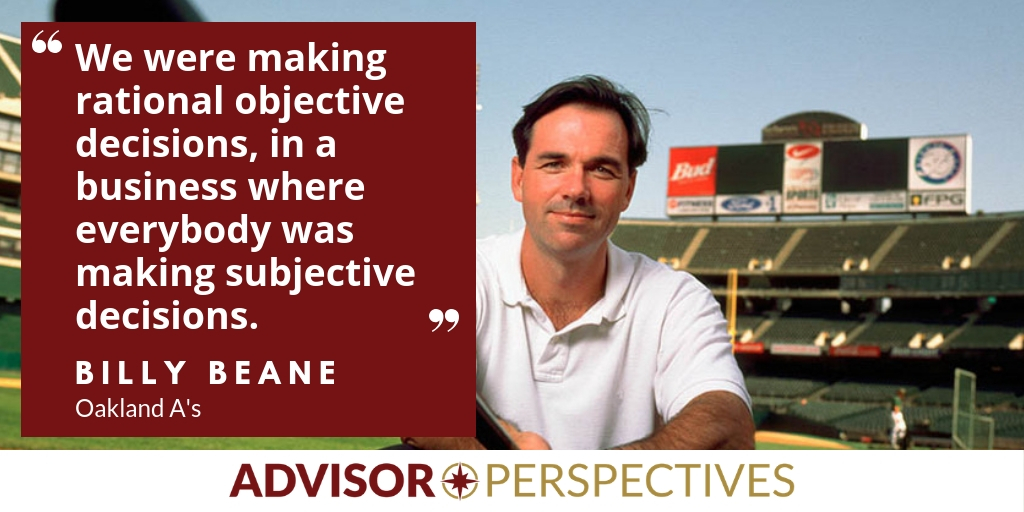
“We were making rational objective decisions, in a business where everybody was making subjective decisions.”
The one thing about running a sports team, Beane said, is that people really don't want to hear about your limited payroll. Fans only care about one thing – cheering for a winning team.
The A’s had limited assets to invest, so Beane sought profitable investment opportunities in the draft using an allocation strategy that challenged conventional wisdom.
Committing to using a data-driven strategy, Beane wanted to find out what player skill was most important in winning games.
“Before the book came out, on-base percentage was the eight highest paid skill in the game,” he said. The industry wasn’t paying for it, despite the fact that it had the strongest correlation with winning baseball games. Then one year after Lewis’ book came out, on-base percentage became the top paid skill in the game.
“We were making rational objective decisions in a business where everybody was making subjective decisions,” Beane said.
“We decided we were going to conduct one draft like that,” Beane said, “and we figured no matter what we do, we can't be more wrong than we've been for the last four years.”
Beane was arbitraging the mispricing of baseball players skills. He allocated assets without letting emotions drive decisions, and assembled a team of players that would work for a low paygrade and could get on base.
“Any 15-year old who owned a baseball team could have done the same thing,” Beane said, “nothing was proprietary.”
By analyzing statistics in relation to real processes in the game of baseball to make rational decisions, Beane led the A’s to six American League West division titles.
With an established disciplined investment strategy, the A’s have managed to keep the pay grades of their players low by having a high roster turnover rate, thereby minimizing risk.
“We're number two in all of baseball,” Beane said. “As we sit here today in 2018, we currently have the lowest payroll and one of the best records in the game.”
Marianne Brunet is a financial markets analyst at Advisor Perspectives.
Read more articles by Marianne Brunet
 How did Billy Beane come up with the “moneyball” approach to evaluating baseball players? Though Brad Pitt’s depiction of him in the film Moneyball suggests he was an overconfident maniac, it was Beane’s failed career as a baseball player that led him to transform the way teams construct their rosters.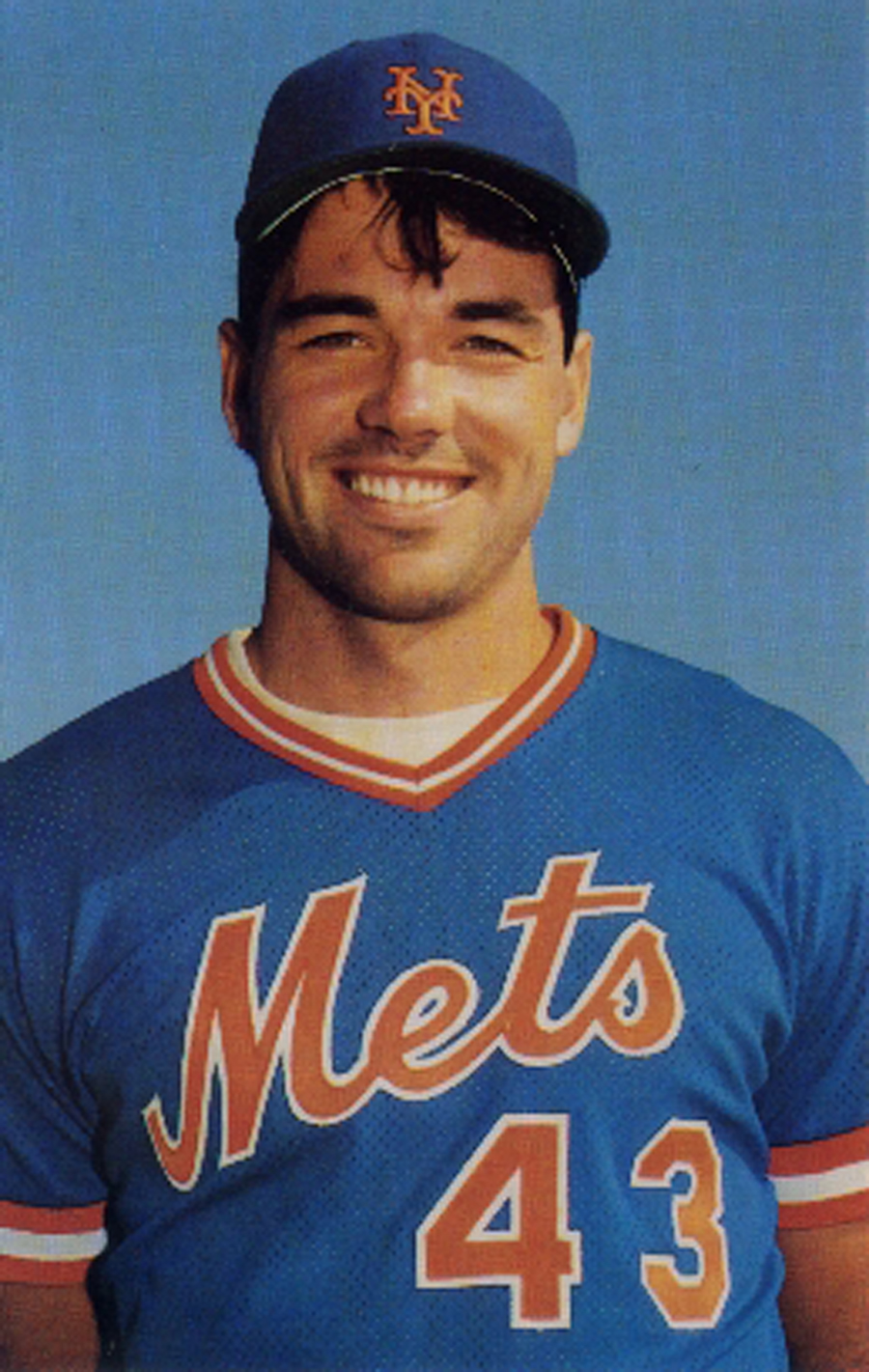
 The A’s had limited assets to invest, so Beane sought profitable investment opportunities in the draft using an allocation strategy that challenged conventional wisdom.