Mexico Gets a Tariff Lifeline. Now Sheinbaum Needs a Quick Deal.
The North American trade treaty isn’t dead just yet.
By sparing Mexico and Canada from his reciprocal tariffs on Wednesday, US President Donald Trump has kept the pact known as USMCA on life support. That’s no small feat given the animosity shown by the US government toward its neighbors in the past weeks. We don’t know whether the exception stems from a sincere recognition of the complexity of North America’s integrated supply chain or is just a tactical pause to avoid further corporate carnage. But the message is clear: Despite his rhetoric, Trump still gives the USMCA partners some preferential treatment.
In Mexico, the decision was greeted with cheers and relief. President Claudia Sheinbaum did a predictable victory lap: “We achieved this preferential treatment,” she said in her first reactions Thursday morning. “Mexico is respected.”
Sheinbaum has earned praise: Her appeasement strategy combined with intense lobbying by Mexican officials in Washington enabled them to dodge a devastating bullet that could have forced her to retaliate. The peso surged the most in two months in early trading; and hey, American consumers will still be able to enjoy great avocados on the cheap. Still, we shouldn’t lose sight that an aggressive and retaliatory Canada pursuing the opposite approach arrived at a similar place. Perhaps Trump has some love left for North American integration after all...
Now for the bad news: Even without reciprocal tariffs, Mexico’s appeal as an investment destination has taken a smack across the kisser, and its companies are already suffering from Trump’s protectionist agenda. While all USMCA products are exempted and can cross into the US tax-free, goods that don’t qualify — about 15% of Mexico’s total exports — pay a 25% tariff. Same for steel and aluminum and for auto exports outside the treaty; for cars compliant with USMCA rules, the 25% tariff applies to the non-US content used in the automobile. If all this sounds complicated, imagine being the hapless bureaucrats trying to decide what tariff a Cadillac produced in Coahuila should be charged when crossing the border.
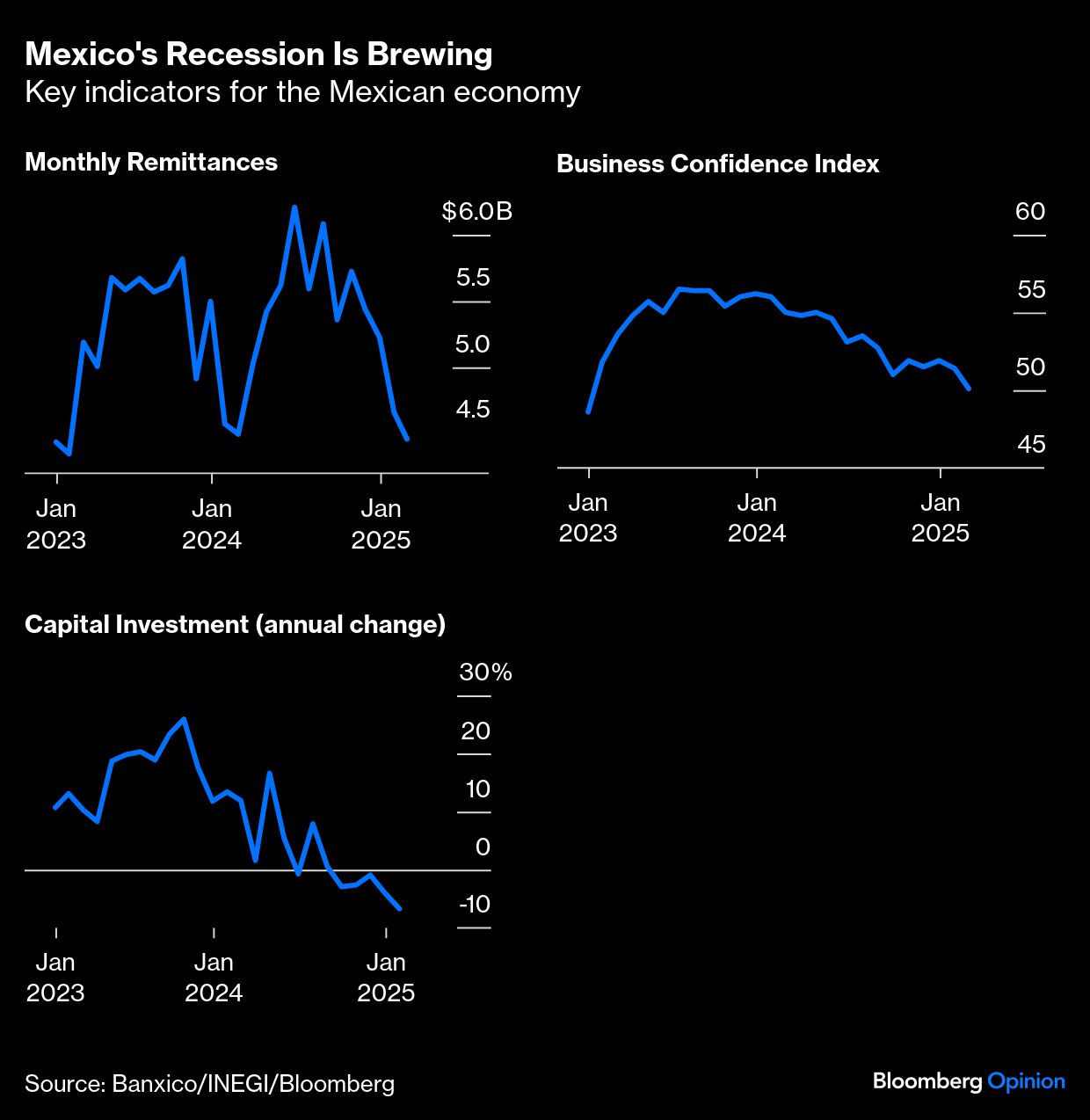
These measures add to a painful outlook for the Mexican economy, which is likely to have fallen into recession after a probable contraction in the first quarter. Indicators are flashing warning signs, in contrast to the official optimism: Business confidence is sliding down, private consumption and gross fixed investment continue to slump and even remittances have shrunk in February to their lowest monthly level in two years. Some companies are already announcing relocations into the US. All very worrying.