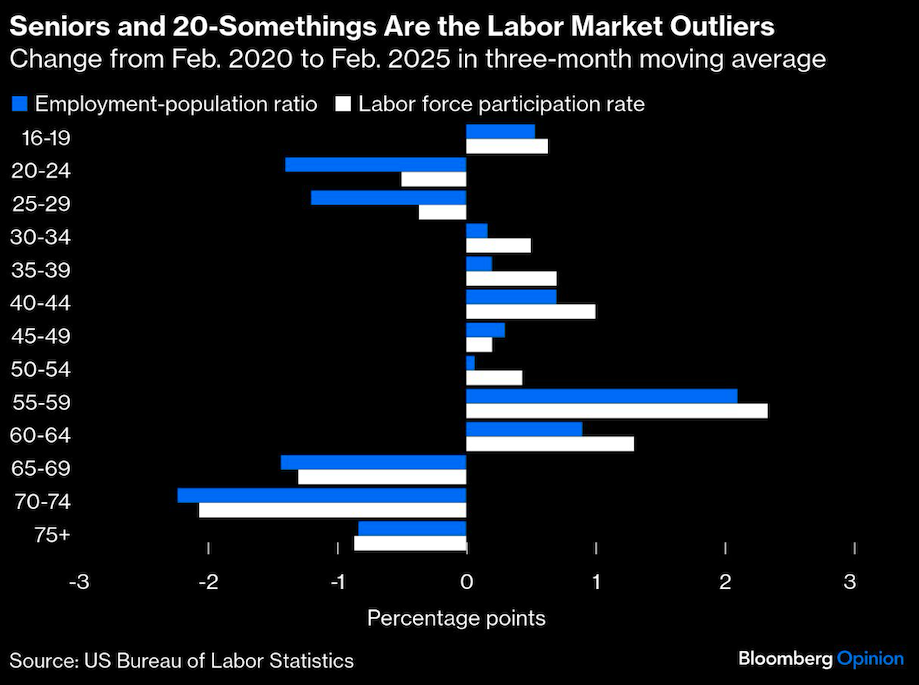
The Covid-19 pandemic brought some big shifts in the US labor market. The biggest was the departure of millions of older workers, ending a decades-long rise in employment and labor-force participation rates for those 65 and older. Smaller, but perhaps more troubling, has been the decline in both those measures for Americans in their 20s.
(These numbers are as of February because labor-market statistics for most narrow age groups aren’t seasonally adjusted, so to compare with how things stood just before the pandemic in February 2020 you need to look at the same month this year. They’re three-month averages because otherwise the data are pretty noisy.)
The over-65 exodus is easy enough to explain: Covid was especially deadly for older people, the pandemic caused many to reevaluate what they were doing with their lives, and for wealthier senior citizens a boom in asset prices made retirement a more attractive option.
For those in their 20s, it’s less obvious what happened, but it seems reasonable to think that it has something to do with how the pandemic disrupted the lives of those who were just about to leave school or college in 2020 and 2021. “Those are a critical few years where people need to be able to launch into adulthood,” said Steve Preston, president and chief executive officer of Goodwill Industries International, which along with running used-goods stores is North America’s biggest nonprofit provider of job training and career placement services. “For a certain segment of the population, if that doesn’t happen, bad things happen.”
Preston also cautioned that he couldn’t point to clear evidence from Goodwill’s own experience that this is what caused the declines in 20-something employment and labor-force participation, and after several years of looking into the phenomenon I remain somewhat unsure of (1) how real it is, given the noisiness of labor-market statistics for narrow age groups and (2) how alarmed we should be even if it is real. But there are enough other signals that things have been somewhat off lately for Americans in their 20s that it shouldn’t be ignored.
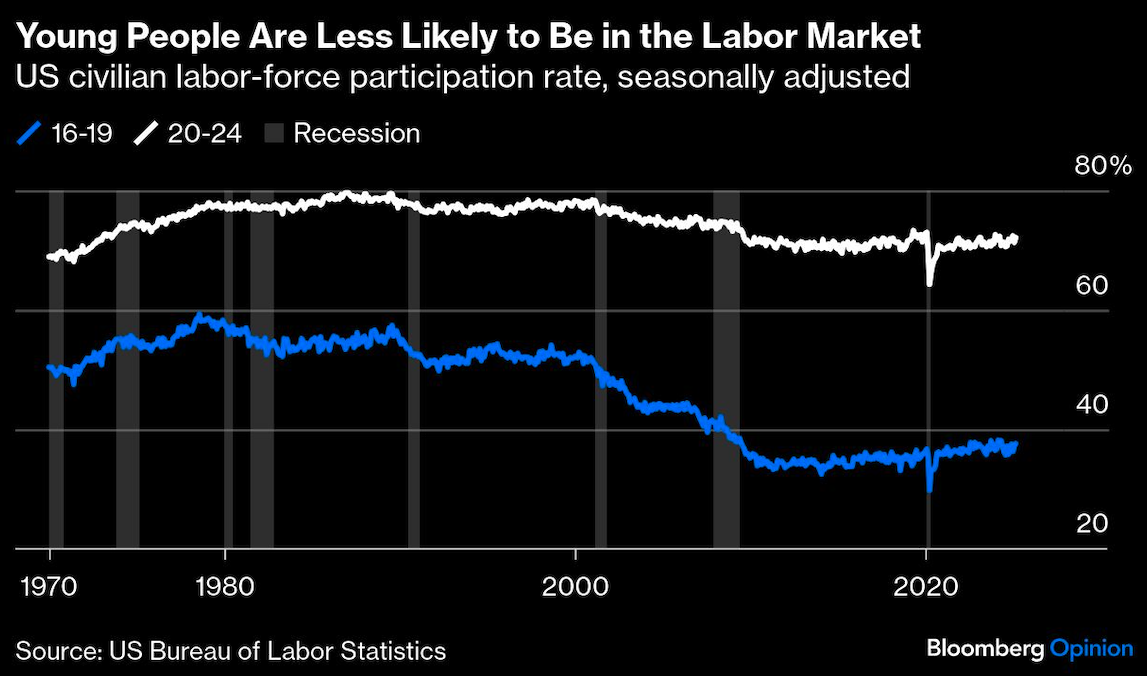
A crucial piece of background information is that there were even bigger declines in employment and labor-force participation among young Americans during and after the recessions of 2001 and 2007-2009. The Bureau of Labor Statistics does offer seasonally adjusted statistics for the 16-19 and 20-24 age groups, and while their labor-force participation declines in 2020 were spectacular, the recovery was, too, and on the whole recent trends seem more encouraging than those of a decade or two ago.
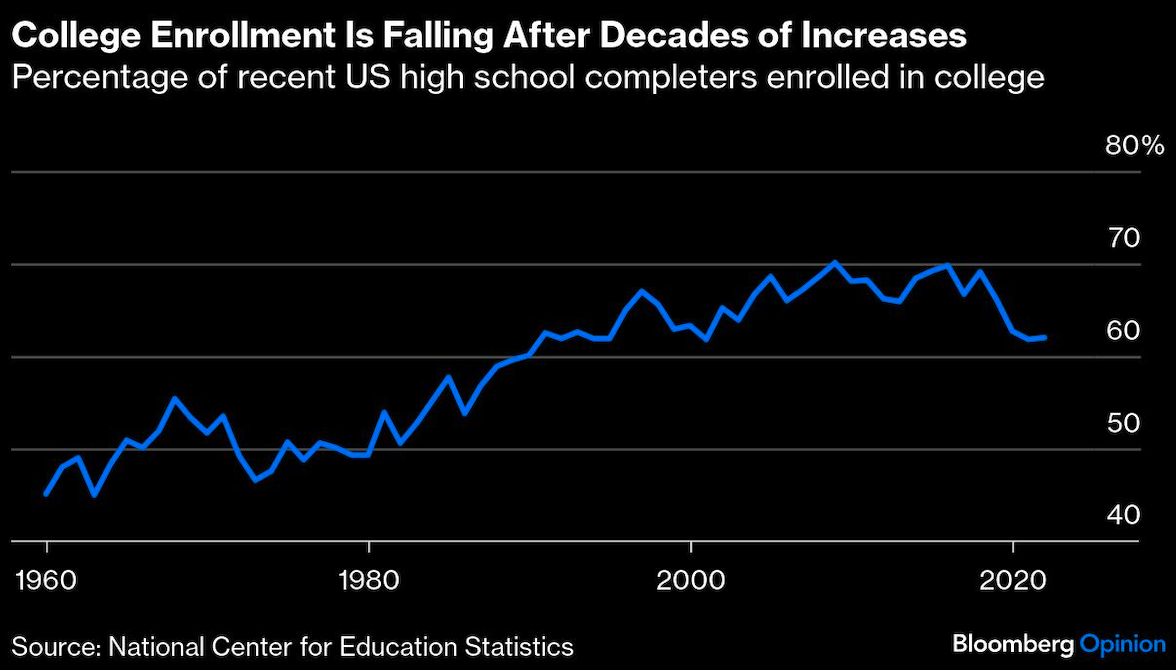
One big factor behind the labor-force participation declines in the 1990s and 2000s, though, was that Americans were staying in school longer and thus entering the workforce later. That’s no longer the case. College enrollment rates plateaued in the 2010s and have been falling lately.
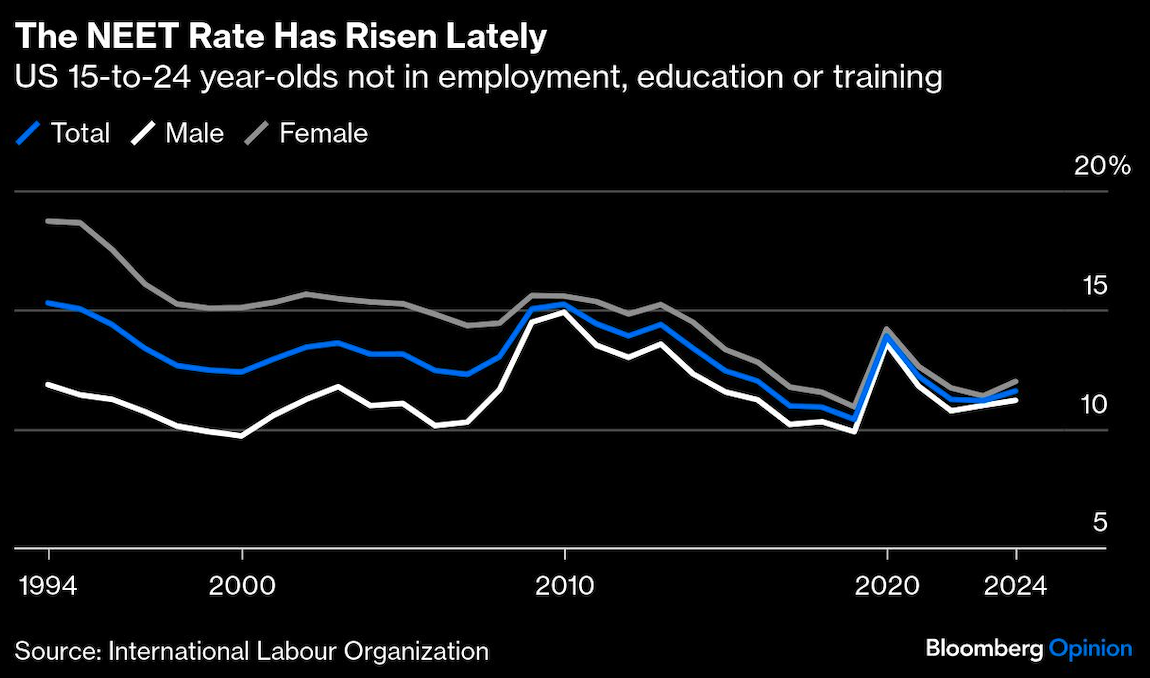
Employment and labor-force participation rates for those 16 to 19 are up since before the pandemic, so in some cases teenagers have been taking advantage of strong labor demand to skip or delay college. But that’s not the whole story. International Labour Organization estimates of the NEET rate — for not in employment, education or training — among Americans 15 to 24 show an increase since 2019.
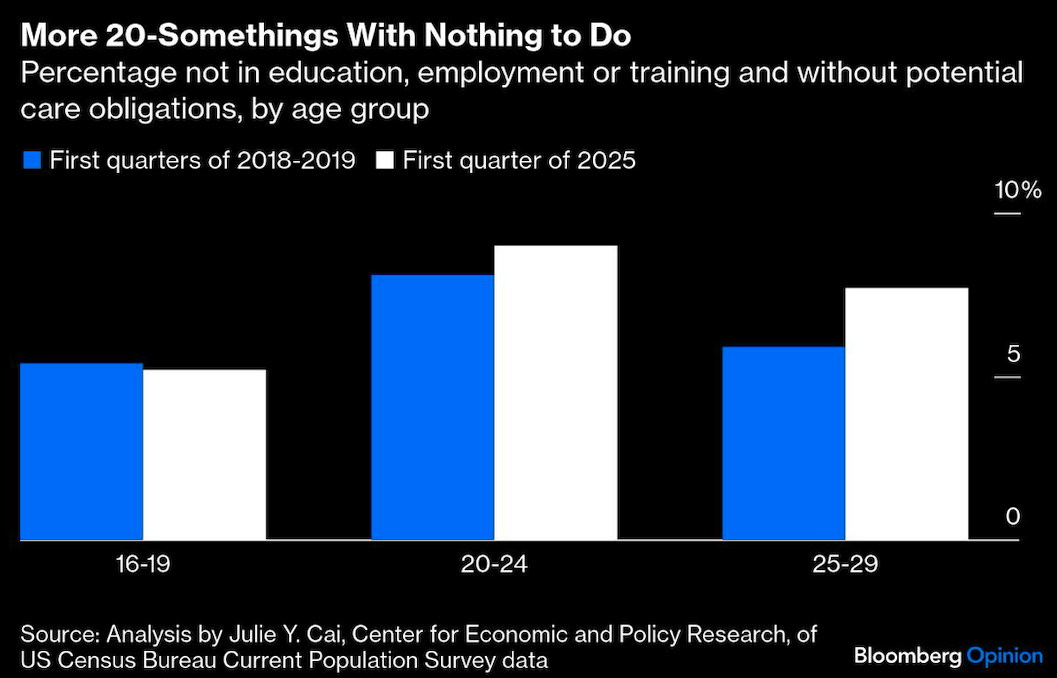
Economist Julie Yixia Cai of the Center for Economic and Policy Research in Washington has done a more recent and granular analysis using microdata from the monthly Current Population Survey (the source of most US labor-force statistics). She excluded those with potential care obligations (that is, they a have disability, live with a disabled adult or live with children younger than 18), and the resulting increase since before the pandemic in the percentage of Americans in their 20s, especially their late 20s, who don’t seem to be doing much of anything, is pretty striking.
Maybe, just maybe, this is due in part to some of the weird things that happened early in the pandemic, with record layoffs followed by large-scale experiments in (1) remote schooling, (2) remote work and (3) universal basic income. It’s definitely interesting that teenagers don’t seem to have been as adversely affected. Those who are 16 to 19 now were 11 to 14 when the pandemic hit and perhaps better able to adjust to the changes.
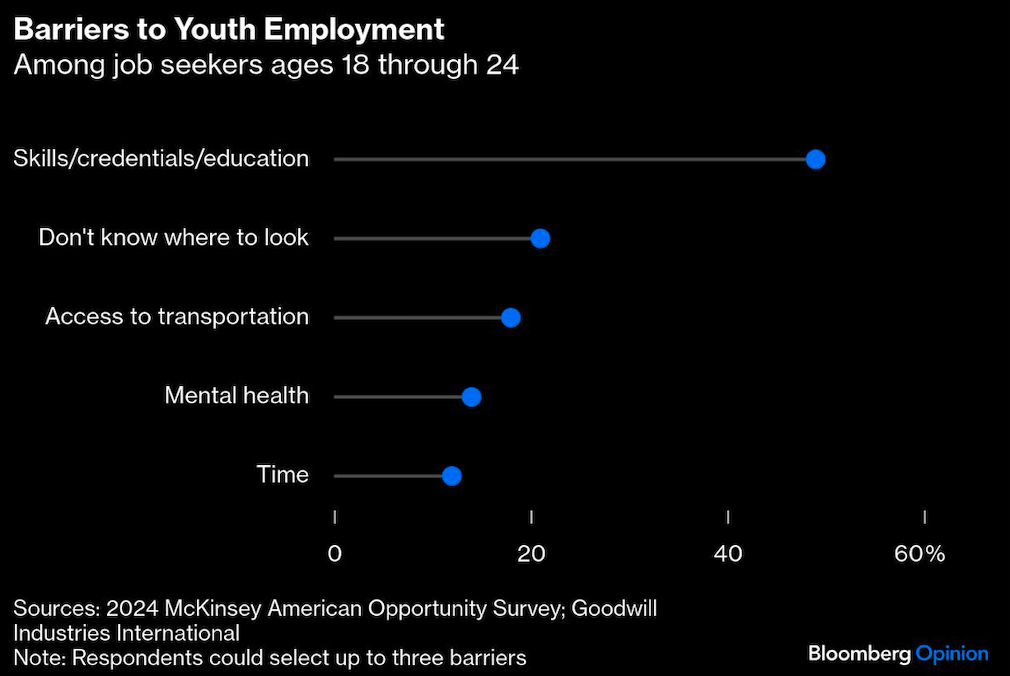
Goodwill recently released an analysis of data from McKinsey & Co.’s 2024 American Opportunity Survey showing the main barriers that job seekers ages 18 through 24 identify as keeping them from finding work. No. 1 is inadequate skills or education or training, all perennial barriers, but the 14% of respondents saying mental health issues are holding them back feels new and alarming.
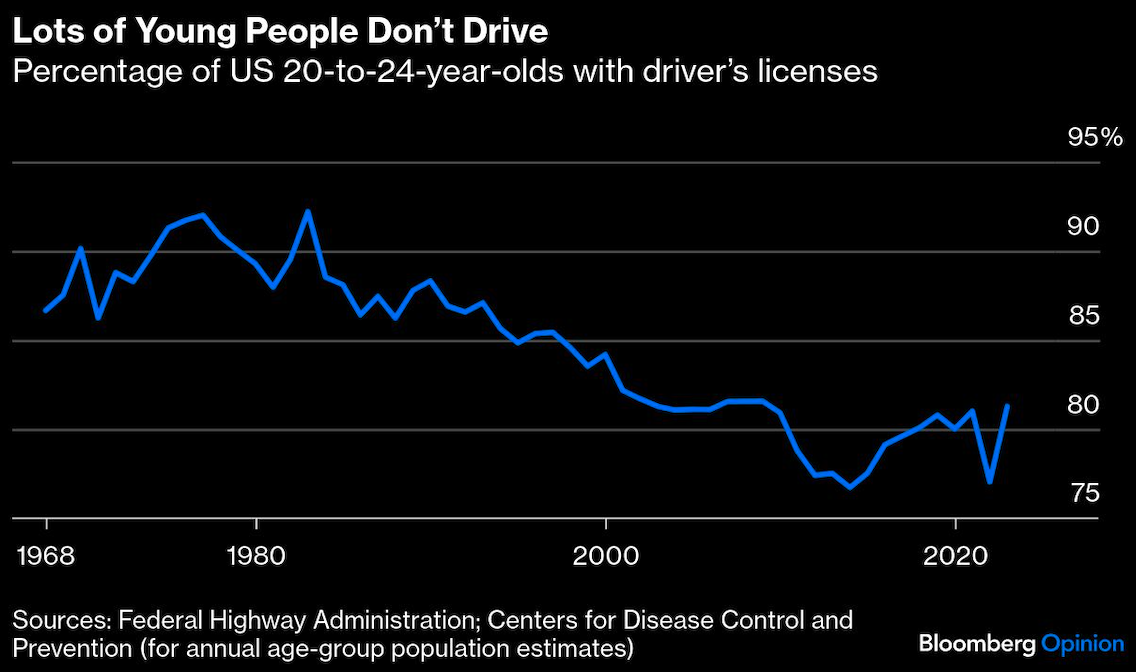
Also discouraging is the 18% reporting access to transportation as a barrier. While the long decline in the percentage of young Americans with driver’s licenses seems to have ended about a decade ago, nearly 20% of those ages 20 through 24 didn’t have licenses as of 2023, even as pandemic-era population shifts left more Americans living in areas without public transportation.
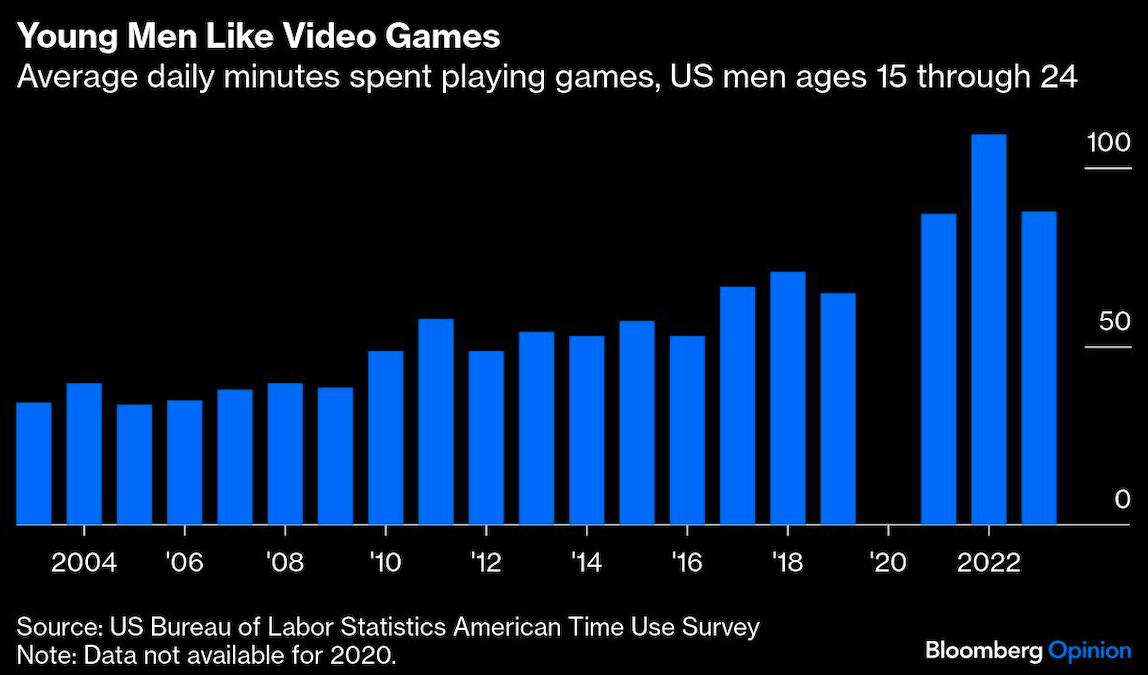
As for not having enough time to find work, for young men one possible contributing cause that I’ve written about before is the sharp increase since before the pandemic in the amount of time spent playing games (presumably almost all video games, but the American Time Use Survey doesn’t differentiate). That may have peaked, though, with the average gaming minutes per day among men ages 15 through 24 falling from 88 in 2023 from an all-time high of 109 in 2022. (Just to be clear, this is the average for all young men including those who report spending no time gaming. For the 43.1% who did in 2023, the average daily time spent gaming was three hours and two minutes.)
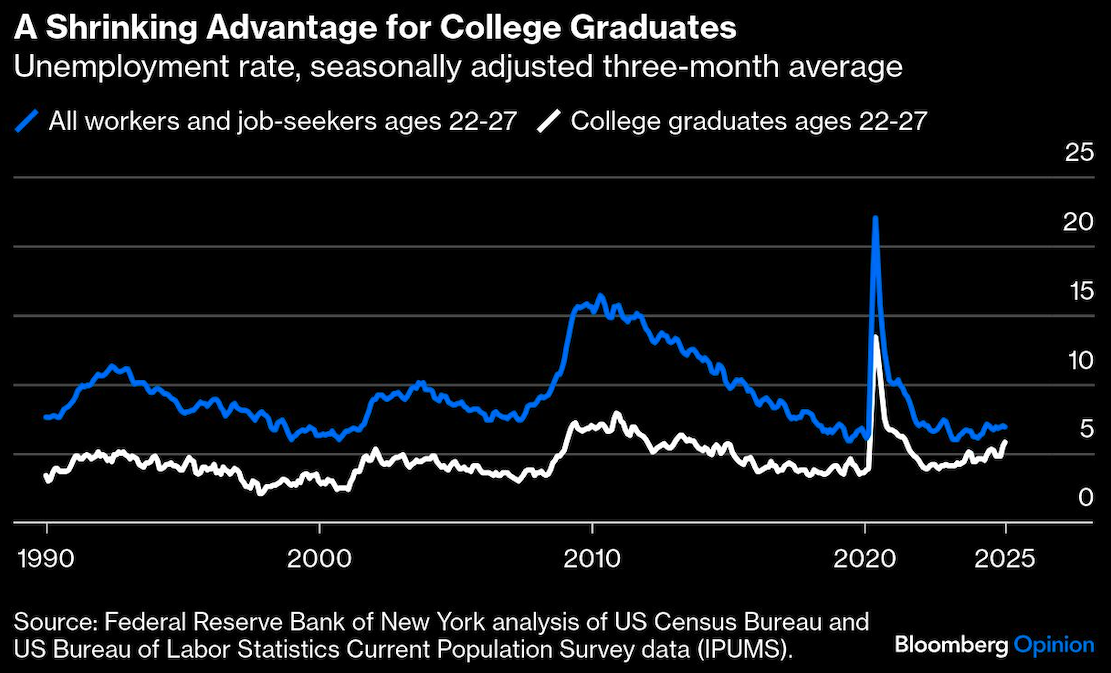
The causes of the 20-something labor-market pullback are so varied and uncertain that trying to address them directly can seem overwhelming and possibly futile. But labor demand and pay increases strong enough to draw the reluctant into the job market and overcome barriers such as lack of transportation can certainly help. The job market was exerting that kind of pull in 2022 and 2023, but this has been less true lately, with unemployment rates rising for young people in general and recent college graduates in particular — possibly a sign that artificial intelligence is beginning to displace entry-level knowledge workers.
Now we’re facing the possibility of a broader economic downturn caused by tariff increases and uncertainty around trade policy. If the economy falls into recession, that will likely be terrible news for employment and labor-market participation among Americans in their 20s. But at least why it’s happening won’t be a mystery.
A message from Advisor Perspectives and VettaFi: To learn more about this and other topics, check out some of our webcasts.
Bloomberg News provided this article. For more articles like this please visit
bloomberg.com.