Advisor Perspectives welcomes guest contributions. The views presented here do not necessarily represent those of Advisor Perspectives.
Risk management is critical to wealth preservation, especially in today’s turbulent market storm. However, during such volatile times, we must also not consider what tomorrow may have in store. Are you prepared to adjust your portfolio in the coming months for the possibility that calm, tranquil markets and a resumption of the bullish trend emerge?
While not front-of-mind for many investors today, President Trump’s other economic agenda items could be bullish for stock investors after the tariff storm passes.
Accordingly, let's discuss a few items on Trump’s agenda that, if enacted, could benefit corporate bottom lines, the economy, and, ultimately, stock prices.
Tax Policy
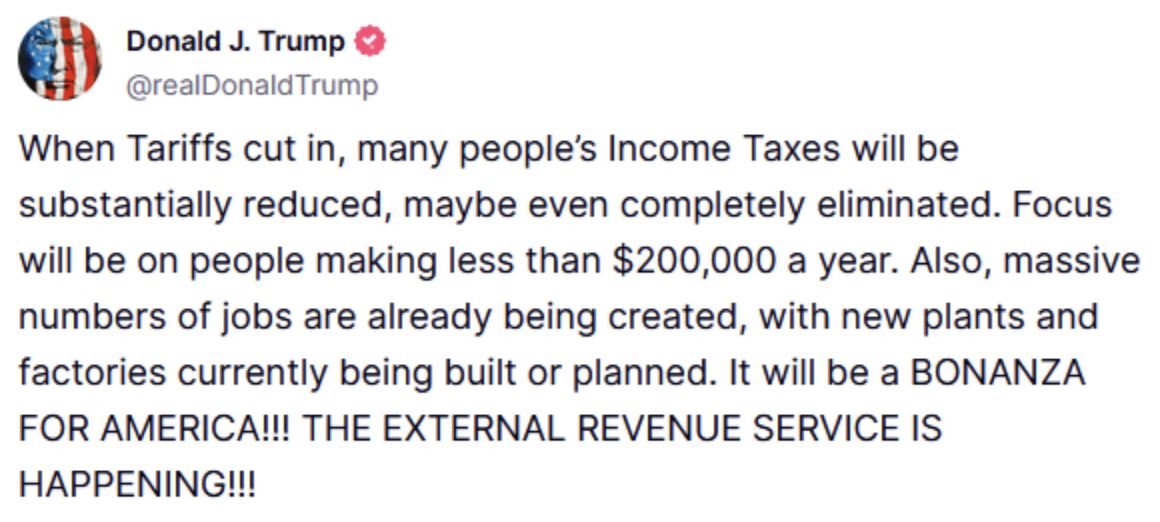
Trump has made several proposals regarding tax reductions. These include eliminating taxes on tips, overtime, and Social Security benefits. Furthermore, as we share below from his post on Truth Social, he has teased the idea of eliminating or sharply reducing taxes on people making less than $200,000.
Those tax relief measures and potentially other ideas yet to be publicized would increase disposable income for many people. Further, if Trump can get Congress to extend the 2018 corporate tax cuts, businesses will have more clarity on future net income. Accordingly, they would be more willing to invest in capital projects and keep employment higher than it might have been if the corporate tax cuts sunset and returned to pre-2018 levels.
Leveraging tax policy
Two economic formulas can help us quantify how tax policy impacts the economy. The first is known as the marginal propensity to consume (MPC). MPC measures how changes in income contribute to economic activity. The second is the Keynesian multiplier, which states that additional personal consumption prompts businesses to produce more, which entails hiring more employees and investing in more output. As a result, one dollar of consumption creates more than one dollar of GDP growth over time.
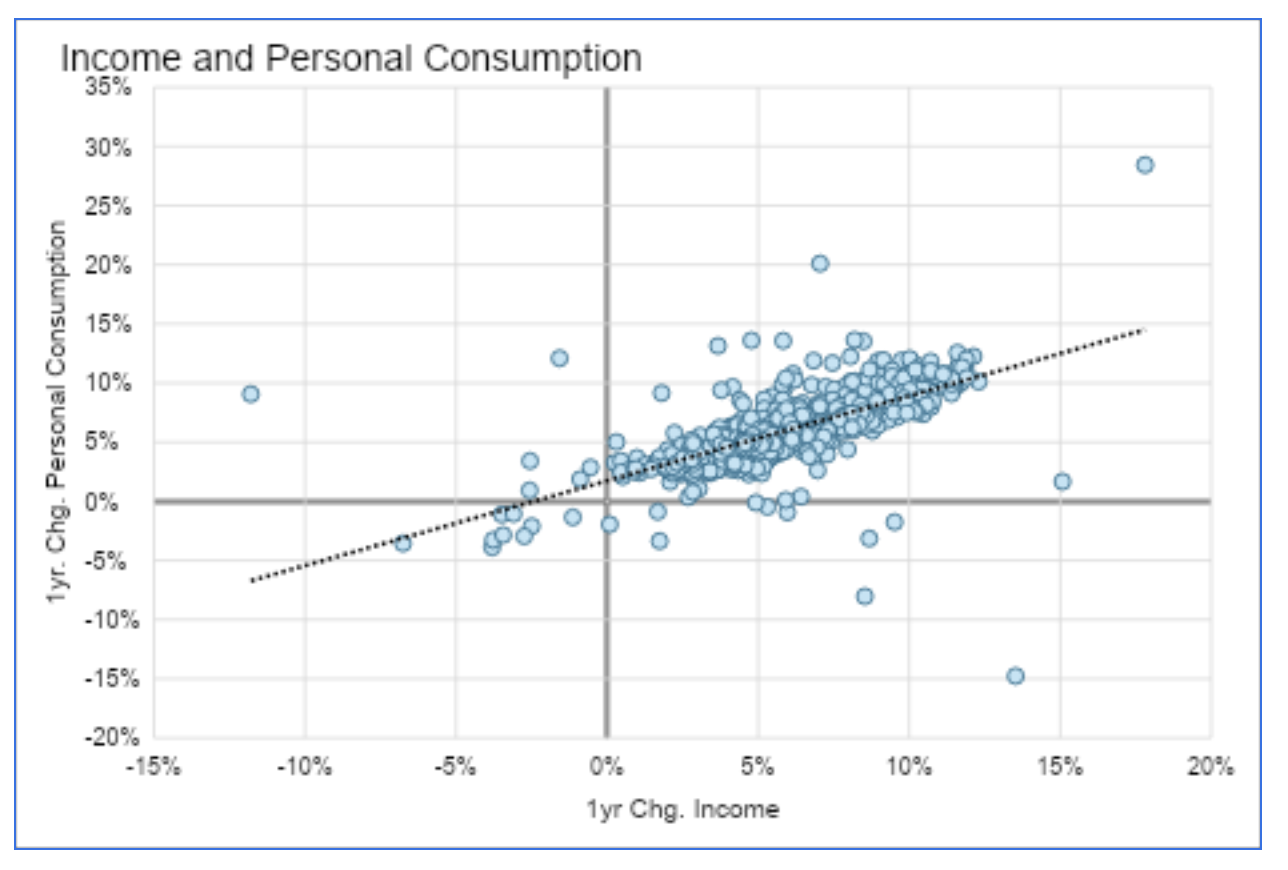
As I will share in a coming article, we estimate the MPC of changes to U.S. aggregate income is .6182. In other words, consumers will likely spend 61 cents of every additional dollar of income in aggregate. Furthermore, based on the Keynesian Multiplier formula (1 / (1-MPC), we should expect the 61 cents of consumption to result in $2.63 of GDP growth.
The graph below shows the correlation between changes in income and consumption. We derive the MPC from the slope of the trend line (0.6182).
While the benefits of tax reductions and cuts are bullish for the economy and market, we must consider the fiscal deficit. If said tax cuts increase the fiscal deficit, higher interest rates may occur, offsetting the benefits accruing from lower taxes. Further, if spending cuts are used to offset lower taxes, the net benefit of tax reductions may be reduced or eliminated.
Deregulation
Trump’s policy goals call for reducing regulatory burdens on businesses. With less red tape, corporate compliance costs should decline and, more importantly, companies will be more incentivized to enter productive investments.
Here are a few quotes from Trump on the topic of deregulation:
- February 22, 2025: “To turbocharge our economy: we have launched the most aggressive deregulation program in history and will be seeking the largest tax cuts in American history.”
- March 25, 2025: “We’re going to slash red tape like never before. Businesses are drowning in regulations, and I’m bringing back my 10-for-1 rule—cut ten old regulations for every new one. It’s going to unleash our entrepreneurs.”
- February 28, 2025: “In my first term, we cut more regulations than any president ever. This time, we’re going even harder. Energy, manufacturing, small businesses, you name it, we’re freeing them up to thrive.”
In 2018, Trump’s deregulation of specific economic sectors and industries contributed to the stock market's strength in the first half of the year. However, tariffs roiled stock market returns later that year. Unlike today, in 2018, there was a calm before the storm.
The following are examples of regulatory actions Trump took in 2018:
- Roll back Dodd-Frank provisions that freed up capital for banks to make loans and buy financial assets and reduced compliance costs.
- Relaxed EPA rules for energy companies, lowering operating costs while increasing production.
- Manufacturing and industrial companies benefited from more straightforward permitting rules and regulations, including changes to labor laws. Cost reductions and quicker production times ensued, thus raising margins for many companies.
In addition to legislation and executive acts aimed at helping specific companies or industries, a pro-business environment attracts more domestic and foreign capital, leading to economic growth.
‘Unleashing American energy’
Trump’s motto, "unleashing American energy," is a key element of his economic plan. Trump’s phrase refers to policies that maximize domestic energy production, reduce energy-related regulatory barriers, and achieve energy independence. Such policies aim to lower energy costs, which in turn boost economic growth and enhance national security.
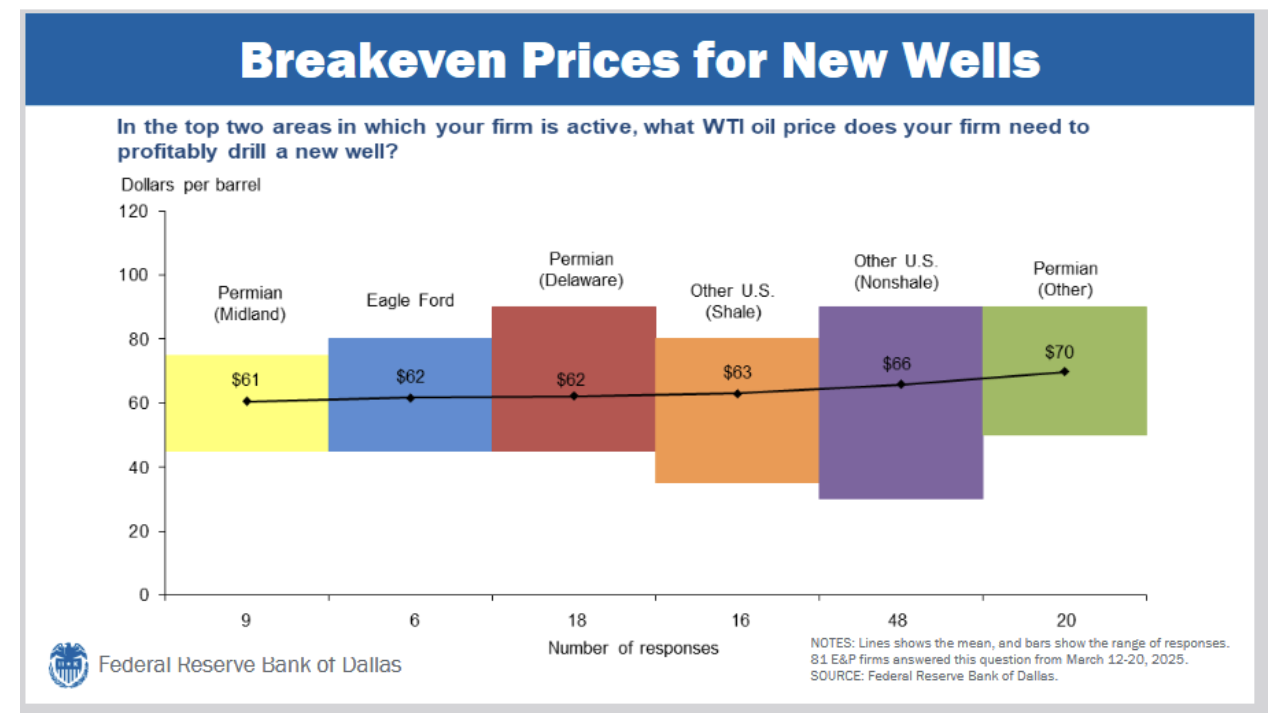
The risk to his plan is that lower energy prices may result in fewer new wells and thus less production. Accordingly, the plan may reduce energy costs today but hamper oil production, which could increase prices tomorrow.
The graph below, courtesy of the Dallas Fed, shows the range and average breakeven oil prices for the decision to drill new shale wells.
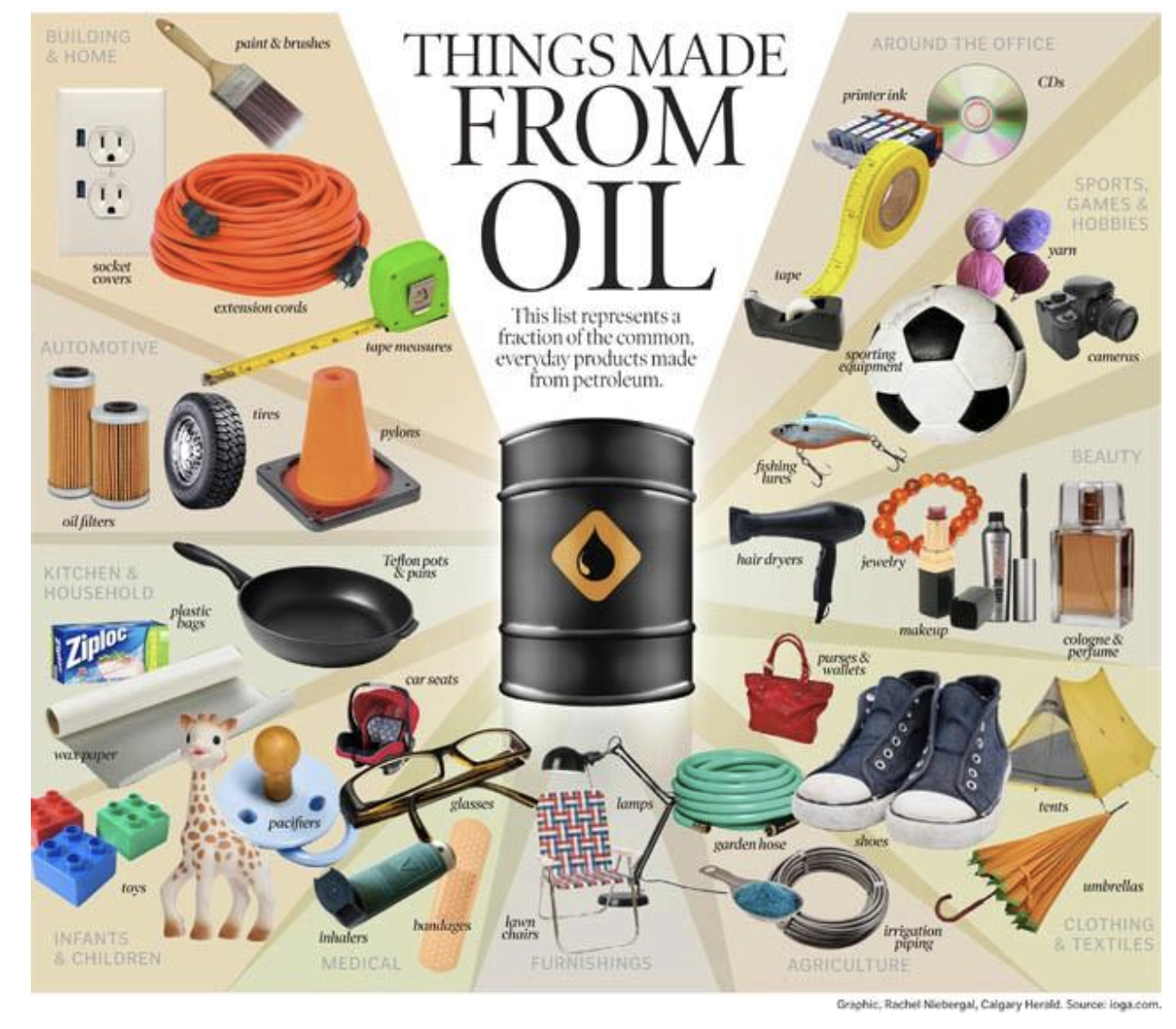
Looking past the energy industry, it’s worth considering that most companies and consumers benefit from low oil prices. To appreciate how oil prices affect the economy, consider the graphic below, which shows just a few of the many items made with oil.
‘Made in America’
Reshoreing jobs and production facilities has the potential to generate significant economic growth. The primary benefits would likely fall to infrastructure and logistics companies. However, higher labor costs and generally more regulations may make onshoreing jobs and facilities expensive, thus negatively impacting margins. The counterargument is that more jobs result in more consumption, benefiting many companies.
Summary
The tariff storm is not over. Thus, manage your risk exposure closely today, but don’t lose sight of what tomorrow may bring. We suspect that Trump will soon be more vocal about his plans to lower taxes, reduce regulations, and implement other policies that have the potential to boost the economy and stock market.
Use this time to consider which industries and companies will benefit from some of the economic policy items discussed above. Bear in mind that if the market explores recent lows or hit new lows, the rally from the ultimate bottom could be significant if Trump’s agenda items are enacted, as tariff agreements are being forged.
A plan will help you better take advantage of the market when tariff fears blind others.
Michael Lebowitz is a portfolio manager with RIA Avisors and author for Real Investment Advice. For more information, contact him at [email protected] or 301.466.1204.
Join RIA Advisors and elevate your career within a deeply experienced team focused on innovation. Our collaborative environment is built on a foundation of advanced technology and effective investment models, designed to enhance your ability to serve clients and grow your practice. Benefit from a supportive culture that encourages professional development and fosters a forward-thinking approach. By joining our team, you’ll be part of a group dedicated to excellence and continuous improvement, empowering you to focus on building meaningful client relationships and pursuing your business ambitions. Discover the advantages of working with our accomplished advisory team by starting your conversation today.
A message from Advisor Perspectives and VettaFi: To learn more about this and other topics, check out some of our webcasts.
Read more articles by Michael Lebowitz
 Advisor Perspectives welcomes guest contributions. The views presented here do not necessarily represent those of Advisor Perspectives.