Bond investors worried about rising fiscal deficits are turning to an unusual haven: emerging markets.
While long-dated bonds in developed markets have come under pressure this year as investors grow wary about government spending, emerging-market bonds in Asia have become a hot pick. Yields have tumbled, foreign funds have flowed in and recent debt auctions have enjoyed strong demand, unlike a number of prominent developed-market sales from the US to Japan.
“Many countries in the region are expected to be hit by tariffs, but we haven’t seen them rolling out fiscal stimulus and most are maintaining low budget deficit targets,” said Yifei Ding, a portfolio manager at Invesco Hong Kong Ltd., who said emerging-market bonds now offer good value.
This investment thesis underscores the stark shifts that have taken place in global markets this year. When Treasuries were roiled in April by deep anxiety over tariffs, former Treasury Secretary Lawrence Summers said US bonds had started trading like emerging-market debt. Now, investors are increasingly turning to the real thing.

Primary auction results underscore the demand. Indonesia’s early July bond sale drew the strongest interest since early 2020. Thailand’s 30-year benchmark offering on July 2 was met with the highest bid-to-cover ratio in two years. A similar super-long issuance by Malaysia in June drew bumper demand.
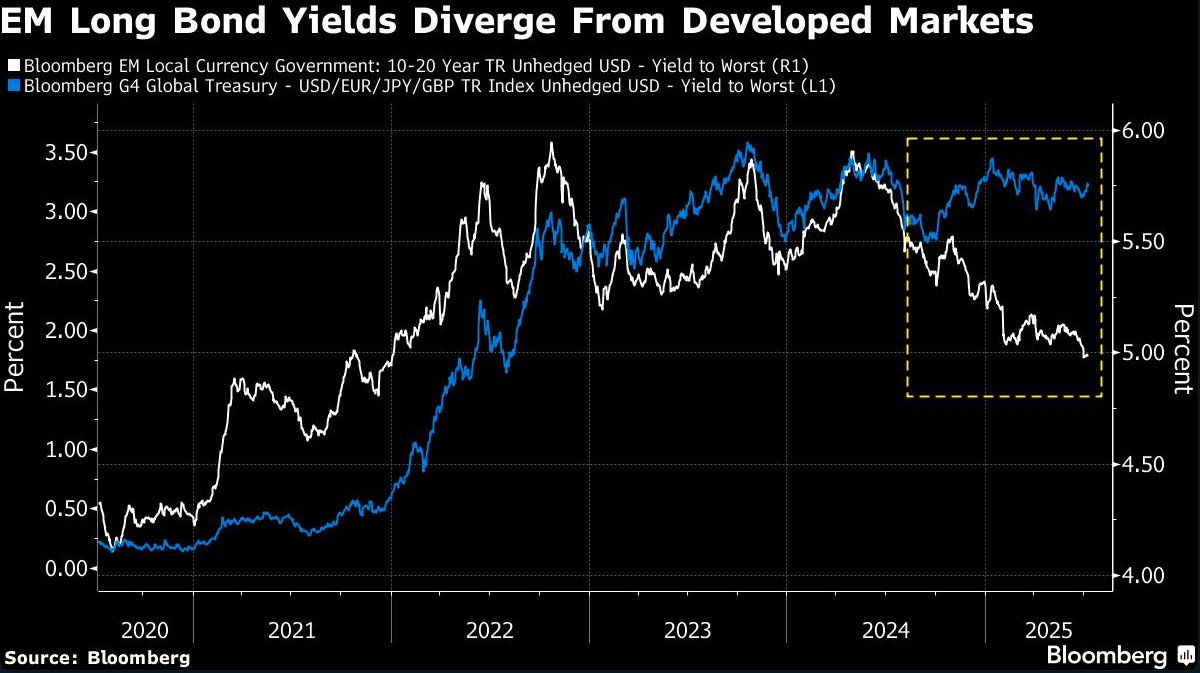
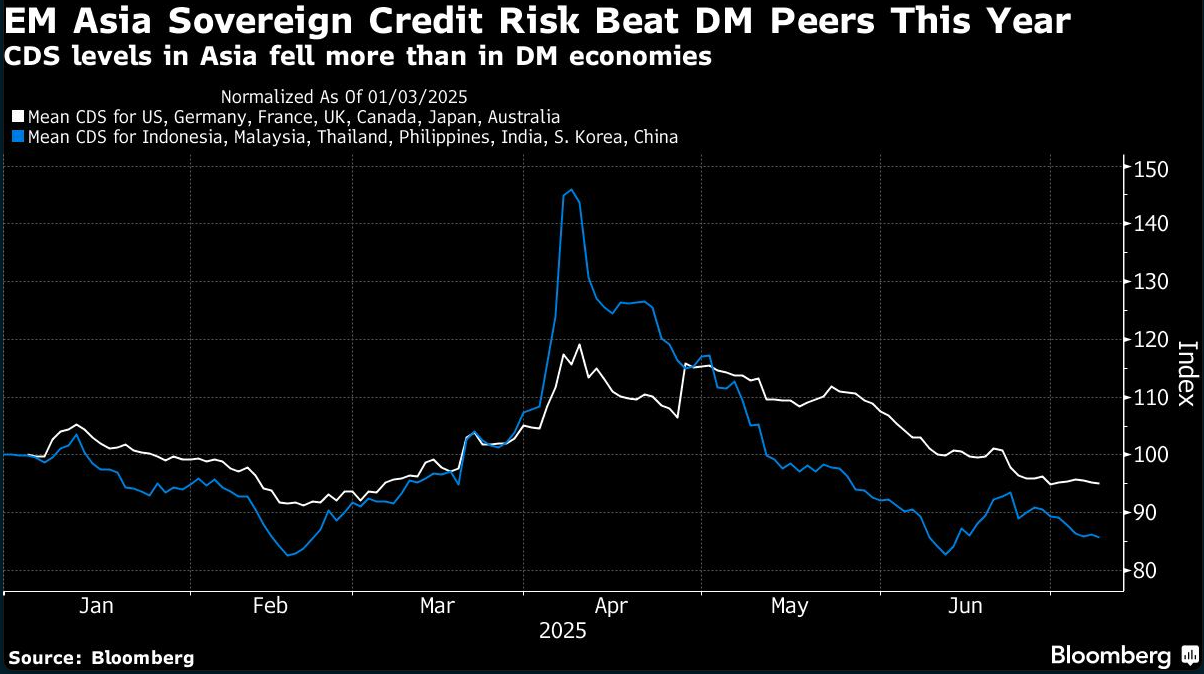
Emerging-market bond yields have declined over the past year, while those in major developed markets have pushed higher, according to Bloomberg data. Credit default swaps on emerging Asian countries — a measure of how much investors pay to insure against default — have fallen much more than those on developed countries since US President Donald Trump announced his so-called ‘Liberation Day’ tariffs in April.
Sovereign credit ratings for large Asian economies appear resilient given their strong currency reserves, limited reliance on overseas debt and healthy current account balances, wrote Goldman Sachs Group Inc. analyst Kenneth Ho in a note on July 10.
Fiscal Prudence
The differing fortunes of emerging and developed bond markets aren’t all down to fiscal policy. Emerging-market bonds still offer higher yields than those in the US and elsewhere. There is often less supply. Central banks in these countries may have a clearer read on inflation than the Federal Reserve, allowing them to get ahead of the US with rate cuts.
The dollar’s roughly 8.3% slump this year is also a big factor. Investors who expect the decline to continue will naturally look at bonds in other currencies.
But improving fiscal responsibility in emerging markets is helping tip the balance. While the US fiscal deficit rose from 3.7% in 2022 to 7.3% last year, the average deficit in emerging Asia fell slightly to 6.7%, according to the IMF.
“Many countries were unwilling to pursue deficit-driven growth policies,” said Rajeev De Mello, global macro portfolio manager at Gama Asset Management. “Monetary and fiscal prudence have also helped contain inflation and allowed emerging-market policymakers to cut rates even with the Fed holding steady.”
There are signs that fiscal consolidation is improving in some emerging economies outside of Asia, giving a glimmer of hope for investors in other developing markets. Romania recently tapped bond investors in euros and dollars after announcing an austerity plan that fueled a rally in its debt. Argentina has returned to a primary budget surplus thanks to the sweeping cuts of free-market-loving President Javier Milei.
But so far, the clear moves by bond investors are happening in Asia. Global funds collectively poured $34 billion into Thailand, Indonesia, Malaysia, India and South Korea bonds in the second quarter, according to data compiled by Bloomberg, the largest quarterly inflow in two years.
A message from Advisor Perspectives and VettaFi: To learn more about this and other topics, check out some of our webcasts.
Bloomberg News provided this article. For more articles like this please visit
bloomberg.com.
Read more articles by Marcus Wong, Bhaskar Dutta