Advanced Micro Devices Inc. shares surged after the chipmaker signed a deal with OpenAI for AI infrastructure that could generate tens of billions of dollars in new revenue.
The two signed a definitive agreement for OpenAI to deploy 6 gigawatts of AMD graphics processing units over multiple years, the companies said Monday in a statement.
AMD has also given OpenAI a warrant for as many as 160 million shares at a penny apiece, equivalent to about 10% of its outstanding stock, which will vest as milestones are achieved. Those targets require AMD’s share price to continue to increase in value and future exercise points include a tranche tied to a share price of $600. AMD shares closed Friday at $164.67.
“OpenAI actually has to do a lot of work to make sure that our deployments are successful,” AMD Chief Executive Officer Lisa Su said on a call on Monday. “We wanted to make sure that they were motivated in the sense that OpenAI would be motivated for AMD to be successful. And the more OpenAI deploys the more revenue we get, and they get to share in the upside.”
AMD shares jumped as much as 38% to a high of $226.71 in New York trading, marking their biggest intraday gain in more than nine years. Nvidia Corp. dropped as much as 2.3%.
The agreement is the latest huge data center deal for OpenAI as the artificial intelligence startup builds out more computing capacity — an unprecedented bet by the technology industry that runaway demand for power-hungry AI tools will continue unabated. In September, Nvidia said it would invest as much as $100 billion in OpenAI to build AI infrastructure and new data centers with a capacity of at least 10 gigawatts of power, equal to the peak electricity demand of New York City.
It’s unclear how exactly OpenAI will finance the enormous costs associated with the chips and data centers needed to build and run more advanced AI systems. Two months ago, OpenAI Chief Executive Officer Sam Altman said he wants to spend “trillions” on infrastructure to secure the computing resources he thinks the company needs for AI services. To bankroll that, Altman said his company is working to devise a “new kind” of financial instrument, without providing details.
Concerns over an AI bubble that could rival the dot-com craze of the late 1990s, which ended in a spectacular crash and a wave of bankruptcies, have grown as multibillion-dollar AI chip and data center deals proliferate globally. The financing is coming from venture capital, debt and, lately, some more unconventional arrangements that have raised eyebrows on Wall Street.
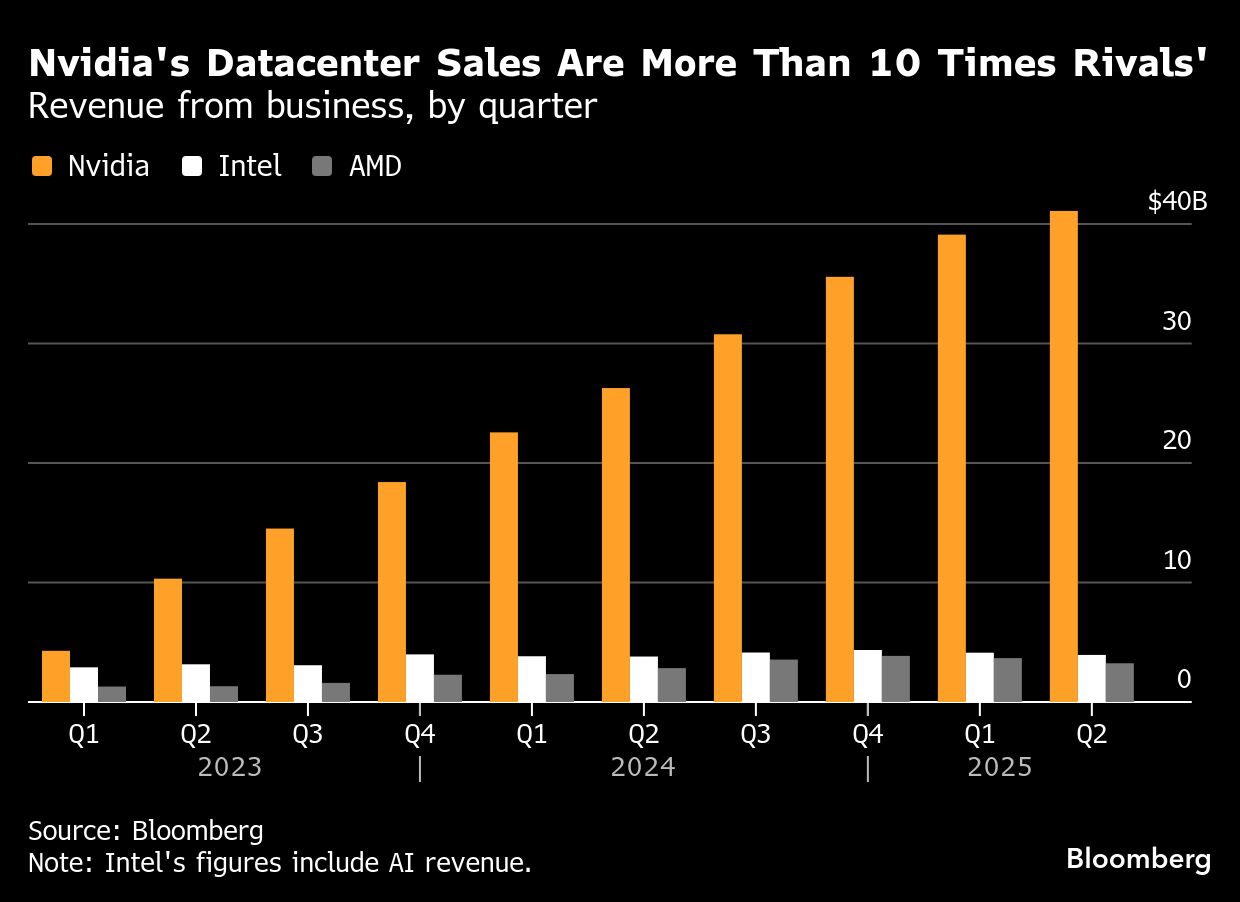
For AMD, the deal keeps its technology in the mix as OpenAI and other owners of large-scale data centers funnel billions toward expanding AI capacity. The chipmaker remains a distant second to Nvidia in the market for so-called accelerator chips. AMD, whose AI GPU revenue is projected to reach $6.55 billion this year, sees the tie up with OpenAI as lucrative beginning next year and accelerating in 2027. It’s also going to provide a springboard to greater adoption of its technology that could take its revenue from the area to above $100 billion, executives said, without specifying a time frame.

In a statement about the new deal, Su said that AMD was “thrilled to partner with OpenAI to deliver AI compute at massive scale.” Altman called the partnership “a major step in building the compute capacity needed to realize AI’s full potential,” adding that AMD’s “leadership in high-performance chips” would help OpenAI bring its technology to more people faster.
For the startup, the commitment to AMD may help foster a more robust alternative to the ubiquity of Nvidia’s technology. OpenAI and data center operators spend a huge portion of their infrastructure budgets on technology from Nvidia. Its data center division alone has more revenue than any other chipmaker has in total. In its latest financial year, the unit more than doubled to $115 billion in sales and is on course to show similar growth in the current period.
AMD’s gains in computer processors against Intel Corp., and its smaller but still successful foray into AI-specific chips, has found favor with investors and boosted its market value to all-time highs, giving its leadership the latitude to use its newfound financial strength to boost its growth prospects.
“Our partnership with OpenAI is expected to deliver tens of billions of dollars in revenue for AMD while accelerating OpenAI’s AI infrastructure buildout,” AMD Chief Financial Officer Jean Hu said in a statement. “This agreement creates significant strategic alignment,” she said, adding that it would boost AMD’s earnings per share.
Nonetheless, the arrangement will pull AMD into a growing tech industry debate over how a huge wave of AI infrastructure expenses will be recouped, and whether the current rate of expansion is sustainable.
AMD and OpenAI said the first tranche of warrants will vest when the first gigawatt of computing is deployed, a build which will start in the second half of next year. Those computers will be based on AMD Instinct MI450 chips. Additional portions will vest as further hardware is put in place.
Nvidia, the world’s largest publicly traded company, pioneered the market for graphics processors, a type of chip that’s become the basis of processors used to train and run AI software. The company has cemented the industry’s reliance on its technology with additional software, computing and networking technology it says make it easy to quickly deploy large amounts of data center infrastructure. AMD is rapidly adding capabilities as it aims to match Nvidia’s breadth of offerings and help it play a broader role.
A message from Advisor Perspectives and VettaFi: Discover something new! Click here to register for our upcoming webcasts.
Bloomberg News provided this article. For more articles like this please visit
bloomberg.com.
Read more articles by Ian King