S&P 500’s Torrid Rally Seen Having ‘More Fuel Left’ From AI, Fed
The rip-roaring rebound in US stocks from the brink of a bear market six months ago will go down in history for its speed and resilience. And bulls expecting the good times to continue have history on their side.
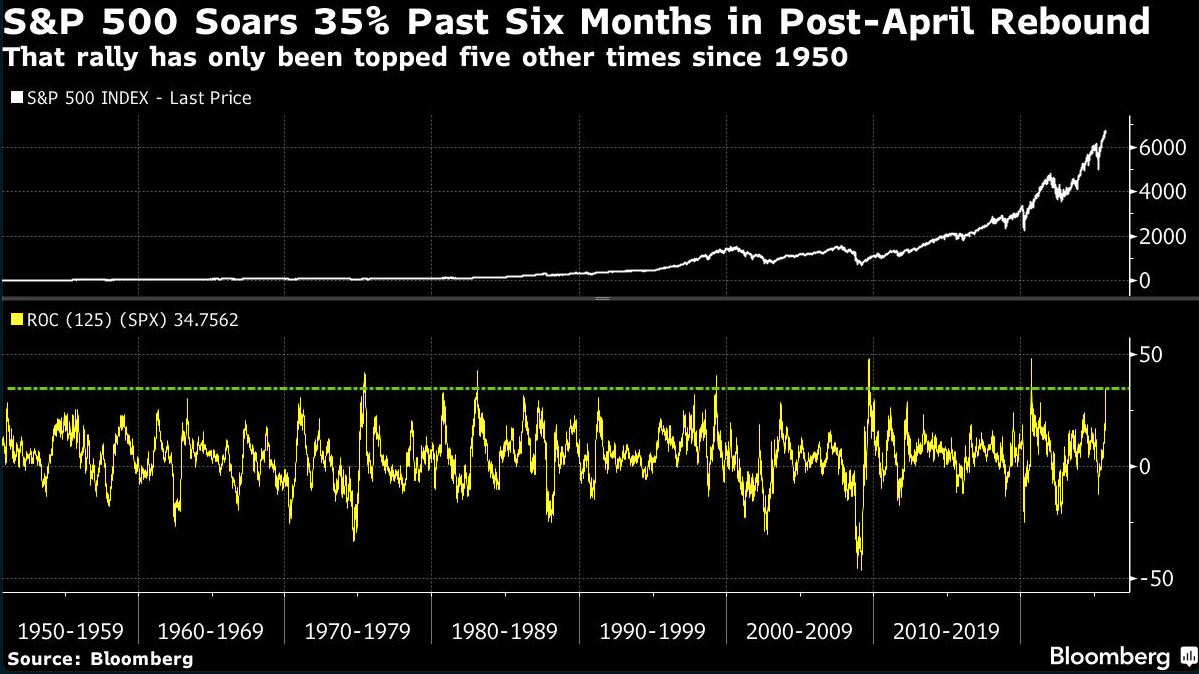
The S&P 500 Index has advanced 35% since its April 8 trough, when fears that US President Donald Trump’s trade war will push the economy into recession sent markets into a tailspin. A six-month advance of this magnitude was seen in just five other instances since 1950, data compiled by Bloomberg show.
The rally has defied skeptics, with easing trade tensions, signs of corporate resilience and insatiable demand all things AI pushing stocks into 32 all-time highs this year. And more gains could be in store: When US stocks hit a record in September in the past, they proceeded to rally in the fourth quarter, gaining 4.8% on average during that time, according to the Stock Trader’s Almanac’s data going back to 1950.
“Are we in a bubble? No. The stock market still has more fuel left in the tank,” said Nick Giacoumakis, president of NEIRG Wealth Management, who said he wouldn’t be surprised to see the S&P 500 pull back 5% to 7% in the coming weeks or months before a year-end rally. “It’s such a strong market that I’ll be buying any dips from here.”
While the S&P 500’s push to fresh records made equity valuations appear swollen, signs of anxiety are hard to find. The Cboe VIX Index is hovering near 17, below its long-term average, while the 500-member gauge hasn’t clocked a 1% move in either direction in 31 sessions — the longest stretch since 2020.
Optimism over Federal Reserve interest-rate cuts has helped power the rally, with investors largely offsetting signs of economic cooling and a slowing labor market.
But while such a strong six-month S&P 500 rally has historically boded well for the rest of the year, some worry about wild cards on the horizon. The US government shutdown, which began on Oct. 1, is one of them. Uncertainty about the path of rate cuts is another. Then, there’s uncertainty about the impact of Trump’s tariff war on the economy.
Trump said this week that 25% duties on medium- and heavy-duty trucks would begin Nov. 1, the latest expansion of his tariff regime aimed at protecting domestic industries. That comes just as the effects of the first tariff wave are expected to show up in earnings. JPMorgan Chase & Co. will kick off the reporting season Oct. 14, and expectations for profit growth are high.