The government shutdown is already beginning to impact air travel. Alarm bells are ringing about the air traffic controllers who are not being paid yet are expected to continue working. While members of Congress bicker, the snarls at airports and potential safety issues are coming like a downhill train that’s lost its brakes.
This shutdown raises questions — again — about whether the Air Traffic Organization should be run by the Federal Aviation Administration, which makes the system work but always seems to be on the edge of disaster with antiquated technology and overworked controllers. The shoddy management can be blamed in part on how the agency is funded. But the biggest single reason is that government in general is terrible at running business operations.
On the funding, a wheel must squeak loudly to get Congress’ attention. The Air Traffic Organization’s success at keeping flyers safe makes this agency as quiet as a well-greased axle. Lately, there has been more noise to hire air traffic controllers and to update systems after a scary radar failure at Newark Liberty International Airport and the tragic collision of a regional airliner with a military helicopter at Ronald Reagan Washington National Airport.
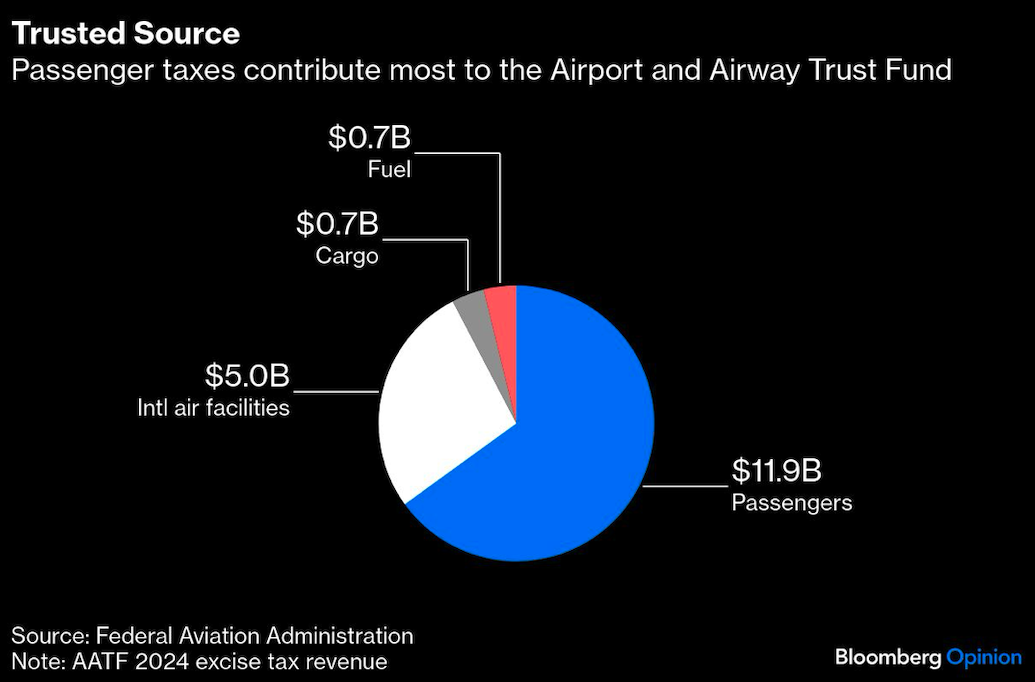
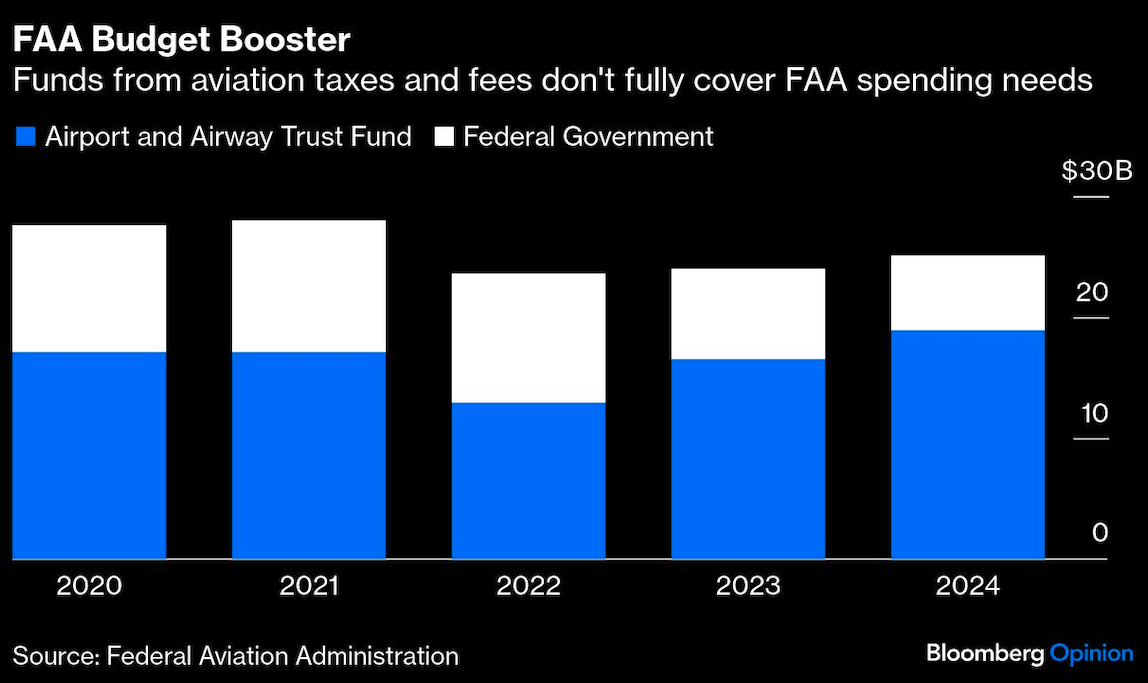
These investments require dollars that exceed the tax collection from passengers, cargo and fuel under the Airport and Airway Trust Fund, which Congress created in the 1970s to provide a steady source of revenue. From 2012 to 2016, the trust covered 71% to 93% of aviation-related appropriations, according to the Congressional Research Service. The deficit was more acute during the pandemic, when commercial flying collapsed and the government stepped in with support.

Transportation Secretary Sean Duffy announced in May a push to hire more controllers and replace antiquated technology. That effort comes after the two-decade NextGen plan that spent billions of dollars to upgrade systems. Throwing more money at a broken system isn’t going to fix it. The FAA’s cumbersome procurement process and the paralyzing aversion to any risk will impede substantial progress no matter the increased spending. These are the outcomes of government’s attempt to run a business.
While the FAA answers to the Department of Transportation and Congress, the agency doesn’t really need to heed complaints from airports, airlines, general aviation and passengers that it serves. The system works, but it’s creaky and strained. There have been periods of stress where airlines have had the temerity to speak up. Such criticism against an all-powerful regulator is akin to poking a sleeping bear.
It’s time to consider an overhaul to place these aviation operations either in a truly self-funding, not-for-profit entity or a highly regulated private company, similar to a utility. Full privatization runs into problems because the service isn’t optional and there is no competition, which is the magic behind capitalism’s unmatched ability to create wealth and efficiency.
Nav Canada is a blueprint to consider. In 1996, Canada bundled air traffic functions into a not-for-profit company whose board of directors is composed of representatives from the different stakeholders, including airlines, airports and workers. The company earns revenue from service charges that can fluctuate based on the ability to cover costs and sells bonds to fund investments in technology and personnel. For large infrastructure projects, such as runway or airport terminal upgrades, the government also provides grant money.
An FAA reorganization doesn’t have to follow the Canadian model. Our northern neighbor has much less traffic and doesn’t have as many small, regional airports, which are crucial for the US’ robust general aviation market. The FAA should continue to be the regulator for everything that flies, including its crucial mission of certifying pilots and new aircraft, but shouldn’t operate the airspace as well.
Any overhaul must include the airlines and other airport users. They provide incentives to keep costs in check and to invest in technology that increases safety and efficiency. An advantage of a private company is the ability to raise capital for investment and deploy it effectively toward a long-term goal. Agility at air traffic control is imperative now more than ever as drones and pilotless rotorcraft will be taking to the skies over the next decade or two.
If employees are unionized, they would fall under the Railway Labor Act, which allows the president and Congress to intervene to avoid a strike. An outcome of a reorganization should be to treat the air traffic controllers and support staff better on both pay and working conditions. This would reduce the burnout and help attract more recruits.
Right now, Congress controls how the FAA spends money on air traffic control and its myriad other functions under reauthorization bills every five years, which is when the extra funding is approved to make up for the trust’s revenue shortfalls. It’s a cumbersome process that isn’t conducive to comprehensive long-term planning. The agency tends to roll out technology to the busiest airports piecemeal, which has resulted in a patchwork of old and new technologies. These old systems, some of which still use floppy disks, are expensive to maintain because parts are no longer available and younger employees haven’t seen such equipment outside of museums.
Given that funding needs aren’t covered by the trust fund’s taxes, a fully self-funded air traffic organization would most likely require an increase in those charges. The extra funds the government provides amounts to subsidies for air travel, a mode of transportation whose users skew toward the wealthier side.
If air traffic control were handled by a not-for-profit private company, oversight from the FAA would be more intense than it is now as an in-house operation. Decision-making and the procurement process would be much nimbler. Air traffic controllers would be paid even during a government shutdown. Air travelers would also have the peace of mind that their safety isn’t in the hands of Congress.
A message from Advisor Perspectives and VettaFi: Interested in learning more about how bond ETFs can help diversify your portfolio? Click here to read more.
Bloomberg News provided this article. For more articles like this please visit
bloomberg.com.
Read more articles by Thomas Black