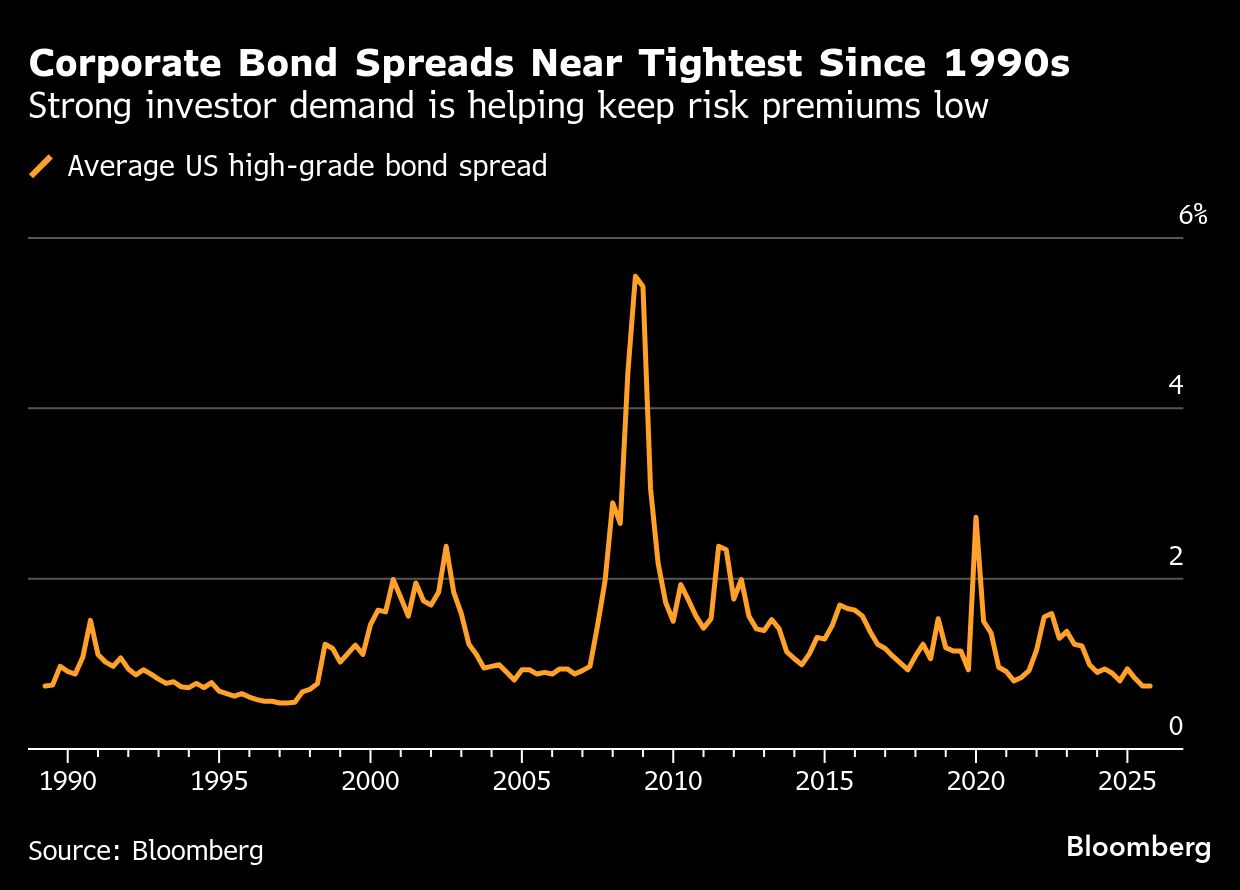
Meta Platforms Inc. found record-shattering demand for its bond sale on Thursday even as its shares plunged, in a sign that bond investors are looking past any concerns about its artificial-intelligence spending plans.
The company sold $30 billion of bonds, the largest high-grade US note sale since 2023, drawing the most ever orders at $125 billion. That came on a day where Meta’s shares dropped as much as 14%, after it had posted quarterly earnings late Wednesday, and stock investors recoiled at how much the company planned to spend on AI.
Chief Executive Officer Mark Zuckerberg has said that Meta will spend hundreds of billions of dollars over the next decade on data centers and other AI infrastructure to try to achieve human-level AI capabilities and integrate them into its products, including Facebook and Instagram. On Wednesday, Meta said its capital expenditure this year would be as much as $72 billion, a figure that will grow even faster next year.
At least part of that spending will be fueled by borrowing. And for now, US corporate bond investors are eager to lend to Meta.
Their demand is partly because investors have been pouring money into short- and intermediate-term high-grade bond funds for 25 consecutive weeks, looking to lock in yields before they fall further. It’s the longest inflow streak in four years, according to LSEG Lipper. Meanwhile, most corporate bond sales this year have been refinancing existing debt, rather than new net borrowing.
That’s left investors clamoring for new bonds, according to Robert Cohen, head of global developed credit at DoubleLine Capital.
The timing for the AI debt binge is “perfect” said Cohen. “The capital markets would be happy to finance these deals as long as they’re structured property.”
The stock and bond markets may have reacted differently because they are looking at different parts of the company’s earnings report. Shares of Meta dropped in part because the company said in its earnings report that it took a one-time, non-cash charge of about $15.9 billion in the third quarter tied to tax cuts in the US. The hit is not enough to disrupt its creditworthiness, according to Steve Sosnick, chief strategist at Interactive Brokers.
But the company’s cash flow from operating activities was $30 billion for the quarter. For bond investors, who worry more about whether they will get paid back in full and on schedule, Meta’s Thursday offering is “quite appealing,” he said.
“The company continues to demonstrate that they possess the earnings power to generate the cash flows sufficient to meet the bond investors’ primary objective about getting paid back as expected,” said Sosnick.
Meta is also facing doubts from equity investors about whether AI can supercharge its advertising business at a level that would justify its plans to spend meaningfully more on data centers and chips next year. But earnings reports from competitors Alphabet Inc. and Microsoft Corp. left no doubt that demand for data centers overall hasn’t yet been met; Microsoft’s backlog for commercial customers, which includes some non-cloud expenditures, was $392 billion. Google’s was $155 billion, almost double where it stood just 18 months ago.
Winners and Losers
Tech companies have been borrowing heavily to fund their AI needs — about $157 billion in US public bond markets as of late September, according to data compiled by Bloomberg. And more debt is coming, with big tech companies expected to spend about $3 trillion on infrastructure like data centers between now and the end of 2028, according to Morgan Stanley.
“The magnitude of the numbers and the way the numbers are kind of going parabolic, you have to take a step back and think about things a little differently,” said Thomas Murphy, a portfolio manager at Columbia Threadneedle Investment.
Oracle Corp. sold $18 billion of investment-grade bonds last month, and banks this week kicked off a $38 billion debt offering that will help fund data centers tied to the company. The company saw its cash flow flip negative this year for the first time since 1992 and analysts anticipate the metric will be in free fall over the coming years before returning to positive in 2029. Debt investors have been buying protection against the company defaulting on its debt, a trend that Morgan Stanley sees continuing in the near term.
DoubleLine’s Cohen has been buying the new AI debt but in small amounts and prefers transactions that are backed by a high grade issuer. He’s keen on deals that come with a guarantee of some sort, including lease payments and he’s been conservative on junk AI deals because it’s uncertain how much capacity is needed in the next few years.
“The devil’s in the details,” said Cohen. “There’ll be good projects and bad ones and we are being very careful about that because we know that not every product’s going to work.”
A message from Advisor Perspectives and VettaFi: Discover something new! Click here to register for our upcoming webcasts.
Bloomberg News provided this article. For more articles like this please visit
bloomberg.com.