Michael Saylor Boosts Yield, Says Strategy Is at an ‘Inflection Point’
Michael Saylor is raising the stakes for almost everyone that is touched by his multibillion dollar bet on Bitcoin.
The head of the digital asset treasury firm Strategy Inc. is boosting the yield on the preferred shares that he’s designated as the company’s primary source of funding going forward to help shore up faltering demand and keep the gambit going.
“We are kind of in an inflection point we believe, our multiple of net asset value has been trending down over time as the Bitcoin asset class matures and the volatility decreases,” Saylor, the co-founder and chairman of the company formally called MicroStrategy, said during an earnings conference call Thursday.
While releasing third-quarter results, Strategy announced that the yield on its Variable Rate Series A Perpetual Stretch Preferred Stock, or STRC, will increase by 25 basis points to 10.5% in November. The company registered net income of $2.8 billion during the quarter after taking an unrealized gain tied to the rising value of its roughly $70 billion cryptocurrency stockpile.
Even though Bitcoin reached a record high during the third quarter and dozens of public firms copied the treasury company model Saylor pioneered five years ago, investors have begun to question the tactic. Shares of Strategy have tumbled around 45% since the stock closed at a record high last November, erasing much of the premium the shares long enjoyed over its Bitcoin holdings for the past few years.
At the same time, the preferred shares have drawn tepid demand. Recent sales have fallen well short of Saylor’s ambition for blockbuster capital raising, prompting a slowdown in the pace of Bitcoin purchases in recent weeks.
Strategy is also looking to international markets to raise capital and considering launching exchange-traded funds underpinned by the preferred shares, Chief Executive Officer Phong Le said during the call. Strategy has around $689 million annually in interest and dividend expenses.
“The incremental interest expense implied by the higher yield [on STRC] would be very modest compared to the positive impact of the capital that the company could raise through STRC and the Bitcoins it could acquire with it,” said Mark Palmer, an equity research analyst at Benchmark Equity Research, who has a “buy” rating on Strategy.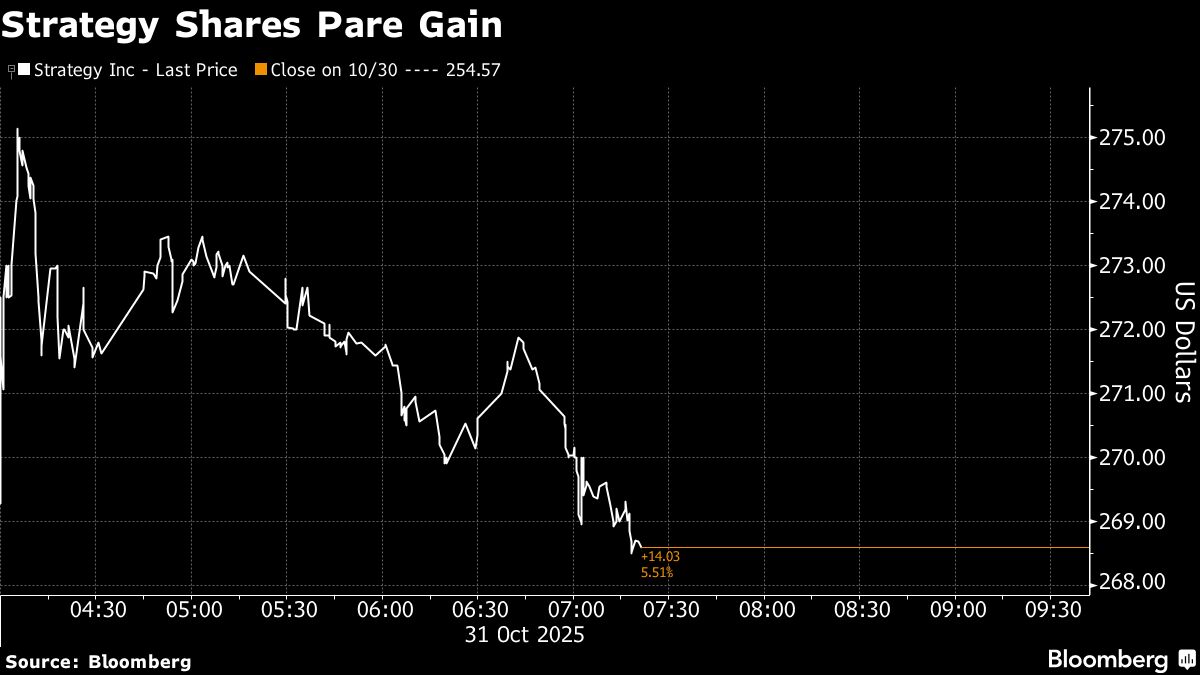
The company was a modest enterprise software firm until 2020, when Saylor jolted Wall Street by shifting money into Bitcoin. The stock ceased trading on earnings potential and began trading on a multiple of its underlying Bitcoin holdings — known as mNAV. After trading at more then two times that multiple at times, the mNAV has shrunk to around 1.3.












