Bitcoin options are showing that traders are betting that the largest cryptocurrency will remain mired in its current trading range in the wake of the fourth-quarter downturn that has cut more than $1 trillion in value from the digital asset market.
The largest digital token by market value slumped as much as 4.4% to $88,135 on Friday, dropping below the median of the roughly $100,000 to $80,000 range it has been trading in for the past three weeks. Bitcoin accounts for almost 60% of the entire crypto market’s total value.
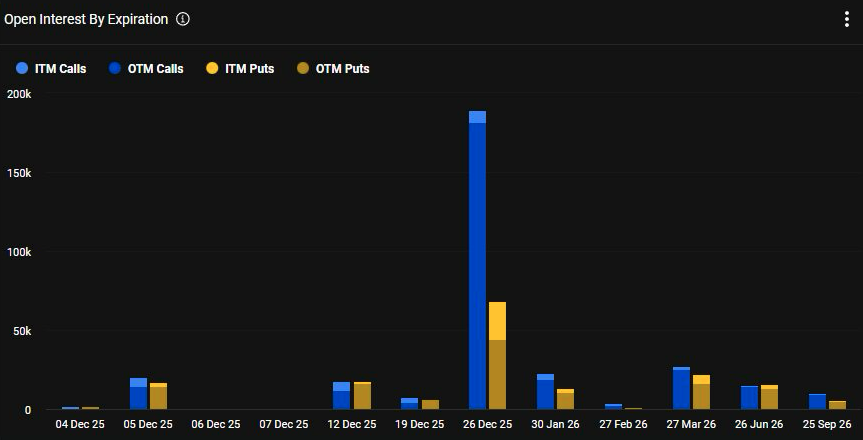
Open interest for options expiring in late December has far exceeded longer-dated contracts due in part to traders selling contracts to earn premium on the expectation of low volatility in the near term, data from Coinbase’s Deribit show.
“Bitcoin options show a clear preference for near-term range trading, with volatility being sold and both wings faded,” Jasper De Maere, desk strategist at Wintermute, wrote in a note Friday. “At the same time, longer-dated optionality is still being added, indicating expectations of stability now but room for larger moves later.”

Earlier this year, Bitcoin notched a record high above $126,000. But the two-month rout, triggered by billions of dollars in forced liquidations and a collapse in retail momentum, has sparked the industry-wide downturn.
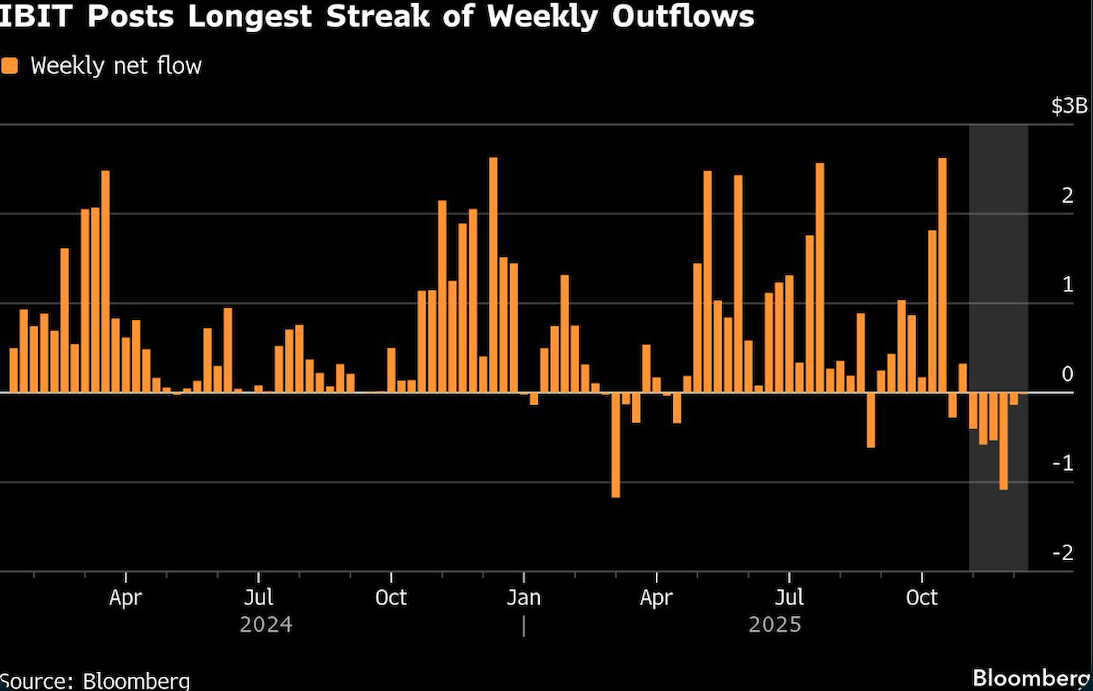
BlackRock Inc.’s iShares Bitcoin Trust has recorded its longest streak of weekly withdrawals since debuting in January 2024, another sign that institutional appetite remains subdued even as prices stabilize in a range. Investors yanked more than $2.7 billion from the exchange-traded fund over the five weeks to Nov. 28, according to data compiled by Bloomberg. With an additional $113 million of redemptions on Thursday, the ETF is now on pace for a sixth straight week of net outflows.
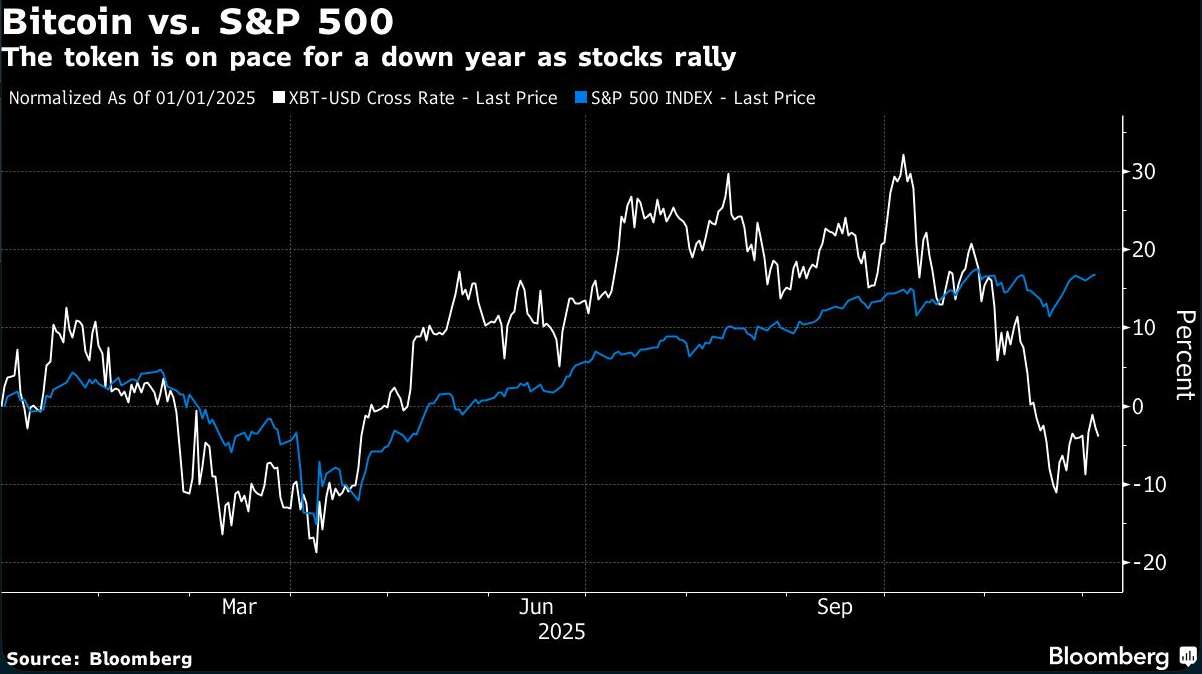
The selloff has Bitcoin trailing the returns of the S&P 500 on an annual basis for the first time in more than a decade. The digital asset has rarely deviated so cleanly from other risk assets even during past crypto winters. The dislocation defies expectations that cryptocurrencies would thrive under President Donald Trump’s return to the White House amid favorable regulation and a wave of institutional adoption.
The boom-and-bust nature of digital assets over the years has generated a whole unique set of terminology to describe the twist and turns, such as crypto winter for deep market downturns. The last major crypto winter occurred from late 2021 to well into 2023, when the priced of Bitcoin tumbled more than 70% from its peak to lowest point.
Bitcoin and stocks have historically moved in tandem — a relationship that was especially prominent during the pandemic, when a low-interest-rate environment fueled rallies in stocks, cryptocurrencies and various speculative investments.
Perpetual futures contracts for Bitcoin, which account for the largest volume in crypto trading, are seeing a bearish tilt with funding rate flipping negative, meaning bearish investors are paying bullish bettors to stay in their short positions, according to data from Coinglass.
Altcoins are under similar pressure. Ether options traders remain defensive with consistent interest in downside protection and only selective upside engagement.
The recent decline in altcoin trading volumes across decentralized finance platforms such as Hyperliquid is also pointing to a sluggish recovery for those tokens since the historic liquidations on October 10 with around $19 billion wiped out in digital assets. Open interest for smaller tokens’ future contracts such as Solana and XRP has not seen a significant recovery since the early October collapse, Coinglass data show.
A message from Advisor Perspectives and VettaFi: Discover something new! Click here to register for our upcoming webcasts.
Bloomberg News provided this article. For more articles like this please visit
bloomberg.com.
Read more articles by David Pan