 Advisor Perspectives welcomes guest contributions. The views presented here do not necessarily represent those of Advisor Perspectives.
December is the critical moment when financial decisions and festive giving collide, and every conversation counts. Across our network of 20,000 financial advisors, we’re setting meetings, fielding calls and executing last-minute plans to optimize tax advantages before new tax laws take effect next year.
It's important to remember that speed doesn’t replace strategy. Every deadline-driven decision is an opportunity to go deeper, to uncover what generosity means to the client and how it fits into their family’s long-term vision and path to financial fulfillment.
The Tax Landscape
Starting January 1, 2026, two big tax shifts will reshape charitable planning, especially for affluent clients. These make it imperative to contact impacted clients now:
-
Itemized deductions will be reduced. The tax benefit of itemized deductions, including charitable gifts, will cap at 35% of adjusted gross income (AGI) for those in the 37% marginal tax bracket. That 2% gap creates a meaningful drop in tax benefit.
-
A new floor for itemizers. Only charitable contributions above 0.5% of AGI will be deductible. For a client with $500,000 AGI, for example, the first $2,500 of giving won’t be deductible.
Those affected may want to consider accelerating charitable contributions in 2025 to take advantage of current tax rules. In 2026 and beyond, we'll look for strategies that help lower taxable income or reduce the impact of these changes so that donors can continue supporting the charities they care about most:
-
Age 70½+ with RMDs? QCDs from IRAs satisfy required minimum distributions (RMDs), reduce AGI and allow you to receive a tax benefit for the full amount.
-
Able to bunch? Clients can reduce the impact of the floor by "bunching" multiple years' worth of charitable donations in one year. A DAF can help them distribute "bunched" contributions over time.
-
Appreciated assets? Donating appreciated assets allows clients to receive a deduction above the floor and avoid capital gains taxes. This can also help reduce concentrated positions without incurring taxes.
-
Unrealized losses? Harvesting unrealized losses in taxable accounts can help offset the impact of the floor.
In addition to these changes, other rules may shape planning into 2026 and beyond if they fit the client’s values and goals. For example, since universities now face tiered taxes on endowment gifts, our client conversations can explore alternatives that may better serve both the client and the institution, like contributing to the annual fund. With a new tax credit for gifts to certain K–12 scholarship organizations coming in 2027, we can discuss how education fits into clients' long-term goals. Each conversation opens the door to meaningful dialogue about the causes that matter most to them.
Beyond Taxes: Turning Insights Into Action
Over our 103 years, we’ve learned that when we align insights with client values, we uncover opportunities we might otherwise miss. The 2023 Bank of America report on Charitable Giving by Affluent Households holds some conversation-starting insights:
-
Women outpace men in spontaneously contributing to urgent needs. Perhaps a liquid donation fund would support this tendency.
-
Younger donors, more focused on global issues than their elders, may appreciate portfolios that reflect those priorities.
-
Among $5+ million net worth households, 54% do not use or plan for a giving vehicle, leaving them ripe for educational conversations on favorable options.
-
The biggest barrier to giving is prioritizing family needs. This may be an opportunity to discuss balancing goals.
Generosity as a Family Skill
Recently, our team worked with a client who was getting ready to sell a business — and generate wealth that was unimaginable for the family. Among their multiple priorities were establishing philanthropic strategies and preserving their family values across generations.
We connected the family with a professional to facilitate family meetings to discuss and create a family "legacy charter" outlining their shared values, philanthropic goals and decision-making principles across generations within the family. Focusing on this step first helped remove barriers to fully supporting the family in creating a tailored plan and investment strategy that was aligned to their overarching goals and legacy.
Experiences like this reflect a growing reality: charitable giving is a cornerstone of intergenerational wealth planning. Nearly 15% of the projected $124 trillion transition through 2048 will go to charity (Cerulli Associates, 2024). As Philanthropy.org reported in April 2025, one of the top priorities among donors is intergenerational involvement. Clients want advisors who can engage families in meaningful conversations.
When we bring heirs and other family members into the dialogue, we uncover the principles that shape their charitable priorities. For the next generation, it seeds financial knowledge, a richer understanding of family values and the responsibilities that come with wealth.
The Team Matters
Clients with complex financial needs expect a coordinated, knowledgeable team for their charitable giving, from tax and legal professionals to estate planners and trust specialists.
For our clients with $10 million or more in investable assets, that capability comes to life through Edward Jones Generations®, a private client service offering with expanded advice, planning, products and services. Those with wealth transfer and charitable planning needs have instant access to professionals in tax, legal, estate planning, trust, banking and business valuation, trained to address the unique needs of affluent families. We’ve also built Generations hubs, physical locations to exclusively serve these clients.
Educating Clients: A Ripe Opportunity
While 91% of wealthy donors with a financial advisor have touched on at least one gifting vehicle, that number doesn’t tell the whole story, per data from the Fidelity Charitable®, 2023 Giving Report.
For example, only 30% of affluent donors with a financial advisor have discussed QCDs, and just 25% have reviewed DAFs. Missing the chance to optimize vehicles like QCDs or DAFs not only leaves tax benefits on the table, it also leaves conversations about client priorities, values and family goals unexplored. Considering that $5+ million net worth households averaged approximately $100,000 in charitable donations in 2024 (Charitable Giving by Affluent Households report), that may be a significant number of missed opportunities.
The Clock Is Ticking
Every situation is a chance to strengthen relationships and align wealth with purpose, but some carry more urgency. The coming tax changes are a prime example, requiring action before year-end. Still, urgency should never overshadow meaningful dialogue. A deadline may start the conversation, but understanding is what sustains it.
Edward Jones, its employees and financial advisors cannot provide tax or legal advice. Investors should consult with their attorney or qualified tax advisor regarding their situation.
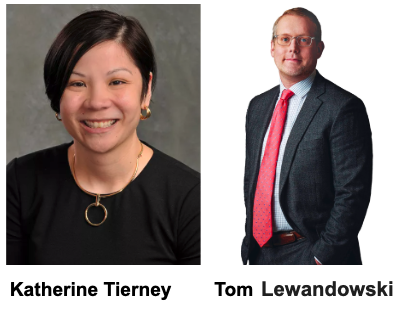
Katherine Tierney is a senior strategist with Edward Jones.
Tom Lewandowski, principal, is the leader of the High Net Worth Segment at Edward Jones.
A message from Advisor Perspectives and VettaFi: Discover something new! Click here to register for our upcoming webcasts.
Read more articles by Katherine Tierney, Tom Lewandowski
 Advisor Perspectives welcomes guest contributions. The views presented here do not necessarily represent those of Advisor Perspectives.










