According to just about every significant economic indicator, including the December jobs numbers released Friday, the US economy is doing fine. Not great, mind you: Job growth stalled in 2025. But unemployment is low, gross domestic product growth is solid, and inflation is seemingly trending downward.
Yet as consumer expectations surveys, political polls and even election results keep making clear, Americans are extremely dissatisfied with how things are going on the economic front. This seeming disconnect between perception and reality has been the subject of much analysis, with partisanship, increasing negativity in both traditional and social media and lingering anger over the inflation wave of 2021 and 2022 probably the most frequently mentioned explanations.
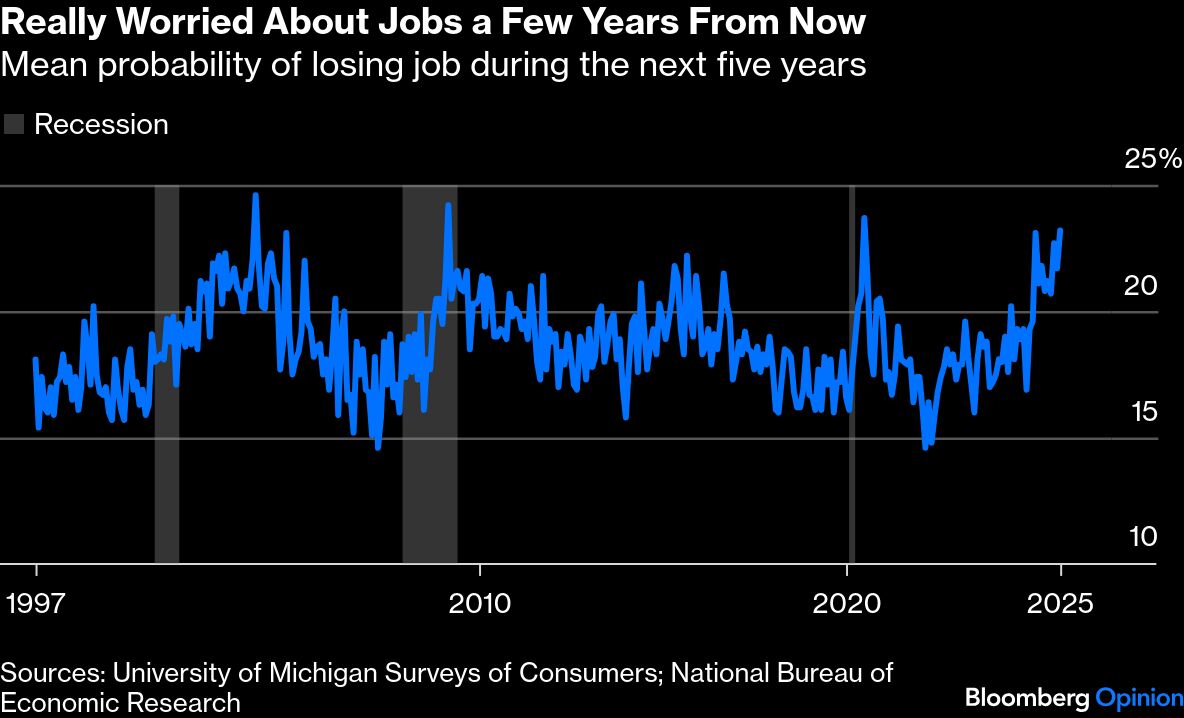
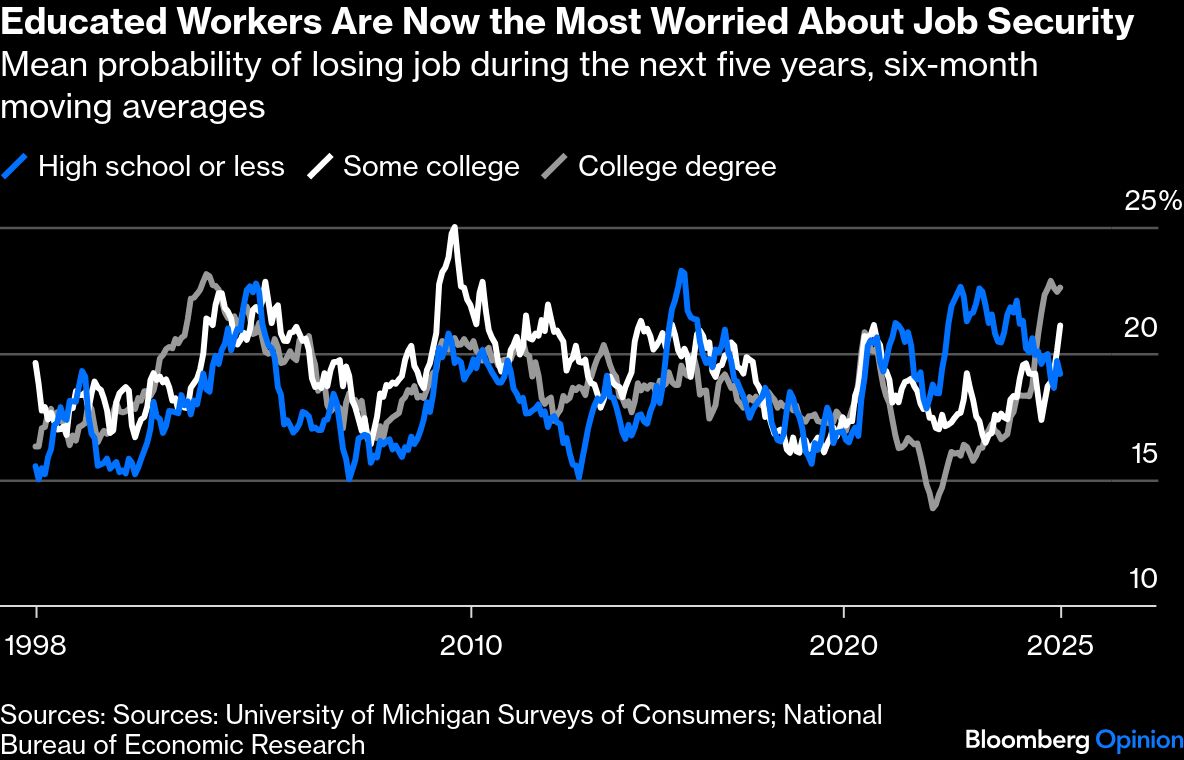
I’ve got a new one to offer, on the basis of responses people have been giving to consumer-survey questions about employment: Americans are really worried about the job market of the near future. They’re not especially worried about losing their jobs right now but are pessimistic about their prospects of finding new work if they do and are downright alarmed about the outlook for several years down the road. Concern about the impact of generative artificial intelligence seems as if it’s probably a key driver of all this, although the current strange state of the job market is clearly a factor, too.
Respondents to the Conference Board Consumer Confidence Survey, for example, are a bit more likely than they were a year ago to report that jobs are hard to get. But the 20.8% who thought so in December was still lower than at all but a few brief periods over the survey’s 59-year history. The 27.4% who thought jobs would be scarcer in six months, on the other hand, was a level seldom seen outside of recessions.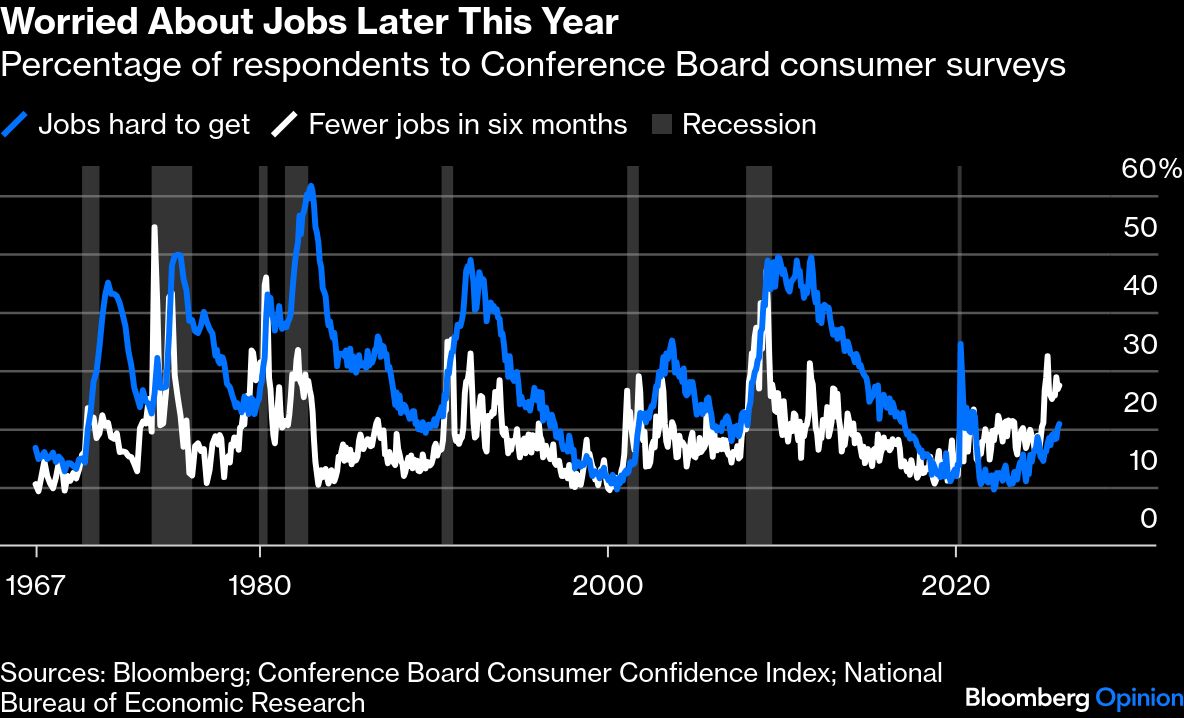
The questions are different in the Federal Reserve Bank of New York’s Survey of Consumer Expectations, but the message is similar. Respondents’ assessments of the probability that they will lose their job have been creeping upward but are still lower than before the pandemic. Their average assessment of the probability of finding another job if they lose their current one, on the other hand, is the lowest it’s been in the 12-year history of the survey.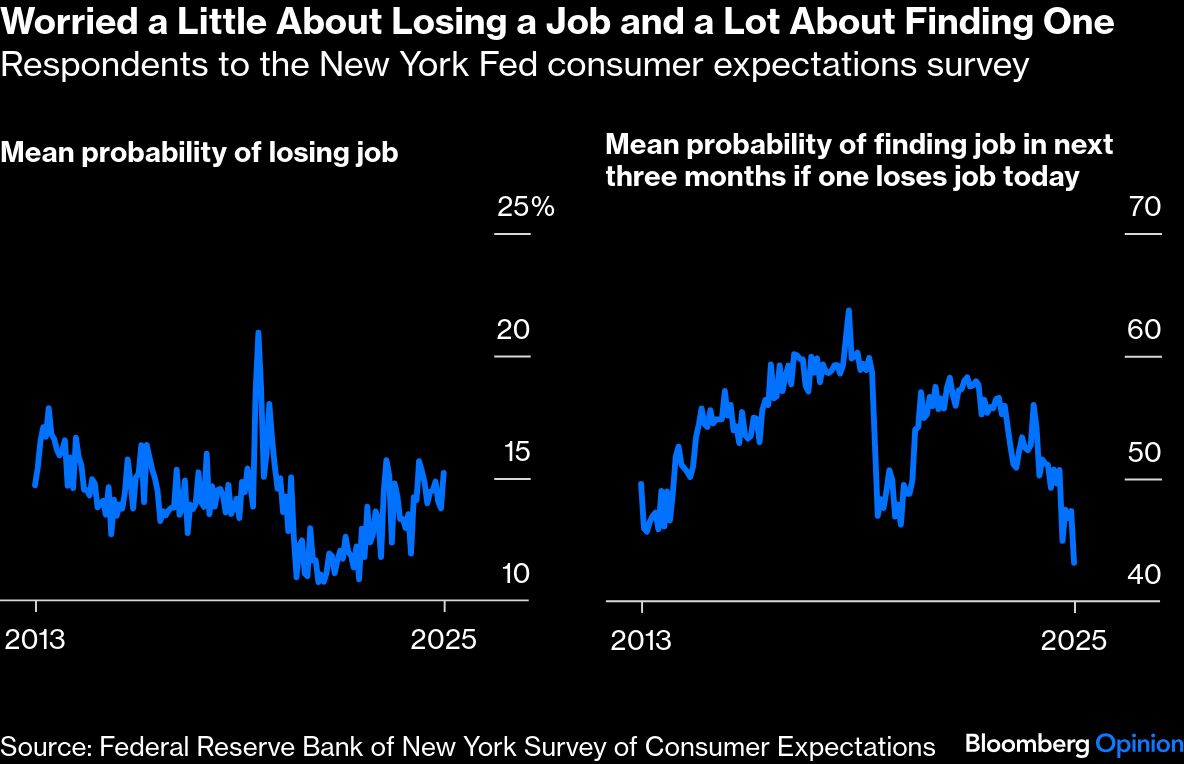
This seems to be an entirely accurate assessment of the current labor market. According to the US Bureau of Labor Statistics’ Job Openings and Labor Turnover Survey, the layoff rate remains quite low by historical standards, but the hiring rate is lower than at any time in the 25-year history of the survey except during the Great Recession and its aftermath. Random people in a consumer expectations survey are capable of quite accurately describing the world around them.