Quantum Computing: Swapping Traffic Lanes for Jetpacks
Membership required
Membership is now required to use this feature. To learn more:
View Membership Benefits Advisor Perspectives welcomes guest contributions. The views presented here do not necessarily represent those of Advisor Perspectives.
Introduction: From Cars to Jetpacks
I spend way too much of my life sitting in traffic. Each time I drop off my child at school, it takes me 25 minutes to drive exactly one mile to my office. With technological innovation developing at an exponential rate, I find myself wondering when I can have a car like George Jetson and simply fly to work!
For nearly eight decades, the global economy has been running on the same basic combustion engine — binary logic. Traditional computing, for all its marvels, is essentially two-dimensional: An endless grid of “traffic lanes” where bits move at staggering speed but always in one direction at a time. Quantum computing, by contrast, is a jetpack. It doesn’t just move faster; it moves everywhere at once.
This leap from lanes to jetpacks isn’t just an engineering upgrade—it’s a revolutionary economic event. Quantum computing could alter productivity, industrial structure, capital allocation, and even the balance of global power. The transformation won’t happen overnight, but investors who wait for proof may find they have waited too long.
Quantum 101: What It Is and Why It Matters
In classical computing, information is stored in bits — tiny electrical switches that are either on or off. Quantum bits, or qubits, operate under the strange laws of quantum mechanics: Superposition (a qubit can be both 0 and 1 simultaneously) and entanglement (changes in one qubit can instantly affect another, even across distance).
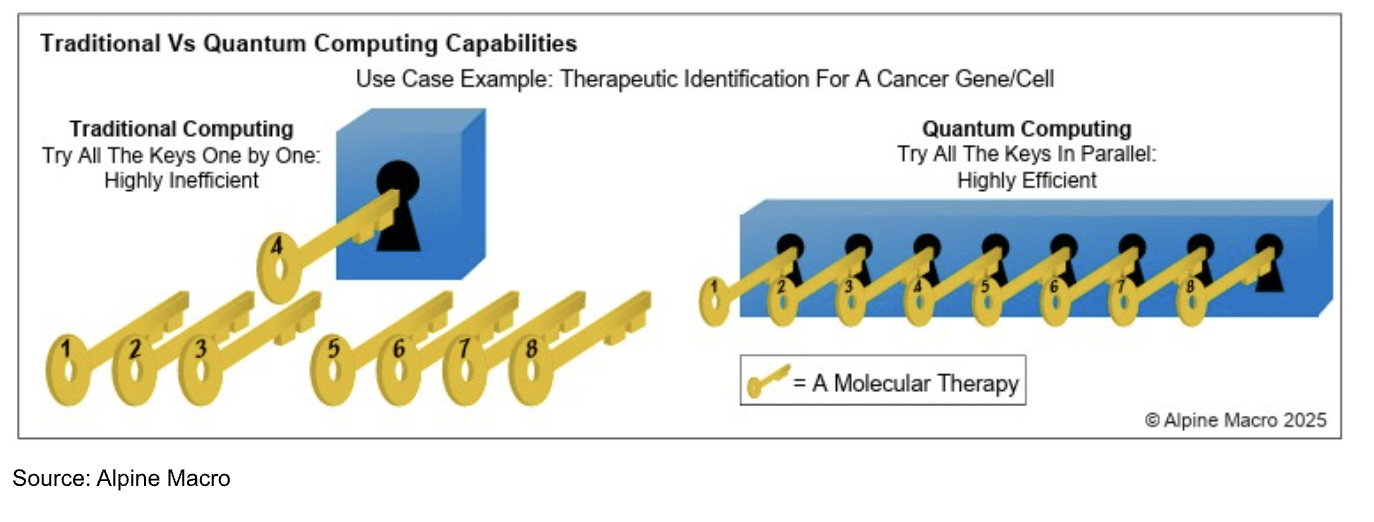
The result: Quantum computers can process complex problems exponentially faster. Instead of testing every route on a two-lane highway, a quantum system explores all routes simultaneously. This makes it ideally suited for optimization, cryptography, material science, and complex financial modeling.
For the global economy, this is like replacing a global fleet of delivery trucks with teleportation pads. Logistical friction collapses, speed soars, and the boundaries of what’s possible shift almost absurdly outward.
Nick Ramos, chief innovation strategist for Alpine Macro, emphasizes the importance of quantum software: “Quantum software advancements are now receiving significant attention and may help ease the computational strain of tackling quantum challenges that previously required a purely hardware-centric approach.”
Current Development: Near-Term Milestones, Long-Term Potential
Quantum computing has moved past the stage of laboratory theory into early-stage commercial experimentation. According to Alpine Macro’s analysis, 2024–2030 will mark the “dawn of quantum utility” — the phase when error-corrected qubits become stable enough to deliver real-world advantages in select use cases.
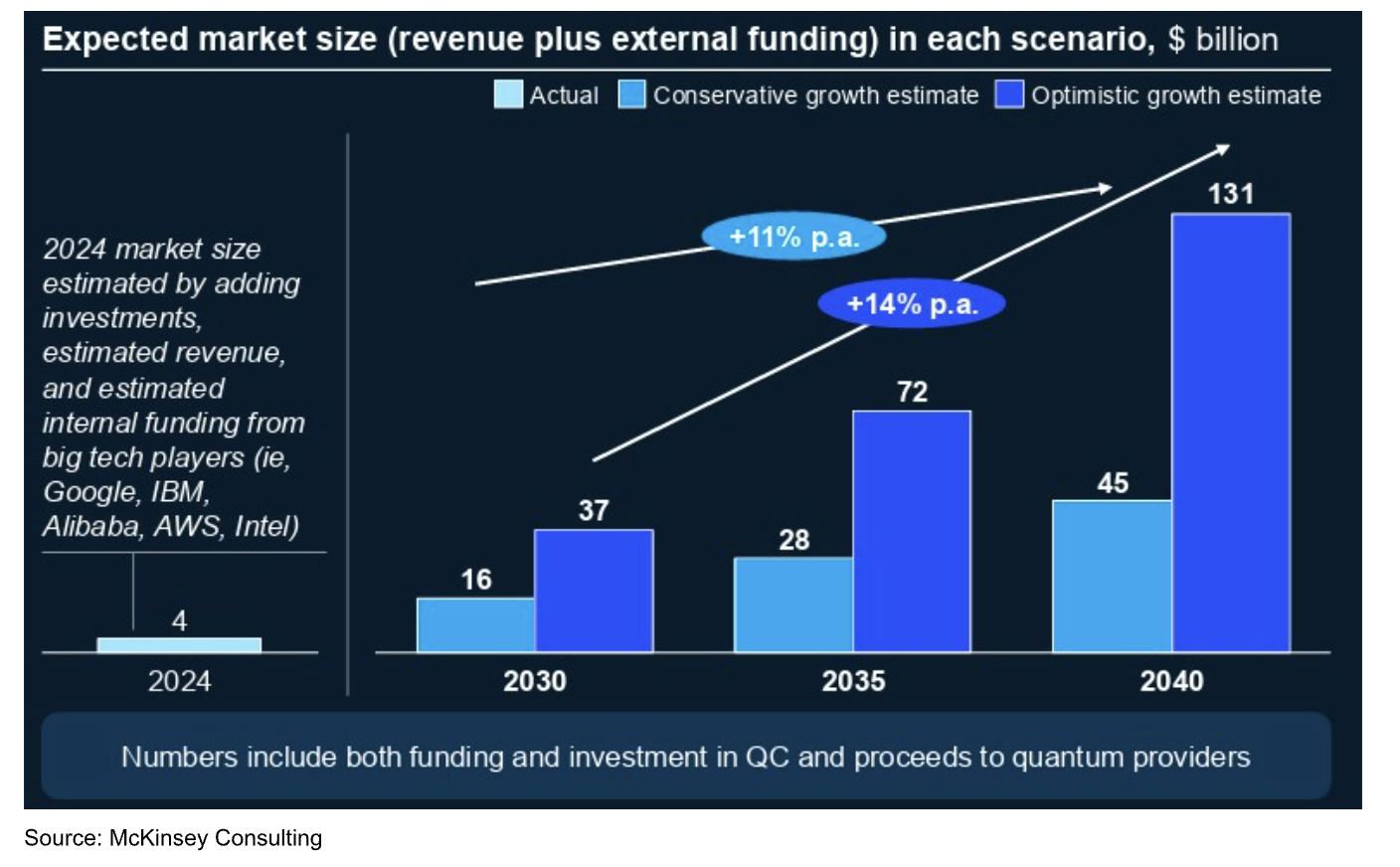
McKinsey’s Quantum Monitor (2025) projects that global private investment in quantum technology surpassed $4.3 billion in 2024 — up nearly 40% year-over-year — with most funding concentrated in North America and China. The focus is shifting from hardware physics to hybrid quantum–classical architectures, where quantum systems act as accelerators for specialized problems. This is an intermediate step before full-scale quantum advantage emerges later in the 2030s. The term “quantum advantage” refers to the stage at which a quantum computer can provide a solution significantly faster than a traditional computer, meaning it can provide it faster or more efficiently or even solve a problem a traditional computer can’t.
For investors and policymakers, that means the timeline for impact is shorter than the hype cycle suggests. Within five years, quantum models could begin influencing materials research, logistics optimization, and drug discovery. Within a decade, financial modeling, risk assessment, and encryption could be directly affected.
Macroeconomic Impact: Productivity, Growth, and Creative Destruction
The macroeconomic effects of quantum computing could rival those of electrification or the internet, but distributed unevenly and perhaps more abruptly.
- Productivity Revolution
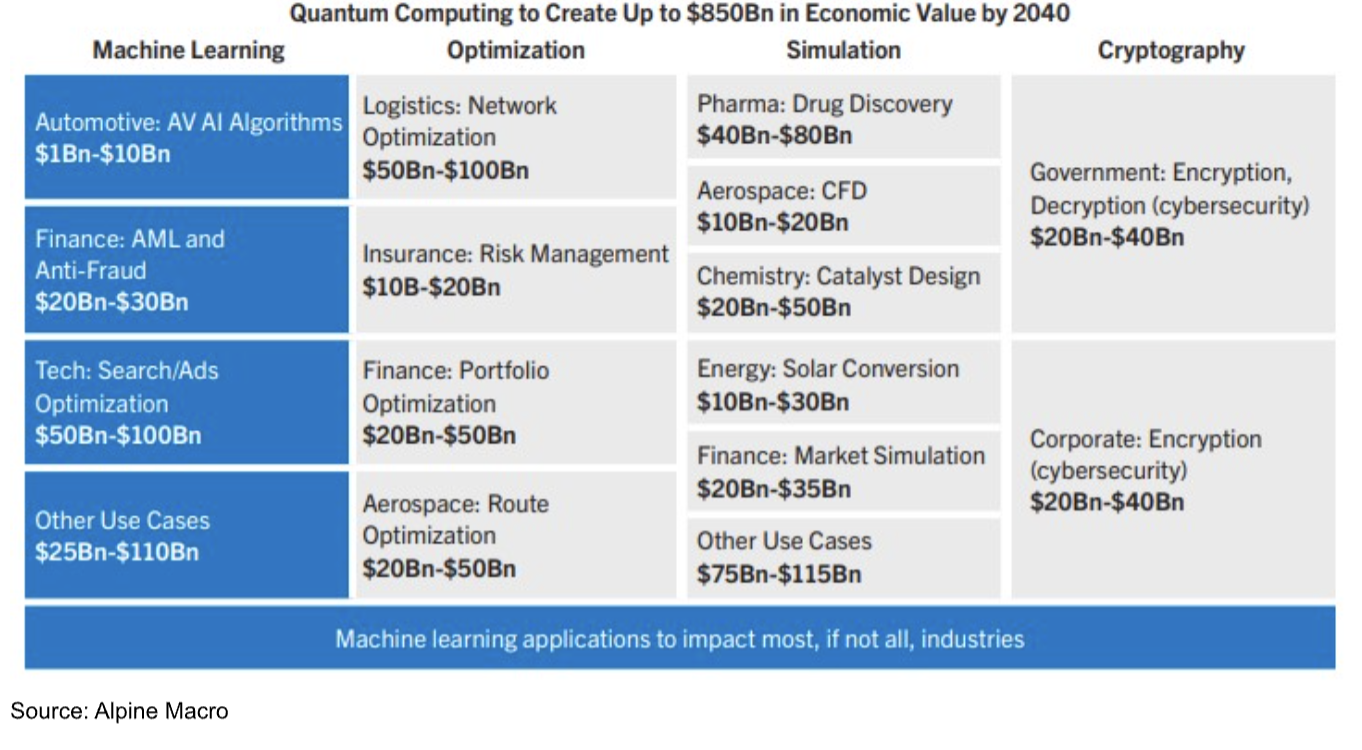
At the core, quantum technology is a productivity story. As Alpine Macro notes, economies that harness computational breakthroughs first tend to capture outsized productivity gains — much as industrial automation did in the 20th century. McKinsey estimates that early quantum applications in pharmaceuticals, chemicals, and finance could generate up to $1.3 trillion in annual value by 2035.
That gain doesn’t flow evenly. The U.S., EU, and China are the dominant investors today, but smaller, digitally advanced nations (South Korea, Israel, Singapore) could leapfrog through targeted adoption. Quantum’s modular nature — cloud-accessed, computation-as-a-service — reduces traditional barriers to scale.
- Inflation, Labor, and Capital Allocation
Quantum computing’s initial impact on inflation may be disinflationary. Faster optimization and supply-chain modeling reduce inefficiencies, compress margins, and lower costs. But, as productivity accelerates, capital displacement becomes the key risk. Entire industries — drug testing, encryption, logistics, even portions of finance — may require far fewer inputs to produce the same output.
If the internet era was about labor disruption, the quantum era could challenge capital allocation itself. Which investments remain justifiable once computation cost approaches zero?
- The Policy Challenge
Central banks face a paradox. Higher productivity usually expands growth potential, but when driven by exponential computation, the lag between capability and measurement widens. GDP and productivity metrics may understate quantum’s early effects, confusing policy signals. Expect greater volatility in data interpretation — much as early digitalization caused statistical “blind spots” in the 1990s.
Financial Markets: Winners, Losers, and Disruptive Repricing
Financial markets are both the laboratories and the guinea pigs of quantum economics.
Modeling, Risk, and Trading
Financial institutions already run stress tests that would have been computationally impossible a decade ago. Quantum computing will supercharge that capability. Banks could run millions of Monte Carlo simulations in parallel, improving risk modeling, portfolio optimization, and derivative pricing.
Per Nick Giorgi, CFA and chief equity strategist for Alpine Macro, “Quantum is another step towards the democratization of financial information and insight. I think this makes the job of active managers harder but potentially more lucrative when/if human insight is able to spot a variant perception relative to quantum-derived output.”
But this cuts both ways. Once markets can price uncertainty with near-perfect precision, traditional inefficiencies disappear. That means returns that used to come from exploiting information gaps may vanish faster than the opportunities themselves.
Cybersecurity and Encryption Risk
Perhaps the most urgent issue is cryptographic stability. Quantum computers, in theory, can break today’s RSA encryption by factoring large prime numbers instantly — a task that would take classical computers millennia.
Transitioning to post-quantum cryptography is already underway; the U.S. National Institute of Standards and Technology (NIST) expects adoption across government and finance within five years. But the transition cost will be enormous. Every digital certificate, trading system, and client database must be quantum-secure — a process that could rival Y2K in scope, though with far higher stakes.
Potential Sector Implications
- Tech Hardware: Obvious beneficiaries, but with high valuation risk. True quantum advantage remains 5–10 years away, and hype cycles can outpace progress.
- Semiconductors: Long-term winners, especially firms in quantum materials, cryogenics, and photonics.
- Cybersecurity: A double-edged sword — short-term disruption, long-term boom.
- Financial Services: Early adopters could reduce risk-weighted assets and capital buffers through superior modeling, improving ROE structurally.
- Healthcare & Energy: Quantum-driven simulation could radically shorten R&D cycles, shifting cash flow patterns for major incumbents.
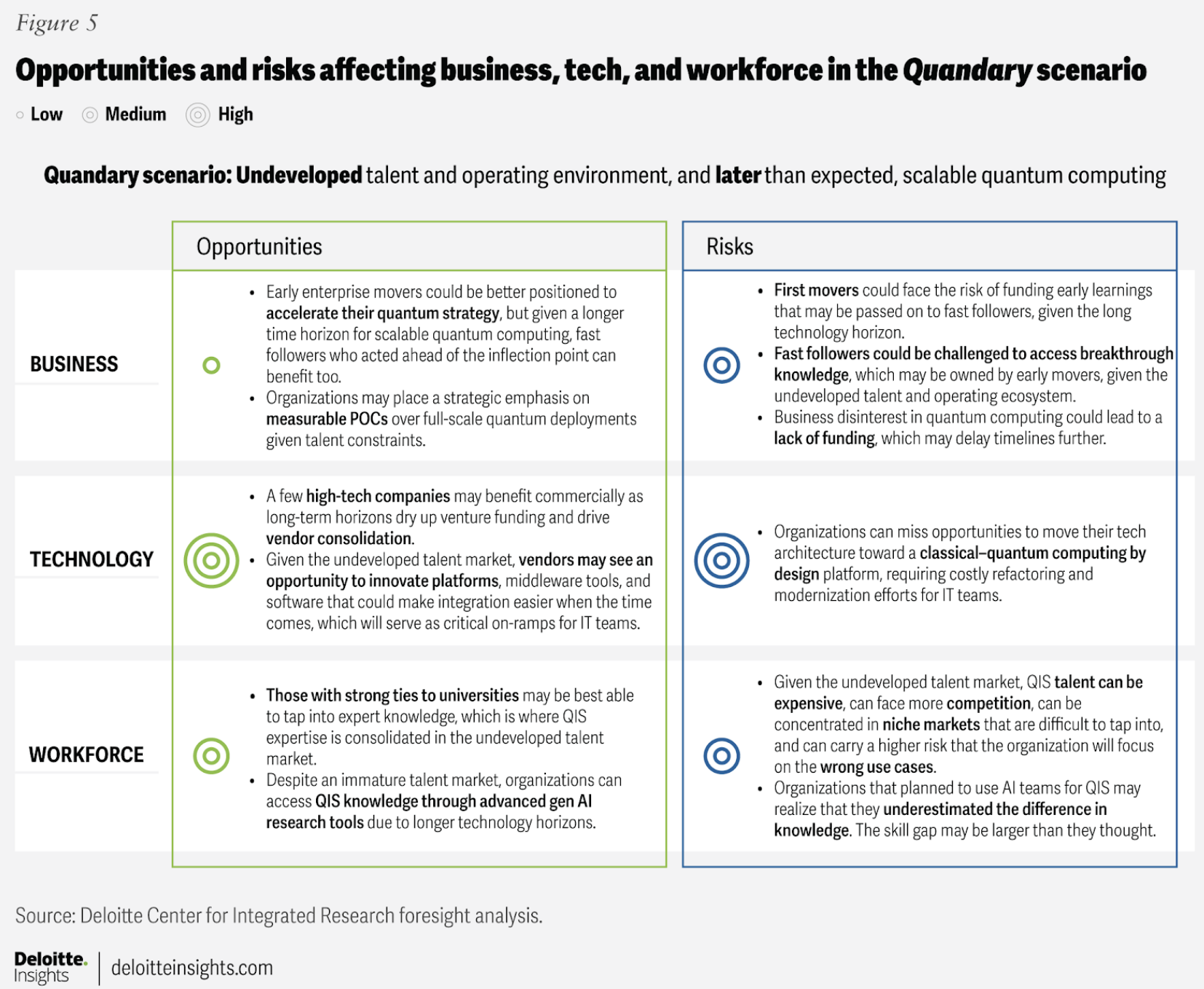
Geopolitical Landscape: The Quantum Arms Race
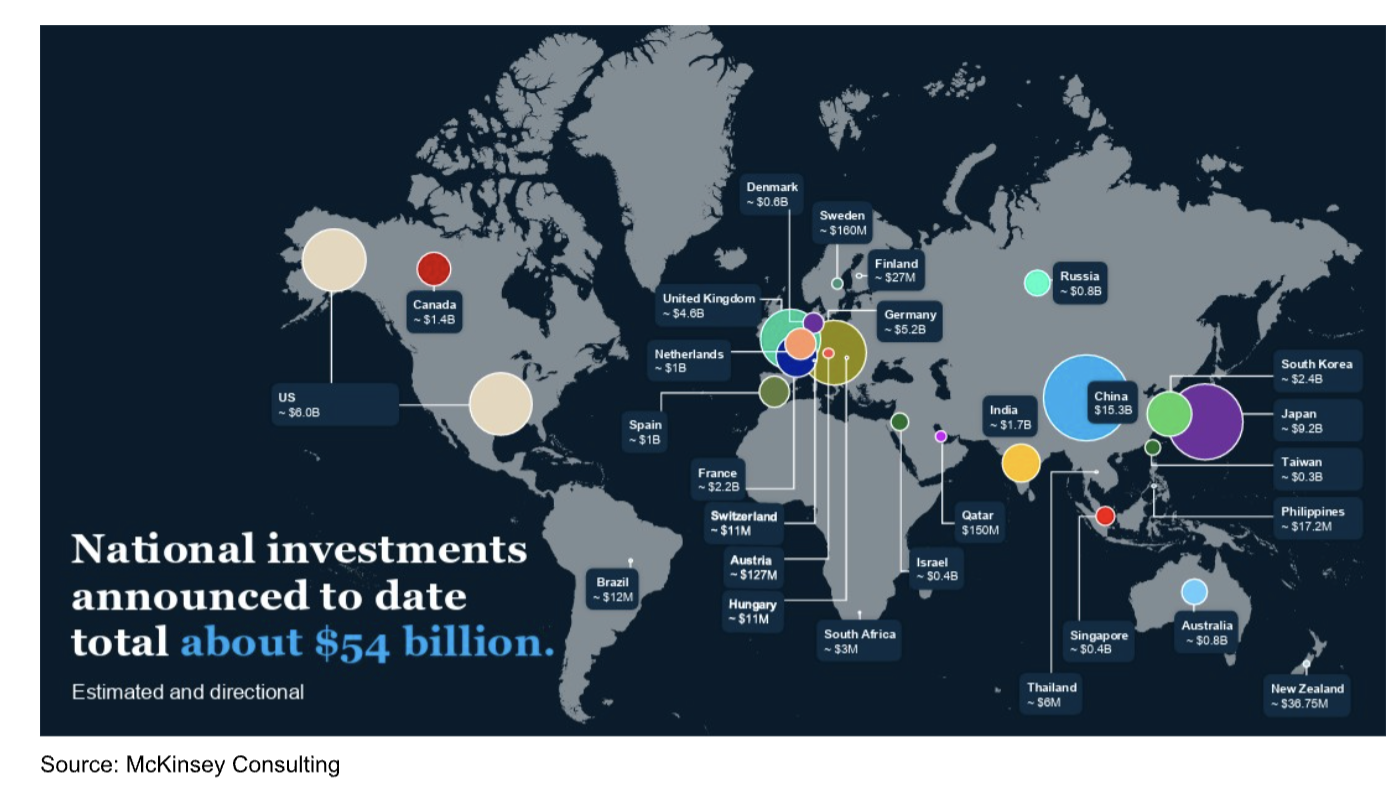
Geopolitical competition over quantum supremacy is already fierce, with the U.S., China, and Europe leading the race. China’s five-year plan calls for $15 billion in quantum funding, including communications satellites designed for unhackable encryption. The U.S. and EU are pursuing public–private partnerships to keep pace, while Japan and South Korea are integrating quantum research into industrial policy.
This creates a bifurcated risk:
- Technological Fragmentation: Competing standards and restricted intellectual property could lead to “quantum blocs,” splitting the digital economy much like the Cold War split global trade.
- Cyber Escalation: Quantum decryption could undermine existing deterrence structures. Governments might rush to secure data before adversaries achieve quantum breakthroughs, leading to a surge in defense-tech investment and covert data migration.
From a markets perspective, the first nation to achieve scalable quantum encryption and computing will control not just information security but information asymmetry itself — the ultimate economic advantage.
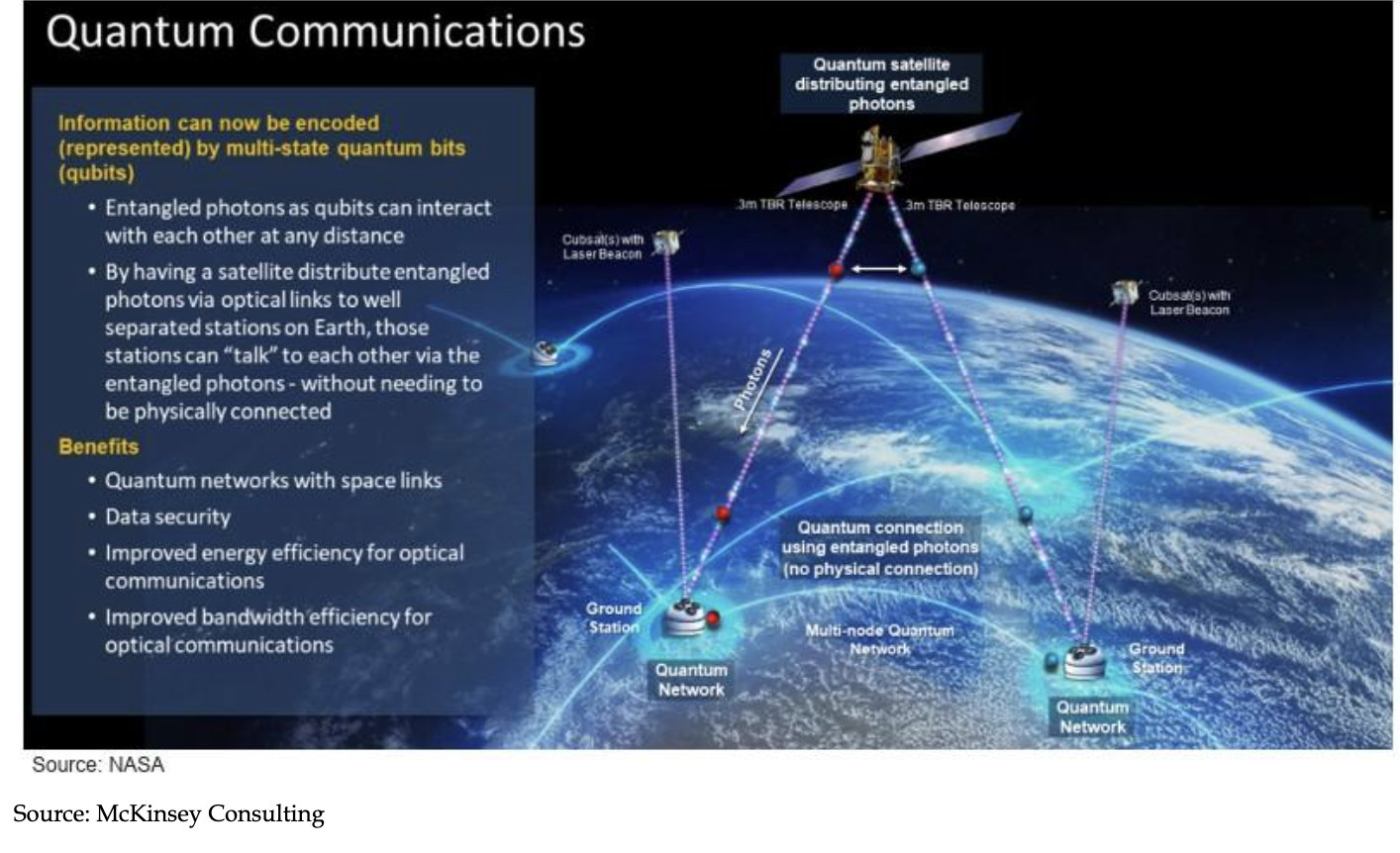
Investment Implications: Navigating the Quantum Transition
Investors don’t need to become physicists to participate in this revolution, but they do need to recognize the inflection points. Mr. Giorgi believes that “Quantum computing likely expands the [economic] pie and is a boost for equities on an aggregate basis. However, it may do so in a disruptive, ‘winner takes most’ manner which increases risk for single companies or industries.”
The Timeline Trade
Think of quantum investing in three phases (years are estimated):
- Enabling Infrastructure (Now–2027): Materials, semiconductors, cryogenics, and hybrid-cloud architecture.
- Applied Disruption (2027–2035): Cybersecurity overhaul, pharmaceutical simulation, and logistics optimization.
- Widespread Integration (Post–2035): Quantum embedded in finance, national security, and AI systems
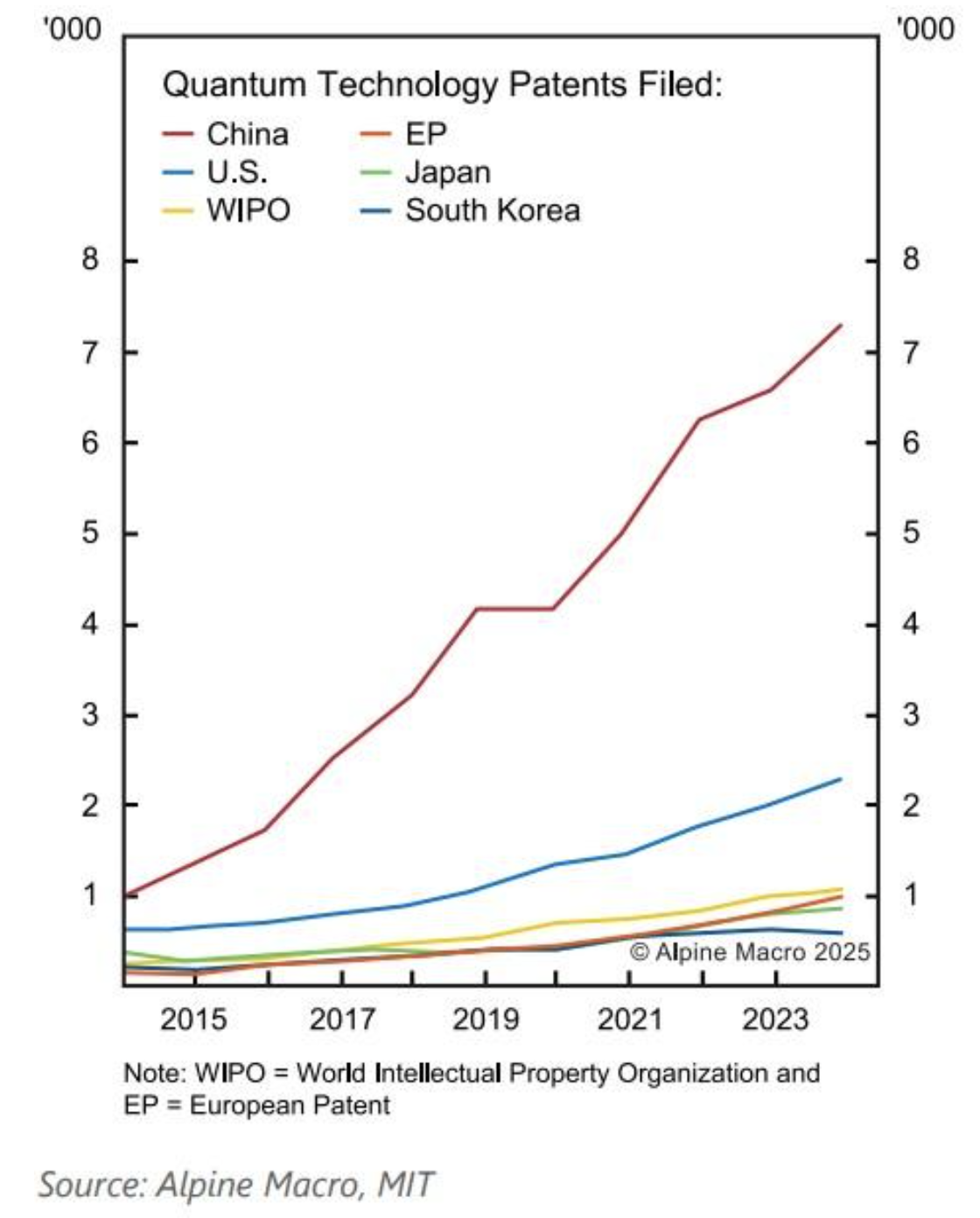
The opportunity lies in identifying companies that straddle these phases — firms already cash-flow positive in classical domains but positioned to pivot toward quantum relevance.
Portfolio Strategy
- Diversify by Exposure Stage: Early-stage quantum ventures remain speculative. Pair them with established tech and semiconductor leaders.
- Watch for Cross-Sector Synergies: The intersection of AI and quantum computing (so-called “QAI”) could unlock self-reinforcing acceleration loops.
- Monitor Policy Catalysts: Government funding, defense contracts, and data security mandates could determine which technologies scale first.
Risk Management
Quantum may flatten traditional risk hierarchies. The same computational tools that enhance returns could also increase systemic correlation, as institutions rely on identical quantum-optimized algorithms. That makes qualitative judgment — human skepticism — more valuable, not less.
In short, investors should treat quantum not as a theme, but as infrastructure for the next era of productivity — the silent power grid of the digital economy.
Final Thought: The Jetpack Era
If classical computing built the information economy’s traffic lanes, quantum computing removes the pavement. It turns computation from a constraint into a catalyst, which could reshape global GDP, reorder capital markets, and redraw geopolitical lines.
The question for investors isn’t whether to prepare for the jetpack era — it’s whether they’ll still be on the ground when everyone else lifts off.
David Tepp is the founder and chief wealth strategist of Tepp Wealth Management, an SEC-registered investment advisor based in Westfield, New Jersey. With over 20 years of experience in wealth management, David provides strategic financial planning and investment advisory services to high-net-worth individuals and families. He frequently writes on macroeconomic policy, fiscal risk, and market strategy to help investors navigate an increasingly complex global economy.
Sources
Alpine Macro, “Opportunities in the Quantum Ecosystem”, written by Noah Ramos, November 12, 2025
Alpine Macro, “The Dawn of Quantum Utility”, written by Noah Ramos, March 5, 2025
Alpine Macro, “The Quantum Landscape: Accelerating Disruption”, written by Noah Ramos, October 30, 2024
Deloitte Insights, “Quantum Computing Over the Next Five Years”, written by Deloitte Insights Contributers, May 2025
Financial Times, “Google and IMB Believe First Workable Quantum Computer is in Sight”, written by Richard Waters, August 12, 2025
Financial Times, “The World Should Prepare for the Looming Quantum Era, written by the Editorial Board, August 21, 2025
McKinsey Digital, “Quantum Technology Monitor”, written by McKinsey Technology Council, McKinsey & Co, June 2025
Wall Street Journal, “Trump Administration in Talks to Take Equity States in Quantum Computing Firms”, written by Amrith Ramkumar, October 23, 2025
DISCLOSURES:
Investment advisory services offered through Tepp RIA, LLC dba (Tepp Wealth Management), is a SEC registered investment adviser. Registration as an Investment Adviser with the SEC or any state securities authority does not imply a certain level of skill or training. For information pertaining to the registration status of Tepp Wealth Management, A copy of Tepp Wealth Management’s current written disclosure statement discussing Tepp Wealth Management’s business operations, services, and fees is available at the SEC’s investment adviser public information website – www.adviserinfo.sec.gov (CRD# 283899) or from the Adviser upon written request: Tepp Wealth Management, 210 Elmer Street, Westfield, NJ 07090.
This article is an expression of corroborated facts along with the opinions of the author. This is for informational purposes only and is intended to inform the reader about market-related activities which could affect individual portfolios and provide insight on specific relevant topics. It is not intended to recommend or suggest any specific course of action or investment strategy. The reader should not infer the likelihood of any future events. Past performance is not indicative of future results. Investors should always consult an investment professional and/or tax professionals to discuss their unique needs and objectives.
Please remember that different types of investments involve varying degrees of risk, and there can be no assurance that the future performance of any specific investment or investment strategy (including those undertaken or recommended by the Adviser), will be profitable or equal any historical performance level(s). Investing involves risk, including the potential loss of principal.
Tepp Wealth Management may discuss and display, charts, graphs, formulas which are not intended to be used by themselves to determine which securities to buy or sell, or when to buy or sell them. Such charts and graphs offer limited information and should not be used on their own to make investment decisions. Tepp Wealth Management has no affiliation with any sourced company, and the use of such information should not be considered an endorsement of any firm. This information is provided for guidance and information purposes only and is not a solicitation. Be sure to first consult with a qualified financial adviser and/or tax professional before implementing any strategy.
A message from Advisor Perspectives and VettaFi: Discover something new! Click here to register for our upcoming webcasts.
Membership required
Membership is now required to use this feature. To learn more:
View Membership BenefitsSponsored Content
Upcoming Virtual Events View All











