 Advisor Perspectives welcomes guest contributions. The views presented here do not necessarily represent those of Advisor Perspectives.
The advisors building the most valuable practices aren't the ones with the fanciest portfolio models. Instead, they meet clients where the stakes are highest: business succession, multigenerational wealth transfer, and tax strategy. Portfolio management and financial planning have become table stakes and, as a result, have become commoditized.
Estate planning is also a way to move upmarket. Most advisors don't want to increase from 100 clients with $1 million each to 200 clients with $1 million each. They prefer to move from 100 clients with $1 million each to 50 clients with $5–10 million each, continuing the progression towards larger clients and higher fees.
Stop Pretending You're Different.
Ask yourself honestly: If you line yourself up against 50 of your peers, how differentiated will your portfolio returns be for the same client circumstances 20 years from now? Moreover, even if you are a top decile manager, what’s the likelihood that you will outperform the markets by more than 100 basis points per annum? The odds are very much against you. One only needs to look at the S&P SPIVA data to see how this has shaken out historically.
I often pose a question to rooms of successful advisors: “Is the advisor on your right or left a better advisor?” Rarely can anyone answer this question. We’re all commodities when it comes to investment management. Advisors should add value where it actually counts. Tax planning is the most significant lever available to wealthy clients, and estate planning capitalizes on that fulcrum. Business succession is a vital part of that solution. However, most advisors repeat the same narrative about delivering a better asset allocation and access to funds, which is often a false promise. Being different is easy.
Clients don't lie awake worrying about asset allocation. They worry about whether their family will be okay after they're gone and if their kids are prepared for the financial responsibilities. They want to know they are building a legacy that truly matters.
Estate planning opens doors that investment management can't. There's an entire tier of value that doesn't even exist until you work with clients with taxable estates. While saving a client a few basis points on their portfolio matters, saving them 30–40% of their net worth is transformative. That could be seven, eight, or even nine figures in wealth preservation. That's the kind of impact that transforms a practice and builds sticky relationships.
AI Forces the Question
AI is changing client expectations and, more importantly, advisors' ability to hide behind data and statements that only focus on the positive. How difficult is it for clients to upload the report that their advisor provides into ChatGPT, or Perplexity, or Claude, and ask it to analyze what they’ve been told, highlight any missing questions, and in bullet points identifying if the advisor is adding value or not? Can you imagine receiving a note from your clients with all the things that AI will know to ask, that they themselves never would have thought of? This is already happening; I do it all the time when helping prospects and clients review their advisors. And, guess what: It always asks about tax and estate planning.
Everyone's talking about AI for efficiency: meeting notes, email drafters, and scheduling assistants. These save time but they don't change your value proposition. Clients won't pay you more because you took good notes faster. AI will help you service clients better, but you should consider how you will differentiate yourself when AI provides a comparison of different advisors.
The real opportunity is expansion — using AI to deliver services clients actually want but most advisors can't provide at scale, like estate planning.
For years, advisors haven't had the tools to offer comprehensive estate planning. Instead, they default to referrals — sending clients to attorneys (who often return the favor) and staying on the sidelines of the most critical conversations. AI changes what's possible. You can now partner with clients throughout the entire process rather than referring the work out.
AI can read entire sets of estate documents, surfacing inconsistencies and planning opportunities in minutes rather than hours. Systems provide a comprehensive view of estates across your entire book of clients and identify those who require attention. Technology turns fragmented estate data into coordinated, living plans.
This is how you can expand your practice with services that create real value. When you can handle complex estate planning, you're not fighting for clients who want cheap index funds. Instead, you’re competing for clients who require sophisticated planning and are willing to pay substantial fees for it.
Technology Makes it Scalable
Estate planning has historically been impossible to scale. Not because advisors can't do it, but because the infrastructure didn't exist. How does an attorney track beneficiary designations across all of their clients? How do they track administration, fiduciaries, and planning that needs to be completed, as well as documents that require updating due to changing laws, ever-changing portfolio values, and net worth? How do you keep track of all this? Many advisors only provide comprehensive estate planning for their top clients; everyone else gets referred out. Most just ignore estate planning altogether.
Without technology, sophisticated estate planning might limit you to 30–40 households. However, with the right platforms, just one advisor can deliver that same depth to hundreds of clients. You become the quarterback.
Effective tech centralizes the entire balance sheet, encompassing real estate, business interests, investment accounts, trusts, LLCs, insurance policies, and other holdings, along with all related documents. Everything in one place. Instead of static spreadsheets and multi-hundred-page legal documents, AI tools let you build dynamic illustrations and visual maps that clients can actually understand.
This matters because growing your practice by moving from $1 million clients to $5 million clients and up is more profitable than trying to serve twice as many $1 million clients. You earn more while managing less operational complexity. Technology makes both possible — you can move upmarket and expand capacity simultaneously.
Most Advisors Won't Do the Work
My guess is that 10% of advisors today possess a deep understanding of estate planning. They run the entire process and manage a team of experts. These are also the advisors with the largest clients and the highest revenue per client.
The other 90% of advisors are familiar with estate planning matters, but most can't dive deep. They avoid it because learning takes effort. They got comfortable selling asset allocation or fund access.
Advisors who master estate planning compete on their ability to solve problems that save clients millions — not on price or portfolio performance.
Even clients below the federal exemption need this work. States like Washington have exemptions as low as $3 million. Clients who think they're "not wealthy enough" for estate planning are then shocked when their heirs face a 35% state tax bill.
The real opportunity is with taxable estates above the federal exemption. The ability to outperform markets is negligible and certainly not often repeatable. Meanwhile, with effective estate planning, you may help families save up to 40% of their net worth. Estate planning fosters lasting relationships and adds immediate, demonstrable value without increasing portfolio risk.
Estate planning changes the relationship. You're not just managing their portfolio; you understand the client’s entire financial life — their business, their family dynamics, and the legacy they want to leave behind.
When clients spend hours discussing their business succession concerns, family dynamics, and charitable goals, they form a deeper bond with their advisor — one that extends beyond a Knicks game or a golf trip. This is what separates holistic advice from product sales.
Moreover, the advisors who do this well build relationships with the next generation while the parents are alive — not meeting the kids for the first time after their parents pass. By the time wealth transfers, they're not the advisor the heirs inherited; they're the advisor the kids already trust.
This stickiness matters more as you move upmarket. Larger clients have more complex situations and more at stake. An advisor who deeply understands a $20 million estate isn't easily replaced.
Advisors have a choice now: learn estate planning or get left behind.
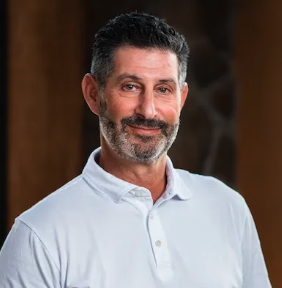
Steve Lockshin is the co-founder of estate planning technology Vanilla.
A message from Advisor Perspectives and VettaFi: Discover something new! Click here to register for our upcoming webcasts.
Read more articles by Steve Lockshin
 Advisor Perspectives welcomes guest contributions. The views presented here do not necessarily represent those of Advisor Perspectives.











