 Advisor Perspectives welcomes guest contributions. The views presented here do not necessarily represent those of Advisor Perspectives.
I recently sat down with the world's oldest investor, who looks suspiciously like Mel Brooks. He has been around since the management part of our brains (the prefrontal cortex) was still in beta testing. He's seen every crash, every bubble, every moment of collective panic. What follows is an edited transcript of our conversation.
* * *
Q: You've been investing for two million years. What's changed?
A: The logos on the buildings. That's it. The buildings used to be caves; now they're towers with bank names. Inside? Same scared people making the same scared decisions. I was there 4,000 years ago when a guy panic-sold his grain futures because he heard a rumor about locusts. Last Tuesday, I watched a guy panic-sell his index fund because he heard a rumor on Truth Social. Same guy. Same panic. Better clothes.
Q: But we have so much more information now. Data. Analytics. Artificial intelligence.
A: Information! Let me tell you about information. On the savannah, information was "that grass is moving." You know what we did with that? We ran. We didn't analyze that, "historically, 73% of grass movements are wind related." We ran. And you know what? Those are your ancestors because the analysts were eaten.
Q: So, fear is the problem?
A: Fear is not a problem; it's the feature that kept me alive for two million years. The problem is today's people still have the same issue, but now we're afraid of numbers on a screen. Red numbers! Our brain's fear center (the amygdala) doesn't know the difference between a lion and a margin call. When we notice, "Something is red and moving fast!” and our instinct is “Run!" our amygdala fires in 12 milliseconds, no matter what. Before we can even process that we're scared, our finger hits the sell button. Then we spend the next three years explaining to our spouses why we sold Apple at $40.
Q: Twelve milliseconds? That fast?
A: The amygdala doesn't mess around. It's been running the show since before we could walk upright. It sees a threat and it acts. No committee meetings. No second opinions. No "let's circle back on this." Twelve milliseconds from event to response. Meanwhile, our rational brain (the prefrontal cortex) that "knows better" still needs 500 milliseconds to show up. By the time logic arrives at the meeting, the trade is done, and the amygdala is in the break room stress-eating a donut.
Q: Tell me more about the prefrontal cortex.
A: [sighs] The new kid. Shows up two million years late, still very impressed with itself. "I can do abstract reasoning! I understand compound interest!" Oy! Let me tell you something about this prefrontal cortex. It's slow. It gets tired. It doesn't even finish developing until we're 25 years old — which explains a lot about what 22-year-olds do with money.
By the time it's finally ready to work, the amygdala has been running the operation for decades. The prefrontal cortex is middle management. It writes memos. The amygdala is the founder who never reads.
Q: What about loss aversion? Why does losing hurt so much?
A: Ah, loss aversion! Losing hurts twice as much as winning feels good. Your scientists measured this: Kahneman, Tversky, Nobel Prize winners, very smart people. But I could have told them for free. On the savannah, a loss was permanent. You lose the food, you starve. You lose the territory, you die. You lose the argument with your spouse, you sleep with the hyenas.
Gains were nice, but losses were fatal. Over time, our brains weighed them differently, which is rational for survival, but irrational for a 401(k). Our brain doesn't know the difference. It just knows something is being taken away, and it panics like we're losing a kidney.
Q: So, if these behaviors are hardwired, why do some investors still outperform?
A: This! This is a good question. The investors who actually make money over time learned a secret. You wanna know? The secret is: They don't trust themselves. That's it! The great investors figured out they're just as scared and stupid as everyone else, so they built systems to protect themselves from themselves. They know the lion is coming, so they build the fence before the sun goes down.
Q: Build the fence? What does that mean practically?
A: Rules. Systems. Decisions we make when we're calm, written down so they can be enforced when we're not. An investment policy statement — you know what that really is? It's a letter from our rational self to our future panicked self that says: "Dear Idiot: I knew you'd feel this way. The market is down, you're terrified, you want to sell everything and move to a cave. Don't. Here's what we decided to do when we were thinking clearly. Follow the plan. Love, the Smart You. P.S. Step away from the screen."
Q: Can't we just learn to control our emotions?
A: [laughs] We think we can outsmart two million years of evolution? Please. I've watched our species try this for a very long time. It doesn't work.
The answer is not to fight fear — fear has a two-million-year head start. The answer is to build layers of delay between fear and decisions, so we can recover our more rational selves. Like the time I made fun of Napoleon Bonaparte and he sat there staring at me. I nearly ran for it until I remembered he loved a good fart joke.
Giving ourselves time to process; that's how we find the angle that works.
Q: After two million years, are you optimistic about investors?
A: Optimistic? I saw fire discovered. Very exciting stuff, everyone was optimistic as the price of sticks skyrocketed. Then sticks plummeted 50% and everyone panicked. Same story, every century. But here's what I've also seen: The investors who survive are the ones who plan for it. They make the decisions beforehand, write them down, and commit to following them no matter what their amygdala screams. And I've learned that architecture beats willpower every time, except that tower in Pisa.
Q: Any final advice?
A: Yes. Don't trust yourself in a crisis. I know, I know, this is not what most motivational posters say. Terrible advice, those posters. In a crisis, trust the version of yourself who wasn't in a crisis. That's what an investment policy is for. You know that Gandhi fellow? He had some good ideas about breathing through difficulty. Too skinny.
And one more thing.
Q: Yes?
A: Be patient with ourselves. Our brains are doing exactly what they evolved to do. And they work wonderfully . . . at the wrong task. Like hiring a firefighter to do your taxes. Very good at his job. Wrong job. That's not a character flaw; that's a mismatch. The goal isn't to become superhuman; it's to design around our very human limitations.
If our ancestors survived two million years of predators, famines, and ice ages, we can survive a bear market. We just can’t let the fear talk us into something stupid while it's happening. As much as fear kept us alive for a very long time, it should never access our brokerage accounts.
* * *
Important Disclosures
This article is for educational purposes only and does not constitute investment advice. “The Two-Million-Year-Old Investor" is a fictional composite character used to illustrate behavioral finance concepts.
References to neuroscience research, including work by Daniel Kahneman and Amos Tversky on loss aversion and dual-process theory, are provided for educational context. Specific neural response times are approximations based on published research and may vary by individual and context.
All investing involves risk, including potential loss of principal. Past performance does not guarantee future results.
Life UnLocked Partners is a registered investment advisor. Registration does not imply a certain level of skill or training.
This piece was inspired by the improvisational genius of Mel Brooks and Carl Reiner, whose “The 2000 Year Old Man” routines have delighted audiences since 1961.
About the Author
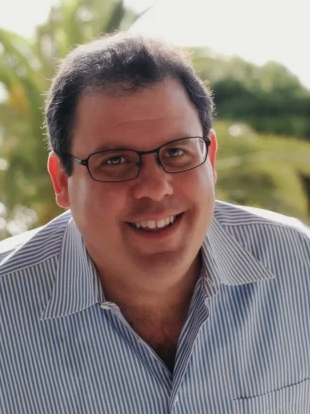
Mark Tennenbaum is CEO of Life UnLocked Partners, a registered investment advisor. He holds an MBA from UCLA Anderson and a psychology degree from Pitzer College, where his studies included brain evolution and behavior. He has 40 years of experience in securities valuation, M&A, and structured products.
A message from Advisor Perspectives and VettaFi: Discover something new! Click here to register for our upcoming webcasts.
Read more articles by Mark Tennenbaum
 Advisor Perspectives welcomes guest contributions. The views presented here do not necessarily represent those of Advisor Perspectives.











