 Advisor Perspectives welcomes guest contributions. The views presented here do not necessarily represent those of Advisor Perspectives.
The key to a truly successful client-financial advisor relationship is great communication. And part of strong communication is understanding on both sides of the discussion.
When it comes to advisor-client communication, how often is the client left befuddled by jargon and language that goes over their head? A lot. That’s because modern finance has been purposefully designed to confuse people rather than connect with them or make things connect in their minds.
This is the reason that led me to create Sound Returns, a financial education social media platform that blends music, culture, and storytelling as a bridge to financial understanding. I am purposefully harnessing my first love — music — and coupling it with my career in financial planning to help make money make sense.
Learn About IRA Conversions From Dr. Dre
With all of that in mind, we can learn about the importance of intentional strategy when it comes to Roth IRA conversions from Dr. Dre’s production style. His career is about patience, pattern recognition, and having the discipline to wait until the solution becomes obvious.
At a time when Napster was the vehicle for music piracy, Dr. Dre realized that the moment was more than just people consuming music differently — they were losing the feel of the music with cheaper earbuds and compressed MP3 song files. He seized that opportunity to create Beats by Dre, with the intent of solving that problem, bringing that feeling back to music again.
When he and his business partner, Jimmy Iovine, sold Beats in 2014, it became Apple’s single biggest acquisition to date, at $3 billion. Exiting with $900 million pre-tax, Dr. Dre became one of the wealthiest hip-hop moguls and doubled his net worth at the time.
A lot of planning and strategy were involved before and after the sale. When a gift of $70 million to the University of Southern California was announced the same year to fund the USC Jimmy Iovine and Andre Young Academy for Arts, Technology, and the Business of Innovation, it was a dual mandate of not only gifting, but tax strategy.
Similarly, deciding to convert a taxable retirement account (401(k), IRA) into a tax-free Roth conversion can dramatically increase a person’s taxable income. Those who convert their taxable retirement accounts into a Roth IRA have that income taxed the year they do it. The planning strategy behind it is that they are paying less taxes now than later, so they can leave the asset growing tax-free, and then choose to take tax-free distributions later. An added bonus? Roth IRAs are free of required minimum distributions (RMDs).
Because there are significant tax implications, Roth conversions need to be timed and planned accordingly. For instance, if a person makes a taxable conversion first and then receives a taxable windfall inheritance later, that income is taxed at an exorbitantly higher rate. Since Roth conversions can’t be undone, it’s best to have this worked out for all probabilities and possibilities in your life.
Timing and Tax Implications Matter
Before making a Roth conversion, always work with your advisor and consider the importance of timing and taxes to get the most out of the conversion. Just like Dr. Dre, you may need to make some charitable deductions to decrease your tax bill.
Did this make the Roth conversion strategy more memorable for you? I hope so. Aligning personal finance to music legends' money dos and don’ts has a way of entertaining and educating. But remember, even this creative financial literacy approach doesn't replace traditional financial planning. This serves as a complement, like your favorite sing-along chorus, while making its information fun, accessible, human, and relevant.
The bottom line is when money finally makes sense, people make better decisions. Not just for their portfolios, but for their families, businesses, and legacies. That’s education delivered in a language people actually understand.
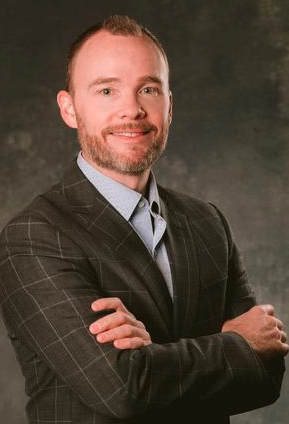
Drew Boyer, CFP®, is the president of Boyer Financial Group.
A message from Advisor Perspectives and VettaFi: Discover something new! Click here to register for our upcoming webcasts.
Read more articles by Drew Boyer
 Advisor Perspectives welcomes guest contributions. The views presented here do not necessarily represent those of Advisor Perspectives.










