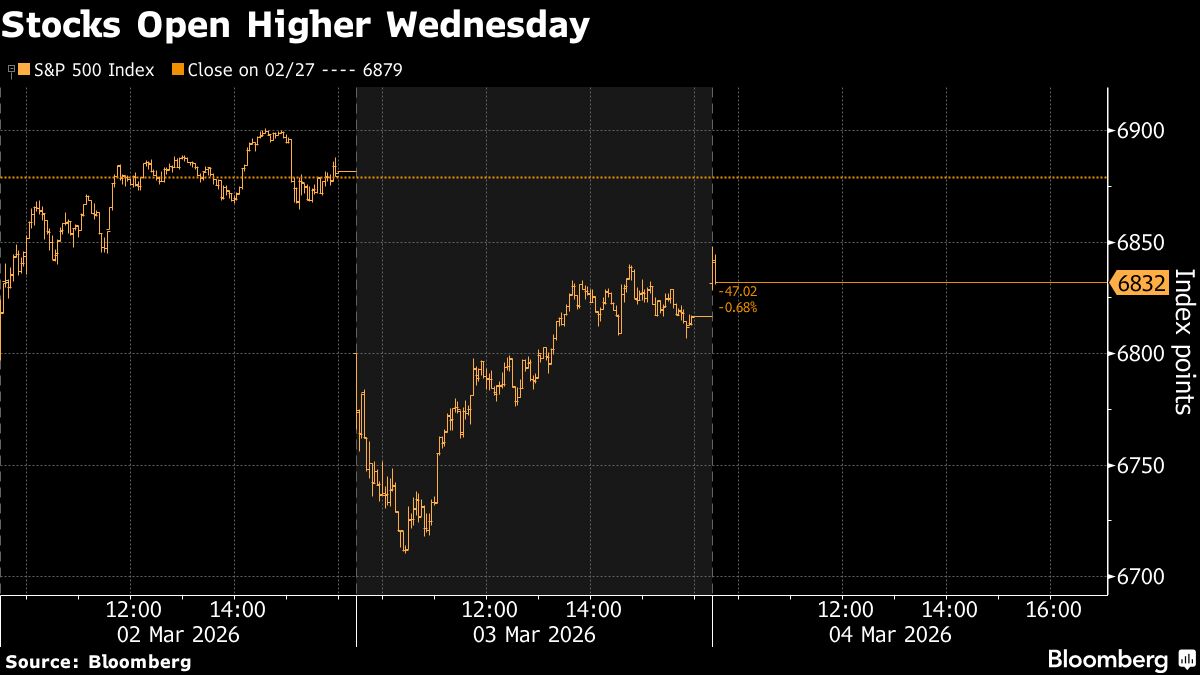
Stocks attempted a rebound Wednesday morning as traders seized on a report that Iranian officials had indirectly reached out to the US about potentially ending the conflict in the Middle East. New data pointing to steadiness in the US labor market also helped fuel gains.
The S&P 500 was little changed after opening 0.4% higher, led by the consumer discretionary and industrials sectors. The move follows a sharp drop from Tuesday that featured broad-based declines across all sectors.
The Nasdaq 100 Index rose 0.4%, while the Dow Jones Industrial Average fell 0.3%.
Market sentiment improved Wednesday morning on a New York Times report that operatives from Iran’s Ministry of Intelligence reached out to the CIA to discuss terms for ending hostilities; in a separate report, Iran denied it. Oil prices slipped for the first time since the war began on the news, before paring losses.
Separately, ADP Research data showed private-sector payrolls increased 63,000 in February, ahead of consensus estimates and a sign of a strrength ahead of Friday’s key US employment report.
“The broad tone across global markets is a bit more positive this morning,” said Derek Holt, vice-president and head of capital markets economics at Scotiabank. He cautioned that the “catalyst for a little more optimism is on shaky foundations” and the US administration doesn’t consider the Iranian overture for ending the conflict to be serious.

The S&P 500 has slipped 0.9% since the US and Israel first struck Iran over the weekend, a reaction some market watchers have described as notable but also muted. The conflict has since escalated, with multiple Gulf states hit by Iranian retaliation and Israel hitting targets in Lebanon. The North Atlantic Treaty Organization shot down an Iranian ballistic missile Wednesday headed for Turkey.
“Two days of dip buying have limited S&P 500 losses for the week,” said Michael O’Rourke, chief market strategist at JonesTrading Institutional Services. “The equity market’s mechanical reaction to oil prices has driven the recent AI and private credit anxieties from the market mindset.”
Traders have been dusting off investing playbooks from 2022, when Russia invaded Ukraine, betting that a spike in energy prices will stoke inflation. Oil-producer stocks are seen as an inflation hedge and have been the top-performing sector this year, even before the Iran war began.
The market’s “benign” reaction to the events in the Middle East has surprised David Solomon, chair of Goldman Sachs Group Inc.
“The complacency that exists today among investors could change on a dime,” said Matt Maley, chief market strategist at Miller Tabak + Co. “Investors should be thinking about how they will react if we do not get the best-case scenario outcome in Iran.”
Wall Street strategists warned against relying on a so-called Trump put when it comes to the Iran war and that the fallout may be harder to contain.
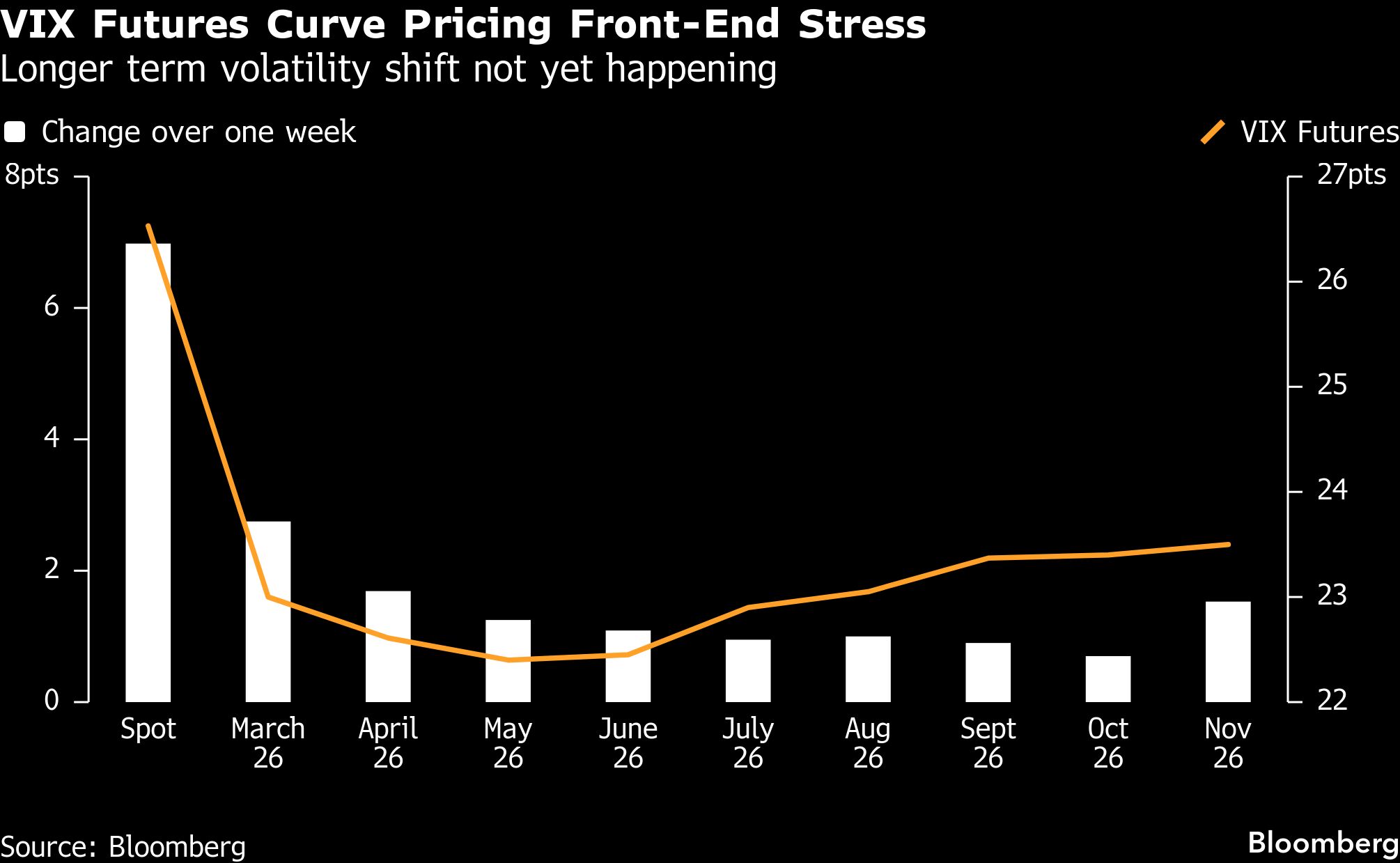
Near-term volatility spiked this week. The VIX curve’s inversion is “consistent with a moderate stock market pullback in the wake of the Iran news,” Brian Reynolds, chief market strategist at Reynolds Strategiy LLC, wrote in a note to clients.
Elsewhere, Treasury Secretary Scott Bessent said Wednesday morning that global 15% tariffs on US imports would likely start this week. Traders also assessed a rise in mortgage applications, with S&P Global purchasing managers index data expected at 9:45 a.m.
Still ahead Wednesday, traders will parse Broadcom Inc.’s earnings after the close.
A message from Advisor Perspectives and VettaFi: Discover something new! Click here to register for our upcoming webcasts.
Bloomberg News provided this article. For more articles like this please visit
bloomberg.com.
Read more articles by Geoffrey Morgan