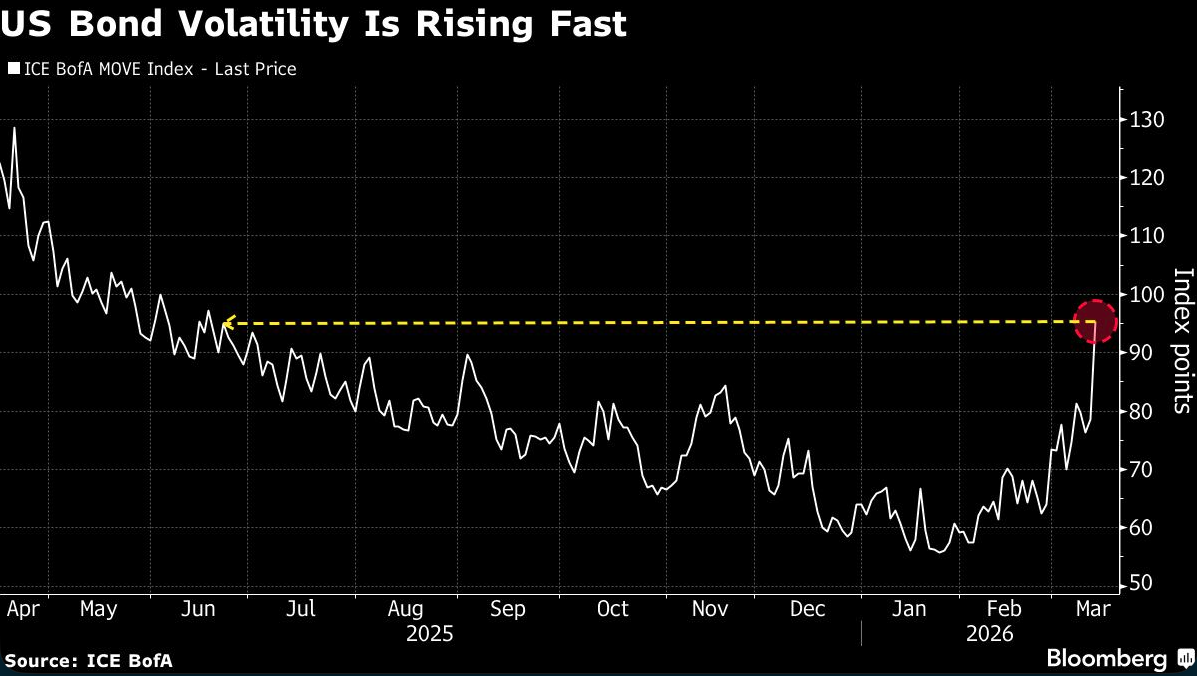
Volatility in US Treasuries jumped to a nine-month high as the Iran war fanned inflation concerns and upended traders’ expectations on the Federal Reserve’s policy path.
The ICE BofA Move Index, often referred to as the “fear gauge” of the bond market, climbed to levels last seen in June as elevated oil prices stoke inflation fears, hurting the real return on Treasuries and limiting their haven appeal.
US President Donald Trump and Iran are both striking defiant tones on the war, creating uncertainty about the length of the conflict. Yields on 30-year Treasuries — securities sensitive to inflation and government spending dynamics — have climbed to the highest in a month, while traders have dialed back bets on any Fed interest-rate cuts in 2026.
“As bond investors, we have to start thinking in terms of stagflation, which always creates a huge amount of uncertainty,” said Jack McIntyre, portfolio manager at Brandywine Global Investment Management. “Therefore I need to be compensated from a volatility standpoint.”
US core PCE numbers — the Fed’s preferred price gauge — will be published later and may provide further clues on the outlook for monetary policy. Economists polled by Bloomberg expect a 0.4% month-on-month increase and a 3.1% jump in the year to January.
Ian Lyngen, head of US rates strategy at BMO Capital Markets says an increase of that magnitude would be especially concerning given that “the report represents January data and doesn’t incorporate the inflationary risks associated with the current run-up in oil and gas prices.”
Bonds from the US to Japan and Australia have dropped since the Iran war began two weeks ago as investors focus on what higher oil prices would mean for the global economy. Treasuries have set the tone for government debt across the world, with yields marching upward as investors bet central banks may have to hike rates sooner rather than later to combat inflation.
Trump has also renewed his call for Fed Chairman Jerome Powell to cut rates, adding to risks to the outlook for US monetary policy and volatility. Two-year US yields have risen to their highest levels since August, while one-year US inflation swaps have climbed 3% — a signal that investors expect stronger price pressures ahead.
“Given the range of uncertainties we are confronted by, I think volatility is going to remain elevated for a considerable period of time ahead,” Vishwanath Tirupattur, chief fixed-income strategist at Morgan Stanley, said on Bloomberg Television.
What Bloomberg Strategists Say...
“If the situation continues to worsen, inflation concerns will further add to expectations that the Fed will keep rates higher for longer”
Alyce Andres, Markets Live strategist
The volatility and inflation worries are now showing up in returns. Bloomberg’s gauge of Treasuries has almost wiped out its gains for this year.
And as the war extends, BlackRock Investment Institute sees risks of a stagflationary shock, while Loomis, Sayles & Co. has warned of risks to the US deficit, further weighing on bonds. Such factors might stoke additional gains in the MOVE Index.
“Any prolonged geopolitical tensions and limited visibility around the outlook may add incremental pressure to the US fiscal position, thereby creating further concerns,” said Marcella Chow, global market strategist at JPMorgan Asset Management.
A message from Advisor Perspectives and VettaFi: Discover something new! Click here to register for our upcoming webcasts.
Bloomberg News provided this article. For more articles like this please visit bloomberg.com.











