BlackRock Inc.’s Rick Rieder, the firm’s top bond-market executive who was passed over by President Donald Trump to be chair of the Federal Reserve, is pursuing investor cash for his first hedge fund in years.
The asset manager stepped up efforts in recent weeks to raise money for TriaXial, which has been in development since last year, according to filings and people with knowledge of the matter. Russell Brownback, deputy chief investment officer for fixed income, is also a portfolio manager.
A representative for New York-based BlackRock declined to comment.
Rieder has described TriaXial to colleagues as a combination of premier investing ideas from across the firm’s fixed-income business packaged into a single strategy. He plans to invest across asset classes and make opportunistic bets designed to have low correlation to the broader market, while relying on a modest amount of leverage to juice returns.
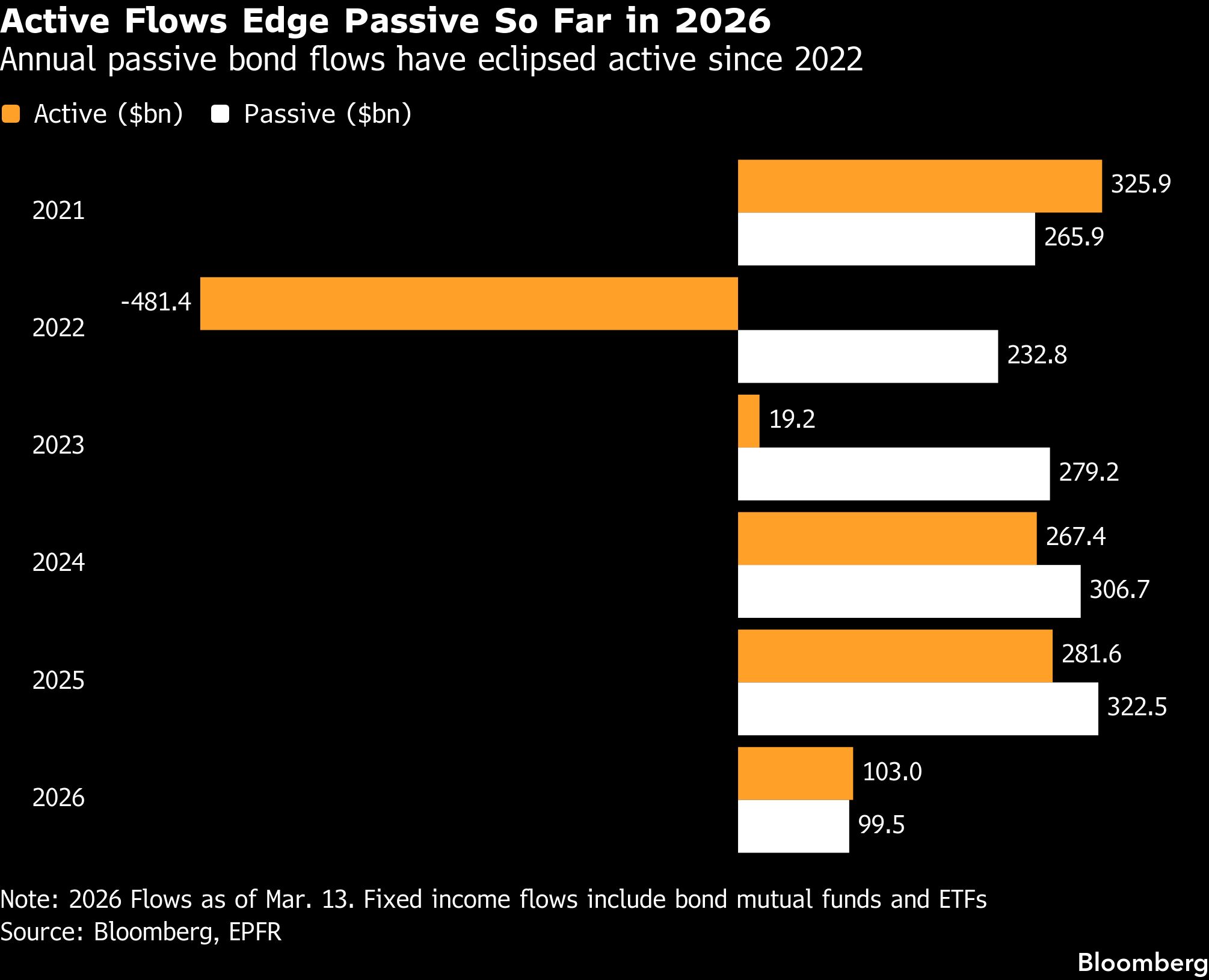
As BlackRock’s chief investment officer for fixed income, Rieder oversees roughly $3 trillion, and his funds have pulled in even more money since his name was mentioned prominently during Trump’s vetting process for the central bank’s top post.
“Rieder is considered a kind of a rock star in the industry,” Kirsten Chang, senior industry analyst at VettaFi, which tracks data primarily on publicly traded bond funds. “People really trust his name to make the moves that he’s making behind the portfolio allocations.”
Bond investing has always been at the core of BlackRock, a $14 trillion giant of public markets. More recently, Chief Executive Officer Larry Fink has pushed deeper into private markets as well, and the firm has suggested that skilled hedge fund portfolio managers can generate superior returns in volatile markets.
Rieder, 64, went from a dark horse candidate for Fed chair to being on a short list of finalists, meeting with Treasury Secretary Scott Bessent as well as Trump, who ultimately picked Kevin Warsh in late January.

Rieder also manages BlackRock Strategic Income Opportunities, its largest actively managed US fixed-income mutual fund, and the iShares Flexible Income Active ETF (BINC), both of which attracted more capital after his candidacy for the Fed gained momentum.
Investors anticipating additional Fed rate cuts pumped more cash into fixed-income funds late last year and early 2026, but the bond rally turned into a rout after the US and Israel attacked Iran, causing oil prices to surge and fueling inflation fears.
BINC, which Rieder often touts publicly, is among the industry’s fastest-growing active fixed-income ETFs. It took in roughly $6.5 billion from August through February, boosting its assets to roughly $17 billion.
TriaXial isn’t Rieder’s first foray into hedge funds. He founded R3 Capital Management in 2008 with money from Lehman Brothers, where he had spent two decades. But then Lehman filed for bankruptcy and BlackRock took over management of R3 in 2009, and Rieder joined the firm as head of its fixed-income alternatives portfolio team.
A message from Advisor Perspectives and VettaFi: Discover something new! Click here to register for our upcoming webcasts.
Bloomberg News provided this article. For more articles like this please visit
bloomberg.com.
Read more articles by Silla Brush, Michael MacKenzie, Sridhar Natarajan