A rush by bond traders to unwind US futures positions amid the selloff triggered by war in Iran is running its course, setting the stage for new wagers that will determine whether the rout reverses or deepens.
Just before hostilities broke out on Feb. 28, positions in US bond futures were heavily skewed toward lower rates, in part reflecting investor concerns about the outlook for growth. Those worries were abruptly replaced by inflation fears as the war sparked a surge in oil prices, prompting traders who were caught off guard to exit their positions, in turn accelerating the market decline.
These types of position-driven dislocations tend to fade within 10 to 15 days, according to research from Morgan Stanley. Tuesday marked the 17th trading session since the war broke out, with US yields trading near their highest in months, though retracing some losses late in the day on a report from Israel’s Channel 12 that the US is seeking a one-month ceasefire with Iran. The gains continued into Wednesday with the 10-year yield four basis points lower at 4.32%.
“This places the market near an inflection point, where the line between positioning unwind and structural shift should become clearer over the next few weeks,” Morgan Stanley’s Shaun Zhou wrote in a note Monday.

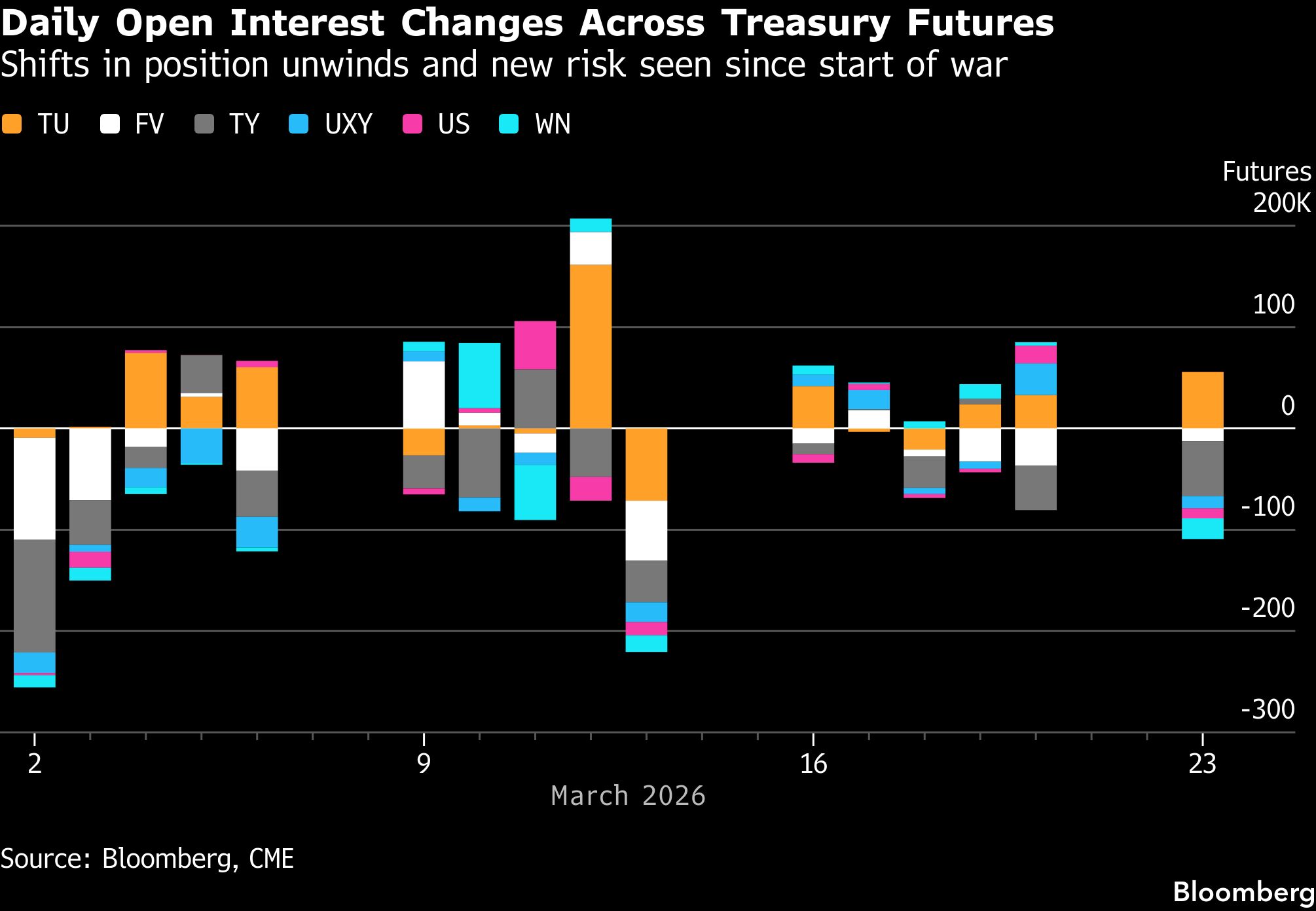
While the biggest amount of unwinds occurred on March 2, the new positions added since then have broadly signaled short positions, targeting higher Treasury yields.
“We saw a large addition of new short risk into cheapening,” Citigroup’s David Bieber, who sees both tactical and structural positioning now “one-sided moderately short,” said in a Monday note.
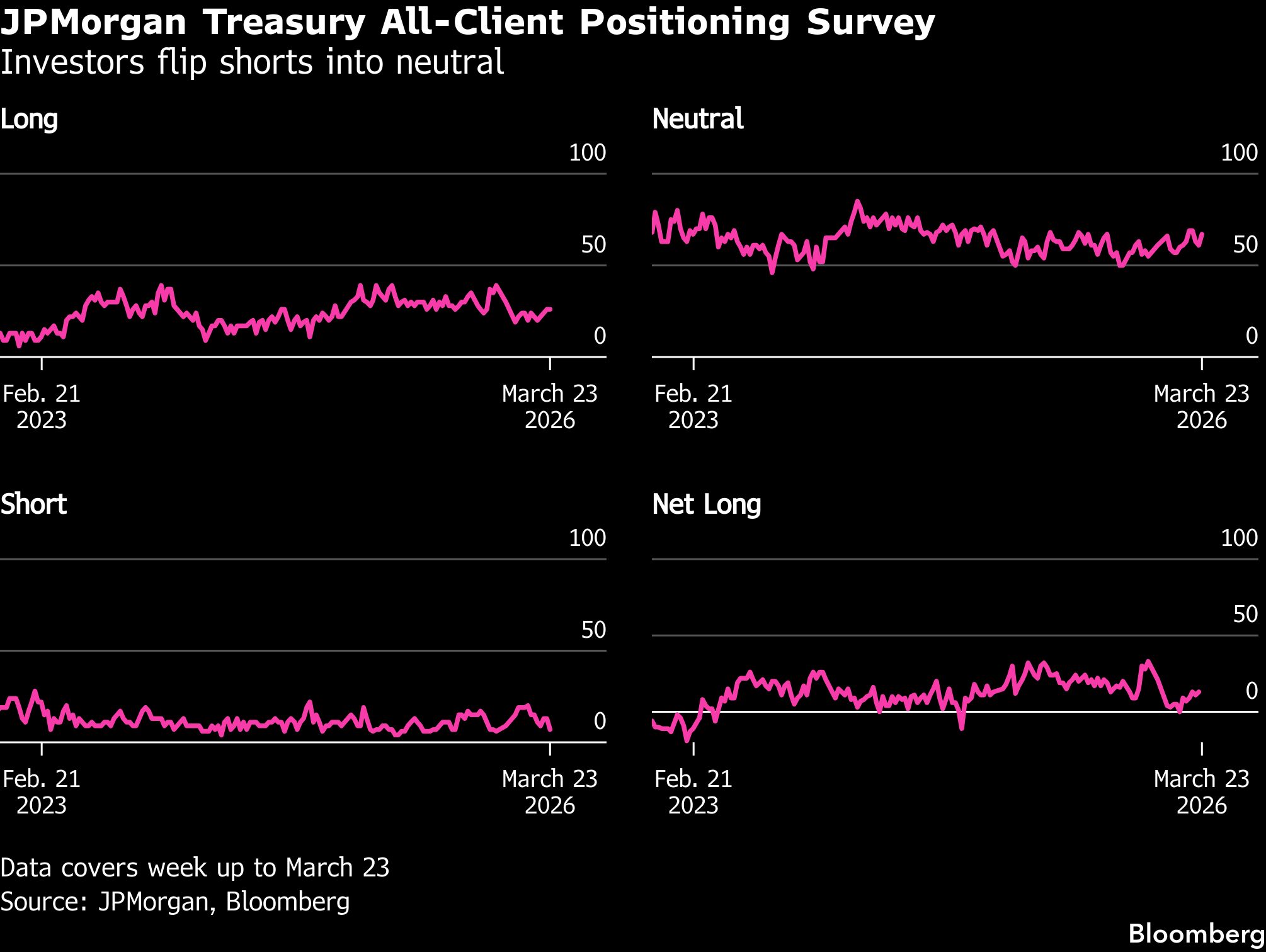
In the cash market, a Tuesday release of a JPMorgan Treasury client survey showed a substantial rise in neutral positioning, signaling high uncertainty about the future path of Treasury yields from here.
In terms of where the biggest unwinds have occurred, the largest amount since March 2 were seen in 10-year note futures, where open interest — or the amount of new risk held by traders — has dropped in 12 of the past 16 sessions for a combined 550,000 contracts, equivalent to about $36 million per basis point in risk. In cash terms, this is about $45 billion’s worth of the current 10-year note.
Here’s a rundown of the latest positioning indicators across the rates market:
JPMorgan Client Survey
In the week to March 23, investors reduced short positions by 6 percentage points, shifting into neutrals which rose by the same amount. Outright longs were unchanged on the week, leaving the net long position at the biggest since December.
SOFR Options
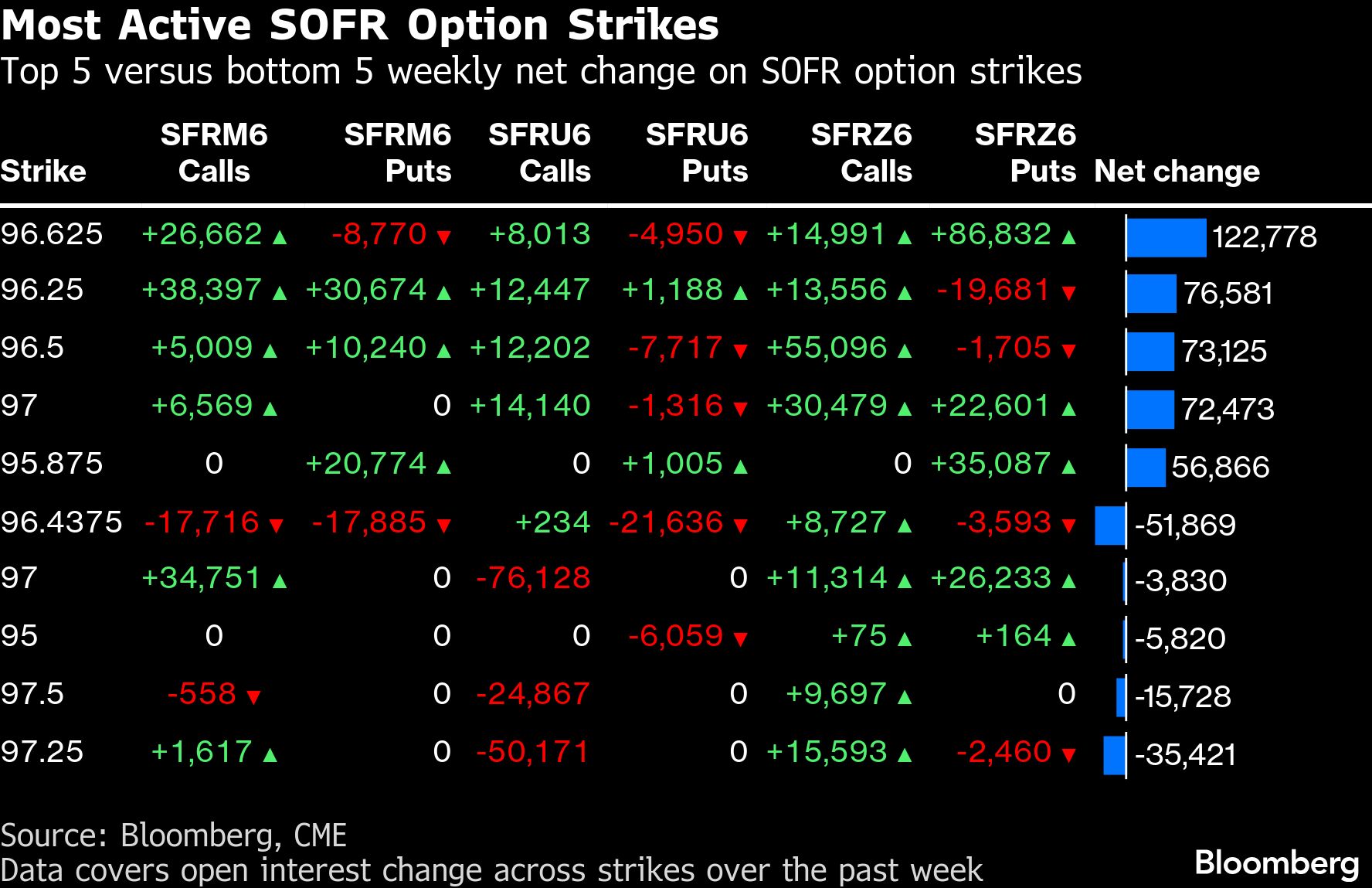
Over the past week, there has been a jump in open interest across the 96.625 strike with flows focused on year-end downside protection. Examples have included buyers of Dec26 97.00/96.625 1x2 put spreads. There has also been demand for 96.25 strikes over the past week, with open interest rising in Jun26 calls and puts — flows have included SFRM6 96.50/96.375/96.25/96.125 put condors bought over the past week. The 96.50 strikes have also been active, with recent flows including buyers of SFRZ6 96.50/96.75/97.00/97.25 call condors, SFRM6 96.50/96.375/96.25/96.125 put condors and SFRM6 96.50/96.375/96.3125/96.1875 put condors.
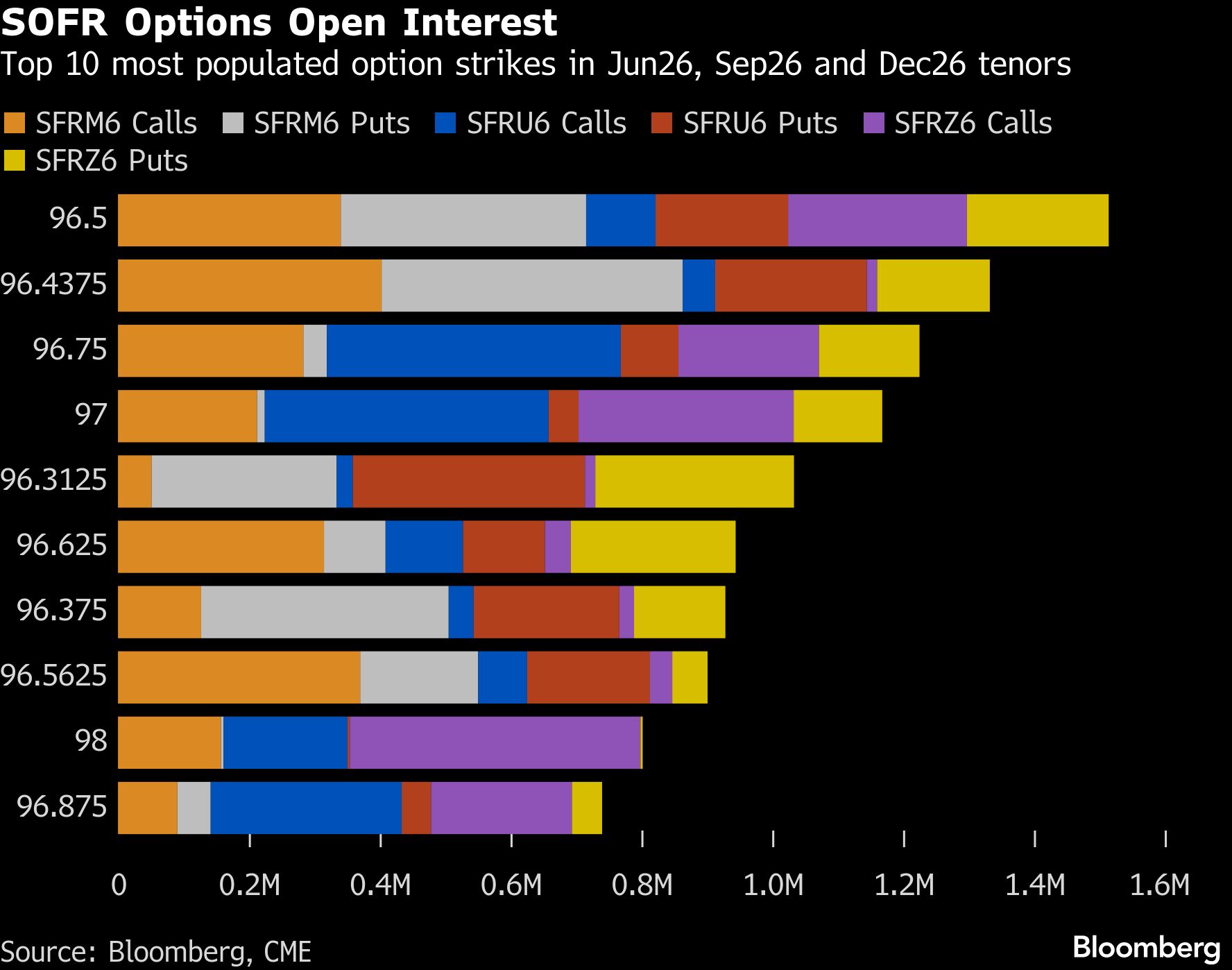
Broadly, the most populated options strike across Jun26, Sep26, and Dec26 options is the 96.50 strike, where a large amount of Jun26 calls and puts risk remains. The June SOFR options expire June 12 and a week ahead of the June 17 policy announcement. There is also a large amount of open interest in June options around the 96.4375 strike, where flows have included SFRM6 96.4375/96.50 call spreads bought vs selling 2QM6 97.375 calls — positioning in a ratio bull steepener structure where volumes are around 100k vs 50k.
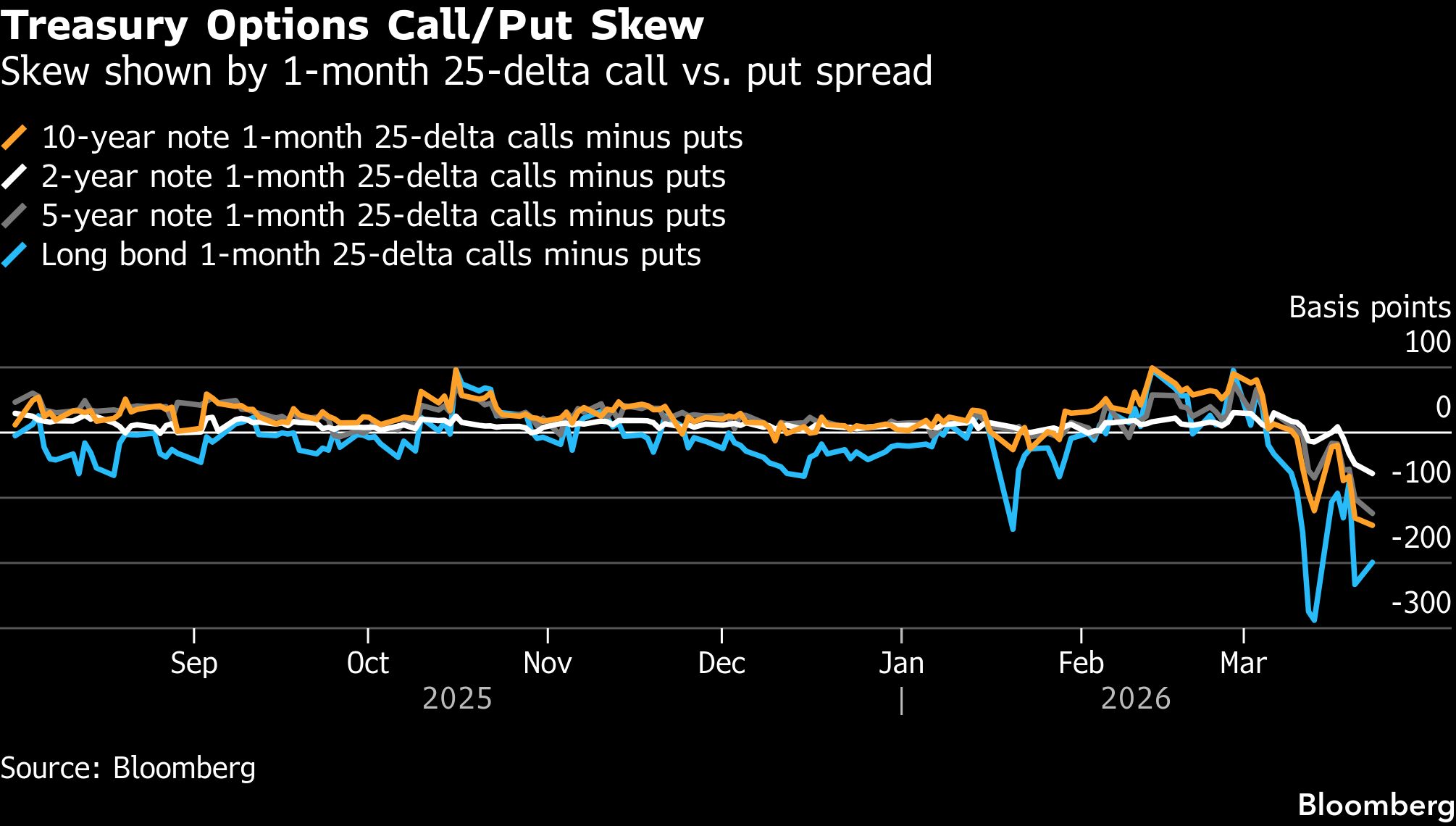
Treasury Options Premium
The premium paid to hedge futures risk in Treasuries continues to trade away from multi-month extremes, but remains heavily favoring premium for puts, especially in longer-dated tenors.
A message from Advisor Perspectives and VettaFi: Discover something new! Click here to register for our upcoming webcasts.
Bloomberg News provided this article. For more articles like this please visit
bloomberg.com.
Read more articles by Edward Bolingbroke