The Iran war is challenging Japan’s safe-haven assets, once again forcing domestic investors to seek better returns abroad.
The yen slid past 160 per dollar at the end of last week, its weakest level since the government intervened in the market in July 2024, and prompting stern warnings from the country’s top currency official. (The currency stepped back from the psychologically important level during Asia hours Monday.) Meanwhile, since the US and Israel first struck Iran on Feb. 28, the benchmark Nikkei 225 Index has lost 14% in dollar terms, in line with MSCI Emerging Markets’ decline.
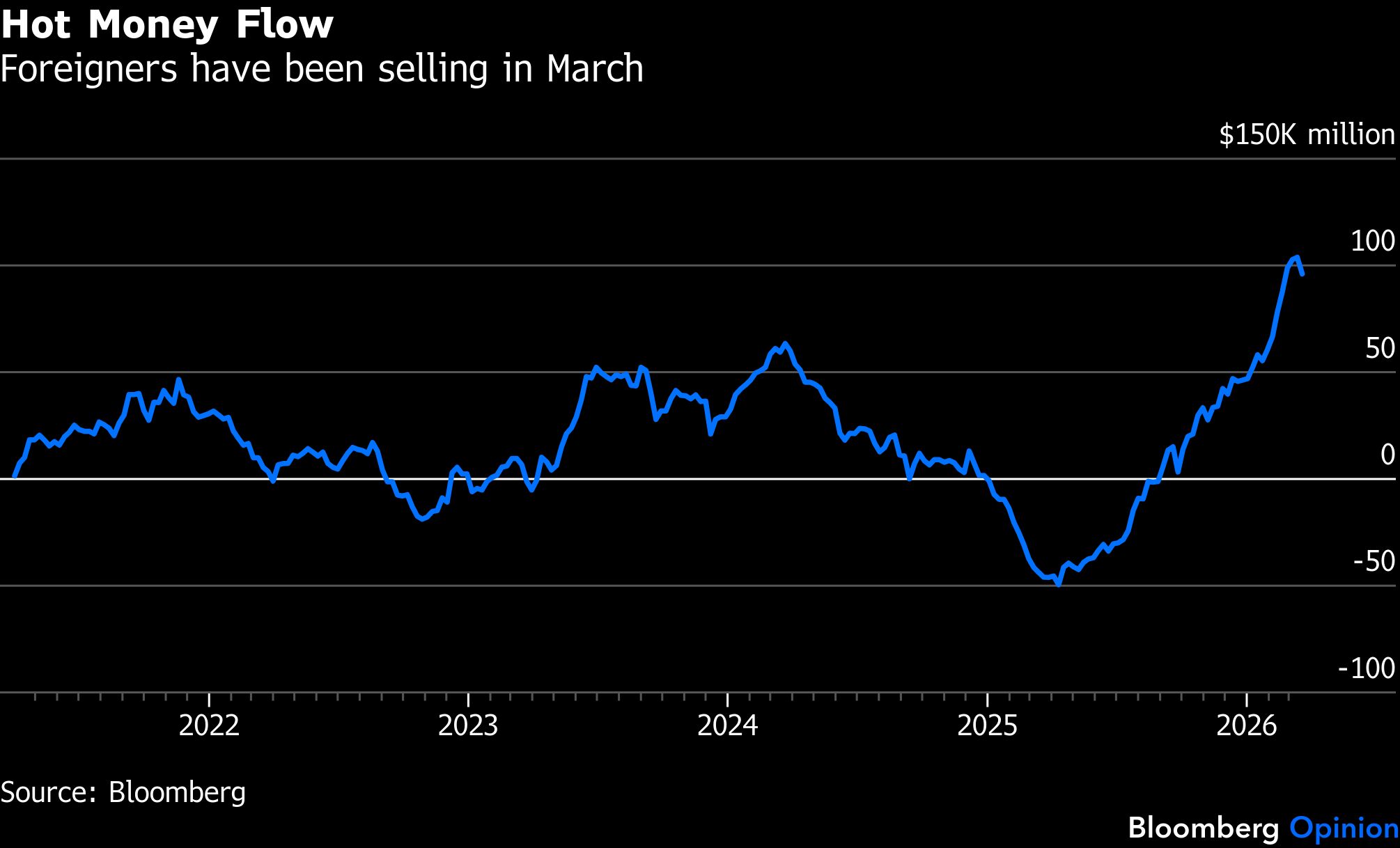
There are several explanations for the recent selloff. First, currencies of energy importers have fallen. Japan is no exception despite having a massive oil reserve of more than 200 days. Second, hot money has been fleeing as investors’ risk appetite worsened. In the three weeks ending March 20, foreigners have sold $24 billion worth of Japanese equities, following almost $100 billion of inflows in the 12 months to the end of February.
But Japan’s problem goes deeper and started earlier than the latest conflict in the Middle East. Some investors fear that the yen, for one, is in a secular decline, creating a vicious feedback loop with domestic equities and affecting how the Japanese invest.
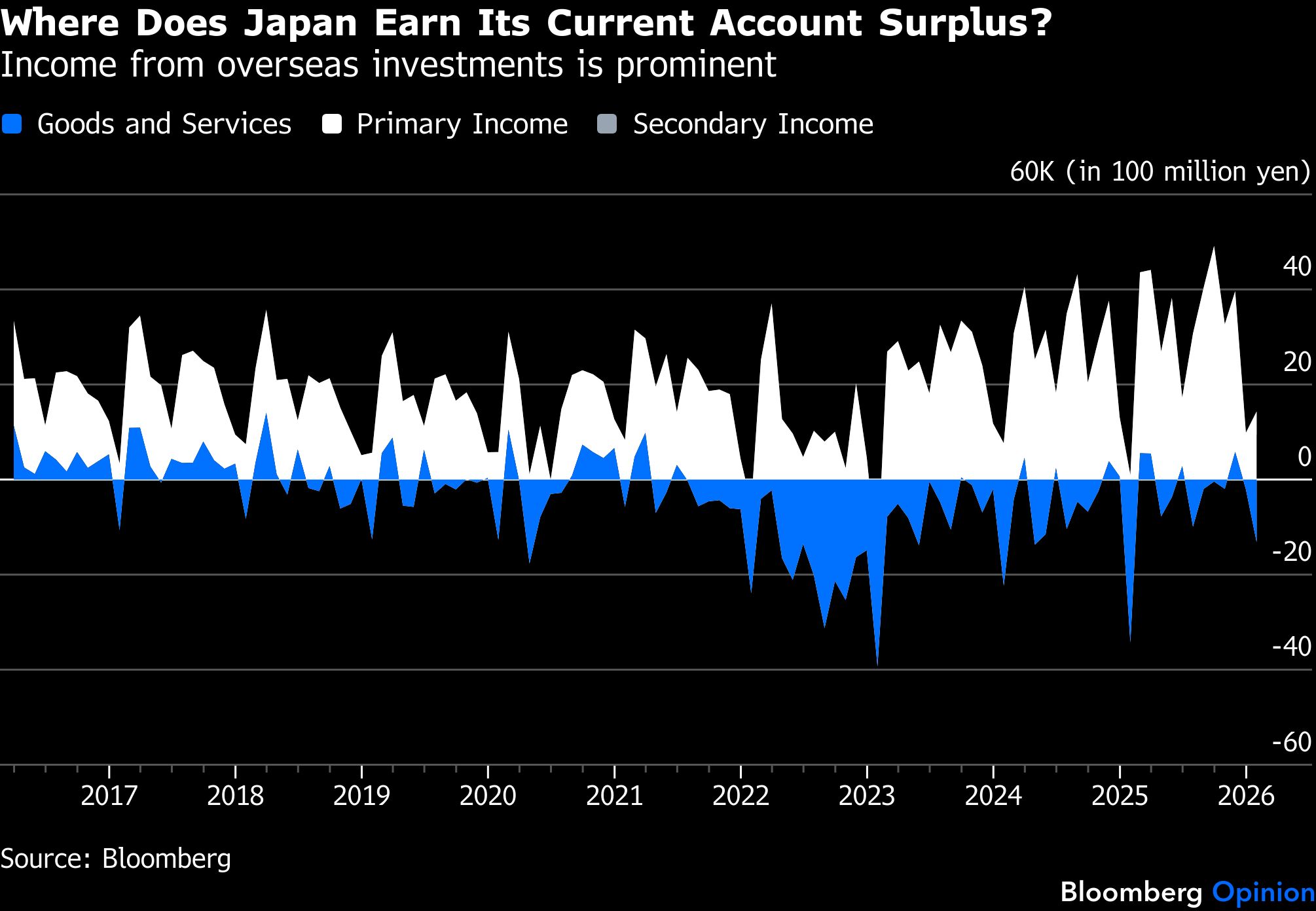
The Iran war is forcing investors to refocus on a country’s external vulnerabilities — and capital outflow is an issue for Japan. While it still runs a current account surplus, it’s not the kind favored by foreign-exchange traders. Instead of net exports, it’s the income balance — or profits from overseas direct and portfolio investments — that account for much of Japan’s surplus.
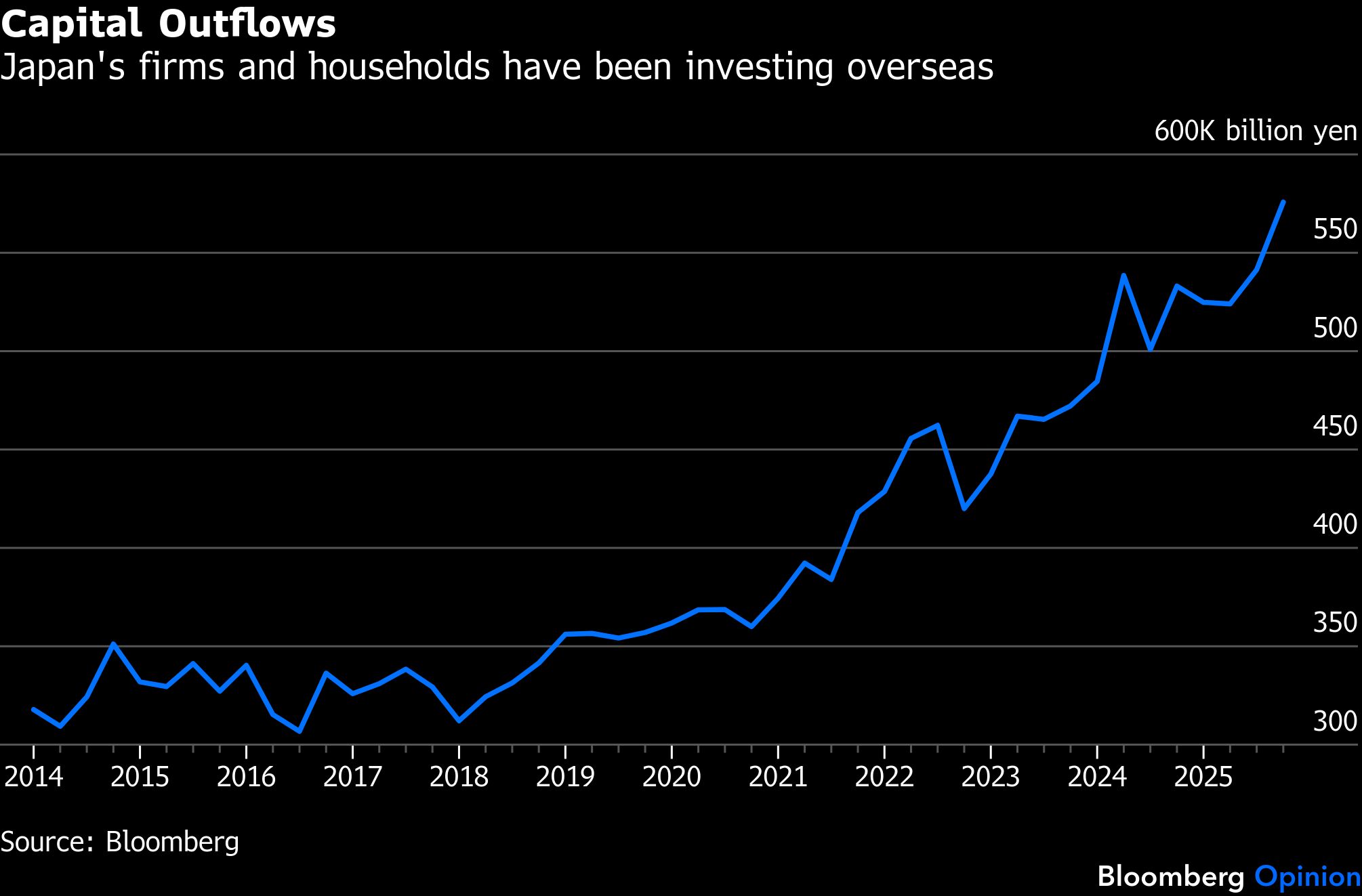
As Japanese firms and households increasingly invest abroad, that puts pressure on the yen. US-based private-credit asset managers, for instance, are finding success with Japanese retail investors, calling them “patient” despite a drumbeat of negative news on loan losses and redemption restrictions. Meanwhile, since the war began, the underperformance of the Nikkei will only reinforce Japanese investors’ views that there are limited opportunities at home. As a result, capital outflows will continue.
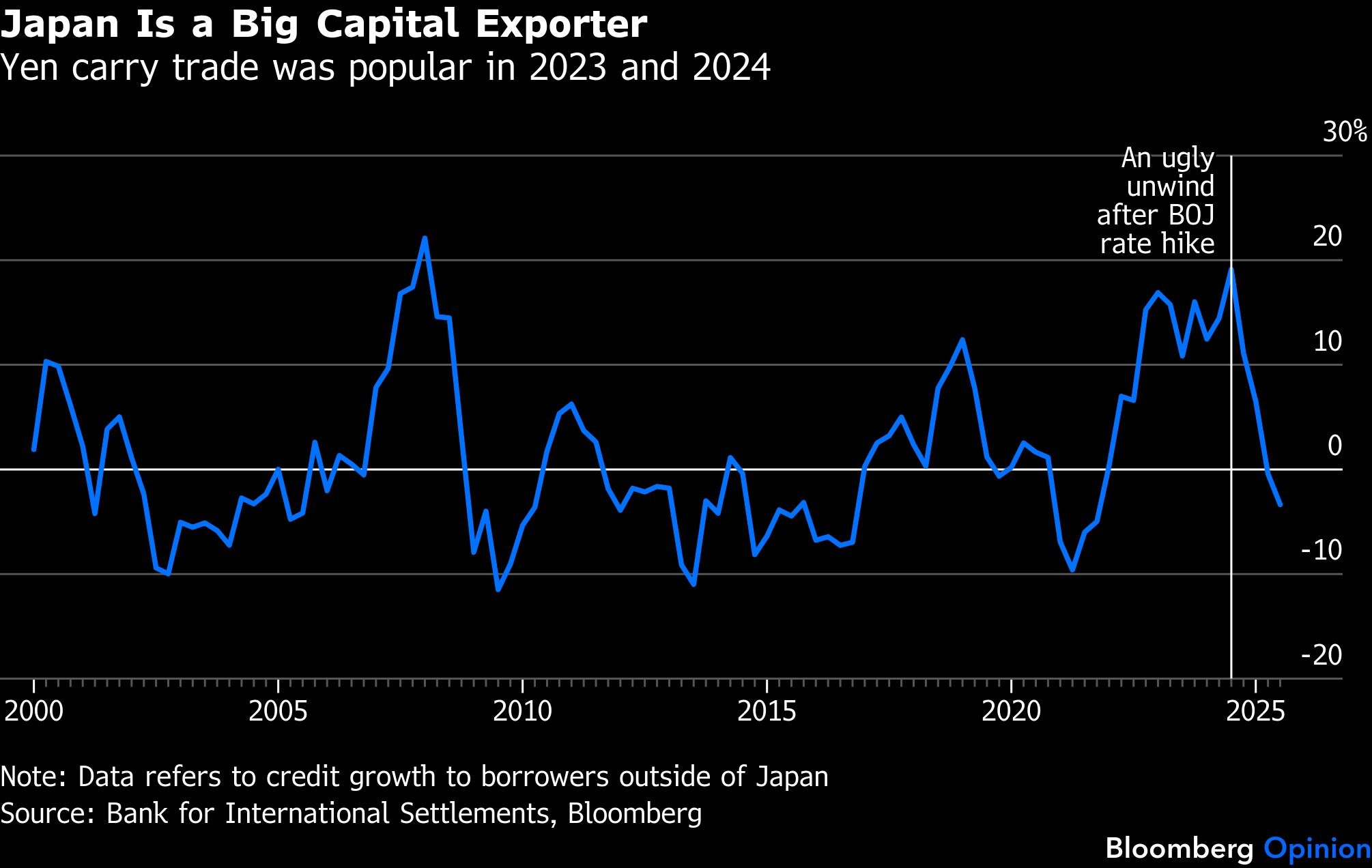
Many, from domestic banks to retail investors, have engaged in the so-called carry trade in the past, borrowing cheaply at home to plow into higher-yielding foreign assets. This strategy was especially popular in 2022 and 2023, when the Federal Reserve was in a hiking cycle while the Bank of Japan maintained its zero-rate regime. But the carry trade may have slowed down after a surprise BOJ rate increase created an ugly unwind in August 2024.
The carry trade is likely rearing its head again. This is because other major central banks are looking to potentially increase rates, while the BOJ is still wary of further lifting borrowing costs.
To be sure, it’s impossible to pin down the exact size of this strategy because unlike stock trades, currency transactions aren’t tracked centrally on exchanges. But the direction of travel is clear: The yield differential between the US and Japan is once again on the rise, and American equities have been a lot more resilient as the Iran war drags on.
A breakdown of Japan’s current account balance gives us a sense of how the country’s relationship with the rest of the world has changed. Japan has transformed from a goods exporter into a global provider of capital. This war, which has caused a selloff in local currencies and equities, will only reinforce domestic investors’ desire to diversify overseas.
A message from Advisor Perspectives and VettaFi: Discover something new! Click here to register for our upcoming webcasts.
Bloomberg News provided this article. For more articles like this please visit
bloomberg.com.