European Stocks Stage Biggest Rally in a Year on Ceasefire Deal
Membership required
Membership is now required to use this feature. To learn more:
View Membership BenefitsEuropean stocks soared the most in a year as investors rushed to buy stocks in the wake of the US and Iran agreeing to a two-week ceasefire in exchange for Tehran reopening the Strait of Hormuz.
The Stoxx Europe 600 index was up 4.3% by 1:35 p.m. in London, the biggest intraday gain since April 2025. Stocks that had fallen the most during the war posted some of the biggest gains. EasyJet Plc and TUI AG jumped more than 10% as travel and tourism stocks led the advance in the index. Energy was the only sector in the red.
“Investors are looking to play a shift in market sentiment and buy everything that’s been beaten up in recent weeks and sell what’s done well,” said Dan Coatsworth, head of markets at AJ Bell.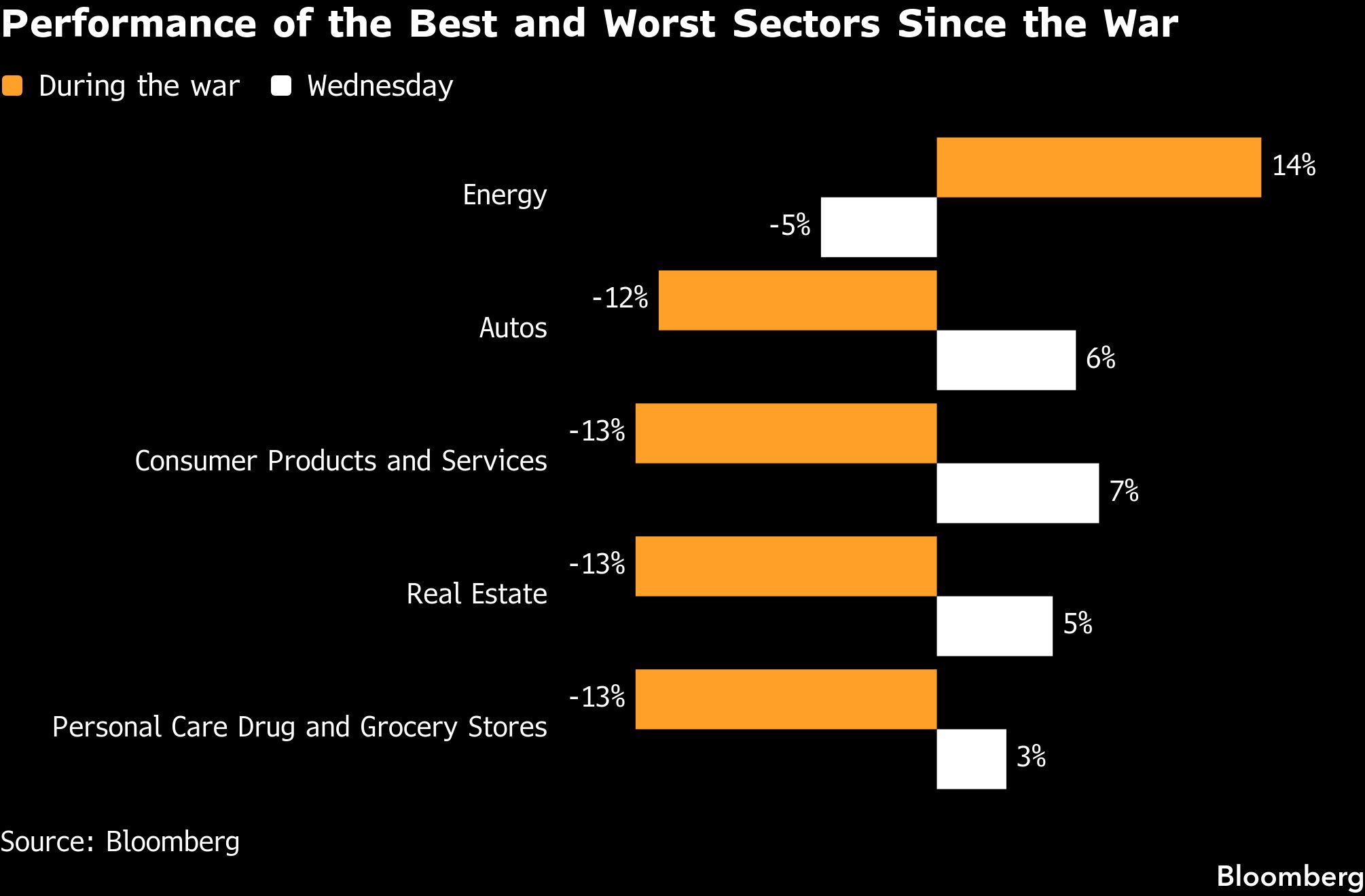
The deal accord buys time for the US and Iran to reach a longer-term deal to end the conflict that has sparked a global energy crisis. The rally was also amplified by a large short position in the market and bearish positioning from systematic investors.
The equity market is likely to experience a “powerful short squeeze,” as hedge funds and CTAs remove protection that was put in place to hedge the war, according to Barclays Plc strategists.
“Sharp CTA/HF de-risking, positive April seasonality and a still resilient economic backdrop mean stocks may be prone to a powerful short squeeze and beta rally,” Emmanuel Cau wrote in a note. “The path of least resistance for stocks is likely higher, even if oil surge may not fully reverse.”
In other individual stocks, Close Brothers Group Plc shares surged as much as 23%. The specialized lender said it’s adequately covered against the estimated cost related to the misselling of car loans.
Meanwhile, Amundi SA said it had been buying into the selloff in equity markets. The Paris-based firm is Europe’s largest asset manager, overseeing about €2.38 trillion ($2.78 trillion).
“We had gradually increased our equity holdings during the selloff, particularly last week, as the positioning seemed cleaner to us,” said Amelie Derambure, a senior multi-asset portfolio manager at Amundi.
Although the ceasefire brought relief to markets, it didn’t address President Donald Trump’s demands for limits on Iran’s nuclear, missile or drone programs. There was no indication the US was prepared to meet Iran’s desire for a permanent agreement and lift sanctions.
“While there is now clear upside on a longer-term ceasefire, we must also recognize that there are still potential factors that may see hostilities resume,” said Oliver Blackbourn, multi-asset portfolio manager at Janus Henderson Investors. “It is unclear how open the Strait of Hormuz will be going forward – will all vessels be allowed through or will there be restrictions?”
Here’s what other investors and strategists had to say:
Sabrina Reeh, portfolio manager at DWS Group:
“If the two‑week ceasefire holds and the Strait of Hormuz remains open, European and particularly German equities could see renewed support. The DAX outperformed the S&P 500 ahead of the conflict but has lagged since late February; a durable truce would allow markets to refocus on recovery prospects, benefiting cyclicals such as industrials and banks and easing pressure on inflation‑sensitive consumer sectors such as travel-related stocks. Still, given recent volatility and policy reversals, uncertainty remains elevated and a barbell strategy is warranted.”
Roberto Scholtes, head of strategy at Singular Bank:
“It will take several months for commodity markets to rebuild inventories and for prices to return to pre-war levels, even if a durable ceasefire and normal transit through the Strait of Hormuz are achieved. Higher inflation and slightly slower GDP growth are therefore unavoidable at this stage, and uncertainty around the endgame for commodity flows is likely to persist. As a result, we are not primarily focusing on cyclical stocks. Instead, in our view, the most compelling opportunity has emerged from a five-month correction in the technology sector, during which earnings have continued to grow strongly. Valuations have declined to more attractive levels, creating a window to increase exposure again to the “Magnificent 7” and key semiconductor value chain players in Asia.”
Richard Saldanha, global equity fund manager at Aviva Investors:
“The key is that this ceasefire does now set a pathway to a more permanent de-escalation and (importantly) a re-opening of the Strait of Hormuz. We’ve seen a number of sectors that have been significantly impacted as a result of the conflict and we expect a sharp relief rally in those today – especially consumer discretionary and industrials which have been more sensitive to higher energy prices. Investors had been grappling with what seemed like very binary outcomes which has made positioning difficult but this will certainly bring some relief given we have now stepped back off the edge of the precipice. Having said that it is important to remember this ceasefire only covers two weeks and we still don’t know how quickly the Strait will re-open – a lot will depend on how quickly vessels are able to get through and bring supply of oil back online.”
Altaf Kassam, European head of investment strategy and research at State Street Investment Management:
“This is best seen as a relief rally, not a full regime shift. The ceasefire has temporarily removed a large geopolitical risk premium, particularly from oil, which supports risk assets. But it’s time‑limited and fragile, so markets will need evidence of sustained energy flows and political follow‑through before repricing this as a durable turning point. If the ceasefire breaks down or negotiations stall, oil volatility could snap back quickly, reversing much of the risk‑on move. What investors need to look for is disciplined diversification — participating in the relief rally while staying protected if the ceasefire fails to become durable.”
Daniele Antonucci, Chief Investment Officer at Quintet Private Bank:
“The lesson for investors is to live with uncertainty without letting it dictate every move. Hold a clear view and retain enough flexibility to navigate a world in constant motion. We readjusted our European equity weight to neutral from a small overweight previously, allowing us to raise the tactical weight of US equities. Historically, the US has shown better resilience in periods of stress and is also rebounding quickly when risk sentiment improves.”
Bloomberg News provided this article. For more articles like this please visit bloomberg.com.
Read more articles by Rose Henderson, Olivia Levieux, Lisa Pham
Membership required
Membership is now required to use this feature. To learn more:
View Membership BenefitsSponsored Content
Upcoming Virtual Events View All












