Fresh data on the US labor market and new research from the Federal Reserve suggest that the conventional wisdom around employment growth being sluggish is wrong. Rather than healthcare being the only industry propping up a labor market that would otherwise be weak, the employment dynamics we are witnessing are the inevitable outcome of a labor force that's barely growing due to sharply reduced immigration.
Because demand for healthcare grows as the population ages, non-healthcare industries are forced to make do with fewer workers. Changing that dynamic will require boosting the labor force -- presumably by a shift in immigration policy that is unlikely until at least 2029 -- or finding a way to increase healthcare productivity or reduce demand so the industry stops hoovering up so many workers.
The Fed research, which came out prior to the release of the March jobs report on April 3, argues that the pool of available workers could grow by only around 100,000 in 2026, or fewer than 10,000 per month. With the unemployment rate already below 4.5%, and with the Fed still dealing with above-target inflation, that leaves very little room for any aggregate job growth and means that sustaining real gross domestic product growth will require gains in productivity to do the heavy lifting.
March’s jobs report released shows the implications of this reality at the industry level. On a monthly basis, healthcare and social assistance job growth was once again a standout performer, increasing by 89,900 jobs, with industries that were impacted by poor weather in February, such as construction and leisure and hospitality, accounting for most of the remaining jobs growth overall.
But it's the change in the year-over-year figures that underscores the dynamics laid out by the Fed. Healthcare and social assistance industries added 680,000 jobs over the past 12 months, while overall employment in the US increased by 260,000 jobs. This means that non-healthcare industries shed 420,000 jobs. Over the same period, the labor force shrank by 554,000, as immigration slowed and the number of retirees continued to steadily rise.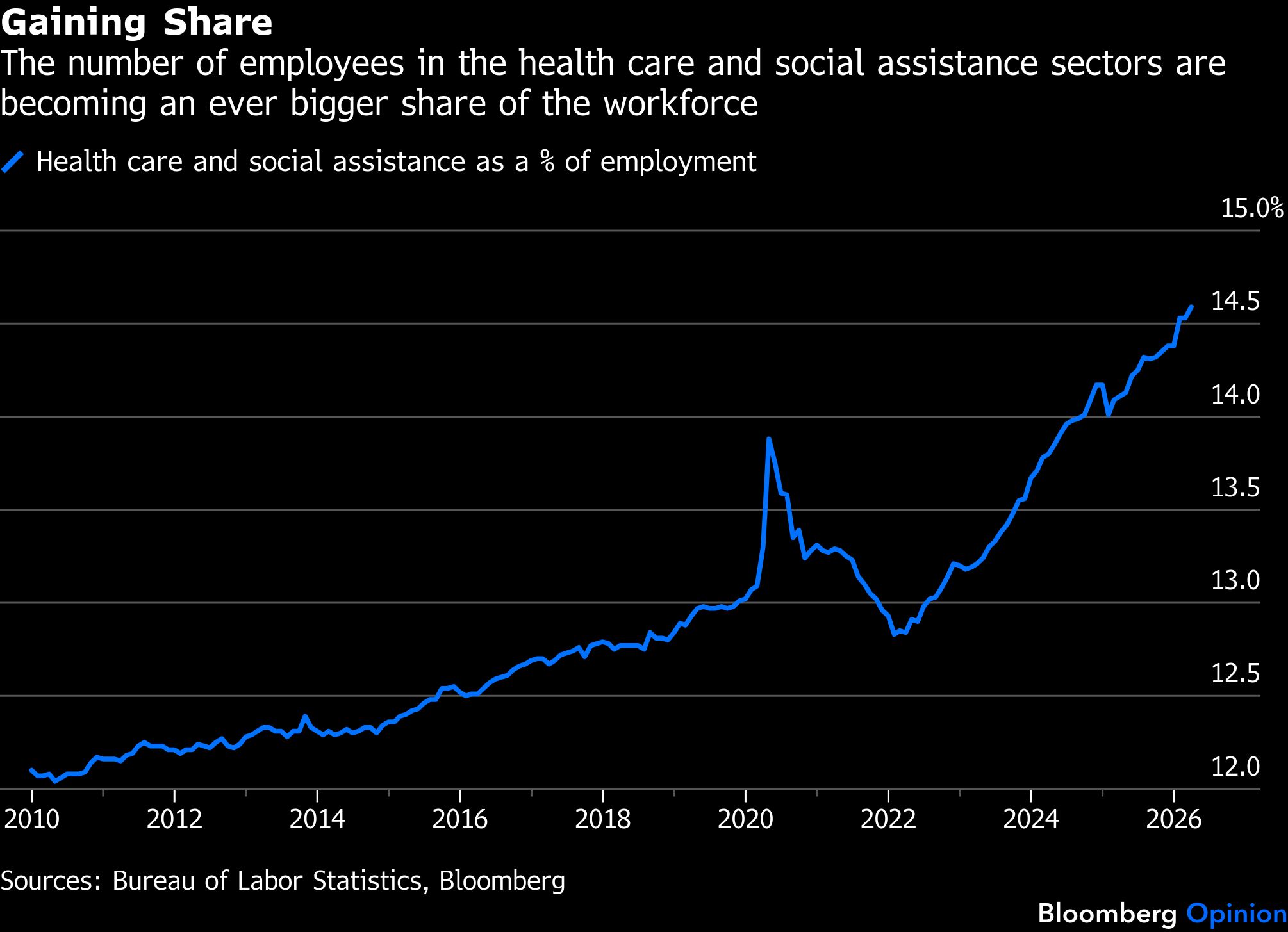
If immigration policy and demographics mean that the labor force won't be expanding, then the unemployment rate is already low and labor force participation rates are high. Healthcare tends to add a lot of jobs no matter what the economy is doing, which means the the rest of the economy has to shed jobs, and it's just a question of what mechanics cause that to happen.












