By at least one metric in the $9.5 trillion foreign-exchange markets, demand for the dollar is ebbing amid the tenuous ceasefire between the US and Iran.
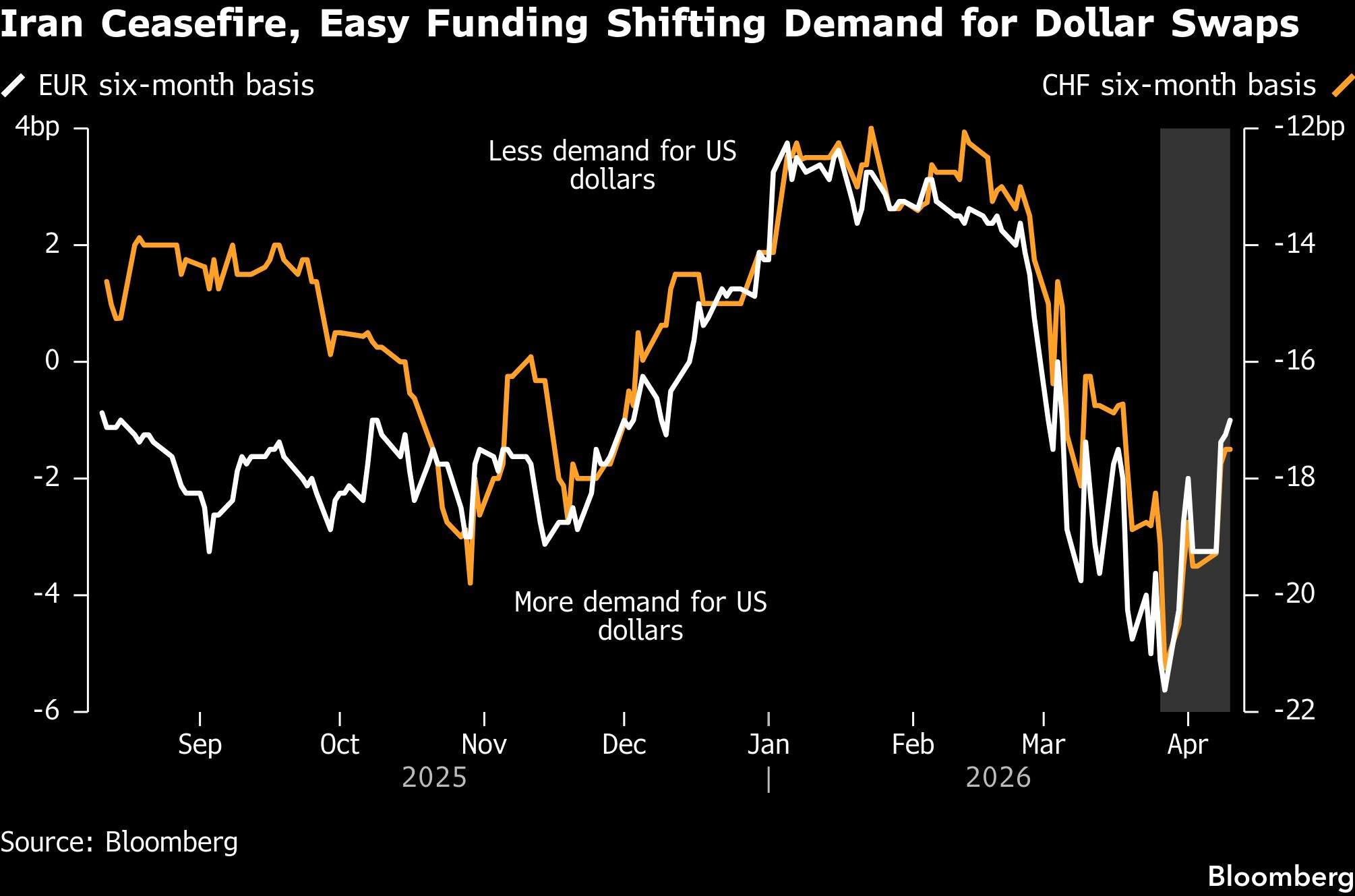
Measures of the so-called cross-currency basis — the extra cost investors pay or receive when sourcing dollars overseas instead of the US — show a steady waning in appetite for the greenback in recent days, particularly against the euro and Swiss franc.
“This is a simple reversal of the dollar trade,” said Nathan Thooft, a senior portfolio manager at Manulife Investment Management. “It was one of the few beneficiaries of the crisis as it developed, and now as there are signs of de-escalation that bid is reversing course.”
But while the basis is indicative of the global investor appetite for US cash, it’s not a forward-looking measure of what the dollar will do next. Predicting that is a different task altogether, especially in a market primed to move on the latest war headlines and comments from President Donald Trump.
“It is really difficult to anchor views and portfolio positioning to a single macro narrative right now,” said Thooft, chief investment officer of the firm’s equities and multi-asset solutions teams managing $309 billion.

In the spot market Friday, the dollar fell after March US consumer inflation data showed headline prices growing the most in nearly four years amid a surge in gasoline costs — but the core measure of inflation, which excludes food and energy impacts, rose 0.2% on the month, below expectations.
“All else equal, this puts less pressure” on the Federal Reserve, Patrick Locke, a currency strategist at JPMorgan Chase & Co., said after the data. That will “compound the drag from the ceasefire that already forced an unwinding of dollar risk premium.”
Bloomberg’s measure of the dollar is now set for a 1.5% decline on the week, which would be the worst performance since January.
The cross-currency basis market gauges how much it costs to exchange one currency for another beyond what is implied by borrowing costs in the cash markets. It effectively sets the price of foreign-exchange hedging for global investors and is an indication of flows between economies and asset classes.
On Friday the six—month euro basis tightened in favor of the single currency to a level last seen in early March. The Swiss franc’s own gauge, meanwhile, is now at its most favorable in three weeks.
Following the launch of US and Israeli strikes against Iran six weeks ago, these gauges rapidly moved in favor of the greenback — implying a rush for dollar funding as the spiraling Middle East war slammed global risk appetite.
“The softening of headlines around the conflict have definitely helped risk sentiment and moderated dollar strength,” said Jayati Bharadwaj, head of currency strategy at TD Securities.
If the ceasefire holds, leading to a permanent easing in hostilities, Nomura strategists reckon a long-term trend of de-dollarization — a broad shift away from dollar-denominated assets due to factors like the US’s unpredictable policymaking and fiscal deterioration — will re-emerge. The bank sees the greenback dropping 4% from current levels by year-end in that scenario.
A fresh reading of speculative positioning in the currency markets, through April 7 ahead of the ceasefire announcement, will be released later Friday by the Commodity Futures Trading Commission.
A message from Advisor Perspectives and VettaFi: Discover something new! Click here to register for our upcoming webcasts.
Bloomberg News provided this article. For more articles like this please visit
bloomberg.com.
Read more articles by Carter Johnson