With the Middle East in flames and a fifth of the world’s supplies of oil and gas in limbo thanks to the uncertain status of the Strait of Hormuz, it’s tempting to imagine that a clean-energy world might leave such conflicts behind:
“Fuel – oil and gas, particularly – is a security challenge,” former US Secretary of State John Kerry said last month. “You don’t want to be the prisoner of a choke point.”
Rewiring the world with green energy is a “path to peace,” in the words of the late environmental journalist Ross Gelbspan.
“If an alien came to visit, I’d be embarrassed to tell them that we fight wars to pull fossil fuels out of the ground,” astrophysicist Neil deGrasse Tyson once remarked.
And yet the unravelling of the global fossil fuel system may well be a source of chaos rather than calm. Two wars have already erupted in major oil-exporting regions since global leaders started committing to net-zero five years ago.
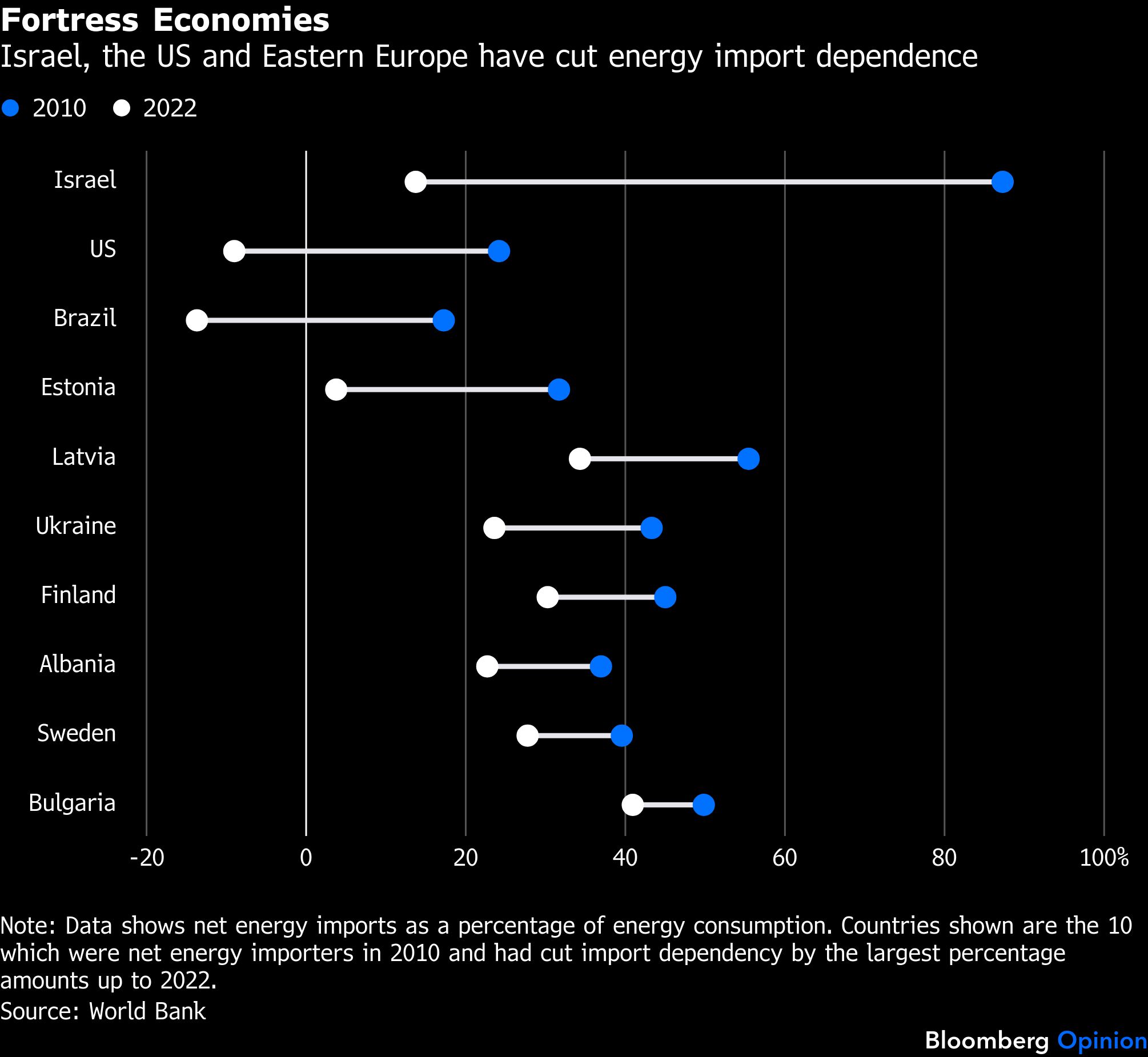
States that are energy independent may also find themselves less fearful of conflict than ones beholden to foreign suppliers. Have a look at countries that have become less reliant on energy imports in recent decades, and it’s hardly a list of pacifists:
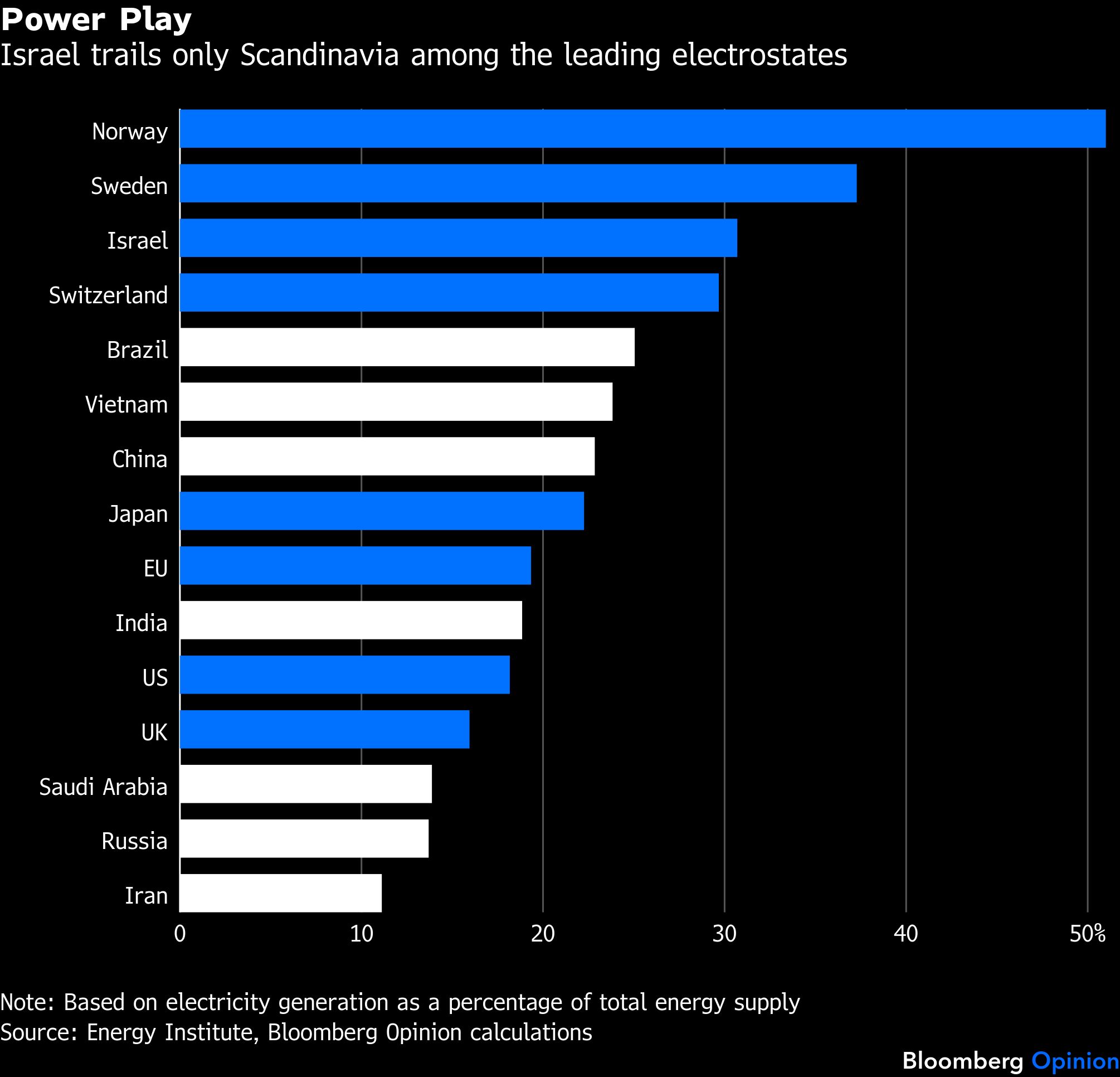
Consider a ranking of “electrostates” — countries that have done most to switch away from fossil-fired engines and boilers, and toward electrical motors, machinery, and heat pumps. China’s surging consumption makes it the archetypal example, but if you consider grid power as a share of energy, the biggest electrostates are Norway, Sweden — then Israel.
It’s a similar picture when you cut the data a different way — the share of energy consumption supplied by imports. Thanks to the discovery of offshore gas fields and the growth of solar and electric vehicles, in Israel this fell 62% between 2010 and 2022. That’s the most dramatic reversal anywhere, and it’s left the country with far greater economic resilience. Since the start of the war with Iran, the shekel is one of the world’s best-performing currencies, up about 2.6%.
Other countries have trodden a similar path. The fracking boom has turned the US from a net importer to a net exporter of oil, and it’s similarly insulated from many of the effects of the crisis in the Strait of Hormuz. At the Waha hub pricing point in west Texas, gas producers will currently pay you about $4.62 per million British thermal units to take their product. Gasoline prices are up, but gas-linked electricity costs should stay low. That’s not making Washington any less bellicose.
China, meanwhile, has built an entire clean energy industry in part to reduce its need for imported oil and gas. Belt and Road pipelines and railways to bypass the Strait of Malacca have been built to blunt the threat of a US oil embargo in the event of war, while dirty domestic coal reserves have been used to trade-proof the grid. If those actions have increased Beijing’s strategic autonomy as intended, they’ll make war more likely, not less.
Similar efforts will now accelerate around the world. Renewable power is cheaper almost everywhere, and is inherently energy-independent. The sun and the wind don’t have to pass through an ocean strait to make it to your generators. Once equipment is connected, it can provide power for decades without a drop of imported fuel. With the US apparently abandoning its role as the guarantor of global freedom of navigation, the strategic value of that consideration has increased drastically.
That doesn’t necessarily bode well for peace. Trade has long been recognized as a restraint on conflict. “The commercial spirit cannot co-exist with war,” Immanuel Kant once wrote. By raising the economic cost of conflict, the deepening integration of the global economy since the Cold War has helped restrain it.
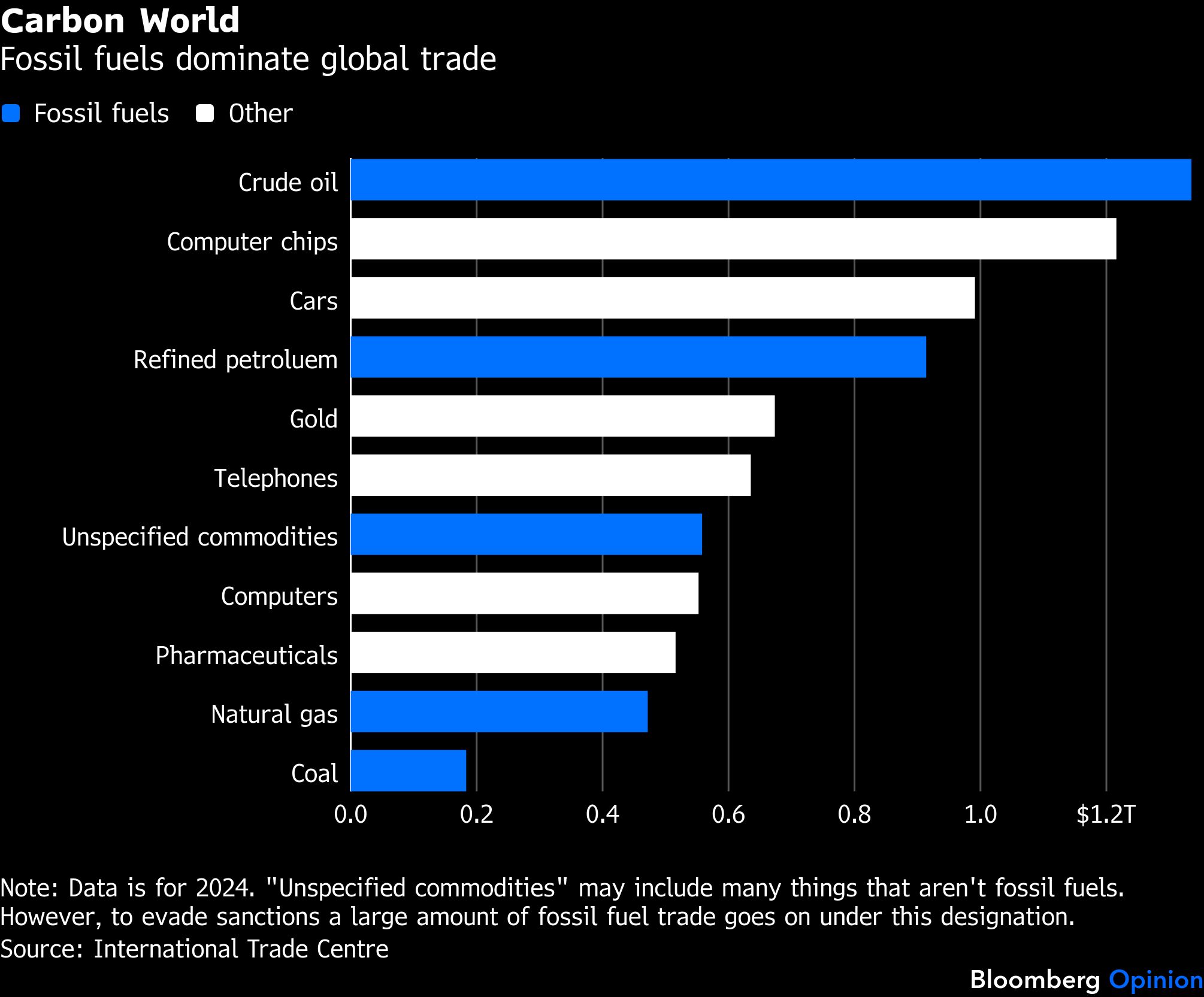
That process has been inextricably linked to carbon. Fossil fuels comprise about 40% of the tonnage that’s moved by sea each year. Crude oil is consistently the most-traded product globally, followed by computer chips, cars, and refined petroleum. Add in gas and coal, and about 12% of the value of global trade comes from carbon-emitting energy alone.
We have seen this play out before. After Britain pushed Germany into famine during World War I by blockading its imports of food and fertilizer, European economies and Japan turned to autarky, a policy of industrial self-sufficiency, to ensure they were never put in the same situation. That in turn fueled the zero-sum competition that eventually sparked another, far more devastating conflict in 1939.
The Iran conflict is sure to spur the world’s transition away from fossil fuels and toward clean energy. If that’s done for national security reasons, though — out of fear of each other, rather than hope for the future — it may push us further away from peace, rather than closer to it.
A message from Advisor Perspectives and VettaFi: Discover something new! Click here to register for our upcoming webcasts.
Bloomberg News provided this article. For more articles like this please visit
bloomberg.com.