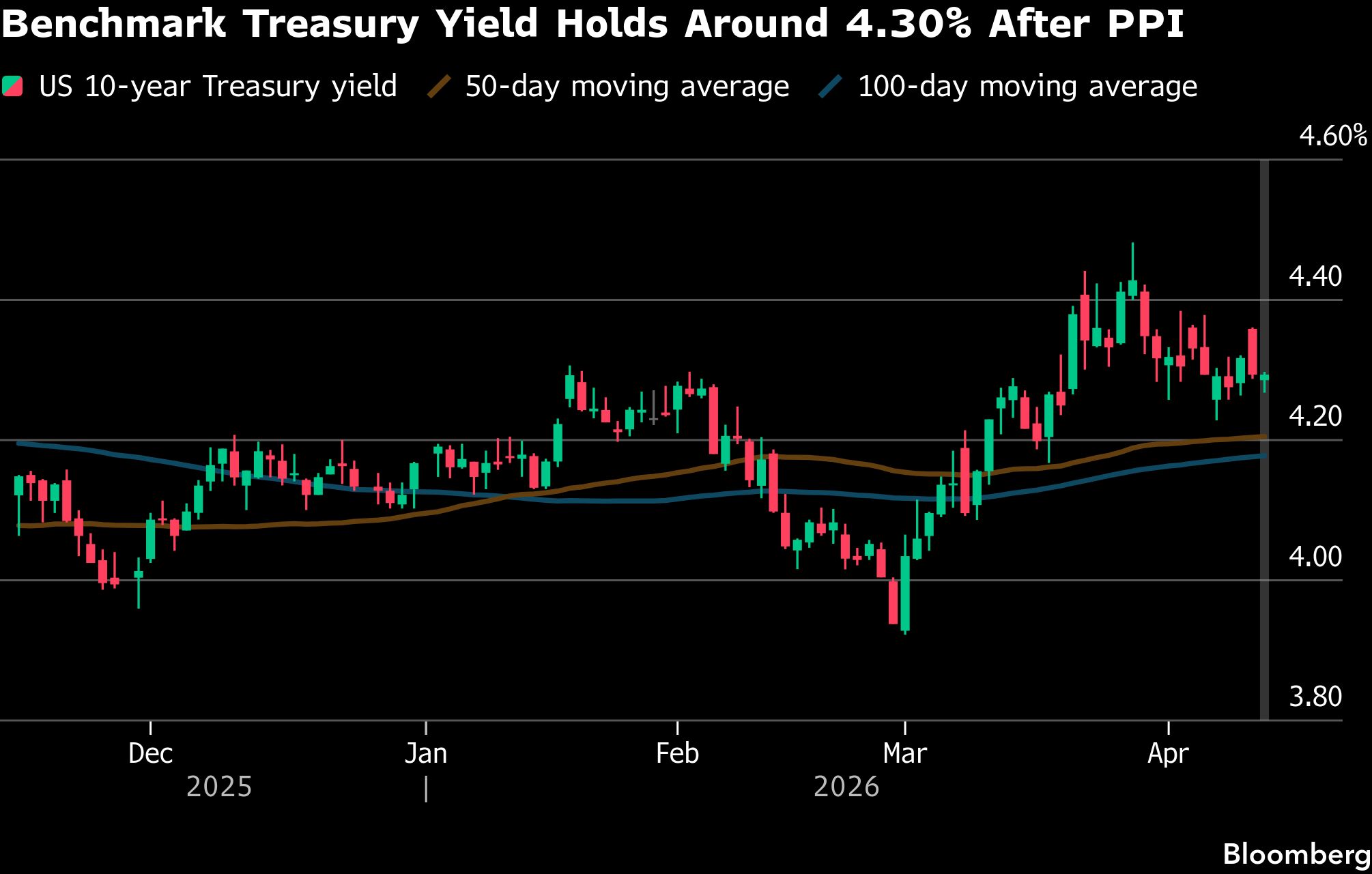
Treasuries traded steadily after a reading of US wholesale prices last month rose less than anticipated, affirming wagers that the Federal Reserve will cut interest rates at least once this year even as the broader inflationary outlook remains murky amid the war in Iran.
The yield on 10-year US government debt traded edged higher toward 4.30%. The dollar extended early losses, while US stocks gained. Swaps traders see a roughly 30% chance of one quarter-point Fed reduction in borrowing costs in 2026; before the war began, they were expecting at least two cuts.
The producer price index rose 0.5% after a downwardly revised 0.5% increase in February, according to Bureau of Labor Statistics data. The median economist estimate was 1.1%. The core PPI, excluding food and energy costs, rose 0.1% versus a 0.4% median estimate.
“We would expect markets to look through the print and expect more of the impact from higher oil passthrough to core in April,” said Molly Brooks, a US rates strategist at TD Securities in New York. “Inflation prints will remain top of mind in the near-term, until the market turns its focus towards growth concerns.”

Global markets have been roiled by the war, which is now in its seventh week. Oil prices and inflation expectations have risen significantly as the conflict has curtailed exports from the region via the Strait of Hormuz, a narrow stretch of water that carries about a fifth of the world’s oil and liquefied natural gas.
This was reflected in US consumer inflation figures for March published last week which rose the most on a monthly basis since 2022, driven by a surge in gasoline prices.
The International Monetary Fund, meanwhile, downgraded its growth projection for the year after the war in the Middle East triggered a major oil shock and included the possibility of a downturn if the conflict drags on and energy infrastructure is severally damaged.
Still, investor focus remains on the ongoing discussions between the US and Iran to end the conflict. On Tuesday, Brent crude briefly dropped below $97 a barrel as Washington and Tehran discussed holding another round of face-to-face negotiations, according to people familiar with the matter. That comes after weekend talks in Pakistan failed to produce a breakthrough.
Regarding the Fed, South Carolina Senator Tim Scott, the Senate Banking Committee’s top Republican, said the group will hold a confirmation hearing next week for Kevin Warsh, President Donald Trump’s nominee to succeed Jerome Powell as chair of the central bank when his term expires in May.
Activity in the Treasuries market was muted. Through 9 a.m. in New York, futures volumes were about 55% of 20-day average levels. In Secured Overnight Financing Rate futures, volumes were 40% to 50% of recent averages out to the December 2027 contracts.
“Consolidation is the theme and one that is likely to define the balance of the week until there is greater clarification regarding the war in the Middle East,” Ian Lyngen, head of US rates strategy at BMO Capital Markets, wrote of the trading in Treasuries.
A message from Advisor Perspectives and VettaFi: Discover something new! Click here to register for our upcoming webcasts.
Bloomberg News provided this article. For more articles like this please visit
bloomberg.com.
Read more articles by Carter Johnson, James Hirai