Is good news about the economy bad news for the stock market once again?
That question is top of mind on Wall Street these days, as investors look ahead to key data on the labor market and inflation while Kevin Warsh awaits Senate confirmation as the next chair of the Federal Reserve with a presumed strong desire to lower interest rates.
However, a hot economy paired with still-elevated oil prices has almost completely dashed hopes for a rate cut this year — removing a bullish tailwind for the stock market. In fact, bond traders are boosting wagers that the central bank’s next policy move could be a rate hike rather than a cut. Expectations may shift further on Friday when the US employment report for April is released and on May 12, when data is expected to show an acceleration in consumer inflation.
“The bar is getting higher for rate cuts given the interesting mix we have of a worsening inflation outlook but increasingly stable labor outlook,” said Kevin Gordon, head of macro research and strategy at the Schwab Center for Financial Research. “If the labor market does start to retighten and inflation takes longer to cool — driven mostly by a protracted war in Iran — I think markets would be at risk of correcting given the attendant tightening in financial conditions.”
Inflation surged in March by the most in nearly four years, a consequence of the Middle East conflict. A record increase in gas prices was responsible for almost three-quarters of the monthly advance, the Bureau of Labor Statistics said last month. Economists expect the increase in the consumer price index accelerated further in April, from 3.3% to 3.8% year-over-year, according to the median estimate in a Bloomberg survey. And while energy markets on Wednesday took some solace from US efforts to end the Iran war, Brent crude remains above $100 a barrel and West Texas Intermediate oil is trading near $95.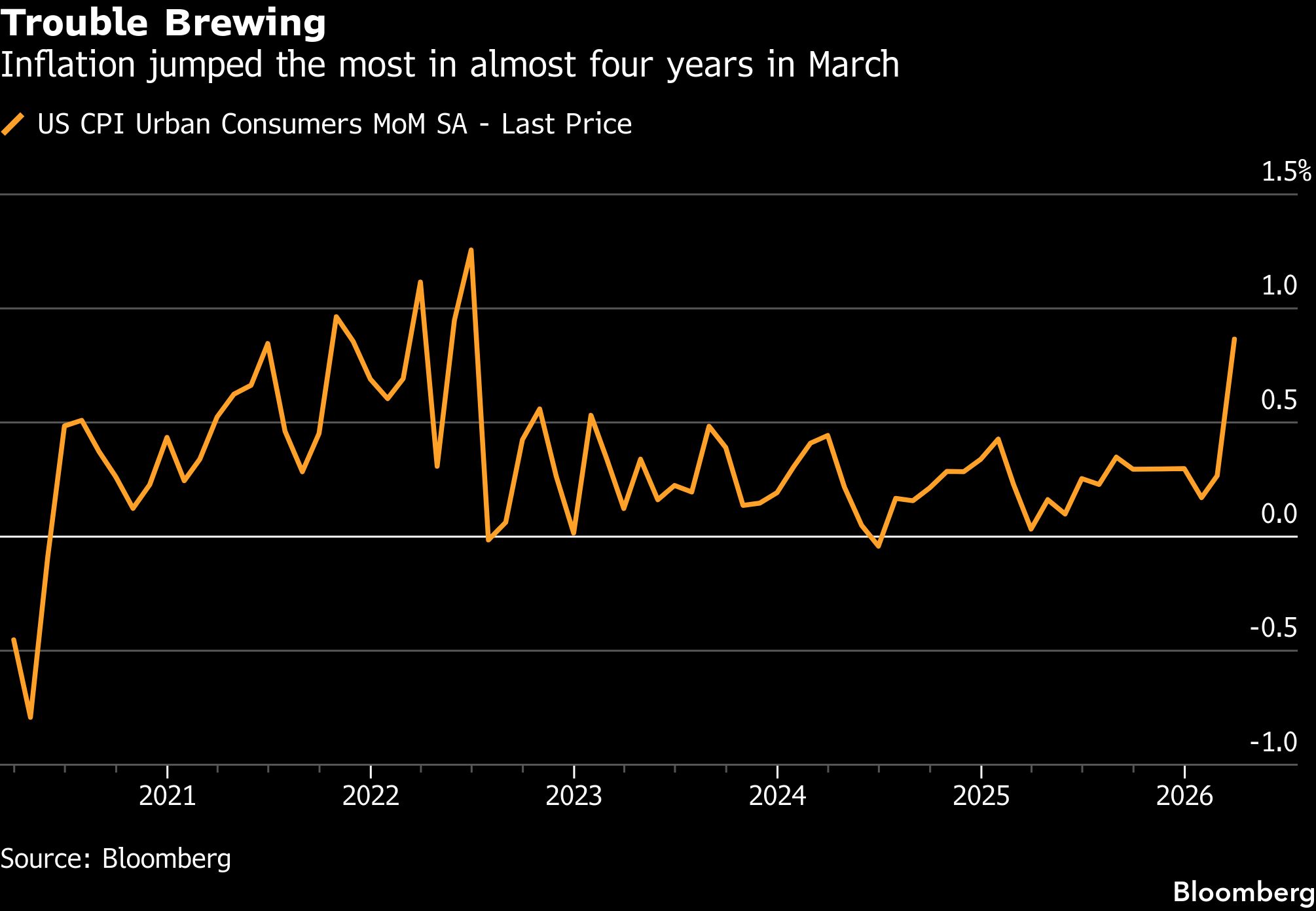
Wells Fargo Investment Institute’s Sameer Samana expects higher energy prices and inflation will keep the Fed on hold. But with Warsh to take over soon, Samana sees the central bank potentially rethinking its balance-sheet strategy. That could put pressure on long-term rates.












