Investors shed government bonds around the world, propelling borrowing costs to multi-year highs from Japan to the US amid intensifying fears that war-driven inflation will force central banks to pursue higher interest rates.
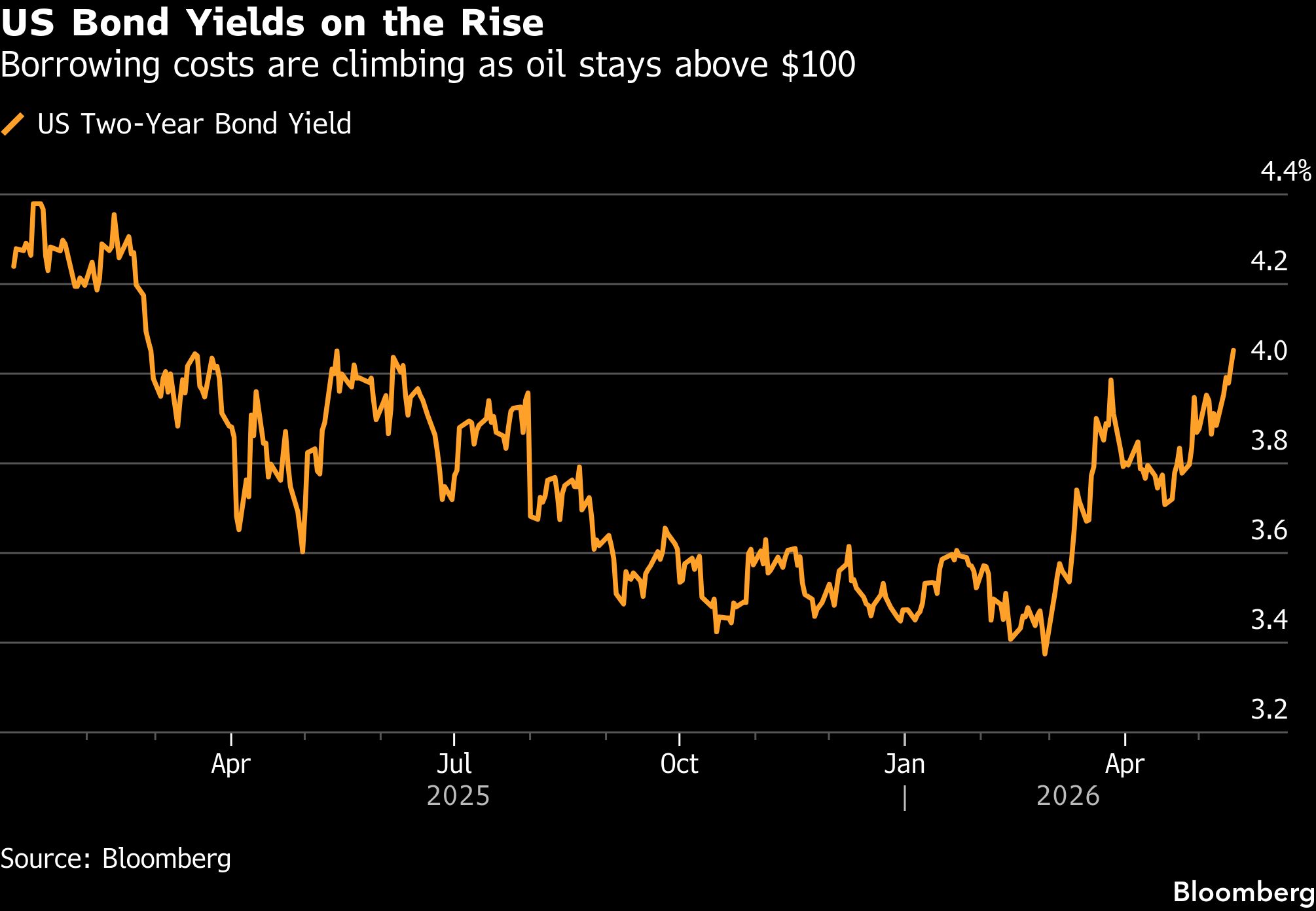
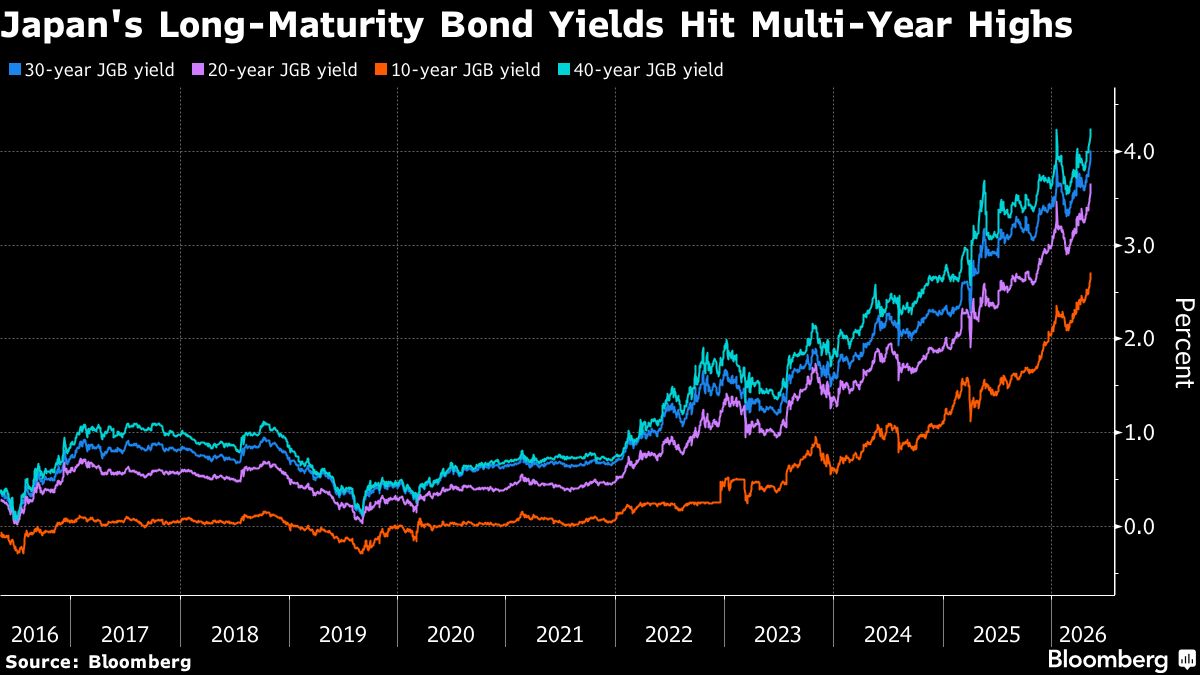
In the US, the yield on two-year Treasuries climbed to 4.07%, a level not seen since March 2025. The US 10-year yield rose seven basis points to 4.55%, its highest level in a year, while Japan’s 30-year yield hit 4% for the first time since the tenor’s debut in 1999. A political crisis in the UK lifted 30-year gilt yields to a 28-year high.
The selloff deepened heading into the weekend as Brent crude’s climb compounded worries sparked by back-to-back US inflation reports and the ongoing conflict between the US and Iran. Along with wagers on Federal Reserve rate hikes, policy tightening bets are also gaining traction in Japan, where producer prices jumped by the most since 2014.
“Bond yields definitely feel like they are getting unhinged,” Subadra Rajappa, head of research at Societe Generale Americas, told Bloomberg Television. “The market is not only testing the Fed, it’s putting Congress on notice. The longer that interest rates remain high, financing costs go higher.”

While bond yields gradually moved higher in recent days, the selloff gathered pace on Friday, with yields in Germany, Spain, Australia and New Zealand also pushing up. Investors are also beginning to sound alarm bells that higher borrowing costs may even puncture the recent run-up in equities.
“The move higher in global bond yields is a little unsettling,” said Prashant Newnaha, senior Asia-Pacific rates strategist at TD Securities in Singapore. “An extended and persistently high oil price could be the nail in the coffin for bonds.”
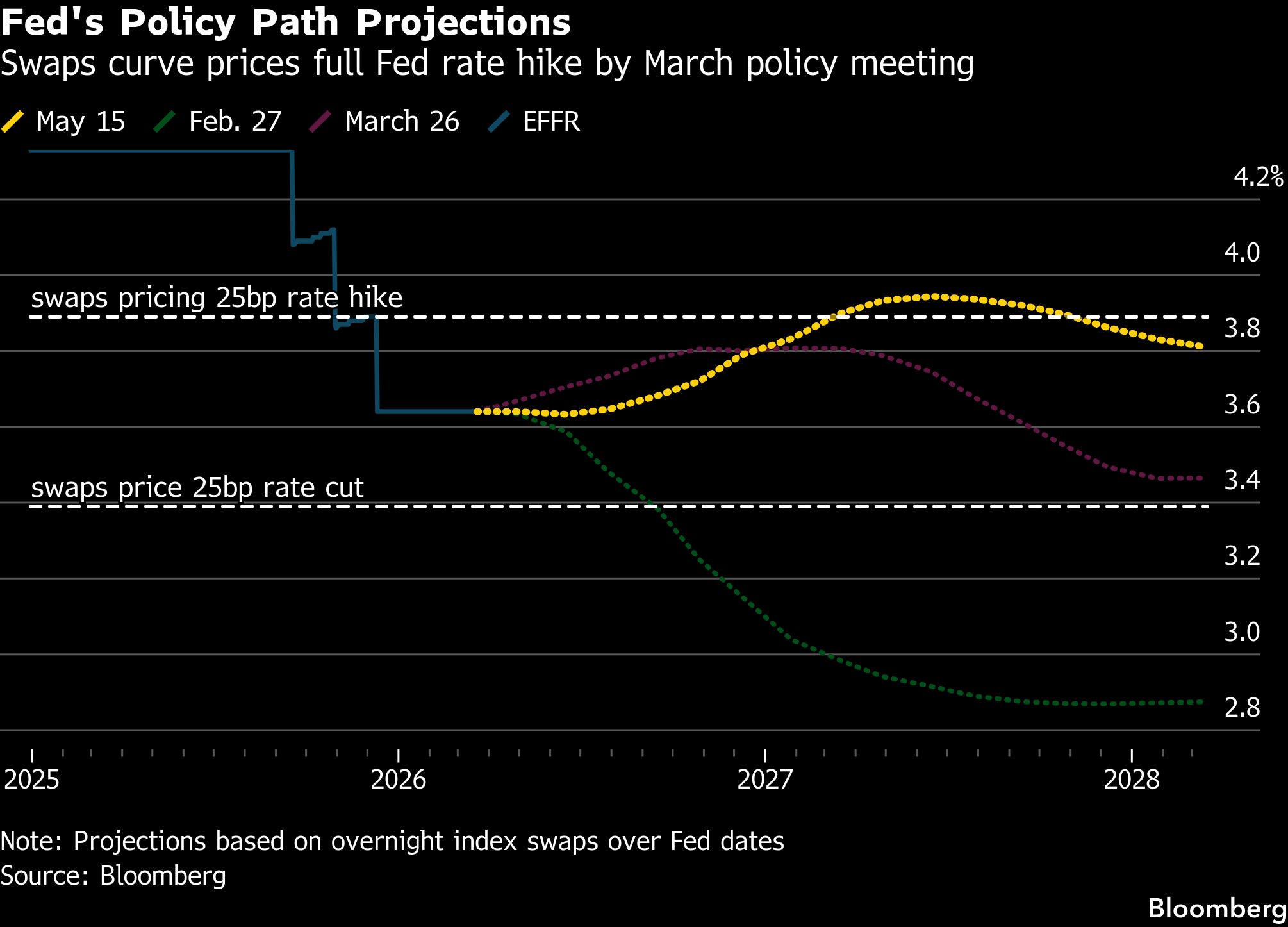
For the US, inflation is the overwhelming risk facing the economy, Fed Governor Michael Barr said on Thursday. The comments followed data this week that showed producer costs accelerating at the fastest pace since 2022. Traders are pricing in an almost two-thirds chance the Fed will hike interest rates in December, with a full quarter-point hike now seen by March 2027, according to data compiled by Bloomberg.
It’s a complicated environment for incoming Fed Chair Kevin Warsh, who was narrowly confirmed this week by the Senate to lead the US central bank. The path is now clear for Warsh, US President Donald Trump’s pick for the position, to be sworn in soon after outgoing Chair Jerome Powell’s term ends on Friday.
“What will be really important for Kevin Warsh is inflation expectations,” said Rajappa. “It’s very important for the Fed to change their bias from easing to neutral and be ready to act if needed.”
Global Impact
In Japan, the rise in yields also reflects renewed concerns over the nation’s fiscal policy. A report in Kyodo News said the government is weighing an extra budget to fund relief measures for the economy. Finance Minister Satsuki Katayama later said the situation has not yet reached the point where that’s needed.
“In Japan, where interest rates have been near zero for a long time, the fact that the yield on the 30-year JGB has risen to 4% is historic,” said Rinto Maruyama, senior FX and rates strategist at SMBC Nikko Securities Inc. “This suggests the possibility of sustained inflation in Japan, which has long been plagued by deflation.”
The country’s yields jumped across the curve on Friday. The 20-year rate climbed to the highest since 1996, and the 40-year yield hit its highest since debuting in 2007.
Meanwhile, the UK has been gripped by a brewing leadership contest that could usher in more public spending. The bond selloff was kicked into gear on Friday by signs that Manchester Mayor Andy Burnham may have a path to challenge Prime Minister Keir Starmer.
The yield on 10-year gilts jumped as high as 5.17%, the highest since 2008. Benchmark UK yields have risen by almost a percentage point since the US and Israel’s attacks on Iran. Traders have also flipped pricing for Bank of England monetary policy from interest-rate cuts to hikes.
As of Friday, swaps markets are pricing at least two rate increases in the UK by year-end, a dramatic pivot from having bet on two cuts less than three months ago.
A message from Advisor Perspectives and VettaFi: Discover something new! Click here to register for our upcoming webcasts.
Bloomberg News provided this article. For more articles like this please visit
bloomberg.com.
Read more articles by Matthew Burgess