Advisor Perspectives welcomes guest contributions. The views presented here do not necessarily represent those of Advisor Perspectives.
Previously, I wrote about the importance of embracing — not running from — crypto’s volatility. Volatility is the longest-running critique of this emerging asset class, and for the last decade I’ve had advisors and other professional investors tell me this is the main reason they don’t recommend a crypto allocation to their clients.
This is starting to change. Increasingly, the advisors I speak with begin the conversation with an understanding that they should not be scared away from crypto’s evolving volatility profile.
I think there are two major reasons for this shift.
Strong Performance
First, the question of whether crypto belongs in an institutional portfolio is no longer theoretical. After years of live data across multiple market cycles — including some of the most volatile macro environments in recent memory — the evidence is difficult to ignore.
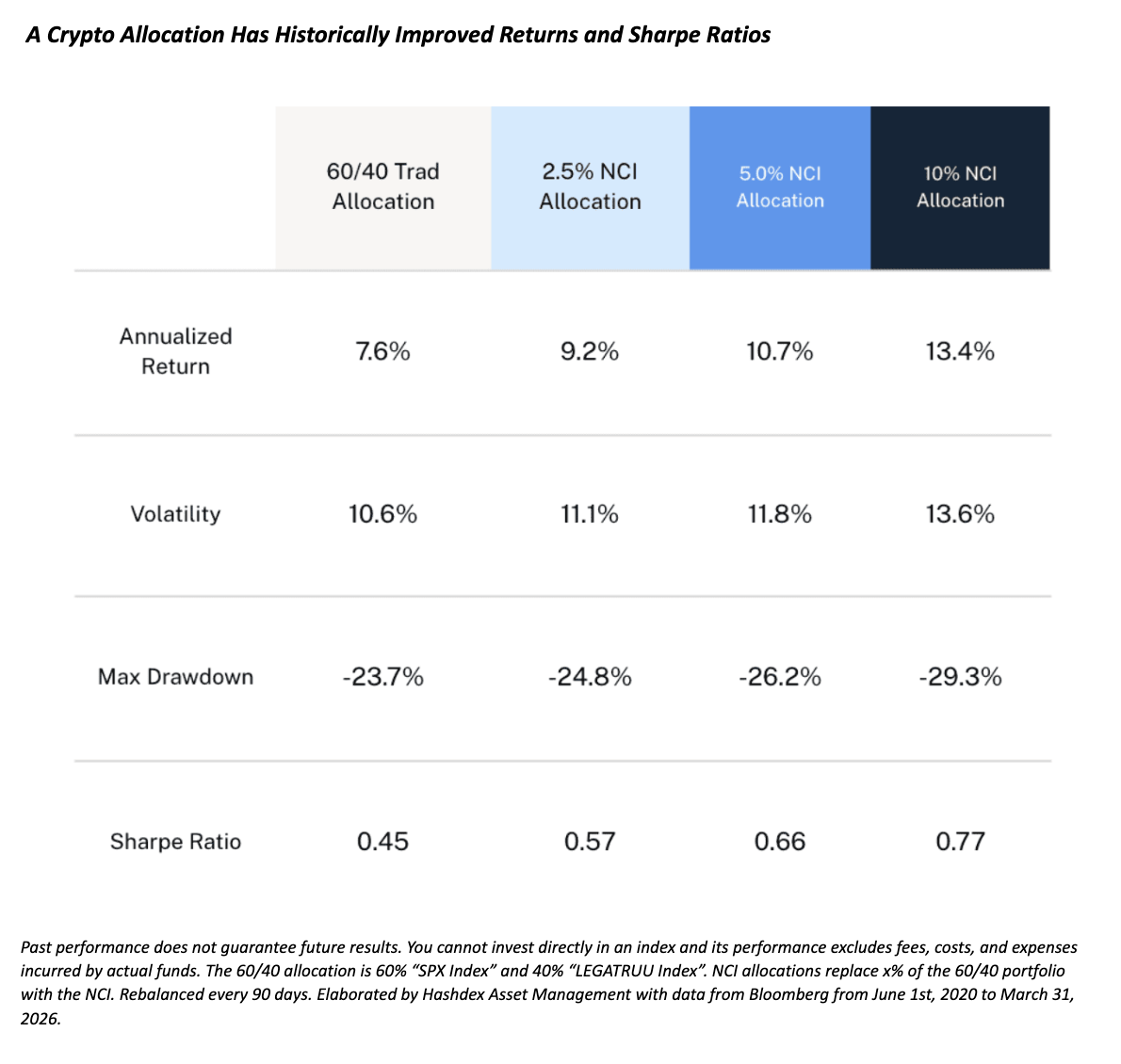
The conclusions for how crypto can fit within diversified portfolios are consistent: A small to modest allocation to crypto has the potential to meaningfully improve risk-adjusted returns without introducing proportionally greater risk.
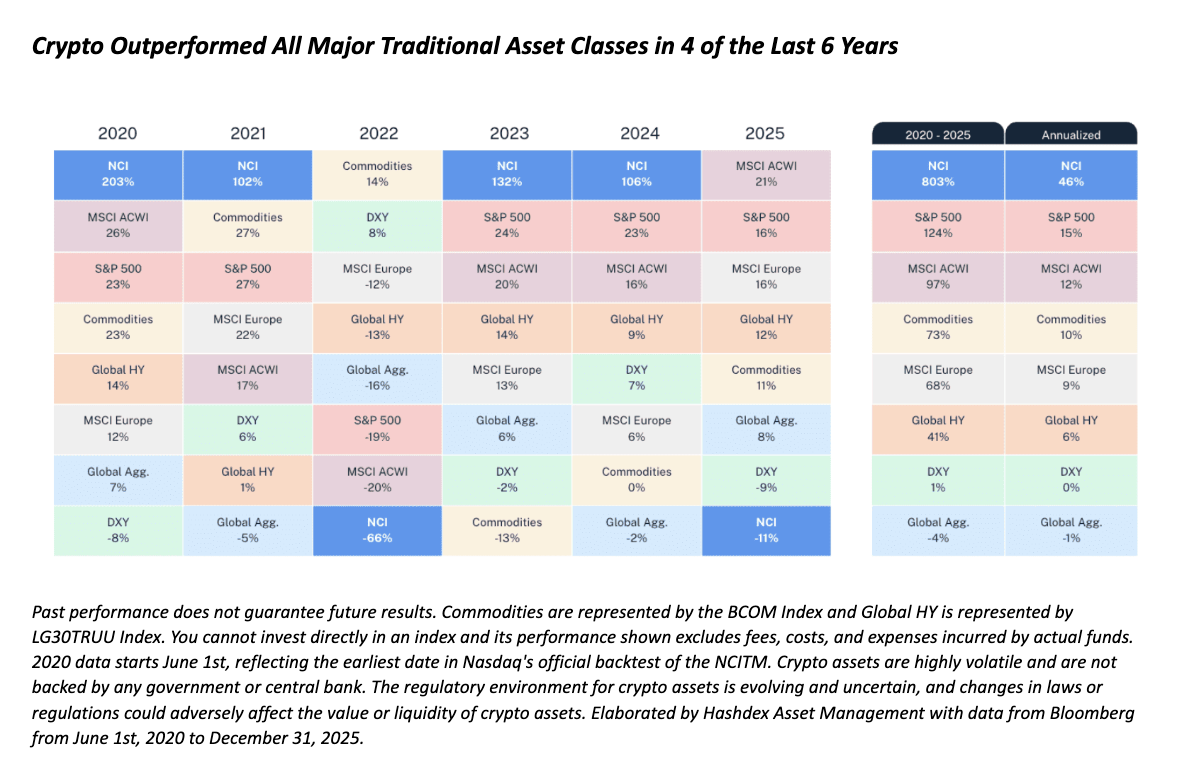
For example, between the launch of the Nasdaq CME Crypto Index (NCI) in June 2020 and December 2025, the NCI delivered an annualized return of 46% — more than three times the S&P 500's 15% over the same period. Cumulatively, that's 803% for the NCI versus 124% for the S&P 500.
But raw returns only tell part of the story. What's more instructive is the consistency. The NCI was the top-performing asset class in four out of the six years we analyzed, finishing ahead of equities, bonds, commodities, and the dollar.
Volatility in Perspective
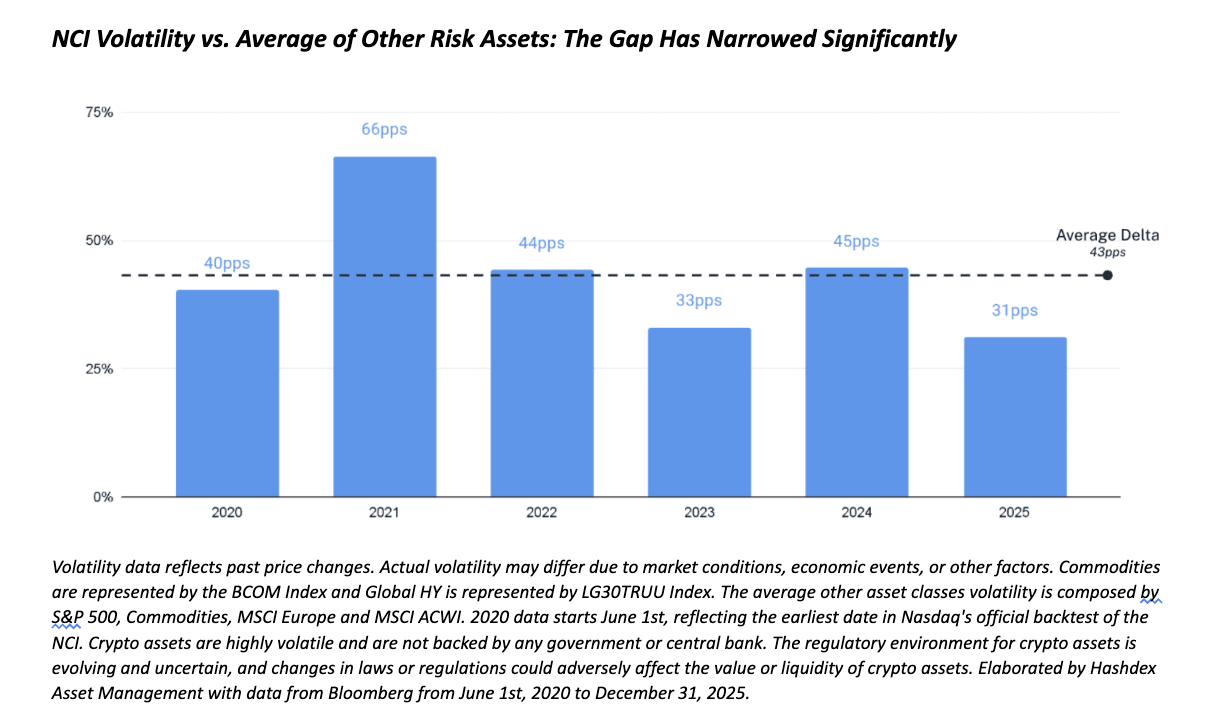
Second, advisors are more aware of the importance of contextualizing crypto’s volatility. That metric has been declining steadily. The gap between the volatility of the NCI and of traditional risk assets narrowed from 66% in 2021 to just 31% in 2025 — a 35% reduction in five years, with the trend continuing.
And, when you compare the NCI to the Magnificent Seven technology companies, the volatility picture looks entirely different. The NCI's annualized volatility of 59% over the 2020–2025 period places it squarely within the range of Tesla (62%), Nvidia (50%), and Meta (42%). If your portfolio already holds significant equity exposure, you are almost certainly holding assets with volatility in the same range as crypto.
A Performance Booster
But beyond the issue of volatility, perhaps the most compelling point is how effectively even a modest crypto allocation enhances portfolio outcomes. We modeled the impact of introducing the NCI into a traditional 60/40 portfolio at sizes ranging from 2.5% to 10%, allocated proportionally from both the equity and fixed income components. At a 10% NCI allocation, annualized returns rose from 7.6% to 13.4%, a 76% increase, while volatility increased by just 28%.
Crypto has clearly matured considerably as an asset class, and it's exciting to hear more advisors speak about the opportunity it presents — without being scared away by its volatility.
The real question today is how much of a portfolio allocation is appropriate given their specific objectives and constraints. Not every investor has the same risk tolerance, of course, but even a small 1% allocation is in line with crypto’s portion of global investable assets. Ultimately, the cost of under-allocation is real — not because of fear of missing out, but because the portfolio construction benefits are quantifiable and consistent. For advisors willing to engage seriously with the evidence, the case for a crypto allocation has never been stronger.
Samir Kerbage is chief investment officer at Hashdex, overseeing global investment strategy, product development, and research. He brings over 15 years of experience in financial market infrastructure and has led the buildout of Hashdex’s crypto asset management platform across ETFs, ETPs, and other vehicles. He can be reached at [email protected].
A message from Advisor Perspectives and VettaFi: Discover something new! Click here to register for our upcoming webcasts.
Read more articles by Samir Kerbage
 Advisor Perspectives welcomes guest contributions. The views presented here do not necessarily represent those of Advisor Perspectives.