 The views presented here do not necessarily represent those of Advisor Perspectives.
There’s something rotten in Palo Alto.
First came the collapse of Theranos, the brain child of Stanford alum Elizabeth Holmes, whose blood analysis device rollouts turned out to be elaborate hoaxes. Then came Sam Bankman-Fried’s FTX and its theft of client assets. Bankman-Fried, while not a Stanford grad, was raised in the school’s campus environment by two well-known professors. Meanwhile, his lieutenant/on-off girlfriend at FTX, Caroline Ellison, and Ramnik Arora, another key FTX employee, were also Stanford grads.
In a lesser-known scandal, a Stanford professor named Stan Cohen touted a drug, HD106, that he claimed cured Huntington’s disease, which Novartis paid $3 billion dollars for. It did no such thing, and in fact, decades before Cohen’s sales job, its severe toxicity had earned it an FDA ban. Finally came the massive scientific fraud coverup that forced the 2022 resignation of Stanford President Marc Tessier-Lavigne (MTL).
Beyond outright fraud, no academic institution can match Stanford’s output of unself-aware billionaire tech bros, starting with Peter Thiel. Of late, he has begun to obsess about a more than century-old theological narrative, “premillennial dispensationalism,” first popularized in the 1970s by Hal Lindsey in his best-selling The Late Great Planet Earth. Thiel has begun to give private lectures on the theory, which applies absurd numerology to the Book of Revelation to predict Armageddon and the appearance of the Antichrist.
An Insider Investigates
What the heck is going on at Stanford? Theo Baker’s How to Rule the World explains. The book answers the question by centering on Baker’s pursuit at The Stanford Daily of the MTL-associated scientific frauds.
And an astonishing journey it is. Baker, the son of two legendary journalists — Peter Baker of The New York Times and Susan Glasser of The New Yorker — begins his Stanford career like any other freshman, as a computer science major wanting to change the world and become a billionaire tech founder, preferably simultaneously.
Did Baker have any desire to follow in his parents’ footsteps? No: Growing up with two parents consumed by the 24/7 world of high-pressure journalism imbued him with little desire to aspire to ink-stained wretchedness.
But either by nature, nurture — or both — Baker turns out to be an immensely talented and dogged investigative reporter. Much like Michael Lewis, one hopes, journalism saves him from the pursuit of mammon.
By the time Baker arrived on campus in 2022 at the age of 17, MTL had been the university’s president for six years, capping a neuroscience career that wound through labs at McGill, Oxford, and UCSF, then as chief scientific officer at Genentech and president of Rockefeller University, before becoming Stanford president in 2016.
An Image Scandal & More
Soon after joining the Daily, Baker became aware that microbiologist Elisabeth Bik had detected evidence of image manipulation in MTL’s papers, some going back two decades. Bik’s interest in MTLs papers was no accident: After one of her efforts had been plagiarized in 2013, she began an avocation pursuing photo tampering in scientific publications, eventually uncovering over 4,000 cases of scientific fraud. Images, particularly so-called western blots, constitute the major finding in many neuroscience articles.
Baker contacted Bik, and thus began a several-month investigative chase. The fraud’s primary perpetrator turned out to be a Genentech postdoc named Anatoly Nikolaev; MTL’s main misconduct lay not in creating the fraudulent images, but in knowingly concealing Nikolaev’s.
The book weaves together three major themes. First and foremost is Baker’s pursuit of the academic fraud associated with the Stanford president, which resulted in his eventual resignation. Second, he uncovered a Stanford environment thoroughly saturated with massive amounts of money that reaches all the way down to incoming undergraduates. Finally, there is a coming-of-age story that includes — among other accomplishments — receiving a George Polk Award while still a college freshman for his reporting on MTL.
A New Angle on a Well-Known Story
The MTL story rivets in the same way, and with the same stereotypical cast of scientific fraud character actors, as John Carreyrou’s narration of Elizabeth Holmes’ downfall, Bad Blood. It includes, of course, the charismatic scientist/entrepreneur who acquires vast wealth and desperately tries to cover up failure at the lab bench; the perpetrator’s combative attorney (in the case of Theranos, David Boies; and for MTL, Stephen Neal) who threatens conscientious and concerned witnesses with a continuous stream of seemingly ruinous — if ultimately empty — threats; and finally, Stanford University itself, whose money-market soaked environment encourages dishonesty and fraud, all the while doing its best to sweep the sleaze under the rug.
Beyond the MTL fraud story, the book’s second major element is the aforementioned financial hothouse atmosphere that has produced Stanford’s signature tech-bro graduates, and no small amount of additional frauds. The university sits at the intellectual and technological heart of Silicon Valley, whose companies make up a fifth of U.S. market cap — roughly the same size as China’s, which itself occupies second place in the world stock market leaderboard.
As put by one observer, “We rule the world. The world doesn’t know this yet.” One is reminded of a remark by economic historian Dharma Kumar about Cambridge nearly a century ago, “Time is a device to prevent everything from happening all at once; space is a device to prevent it all happening in Cambridge.”
The Pleasure Island Trap
The new Stanford freshman soon finds themself attending lavish parties thrown by venture capitalists in posh mansions. Even fraternity pranks could cost tens of thousands of dollars. In one instance, a Greek house sent a pledge who wanted to stop smoking on a round trip to Dubai with a turnaround so short that for several days he could not smoke even a single cigarette. According to Baker, it worked. And for an end-of-year party for his hacking club, Baker rented a 150-foot yacht with university funds.
The book’s title comes from one of the book’s central characters, an individual known only as “Justin,” who scouts incoming students for his “How to Rule the World” course. Baker refers to this class as the secret “Stanford inside Stanford,” and its purpose is to groom these select youngsters to become tech billionaires who will, well, rule the world.
The most popular pathway to world rule was to become a “10X engineer” able to produce code that solved previously intractable problems. Even better than being a 10X engineer was to also become a “high agency man,” someone who can, in the words of one of this elect, “bend the universe to your will. Anything less than complete certainty is for chumps.”
Baker has fun cataloguing how the high-agency belief system often metastasizes. According to one CEO, “Peanut allergies are woke,” an assertion that would surprise the families of the dozen or so Americans who die from peanut anaphylaxis each year. Others: Mass shootings are caused by antidepressants. Or that the U.S., which jails three times the percentage of its citizens as second-place Russia, still isn’t incarcerating enough people. From here, it’s just a short jump to the antichrist.
The Rot Underneath the Shiny Surface
In fairness, some Stanford freshmen deserve the attention. One, Amber Yang, had written an algorithm in high school that predicted the position of space debris with far higher accuracy than NASA’s best programs. But for every Amber Yang, there were a larger number of ones like “Janet,” whom Baker identifies as living in a $6 million mansion, paid for by venture capitalists. She boasted of having produced a poorly described killer application that, in the end, didn’t work. It turned out she had struggled with the computer science coursework and plagiarized from classmates. It’s not unheard of for students to ask professors to sign nondisclosure agreements.
The seminal feature of the Stanford pressure cooker was Computer Science 107, a fearsome “weeder course” (similar to organic chemistry, which has terrorized pre-meds for nearly a century) designed to select out the “NGMIs”: Not Gonna Make Its. The year before Baker arrived, four students had killed themselves. Overall, Stanford’s suicide rate is about twice the national average, a subject the university avoids mentioning or addressing.
Even greater benefits accrue to faculty. One member of the computer science faculty is known as “Professor Billionaire.” Even after MTL’s resignation, Baker put his net worth at a half billion dollars.
A Unique Kind of Privilege
Stanford’s financial heft benefitted both the Daily and Theo Baker. The reader who is aware of his parentage certainly will be on the lookout for journalist nepo baby privilege. However, at least in Baker’s telling, he did his best to distance the MTL story from his mother and father. Rather, he benefited from the layers of privilege enjoyed at many elite school newspapers.
For starters, the publication has generous financial backing. It occupies an impressive campus building — paid for with $4.5 million in donations — that sits largely empty. Next comes expert mentoring and case-specific advice from journalism’s brightest lights. And most importantly of all, top-flight law firms offer pro bono legal support. In the Daily’s case, Davis Wright Tremain, one of the nation’s foremost litigators, shielded Baker from Neal’s incessant threats.
The book’s third element, Baker’s coming of age story, is the weakest. He is far from the only college freshman to overdose, pull heroic all-nighters, arrange epic parties, or get hilariously deflowered. These escapades consume far too many pages.
Another of the book’s missteps, increasingly seen today in nonfiction titles, is the absence of an index. Baker has written an important book covering two serious subjects — MTL’s downfall and Stanford’s corrupting environment — and an index would have been an invaluable adjunct for both the careful reader and future researchers.
But these are quibbles. How to Rule the World is an important and rollicking yarn that explains the moral odor wafting from Palo Alto from an insider’s perspective. The journalism world has not heard the last of Theo Baker.
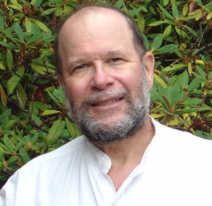
William J. Bernstein is a neurologist, the co-founder of Efficient Frontier Advisors, an investment management firm, and a writer with several titles on finance and economic history. He has contributed to the peer-reviewed finance literature and has written for several national publications, including Money Magazine and The Wall Street Journal. He has produced several finance titles, and four volumes of history, The Birth of Plenty, A Splendid Exchange, Masters of the Word, and The Delusions of Crowds about, respectively, the economic growth inflection of the early 19th century, the history of world trade, the effects of access to technology on human relations and politics, and financial and religious mass manias. He was also the 2017 winner of the James R. Vertin Award from the CFA Institute.
A message from Advisor Perspectives and VettaFi: Discover something new! Click here to register for our upcoming webcasts.
More Innovative ETFs Topics >
 The views presented here do not necessarily represent those of Advisor Perspectives.