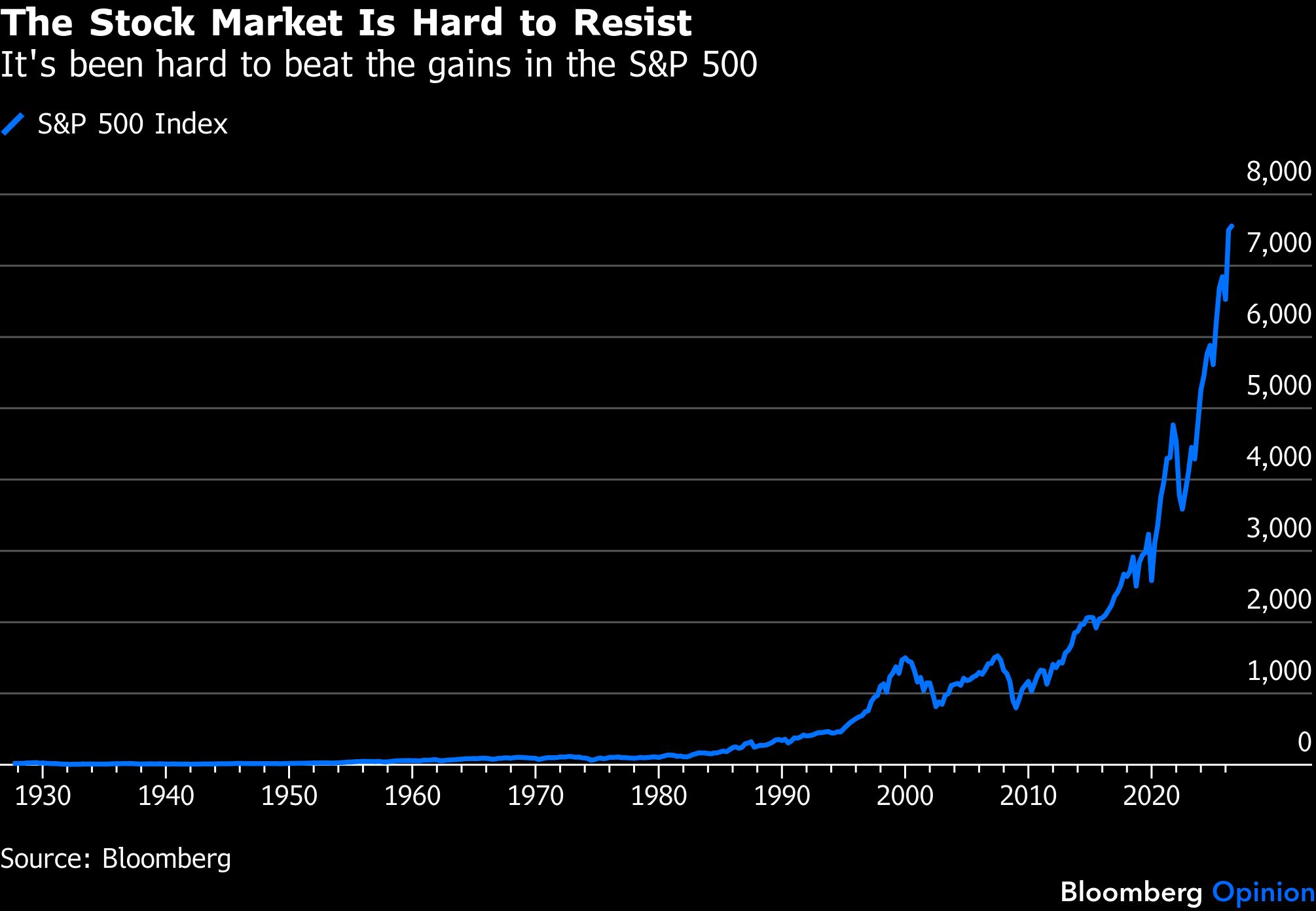
The median house price in Nantucket, Massachusetts, is nearly $4 million. It was just $500,000 in 1995. This sounds like a stunning increase in one of the hottest and least accessible real estate markets in the country. What’s even more stunning is the stock market: If you invested $500,000 in the S&P 500 Index in 1995, you’d have more than $8.2 million today, even more if you reinvested the dividends you earned.
Stocks have clearly been the superior investment, even as housing has moved out of reach for too many Americans. It’s no surprise then that young people are saying they would rather put their money in equities than make a down payment like people their age have done for generations.
This is a big cultural shift; home buying was long seen as a sign of success, and the standard advice has been to buy a home once you can afford it. The fact that housing has become unaffordable for young people seemed to indicate that something was broken in the economy. But it could be that the equity market is just a better investment in a technology-driven world, especially if you are young, may want to move in the next five years and don’t have much wealth. If so, a new norm may be taking shape for the always online generation, where investing in intangibles rather than property is the American Dream. Houses may be good for living in, but they’re not necessarily the best place for your money.
Real estate was once the main asset most Americans owned. Home ownership was the ultimate financial goal, partly predicated on the idea that prices always go up. This belief had some validity. Housing was the best investment up until World War II. Stocks beat housing in realized returns in the post war era until 2015, but the former were much more volatile, so housing was still a great bet after accounting for that risk.
We idealized home ownership for cultural reasons, too. Owning is seen as a big part of the American Dream, and the sense of permanence it creates builds neighborhoods and communities. It’s why the US encourages families to buy with policies including the mortgage-interest tax deduction and subsidies that make the financial abomination of a 30-year fixed-rate mortgage a possibility, something that doesn’t exist in other countries.
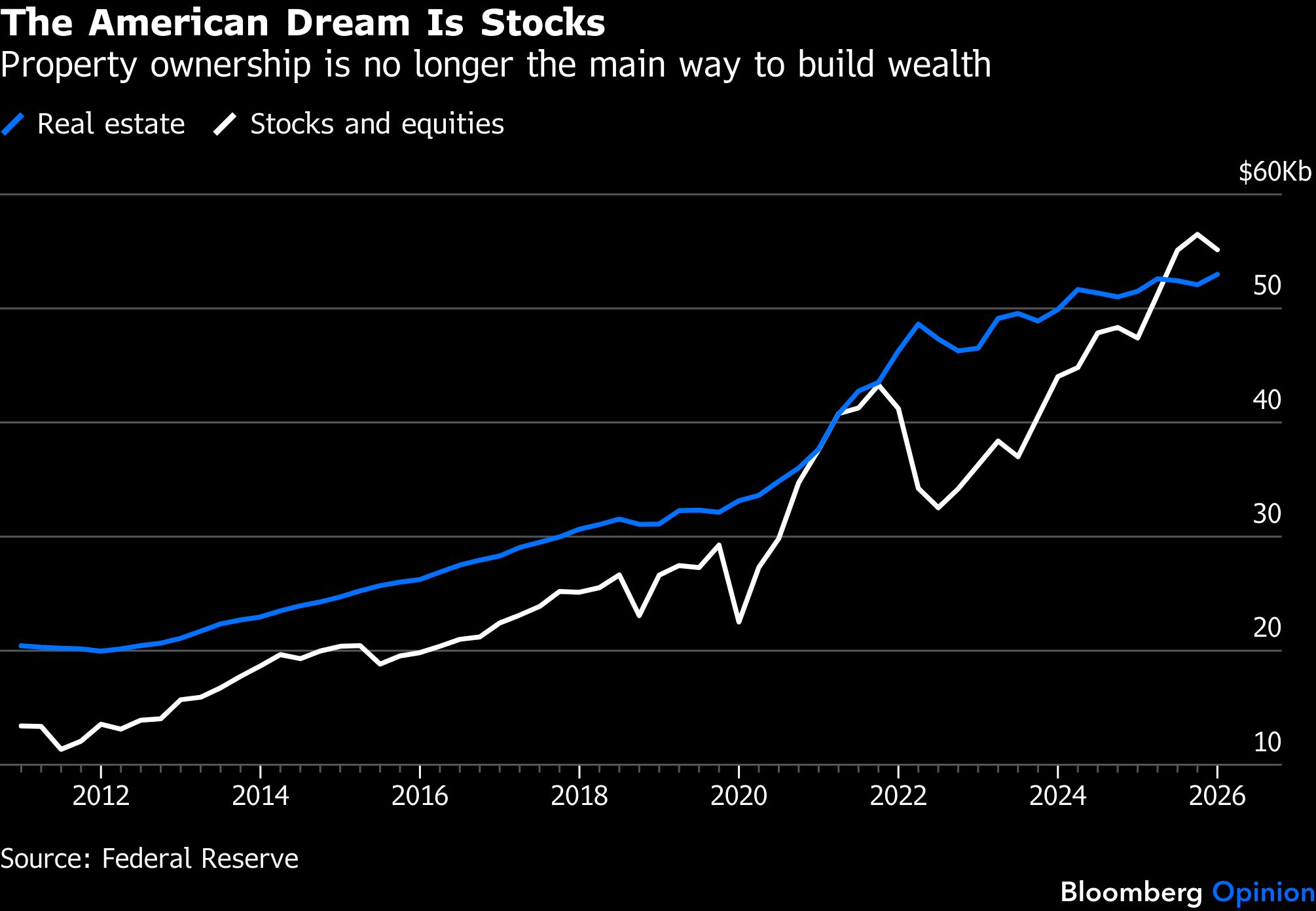
The past decade has overturned much of the conventional logic. Stock returns trounced those from housing while a pandemic-era explosion in property prices and rising mortgage rates shut many people out of achieving their American Dream. Add in changing social norms: It is more acceptable for young people to live with their parents to save money today. Half of those under 30 do so.
Young people have been sidelined even if on paper their finances are stronger than previous generations at their age. Less than a quarter of those under 39 think housing is a good investment, a recent survey found.
More household wealth is now concentrated in stocks rather than real estate, thanks to the rising stock market and increasing equity ownership.
The people interviewed for a recent Bloomberg News story on building wealth said that the stock market is a better bet. With no homeowner association fees or repair costs and stellar stock returns, they are not entirely wrong.
It’s more than that, though. Most of us take a lot of leverage to bet on a single asset whose value is correlated with the local labor market. It is also illiquid, making it hard to relocate for work opportunities. Tying yourself down may pose costs to your income, especially if you are young.
There are benefits to owning a home, beyond price appreciation, that can’t be ignored. It makes families feel more invested in their homes and communities, incentivizing them to work toward the improvement of both. It is also worth remembering that ownership pays dividends in terms of giving you a place to live. If you rent, you need to pay those dividends to someone else.
Still, the perception that homeownership is the ultimate financial goal may not survive the last 30 years of great stock returns. Owning stocks means you have a share in America’s best companies instead of physically owning a piece of the country. And it is not so much that real estate under-performed as stocks price growth has been exponential.
This exceptional growth has been a historical irregularity. Perhaps it reflects a sustainable change in the potential and profitability of American industry, and this great run will continue for another 30 years. Or maybe it’s a fluke and stocks will return to a more normal rate of return, or a crash will result in decades of low growth, as with Japan.
There was a time when it seemed like housing would always pay-off, no matter how much debt you took on; and often it did. The housing bust of the global financial crisis shattered that illusion. Now it seems stocks are the sure bet. No one knows the future for any risky asset class, but one thing we do know is past performance offers no guarantees.
Before the advice was simple, buy a home as soon as you can afford to. Now, there are better alternatives, depending on your age and situation. And perhaps owning before you are 40 is no longer the American Dream.