An Inconvenient Truth: Bonds Have Vicious Bear Markets Too
Over the years, most of us have grown accustomed to the tried and true method of permanently holding bond funds within client accounts. These investment vehicles have come through for us time and time again, providing a cushion to those nasty stock market drops that happen every several years. After all, if we could get high single-digit returns from an asset class that never dropped more than high single-digits, why not buy and hold? As a local mortgage company's commercial says, "It's the biggest no-brainer in the history of mankind."
Better think again
Unfortunately, bond funds aren't the cute, cuddly pets we've been conditioned to hold forever. They do have their own bear markets, which can be vicious in their own right. Sure, your average intermediate-term bond fund will probably never drop as much as your average stock fund has, but you'll be surprised to learn just how far they can and do drop.
Bond Bear Markets: An Inconvenient Truth
This first chart shows how much the average intermediate-term bond fund fell during each bond bear market since the 1950's.
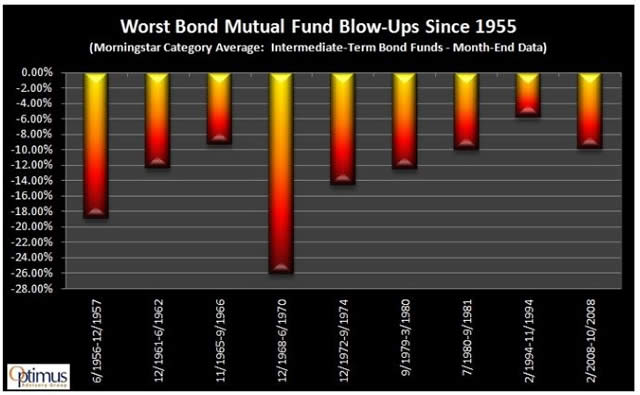
That 1968-1970 bar looks sickening, with a -26% drop using month-end data. It's safe to say they probably hit -30% intra-month. Imagine talking to your clients after that Armageddon-esque plunge. Keep in mind, the bond market "panic" we just went through would barely show up on the chart, with maybe a -5% hit. The median drop on this chart is -12.5%, so -5% is nothing. Also notice that the much talked about big, bad bond bear market in 1994 is laughably small. We only included it here because it is talked about so much in the media. Otherwise, it would only warrant a footnote.
Trying to come to terms with reality
What caused these bond bear markets? Was it inflation? Was it the Fed? How about the economy?
The short answer is it depends.
Obviously, rising rates negatively impact bond prices, but why do rates rise? Here are some charts for helping to sort it all out.
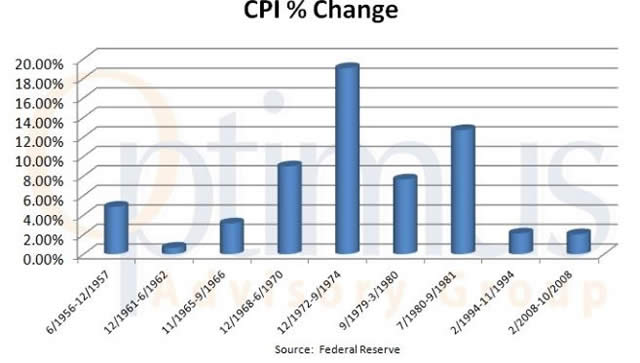
Many of the bear markets had an inflationary environment, but not all.
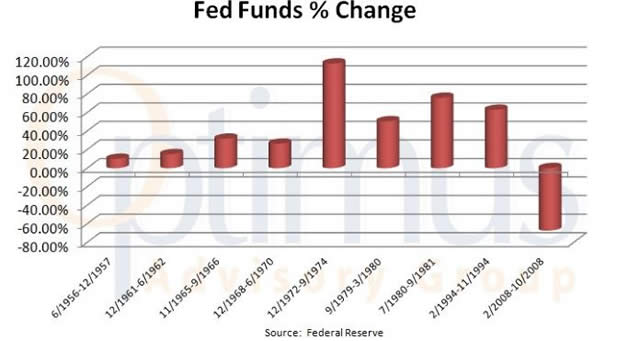
Excluding the financial crisis of 2008, all of the bear markets had the Fed actively raising the fed funds rate. It's safe to say that bond markets like stable to falling interest rates, not rising ones.
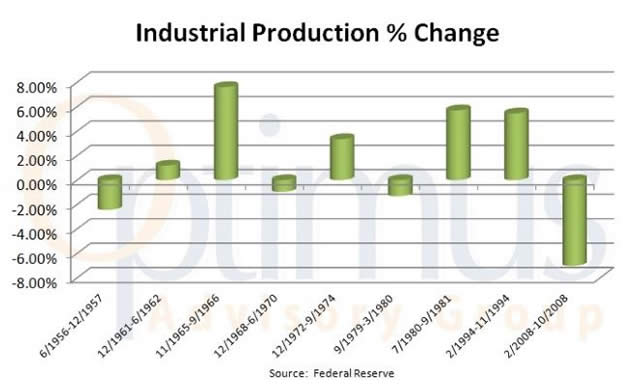
This chart gives a conflicting message because during bond bear markets, sometimes the economy is contracting and sometimes it is expanding.
OK, it all looks painful, but stocks will bail me out, right?
This final chart shows how stocks and a typical 60/40 stocks/bonds split did during these bond bear markets. It ain't pretty:
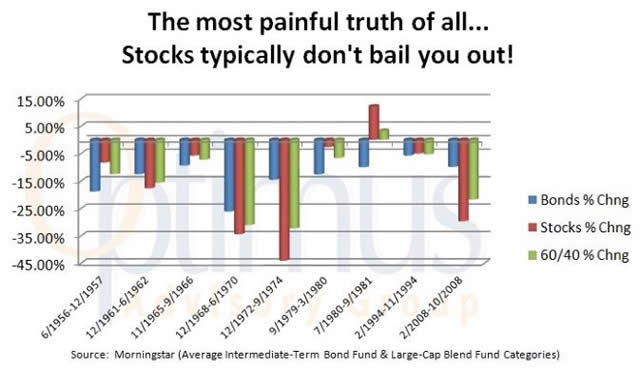
During the past 57 years, stocks only bailed you out once! All the other bond bear markets, stocks dropped as well, sometimes by more than the bonds!
Bottom-Line:
Since most of us aren't going to sell all of our intermediate-term bond funds and load up on floating rate funds or whatever we're being told will hold up well in a bond bear market (don't look at 2008's numbers), we're suggesting a better alternative for this environment IS an alternative. Alternative bond fund strategies offer clients the opportunity for potential gains in a rising rate and/or inflationary environment. By having the ability to take short-to-intermediate-term positions in long and/or inverse bond funds, there is the potential to make money in bond bull and bear markets. If we just entered a bond bear market, that could possibly unwind some or most of the last 32 year bond bull market's gains, it might be worth taking a new look at liquid alternative bond strategies.
© Optimus Advisory Group













