Despite an optimistic start to September, mixed geopolitical developments weighed on investor sentiment over the month. Trade tensions between the U.S. and China eased somewhat as September began: China exempted certain U.S. agricultural products from additional tariffs, and President Donald Trump delayed a scheduled 5% increase in tariffs from October 1 to October 15 so as not to coincide with the People’s Republic of China’s 70th anniversary celebration. However, political uncertainty rose as U.S. House Speaker Nancy Pelosi launched a formal impeachment inquiry against Trump after a whistleblower’s complaint alleged that he had pressured the Ukrainian president to investigate former vice president and Democratic presidential candidate Joe Biden and his son. Developments outside the U.S. were similarly mixed: Odds against a no-deal Brexit appeared to improve as Parliament passed a bill designed to prevent a no-deal exit from the European Union and the U.K. Supreme Court ruled Prime Minister Boris Johnson’s suspension of Parliament unlawful. However, political instability remained in Hong Kong, where protests continued; in Spain, which headed for its fourth general election in four years; and in Israel, where Prime Minister Benjamin Netanyahu appeared challenged to form a government following an inconclusive election. Tensions in the Middle East also flared after attacks on two large Saudi oil facilities, temporarily halting nearly 5% of global crude oil output.
Central banks generally maintained more accommodative policy stances as growth concerns lingered. Economic uncertainty also remained elevated. The global manufacturing recession deepened, with a wide swath of countries indicating contractionary levels in their purchasing managers’ indexes (PMIs), including many in the eurozone. Softer U.S. job growth, alongside relatively strong retail sales, also painted a mixed picture of the health of the U.S. consumer. Against this uncertain backdrop, the U.S. Federal Reserve (Fed) lowered its target fed funds rate by 25 basis points (bps) in a widely anticipated move. Even so, the division among Federal Open Market Committee (FOMC) members was apparent: Three dissented – though for different reasons – and the “dot plot” revealed that seven members projected another rate cut by the end of this year, while five members preferred to hold rates steady; in addition, five participants went into September’s meeting preferring not to cut the benchmark rate at all. In Europe, the European Central Bank (ECB) lowered its deposit rate by 10 bps and announced that its quantitative-easing program would restart later this year despite winding down only last year.
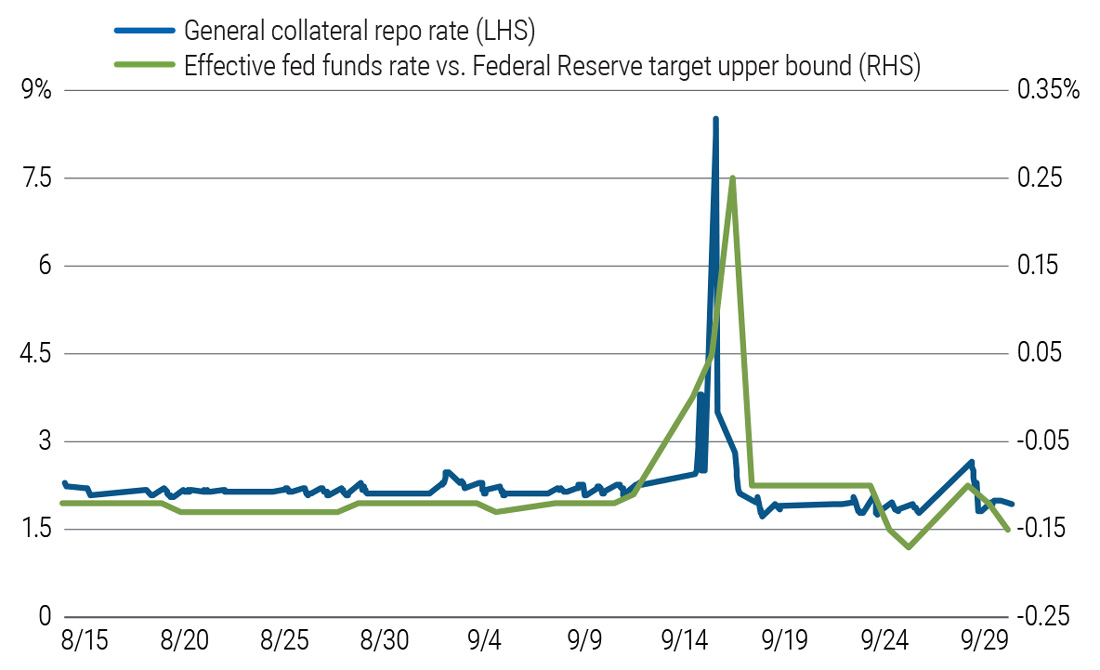
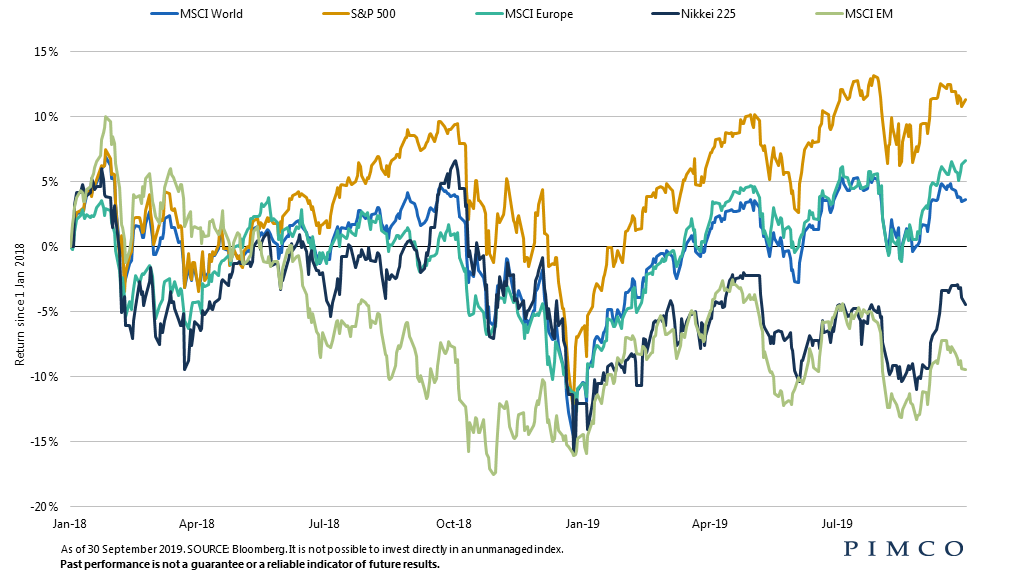
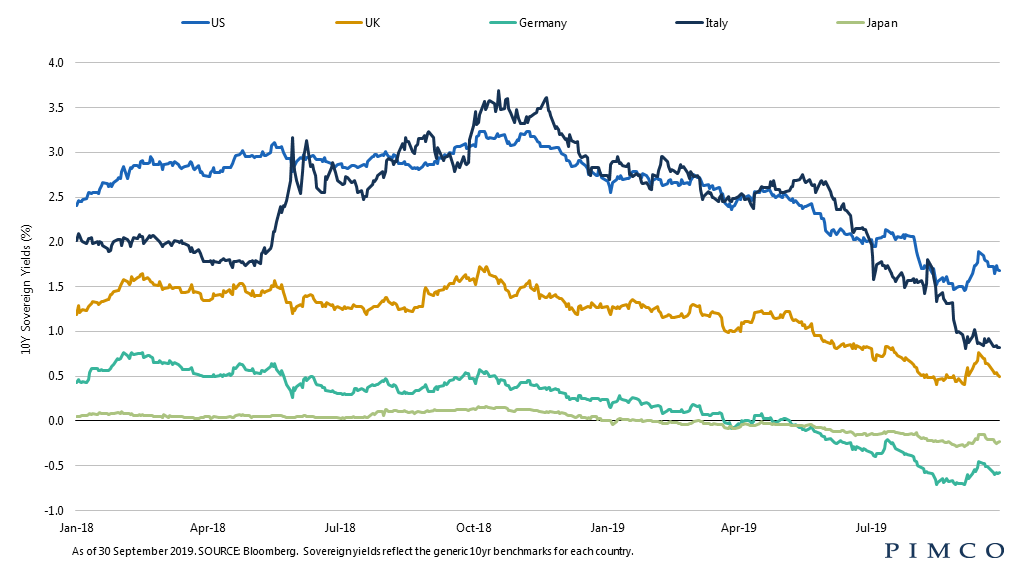
While initially robust, risk appetite waned in the latter part of September. Geopolitical and growth uncertainties eventually weighed on an initial rally in risk assets, a trend evident in equities, credit, and interest rates. A brief surge in short-term rates in U.S. repo (repurchase agreement) markets added to investor anxiety (see chart), as did the attacks on two major Saudi oil facilities, which initially drove up the price for Brent crude oil nearly 15% to $69 per barrel. Global equities (MSCI World Index) gained over 3% in the first part of September, but the rally sputtered in the second half to close up only 2%; U.S. equities (S&P 500 Index) mirrored the pattern as well. In a similar vein, developed market sovereign bond yields generally rose for the first part of the month, headlined by U.S. 10-year yields surging 40 bps before falling back to end 17 bps higher. In addition, the overall gain in U.S. equities masked a notable move: Technical factors drove a dramatic rotation out of momentum and into value stocks, with value (MSCI World Value Index) outperforming growth companies (MSCI World Growth Index) by 3.6% after over a decade of growth-dominated markets.
Spiked September Overnight rates for repos (or repurchase agreements, which are very short-term secured loans) surged on September 17, rising to nearly 9% from 2.52% the prior day and raising concern of a larger systemic issue. The spike, however, was due to a number of idiosyncratic factors that drove a mismatch in the supply and demand for cash, including the deadline for U.S. corporate tax payments and an increase in the U.S. Treasury general account. When repo rates rose, the subsequent flow of capital to the repo market then put upward pressure on the effective U.S. fed funds rate, which finished at 2.30% that day, 5 basis points (bps) above the Federal Reserve’s target range at the time of 2.00%−2.25%. To bring the funds rate back to normal, the New York Fed conducted its first overnight system repo in a decade, injecting billions of dollars in liquidity, and continued with these operations throughout the month. It will likely do so through early November (with a more permanent solution expected at the next Federal Open Market Committee meeting).
In the Markets
EQUITIES
Led by international markets, developed market stocks1 increased 2.1% in September, as improvements in the outlook for U.S.–China trade talks supported risk markets and the U.S. dollar strengthened. Of note, internal market dynamics experienced meaningfully higher volatility during the month relative to broader developed market (DM) indices, as value stocks2 outperformed growth stocks3 by 3.5%. U.S. equities4 climbed 1.9% following improvements in the outlook for trade talks, while the Fed announced a widely expected second rate cut amid mixed economic data. European equities5 increased 3.8%, driven by improving outlooks for trade, Brexit, and a new round of stimulus measures from the European Central Bank (ECB). Japanese equities6 rallied 5.7% in conjunction with global markets and a decline in the yen.
Emerging market equities7 rose 1.9% over the month, also supported by the improvement in U.S.–China trade sentiment and easing from the ECB and the Fed. In Brazil8, stocks rose 3.6% as energy and material sectors led a recovery in local markets. In China, local equities9 climbed 0.8%, supported by the improvement in trade talks. In India10, stocks rose 3.6% as the Indian government’s announcement of corporate tax cuts for domestic corporations boosted local risk sentiment. Lastly, Russian equities11 rose 0.6% as the attack on Saudi Arabian oil fields boosted Brent crude prices and drove the ruble sharply higher.
DEVELOPED MARKET DEBT
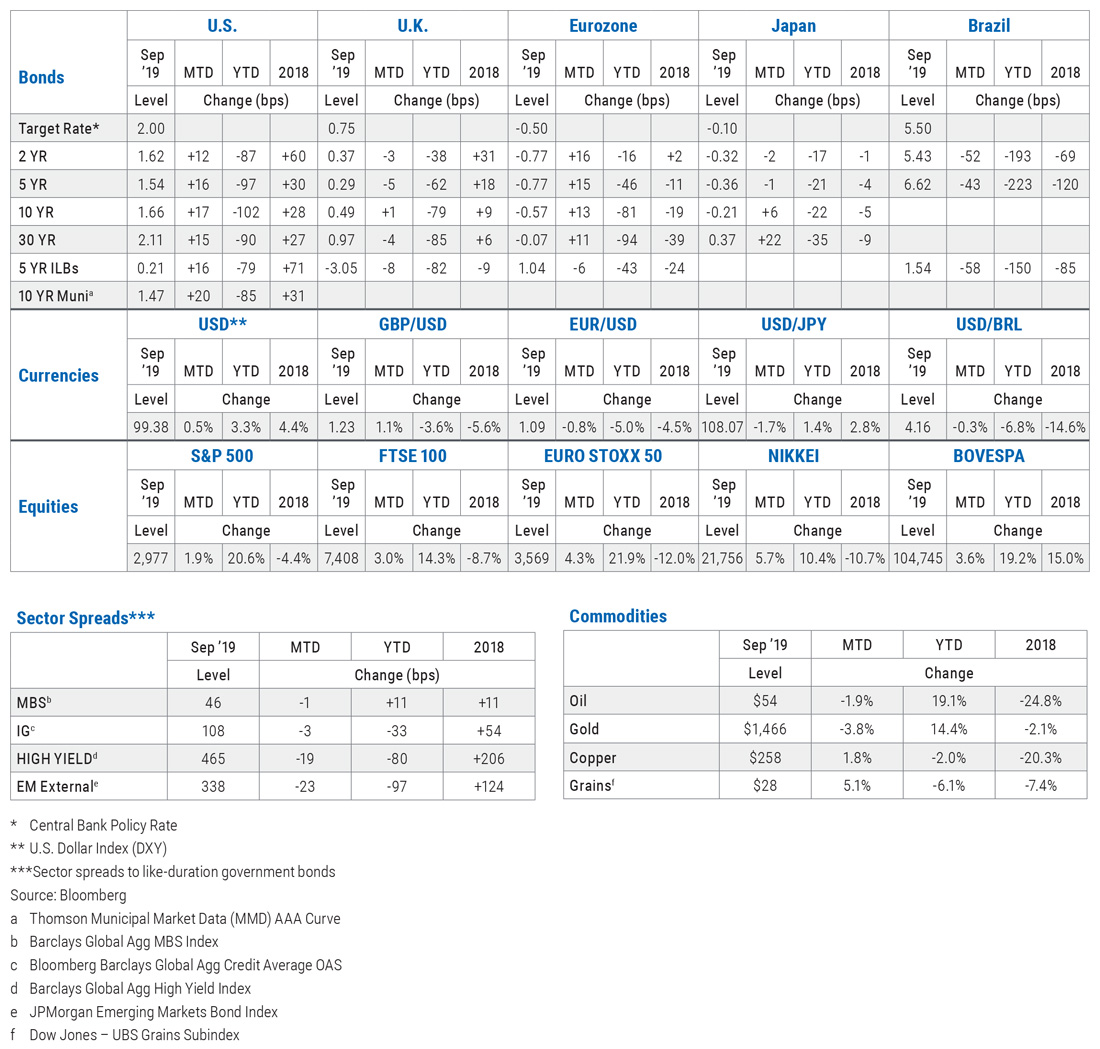
Strong risk appetite helped push most developed market yields higher at the start of September, though geopolitical developments and growth concerns contributed to some reversal in the second half of the month. In the U.S., the Federal Reserve lowered its policy rate 25 basis points (bps) as expected, but the updated “dot plot” revealed a committee divided on the future path for rates. The European Central Bank (ECB) similarly delivered a modest rate cut, along with a package of other monetary policy easing measures, while the Bank of England (BOE) and Bank of Japan (BOJ) held rates steady. Still, yields in all these regions broadly ended the month higher: The U.S. 10-year Treasury yield rose 17 bps to 1.66%, the 10-year German bund yield rose 13 bps to –0.57%, the 10-year Japanese government bond rate rose 6 bps to 0.21%, and the 10-year U.K gilt yield moved marginally higher (1 bp) to 0.49%.
INFLATION-LINKED DEBT
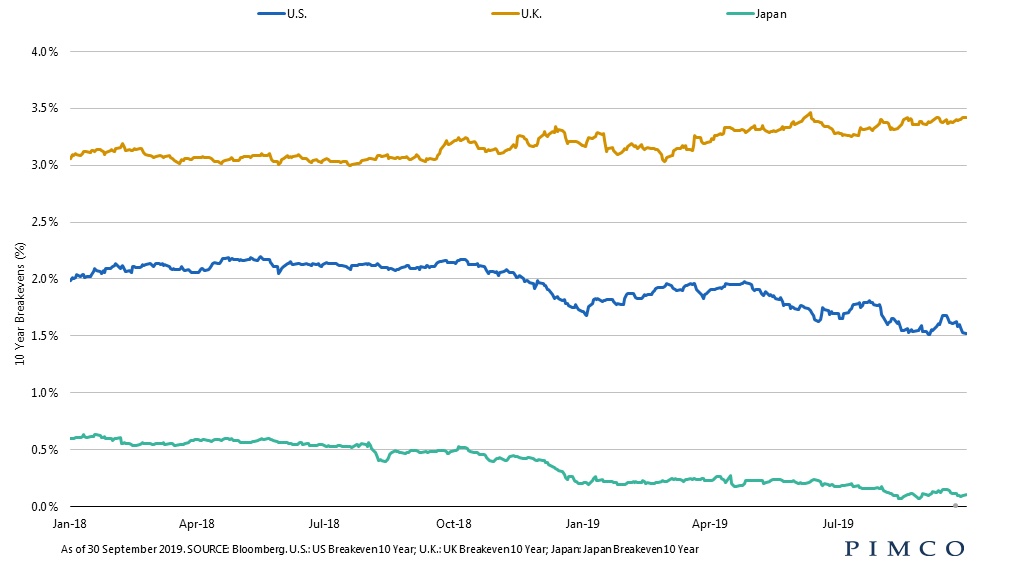
Global inflation-linked bonds (ILBs) posted negative absolute returns as real yields sold off due to the improvement in U.S.–China relations. Global breakevens edged higher early in the month before reversing on the back of weak global macro data and a faster-than-expected recovery of Saudi Arabia’s oil production. In the U.S., Treasury Inflation Protected Securities (TIPS) posted negative absolute returns and underperformed nominal Treasuries. In tandem with real rates, U.S. breakevens moved higher initially before reversing on a weak PCE print and lower oil prices. Outside the U.S., core European linkers posted negative returns as real rates rose following the ECB’s stimulus package, which fell short of expectations. However, linkers in peripheral countries, particularly in Italy, saw positive returns as real rates rallied on expectations that the ECB’s asset purchase program would likely continue.
CREDIT
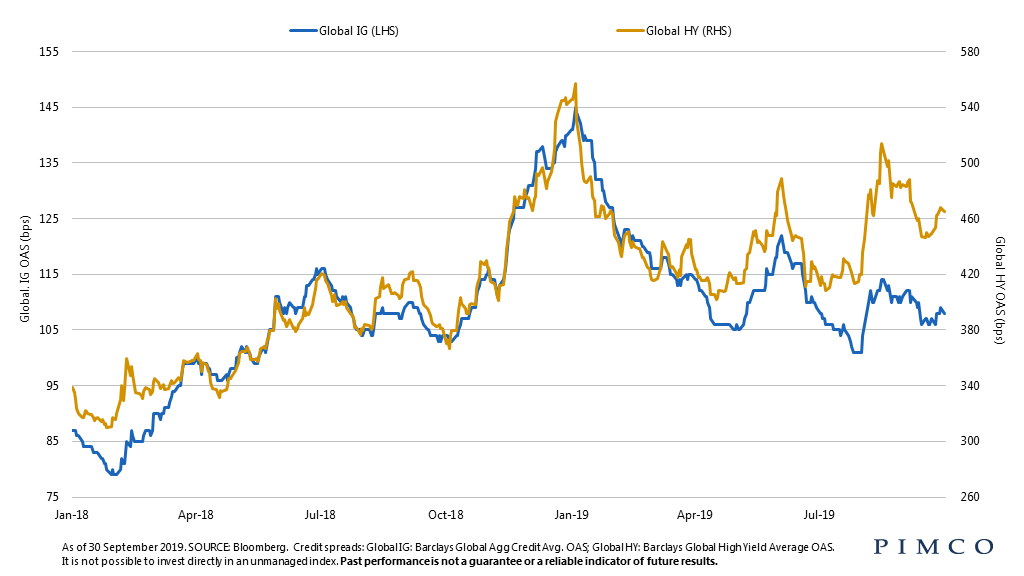
Global investment grade credit12 spreads tightened 2 bps in September, and the sector returned −0.52% for the month, outperforming like-duration global government bonds by 0.26%. Credit spreads narrowed modestly as expectations of more accommodation from central banks globally and less concern around the magnitude of slowing growth outweighed pressure from one of the largest primary issuance months. Energy sectors outperformed at the margin following the attack on Saudi oil facilities. The finance and manufacturing sectors also outperformed, driven by a large conglomerate’s tender of front-end debt.
Global high yield bond13 spreads tightened 8 bps in September, and the sector returned 0.27% for the month, outperforming like-duration Treasuries by 0.61%. Performance was mixed during September amid large intra-month swings in oil prices and interest rates, an active primary market, and the largest retail inflows in seven months. Of note, the energy sector remained volatile. The higher quality BB segment returned 0.22% for the month, while the CCC segment returned 0.12%.
EMERGING MARKET DEBT
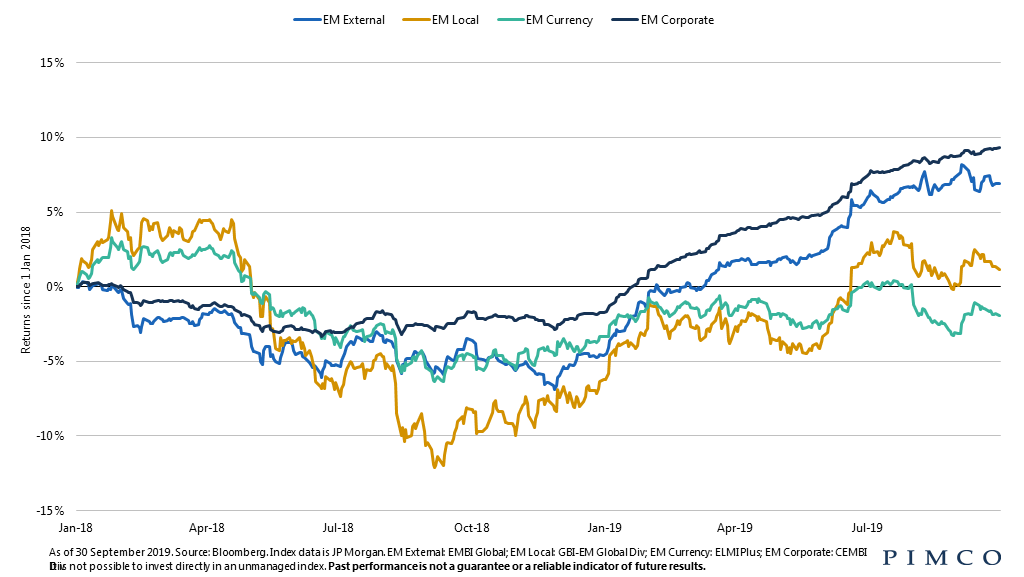
Emerging market (EM) debt performance was bifurcated along currency lines in September. External debt returned –0.36%,14 despite a 23-bp tightening in spreads, as the underlying U.S. Treasury yields rose by 18 bps.15 By contrast, local EM debt posted a return of 0.96%16 after local rates rallied modestly and currencies appreciated marginally due to improved investor sentiment. EM investor sentiment generally improved over the month as U.S.-China trade tensions eased, global monetary policy generally turned more dovish, and contagion fears – which had arisen due to a precipitous sell-off in Argentinian assets in August – largely subsided.
MORTGAGE-BACKED SECURITIES
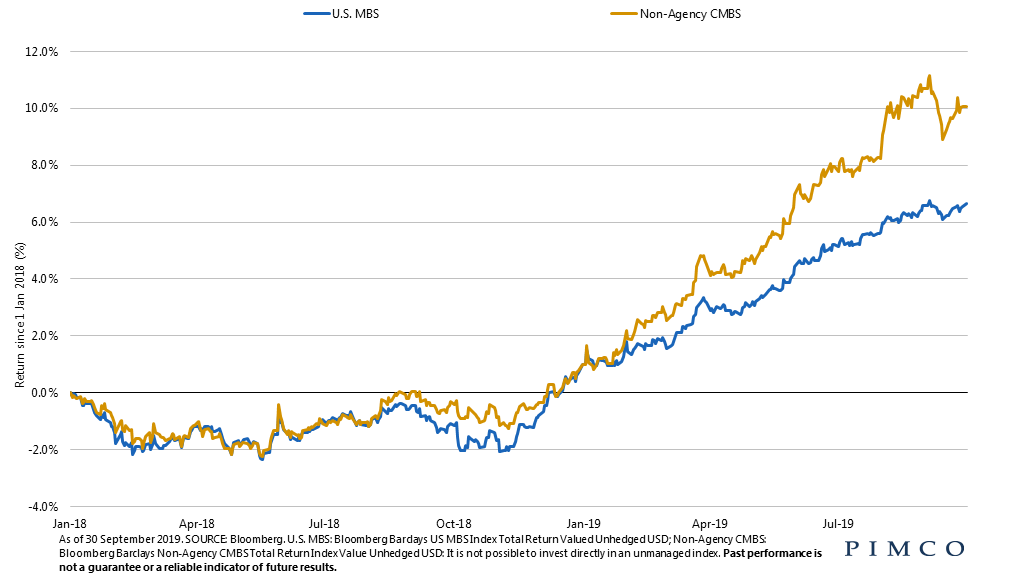
Agency MBS17 returned 0.07%, outperforming like-duration Treasuries by 24 bps. September was the 12th month of the Federal Reserve’s balance sheet unwinding: The Fed sold $20 billion in MBS over the month and has cumulatively sold $320 billion. However, the pay-downs on the Fed’s holdings exceeded its $20 billion cap, and the Fed began to reinvest the additional $6 billion back into agency MBS in September. A few factors were supportive for MBS over the month, namely slower-than-expected prepayments and a declining refi index, which pointed to slower future prepayment speeds. Higher coupons outperformed lower coupons, 30-years outperformed 15-years, and Fannie Mae securities outperformed Ginnie Mae. Gross MBS issuance remained robust for the month at $159 billion, though it decreased 7% from August. Prepayment speeds increased 5% in August (most recent data available). Non-agency residential MBS spreads widened during September, while non-agency commercial MBS18 returned −0.57%, outperforming like-duration Treasuries by 9 bps.
MUNICIPAL BONDS
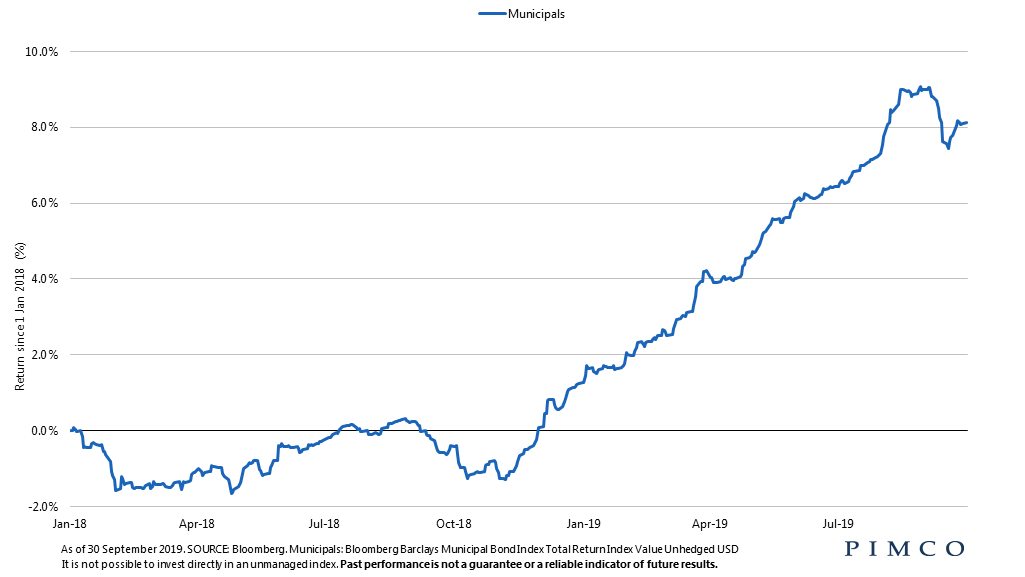
The Bloomberg Barclays Municipal Bond Index returned −0.80% in September, bringing the total return to 6.75% for the year. Munis outperformed the U.S. Treasury index over the month, causing MMD/UST ratios to decrease across the curve. High yield munis outperformed investment grade munis, returning −0.20% for September and bringing the year-to-date return to 9.69%. Underperformance in the high yield transportation sector, however, offset positive returns from the electric utility and resource recovery sectors. Total muni supply of $38 billion in September was down 2% from the previous month but up 50% year-over-year. Muni fund flows remained robust, marking 38 weeks straight of inflows: Investment inflows totaled $5.6 billion for September, bringing the year-to-date total to $68.4 billion, again the strongest recorded level for this point in the year.
CURRENCIES
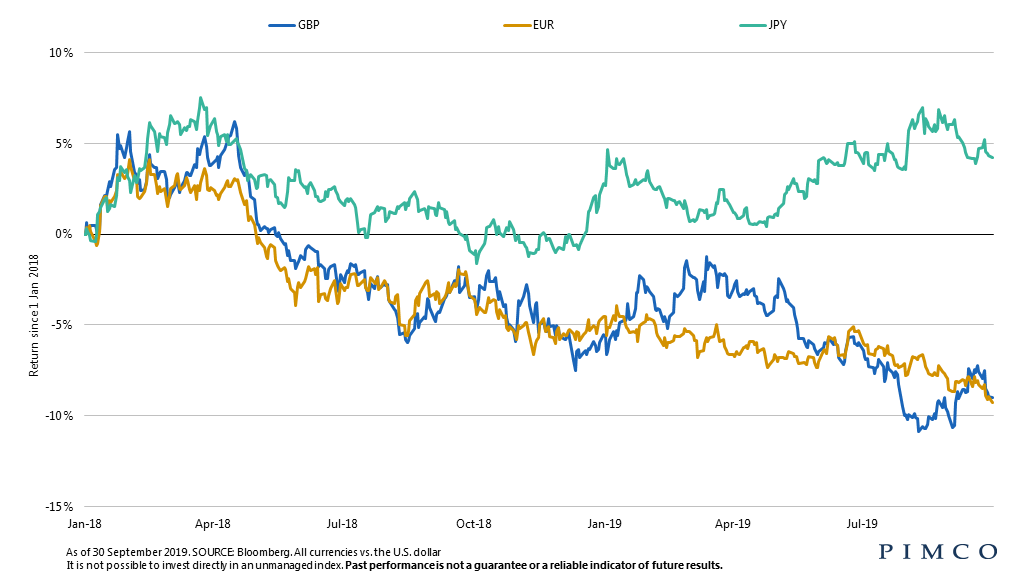
The U.S. dollar ended the month stronger (up 0.5% based on DXY) than its developed-market counterparts, as global growth concerns and less-dovish-than-expected Fed rhetoric overcame the impact of the policy rate cut in September. The euro weakened 0.8% versus the dollar: Economic data remained mixed, and the ECB cut its deposit rate, while also announcing the restart of QE (quantitative easing). The Japanese yen, a traditional “safe-haven” currency, was a strong underperformer, weakening 1.7% against the dollar, as U.S.–China trade tensions marginally improved, which strengthened risk sentiment. In contrast, the British pound strengthened 1.1% against the dollar on somewhat positive Brexit-related news; the odds of a no-deal Brexit appeared to diminish, and news headlines indicated some potential for a resolution around the contentious Irish backstop.
COMMODITIES
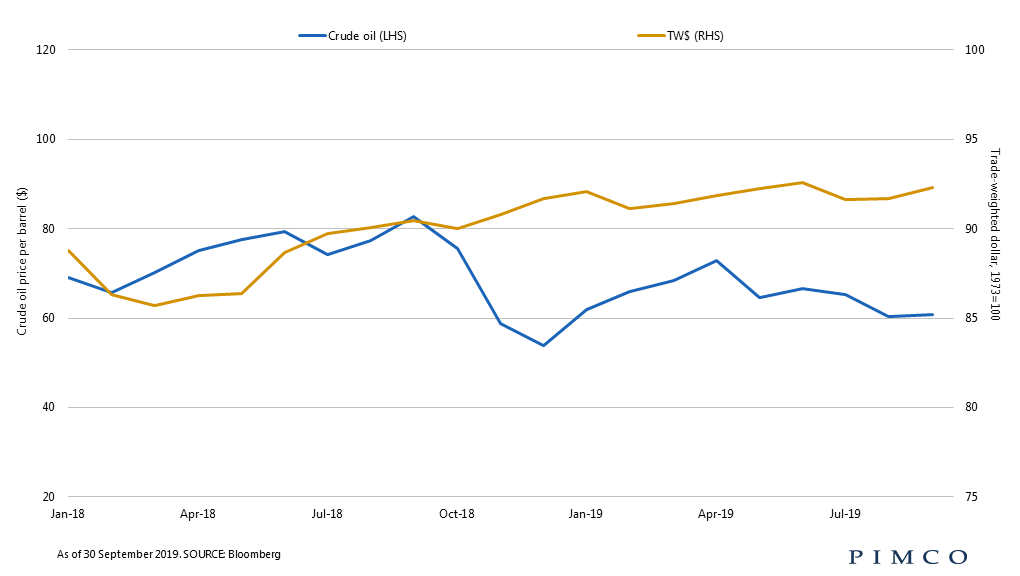
Commodity returns were positive overall in September. Despite the largest one-day increase in Brent crude prices since the contract’s listing in 1988, oil ended the month relatively unchanged. The outsized move followed attacks on Saudi Arabia’s oil infrastructure, which temporarily disrupted 5.7 million barrels per day (b/d) of oil production, or more than 5% of global supplies. Gains were short-lived following reports that Saudi Arabia had managed to replace lost production; macro concerns weighed further on prices. The agricultural sector was well supported over the month on bullish data: Stockpiles reported by the U.S. Department of Agriculture (USDA) came in lower than expected, and news reports indicated the Chinese government would support resuming purchases of U.S. agricultural products. Base metals were positive on the month, driven by gains in zinc and lead, while precious metals reversed course on higher real yields.
123456789101112131415161718
Outlook
Based on PIMCO’s Cyclical Outlook from September 2019.
We believe the global economy is about to enter a low-growth “window of weakness” as ongoing trade tensions and heightened political uncertainty continue to act as a drag on global trade, manufacturing activity, and business investment. In our baseline forecast, the low-growth period of vulnerability – with trade, monetary, and fiscal policy acting as swing factors – gives way to a moderate recovery in U.S. and global growth in the course of 2020.
In the U.S., we continue to expect growth to slow to 1.25%–1.75% in 2020 from a peak of 3.2% in the second quarter of 2018. Slower global growth and elevated trade tensions are expected to depress investment and export growth, while slower business output and lower profit growth slow labor markets, weighing on consumption. Core inflation is likely to firm somewhat to the 2.25%−2.75% range due to the recent tariffs on Chinese goods, though it is likely to moderate in later 2020. We expect the Federal Reserve to support growth by cutting rates further over the next few quarters.
For the eurozone, we see the continuation of a 1% growth, 1% inflation economy. Ongoing trade tensions are expected to exert a significant drag on growth, somewhat offset by supportive domestic conditions, including easy financial conditions, modest fiscal stimulus, and remaining pent-up demand. Core inflation could rise a bit over the next year in response to rising wages, but weak growth suggests that margin pressure on businesses will continue, limiting the pass-through of higher labor costs. While the European Central Bank may cut the policy rate a little further, we expect the focus to remain on forward guidance, targeted longer-term refinancing operations (TLTROs), and asset purchases.
In the U.K., we expect real growth in the range of 0.75%–1.25% in 2020, modestly below trend. We anticipate an orderly Brexit, either through an amended withdrawal agreement or a relatively orderly no-deal exit. However, we see headwinds from weak global trade, Brexit-related uncertainty, and possible disturbances in the event of a no-deal exit weighing on growth. We expect core CPI inflation to remain stable at or close to the 2% target. While wage growth has picked up, we think firms are likely to absorb higher labor costs. The Bank of England will likely keep its policy rate unchanged at 0.75%, but we expect a cut in the event of a no-deal exit.
Japan’s GDP growth is expected to slow to a 0.25%–0.75% range in 2020 from an estimated 1.1% this year. Although we expect domestic demand to remain resilient thanks to a tight labor market and anticipated fiscal accommodation, the balance of risk remains on the downside due to external factors. Core inflation is expected to remain low at 0.5%–1%, with most of the impact from the consumption tax hike offset by lower mobile phone charges and free nursery education. The hurdle for deeper negative interest rates remains high, but there is clear appetite for fiscal stimulus from both the Bank of Japan and the government.
In China, we see growth slowing in 2020 to a 5.0%‒6.0% range from an estimated 6.1% in 2019 due to the trade conflict, rising unemployment, weakening consumption, and sluggish business investment. We expect fiscal stimulus of around 1% of GDP, likely front-loaded in the first quarter of 2020. Inflation should remain benign at 1.5%–2.5%, and we expect the People’s Bank of China to cut rates by 50 basis points, in addition to reductions in bank reserve requirement ratios. We also expect further moderate yuan depreciation against the U.S. dollar to cushion the trade war’s impact on manufacturing.
DISCLOSURES
A “safe haven” is an investment that is expected to retain or increase in value during times of market turbulence. A “safe haven” currency is a currency perceived to be low risk due to the stability of the issuing government and the strength of the underlying economy. All investments contain risk and may lose value.
Past performance is not a guarantee or a reliable indicator of future results. Investing in the bond market is subject to risks, including market, interest rate, issuer, credit, inflation risk, and liquidity risk. The value of most bonds and bond strategies are impacted by changes in interest rates. Bonds and bond strategies with longer durations tend to be more sensitive and volatile than those with shorter durations; bond prices generally fall as interest rates rise, and low interest rate environments increase this risk. Reductions in bond counterparty capacity may contribute to decreased market liquidity and increased price volatility. Bond investments may be worth more or less than the original cost when redeemed. Investing in foreign denominatedand/or -domiciled securities may involve heightened risk due to currency fluctuations, and economic and political risks, which may be enhanced in emerging markets. Currency rates may fluctuate significantly over short periods of time and may reduce the returns of a portfolio. Mortgage- and asset-backed securities may be sensitive to changes in interest rates, subject to early repayment risk, and while generally supported by a government, government-agency or private guarantor, there is no assurance that the guarantor will meet its obligations. Sovereign securities are generally backed by the issuing government. Obligations of U.S. government agencies and authorities are supported by varying degrees, but are generally not backed by the full faith of the U.S. government. Portfolios that invest in such securities are not guaranteed and will fluctuate in value. Income from municipal bonds is exempt from federal income tax and may be subject to state and local taxes and at times the alternative minimum tax; a strategy concentrating in a single or limited number of states is subject to greater risk of adverse economic conditions and regulatory changes. Inflation-linked bonds (ILBs) issued by a government are fixed income securities whose principal value is periodically adjusted according to the rate of inflation; ILBs decline in value when real interest rates rise. Treasury Inflation- Protected Securities (TIPS) are ILBs issued by the U.S. government. Income from municipal bonds may be subject to state and local taxes and at times the alternative minimum tax. Corporate debt securities are subject to the risk of the issuer’s inability to meet principal and interest payments on the obligation and may also be subject to price volatility due to factors such as interest rate sensitivity, market perception of the creditworthiness of the issuer and general market liquidity. Equities may decline in value due to both real and perceived general market, economic and industry conditions. Commodities contain heightened risk, including market, political, regulatory and natural conditions, and may not be suitable for all investors. It is not possible to invest directly in an unmanaged index.
The credit quality of a particular security or group of securities does not ensure the stability or safety of an overall portfolio. The quality ratings of individual issues/issuers are provided to indicate the credit-worthiness of such issues/issuer and generally range from AAA, Aaa, or AAA (highest) to D, C, or D (lowest) for S&P, Moody’s, and Fitch respectively.
PIMCO as a general matter provides services to qualified institutions, financial intermediaries and institutional investors. Individual investors should contact their own financial professional to determine the most appropriate investment options for their financial situation. This material contains the opinions of the manager and such opinions are subject to change without notice. This material has been distributed for informational purposes only. Forecasts, estimates and certain information contained herein are based upon proprietary research and should not be considered as investment advice or a recommendation of any particular security, strategy or investment product. Information contained herein has been obtained from sources believed to be reliable, but not guaranteed. No part of this material may be reproduced in any form, or referred to in any other publication, without express written permission. PIMCO is a trademark of Allianz Asset Management of America L.P. in the United States and throughout the world.