This article will help you evaluate whether it’s still a good time for clients to gain Bitcoin exposure—even after its recent all-time high—and how to do so responsibly. You’ll learn how Bitcoin fits into a diversified portfolio, what leading financial institutions forecast for its future, and why spot Bitcoin ETFs offer a regulated, practical entry point for long-term investors. Most importantly, you’ll gain insights to guide clients through crypto conversations with clarity and confidence.
Bitcoin’s new high: is it too late to get in?
Bitcoin reached a new all-time high in November 2024, following Donald Trump’s re-election—a candidate widely viewed as supportive of cryptocurrency. Historically, headlines like this fuel retail interest and investment inflows. Yet many clients may now be wondering: have they missed the boat?
This article reviews several prominent price forecasts for Bitcoin and provides guidance on how advisors can thoughtfully integrate it into client portfolios.
The perennial question: is it too late to invest in Bitcoin?
Bitcoin has experienced numerous rallies—and drawdowns—since its launch in 2009. While forecasting is never an exact science, institutional predictions indicate room for further growth:
Bernstein forecasts bitcoin to reach $200,000 by the end of 2025, driven by the crypto-friendly Trump administration, corporate treasury adoption and inflows into the spot ETFs approved by the SEC in early 2024.
British bank Standard Chartered believes easier access for investors and lower volatility could propel bitcoin to $500,000. by the end of 2028.
Ark Invest’s Cathie Wood projects bitcoin could be worth as much as $2.4 million by 2030 for various reasons including institutional adoption, its role as digital gold and its use in national reserves.
JP Morgan, on the other hand, pegs Bitcoin’s fair value at $45,000, though skeptics like Anthony Scaramucci argue they’ll revise that view with ongoing regulatory progress.
How does bitcoin fit into a balanced portfolio?
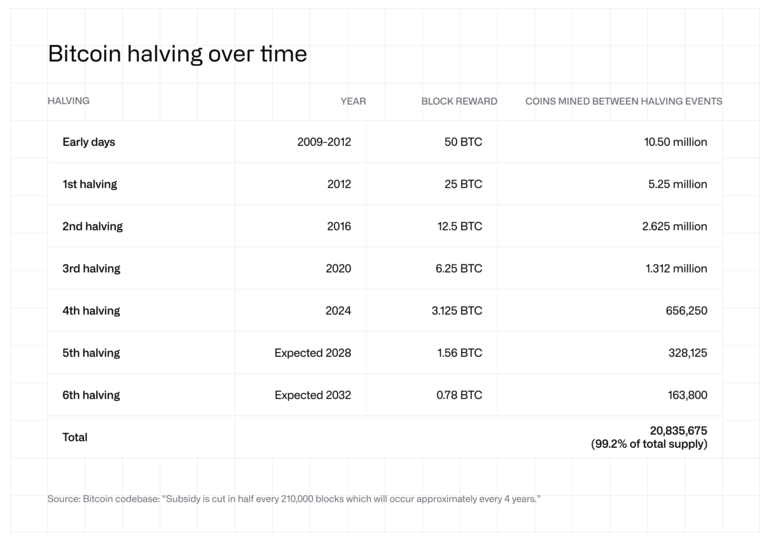
Bitcoin has become recognized as a store of value, as it shares several key characteristics with gold: scarcity, divisibility, portability, and durability. In fact, one could argue that Bitcoin is even more effective, given that its issuance is pre-programmed, follows a four-year halving cycle, and has a clearly defined maximum supply.
Educating clients about this status during times of market instability can build trust and boost retention. In the end, when adding bitcoin to a portfolio, advisors should focus on diversification and hedging against inflation rather than fear of missing out on the latest bull run. As CoinShares research shows, allocating 4% of a standard portfolio to bitcoin using the products listed above can enhance the risk-return profile and improve diversification without compromising fiduciary duty.
Finally, diversifying with altcoins is also possible, but advisors should tread carefully. Bitcoin dominates the market thanks to its longevity and resilience and while tokens issued by Ethereum and Solana have proved durable, 2,300 altcoins became obsolete between 2013 and 2022, primarily due to low trading volume.
When is the best time to invest? Time the market or DCA?
During a bull run, client interest in bitcoin spikes, along with anxiety about timing the market. Investing a lump sum offers the potential for substantial gains, but it can also feel like an emotional rollercoaster, especially with an asset as volatile as bitcoin. And potentially buying at the top is a risk, just like stocks.
Staying on the sidelines isn’t a viable option, as it risks missing out on the trend entirely. Rather than asking if it’s too late, financial advisors should encourage clients to enter the market with discipline and a long-term perspective.
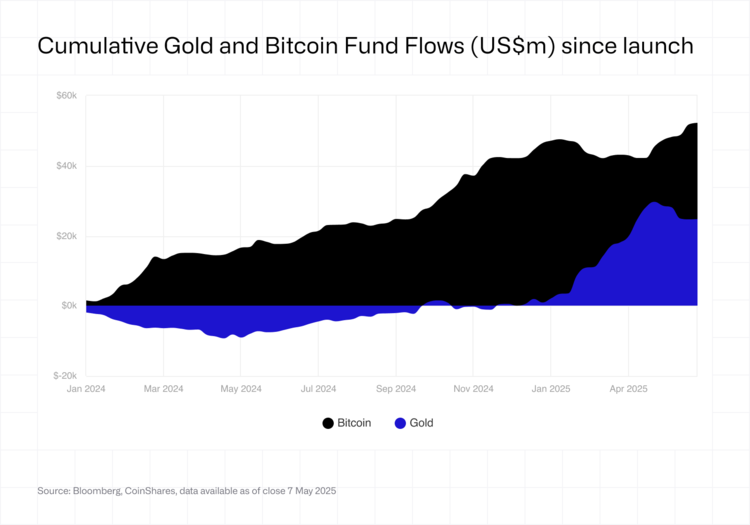
ETFs are ideally suited to dollar-cost averaging. Clients can now choose from 11 spot Bitcoin products trading in the U.S., issued by some of the biggest names in finance, such as BlackRock and Fidelity. These ETFs trade on the same exchanges as mainstream products, allowing them to sit alongside traditional assets in a client’s portfolio and contribute to overall returns. They are also subject to the same regulations, including reporting requirements and exchange rules. Their launch has been a major success, meeting long-standing investor demand as shown by their net inflows outpacing gold products.
A global demand for this asset
The launch of spot Bitcoin ETFs in the United States has been a transformative moment for the asset class, bringing institutional legitimacy, regulatory clarity, and ease of access to a broad spectrum of investors. Simultaneously, the emergence of Bitcoin treasuries, where publicly listed companies allocate part of their balance sheets to Bitcoin, has further cemented its role as a strategic asset. Together, these developments have not only bridged the gap between traditional finance and digital assets but have also catalyzed a wave of global demand. Elsewhere in the world, most notably in Europe and Canada, Bitcoin investment products and corporate Bitcoin treasuries are also driving demand and putting upward pressure on the asset class. From retail investors to asset managers and corporate treasurers, a growing number of participants are recognizing Bitcoin’s potential as a store of value and portfolio diversifier in a changing macroeconomic landscape.
Quick facts
Price forecasts range from $200,000 by end-2025 to $2.4 million by 2030.
A 4% allocation to Bitcoin can enhance portfolio diversification and return potential.
Spot Bitcoin ETFs are now live in the U.S. and well-suited for dollar-cost averaging
Why This Matters For Advisors
_As crypto matures from fringe speculation to a regulated asset class, your clients will increasingly expect guidance—not just opinions. With the launch of spot Bitcoin ETFs, rising institutional adoption, and growing macro relevance, Bitcoin now fits within the strategic framework of modern portfolio construction.
Advisors who understand how to navigate this shift can offer differentiated value: by demystifying Bitcoin, framing it as a tool for diversification, and aligning exposure with each client’s risk profile and investment goals.
The question isn’t whether crypto belongs in the conversation—but whether you’re prepared to lead it._