As of midnight Tuesday, the U.S. government shut down, as lawmakers couldn’t reach an agreement on a short-term bill to continue funding government expenditures. Currently, none of the 12 appropriations bills have been passed. This is the first shutdown since December 2018. There is certainly a human element to consider, as many government workers will be furloughed and others will continue to work without pay. Benefit payments and tax collections will continue.
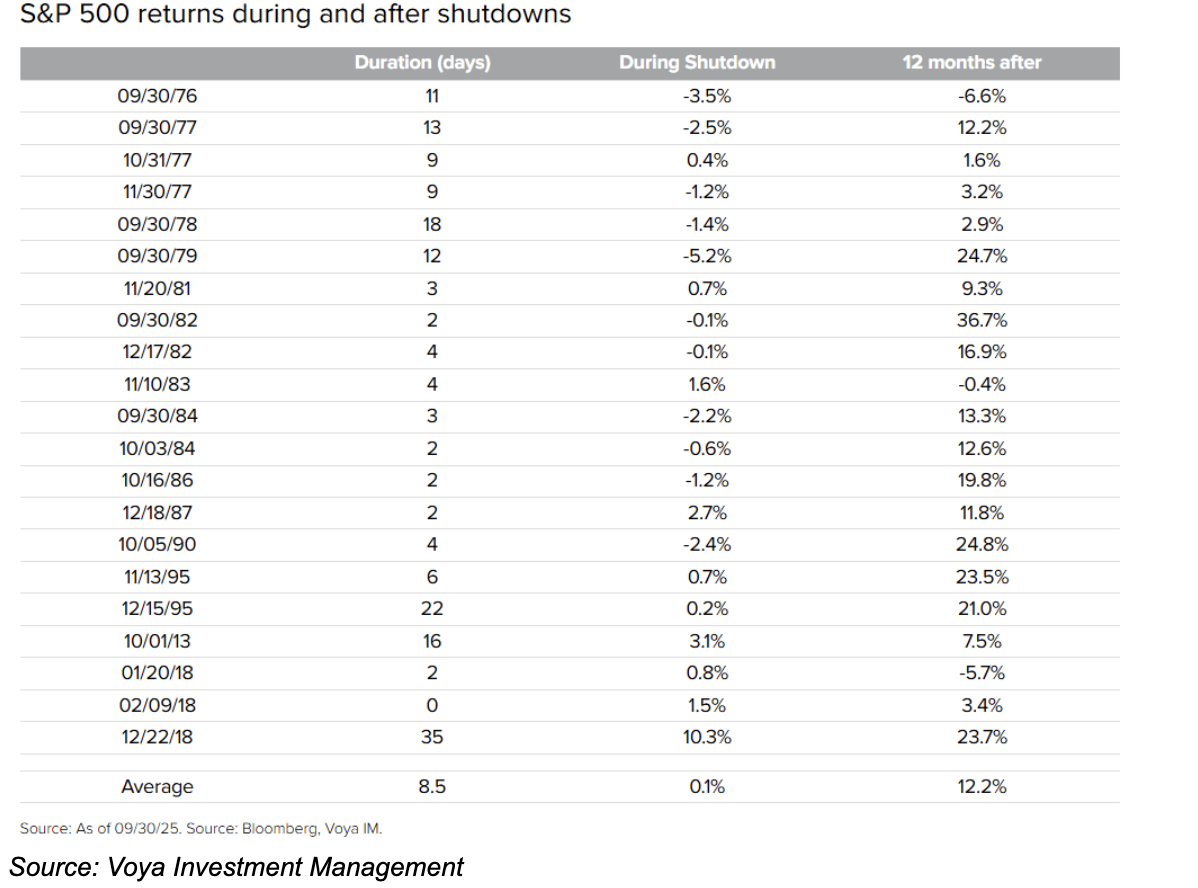
Here, I’d like to focus on the government shutdown’s potential impact on markets. Despite the surrounding uncertainty, markets have tended to look through them. Will that be the case this time? Let’s take a closer look.
How Long Will It Last?
Historically, shutdowns tend to be short. Over the past 50 years, there have been 21 shutdowns that averaged between 8 and 9 days. The bulk of these occurred under Presidents Carter and Reagan. Since 1995, there have been 6 shutdowns, with 3 of them lasting 22, 16, and 35 days. The longest shutdown was the last one, which occurred during December 2018 into January 2019 during the first Trump administration. That impact was a partial shutdown, as 5 of the 12 appropriations bills had been passed.
Since we’ve reached this point and as evidenced by the rhetoric from both parties, it’s clear that both sides of the aisle are entrenched in their current positions. Still, a resolution could occur at any point. Voters tend not to like shutdowns. Eventually, that pressure should lead to some form of common ground and a compromise to fund and reopen the government. It appears conversations have already begun in the Senate to achieve a short-term resolution and buy time to negotiate the differences between the parties.
What’s the Issue?
The human element of the shutdown comes as an estimated 750,000 employees could ultimately be furloughed. This would be in addition to those who continue to work but don’t receive a paycheck until a funding bill is passed.
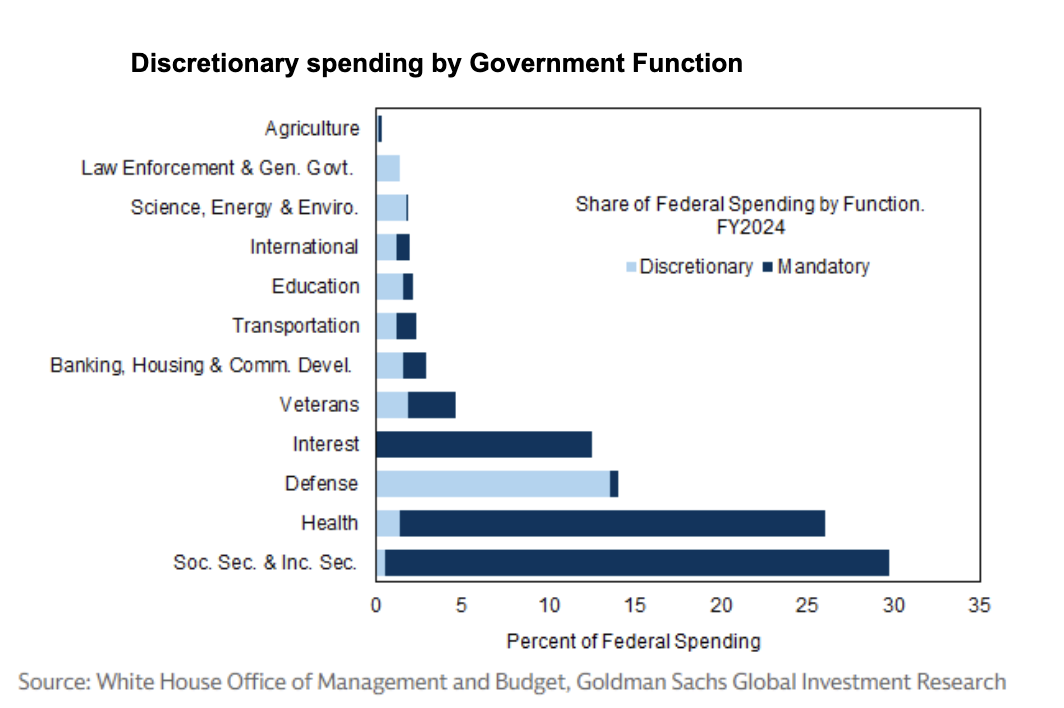
But the amount of funding affected by a shutdown is a subset of total government spending. The core issue is discretionary spending that is funded by appropriation bills. This makes up roughly 25 percent to 30 percent of total government spending. The remaining portion is mandatory spending and is not impacted.
As shown in the chart below, defense spending is almost entirely discretionary and makes up a significant part of the government’s total discretionary spending.
Benefit programs, such as Medicaid, Medicare, and Social Security, would continue uninterrupted. Student loan disbursements would also continue to be made.