The gap between the haves and have-less is clear when boarding an airplane. Most aircraft place the first- and business-class seats nearest to the door, with priority boarding. Those passengers sit in comfort while all others trundle past to crowded rows. After takeoff, a curtain is lowered to enforce the separation. We are all traveling together, but the experience is not shared.
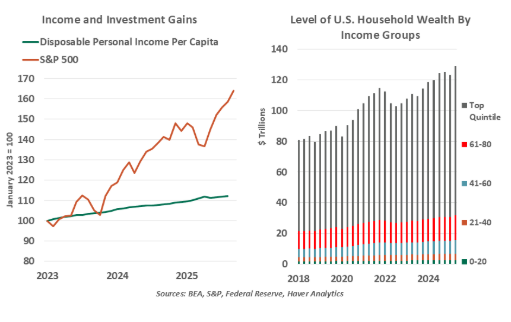
Broad measures of the U.S. economy are strong. Stock market indices have set new record highs this year. House prices have gained over 50% since the start of the decade, with most markets holding their value. Tax breaks passed this summer may set the stage for larger income tax refunds next year. These gains, however, have not been felt uniformly.

Households with higher incomes and higher wealth are propelling activity. After a fairly uniform experience in the pandemic recovery, card spending trends show that the highest third of credit card holders have increased their spending by 2.6% in the past year, while the bottom third is flat.
Signs of strain are growing. Delinquency rates have risen across credit cards and auto loans, a sign that some households have overstretched themselves. Lower earners are less likely to have made investments that benefit from surging stock markets and house prices. A recent J.D. Power survey found a third of respondents had a second job or some sort of "side hustle."
This divergence is leading to unexpected outcomes. High-end, luxury retail brands are performing well, but discount retailers are also ascendant as more consumers trade down. Brands that serve the mass market, with neither high-end nor value appeal, have struggled to compete.
Some inequality is inevitable, but too much can lead to instability. Lower-income consumers have a higher propensity to spend their income; high earners who save will not offer the same multiplier. And those households are most exposed to the strains of higher prices and slower hiring.
A robust growth cycle will include opportunities and wage gains for workers of all skill levels; more capital expenditure could help to create a broader array of well-paying jobs. Growing incomes will ensure all workers get a chance to take a flight—and aspire to first class.
A message from Advisor Perspectives and VettaFi: Discover something new! Click here to register for our upcoming webcasts.
Information is not intended to be and should not be construed as an offer, solicitation or recommendation with respect to any transaction and should not be treated as legal advice, investment advice or tax advice. Under no circumstances should you rely upon this information as a substitute for obtaining specific legal or tax advice from your own professional legal or tax advisors. Information is subject to change based on market or other conditions and is not intended to influence your investment decisions.
© 2025 Northern Trust Corporation. Head Office: 50 South La Salle Street, Chicago, Illinois 60603 U.S.A. Incorporated with limited liability in the U.S. Products and services provided by subsidiaries of Northern Trust Corporation may vary in different markets and are offered in accordance with local regulation. For legal and regulatory information about individual market offices, visit northerntrust.com/terms-and-conditions.
© Northern Trust
Read more commentaries by Northern Trust