After an extended period of surprisingly resilient economic activity, marked by buoyant consumer spending and robust labor market gains, the U.S. economy is shifting gears. The sprint phase, characterized by fiscal tailwinds and pent-up demand, is giving way to a more measured pace. The cumulative effects of restrictive monetary policy, a softening jobs market and trade disruptions are becoming more apparent.
The economy enters the final quarter of 2025 navigating a complex landscape. Renewed trade tensions with China and the ongoing government shutdown have compounded uncertainty at a time when momentum is already slowing.
The outlook calls for below-potential expansion, not contraction. Strolling may lack the adrenaline of the sprint, but it is more stable and sustainable.
Following are our thoughts on the U.S. economy.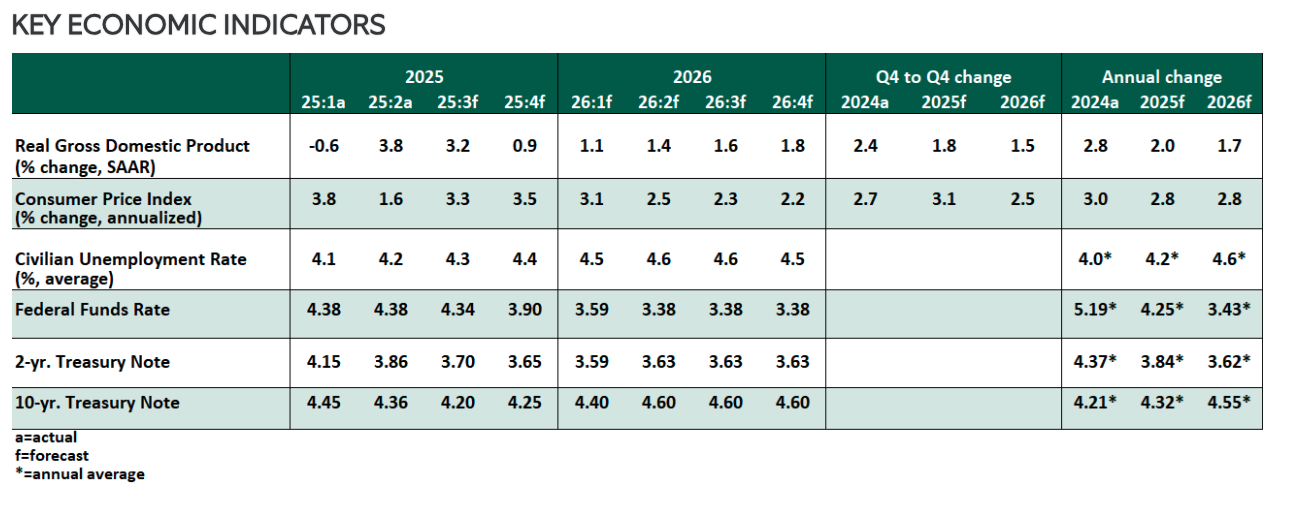
INFLUENCES ON THE FORECAST
- Real gross domestic product (GDP) growth has been volatile this year: a modest contraction in first quarter, followed by catch-up growth in the subsequent quarter and a likely strong performance in the third. This mid-year strength reflects payback after first quarter’s decline, which was driven by swings in imports and inventories. Robust consumer spending and an AI-led investment boom have also been drivers of activity.
But a step down lies ahead. The labor market is softening, and households’ real disposable incomes will be squeezed by rising prices. Discretionary spending has softened this year, with low job availability weighing on sentiment. A growing divergence in spending patterns is also set to dampen aggregate demand, amplifying the slowdown. While tax cuts and lower interest rates should help spending recover gradually into 2026, growth is expected to remain below potential. - With official jobs data suspended, the ADP National Employment Report became the primary signal this month. It showed private-sector employment fell by 32,000 jobs in September, the largest decline since March 2023. The soft reading underscored slowing momentum. The labor market remains a key downside risk. Joblessness is gradually edging up while the trend of job growth is falling. That said, tighter immigration will restrain worker supply, limiting the rise in the headline unemployment rate.
- The September consumer price index (CPI) report has been delayed, but it is expected to release ahead of the Fed’s upcoming meeting. It will not alter the central bank’s stance. Tariff-driven inflation has been modest thus far, and the Federal Open Market Committee will look through a temporary rise in goods prices. Cooling employment conditions will cap domestic price pressures.
In a recent speech, Chair Powell signaled support for further cuts as the job market softens. Powell also indicated balance sheet runoff will stop “in the months ahead,” signaling that liquidity will not be a constraint to growth. We continue to expect two more cuts this year and one next year, with additional action only if the labor market weakens further. - Trade tensions and tariffs are once again dominating headlines. In retaliation to China’s recent restrictions on rare earth exports, the U.S. has threatened additional tariffs of up to 100% on Chinese imports, which would push levies back to April levels of around 130%. This, coupled with sectoral tariffs, will distort price signals, disrupt supply chains and introduce uncertainty into investment planning all over again. With inflationary pressures potentially reignited by higher costs, the Fed may be forced to reconsider its current focus on labor market dynamics.
