A weakening greenback is being compounded by global de-dollarization and lower interest rates, creating an environment for emerging markets (EM) ETFs to prosper. In turn, more investors are flocking into EM equities, but for more targeted exposure, South Korea could present an intriguing alternative.
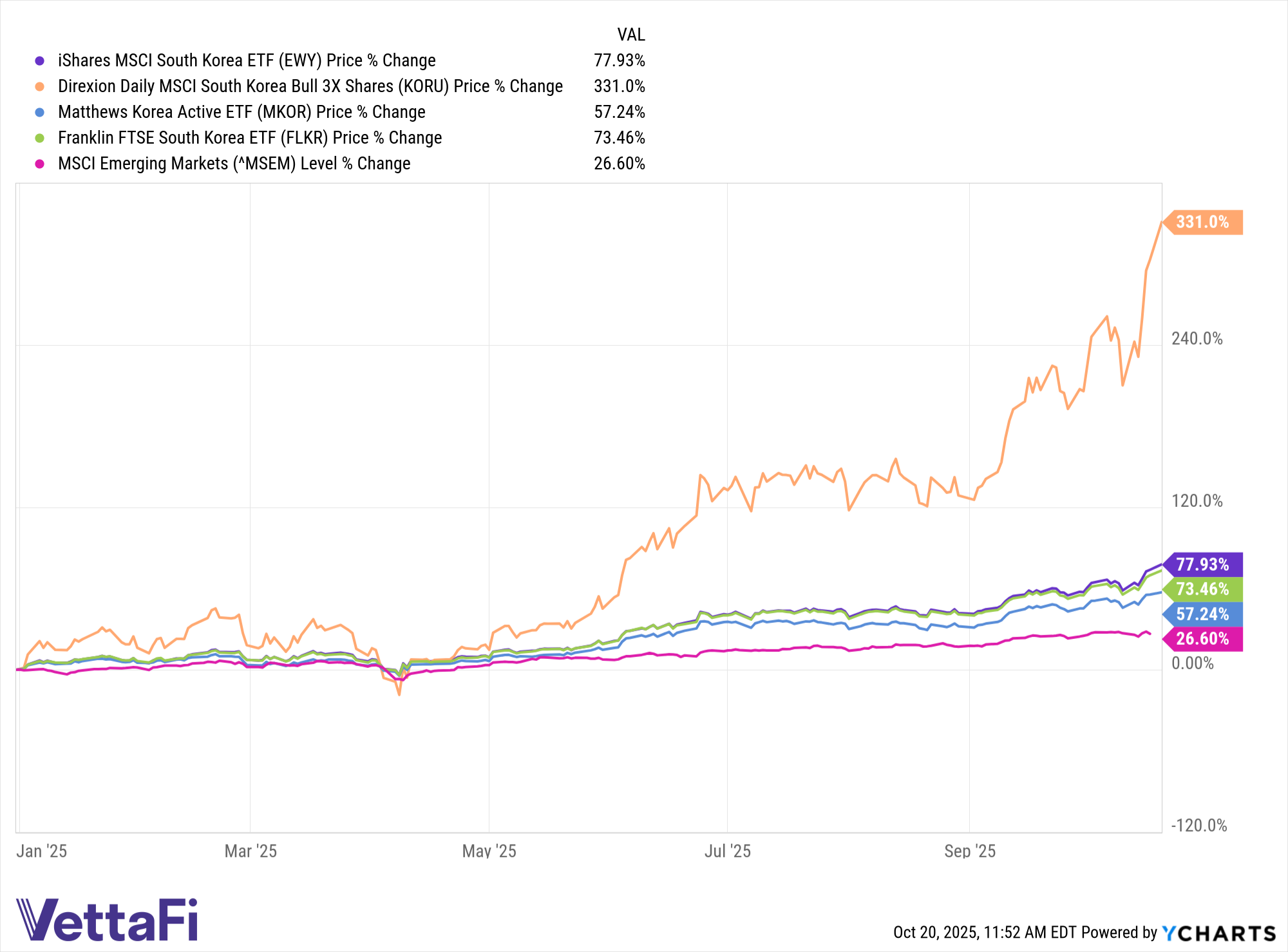
Country ETFs focused on South Korea have been strong performers this year, easily besting the broader MSCI Emerging Markets Index. These outperformers include the iShares MSCI South Korea Index (EWY), Franklin FTSE South Korea ETF (FLKR), Direxion Daily South Korea Bull 3X Shares (KORU), and Matthews Korea Active ETF (MKOR).
For simple exposure by way of passive indexed funds, EWY and FLKR are strong alternatives. EWY’s assets under management are just over $6 billion so it benefits from BlackRock’s brand recognition via its expansive iShares ETF suite.
For emboldened traders, KORU might be your proverbial cup of tea, given its 3x leverage. Because of this leverage, the fund is up over 300%, but seasoned traders should only use these products as tactical tools to game the markets.
Another interesting option is MKOR, as its actively managed. The ETF market is witnessing record active fund launches this year, giving mutual funds a run for their money. South Korean equities carry their own nuances compared to other EM countries, so having portfolio managers who are privy to its equities is an advantage of active ETFs.

Economic Tailwinds Blowing
The fundamental drivers for the strong performances of these funds could tie back to the country’s growing economy. After a pandemic-fueled 2020 caused a negative growth rate, South Korea’s GDP rebounded sharply in 2021, but has been coming back down to earth since then.
2025, however, is showing signs of life. The country’s Finance Minister noted that the economy is in recovery mode after a stagnant period of growth and, more importantly, is showing signs of “vitality.”
“Recently, our economy has been slowly regaining vitality after a long period of stagnation,” said Finance Minister Koo Yun-cheol, who also mentioned that the benchmark Korea Composite Stock Price Index (KOSPI) has been touching record highs while the government is implementing stimulus measures to jumpstart consumer spending. “The government will continue to spread and reinforce the hard-won momentum for recovery.”
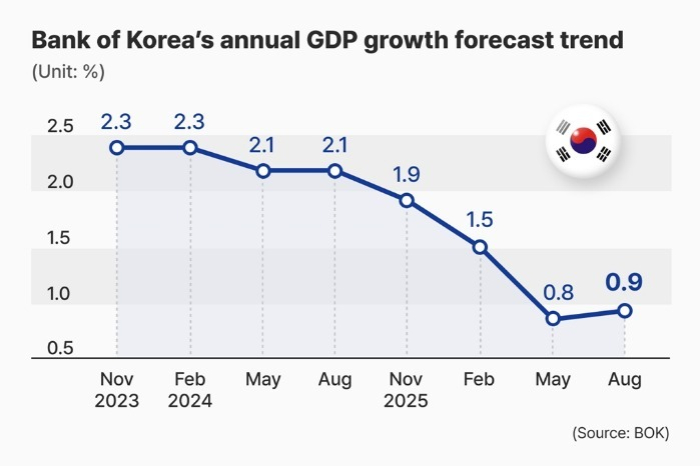
As noted in the Korea Economic Daily, there’s more optimism heading towards the end of the year with the Bank of Korea raising its growth targets in recent months. Wall Street is responding in tow with both Goldman Sachs and JP Morgan raising their growth targets.
Of course, the counterargument centers around tariffs. The Korea Economic Daily also noted that South Korean exports to the U.S. fell by more than double in the month of August, so prospective investors will have to continue being wary of that risk.
Nonetheless, there’s still plenty of optimism looking ahead. Artificial intelligence (AI) will continue to be a prevailing theme, and South Korea vows to bolster their innovation with an ambitious 5-year economic plan. The country has the government’s staunch backing to support the buildout of AI, as well as robots, machine learning applications, drones, and other technological disruptors.
Diversifying Exposure
Despite the strong growth prospects, some investors will want to hedge away the idiosyncratic risks tied to just getting South Korea exposure. The country might still be considered a contrarian play, which will keep the risk averse at bay. That said, there are ETFs that allow for more tailored exposure to EM while still maintaining South Korea equities as part of the fund’s core holdings.
Based on ETF Database’s country exposure weightings, other funds to consider include the First Trust Asia Pacific ex-Japan AlphaDEX Fund (FPA), VanEck Vietnam ETF (VNM), VictoryShares Emerging Markets Value Momentum ETF (UEVM), and KraneShares MSCI Emerging Markets ex China Index ETF (KEMX). The funds carry the heaviest allocation to South Korea while diversifying to other countries.
Originally published on ETF Trends
For more news, information, and analysis, visit VettaFi | ETF Trends.
Read more commentaries by VettaFi