Enjoy this special Halloween edition of the Investor Alert! After the commentary, our investment team shares their favorite stock “treat” of the week.
Want to hear something really scary?
The ongoing government shutdown, now in its fourth week, is projected to cost the U.S. economy as much as $14 billion, the equivalent of a 2 percentage point hit to gross domestic product (GDP).
That’s according to the nonpartisan Congressional Budget Office (CBO), which adds that most, but not all, of the shutdown’s negative effects could be reversed once the government reopens—whenever that happens.
As if that weren’t all, U.S. businesses and consumers are still facing an average tariff rate of 18%, the highest in about 90 years. Yale’s Budget Lab estimates that this translates into an income loss of around $1,800 per household this year alone, a not-insignificant amount.
That’s because consumers are shouldering most of the tariffs, according to Goldman Sachs. In a note to investors dated October 12, economists with the investment bank wrote that American households are currently responsible for paying about 55% of the new levies, while companies are paying 22%. The remaining 23% is either absorbed by foreign exporters or avoided altogether.
Higher Candy Prices Will Contribute to Record Spending This Halloween
Among the goods that have been marked up recently are Halloween candy, costumes and decorations. The National Retail Federation (NRF) estimates that Americans will fork over a record $13.1 billion on Halloween this year, up from last year’s $11.6 billion and exceeding the previous record of $12.2 billion, set in 2023. Nearly 80% of surveyed consumers said they expected prices to be higher this year due to tariffs.
(Tariffs were also cited as the reason why some consumers are planning on spending less on Christmas later this year. Preliminary data from the Conference Board suggests that U.S. households will spend 4% less on gifts and 12% less on everything else compared to last year.)
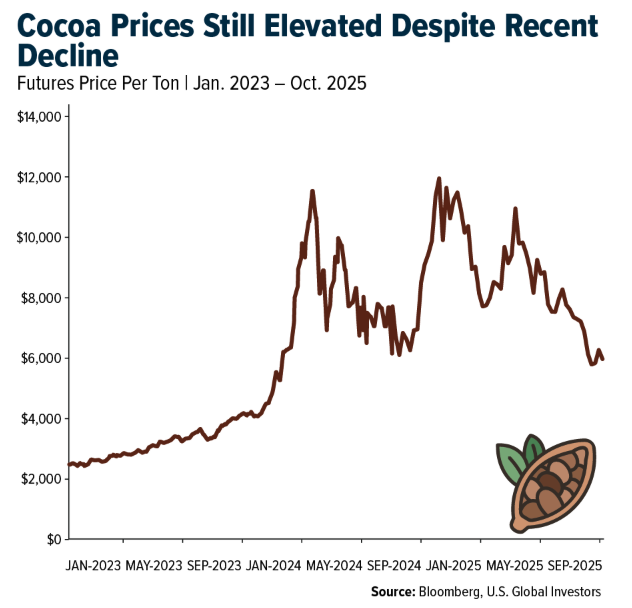
Not all price hikes can be blamed on tariffs, though. That’s especially true when it comes to cocoa, used to make your favorite chocolate treats. West Africa, where some 70% of the world’s cocoa supply comes from, was hit by plant disease and drought in the past couple of years, causing futures prices to spike as high as $12,000 per metric ton at the end of last year.

Producers Reducing Cocoa Content
Earlier this year, a number of chocolatiers, including Hershey, Lindt & Spruengli and Mondelēz, announced higher chocolate candy prices as a result of increased input prices. Hershey warned of a double-digit percentage increase.
That’s not the only change they made. Maybe you’ve noticed, but many companies have had to “reformulate” their chocolate recipes by replacing expensive cocoa with other ingredients. This has led some companies to quietly remove the words “milk chocolate” from their candy bar wrappers, as they no longer meet the regulatory definition of milk chocolate.
European Chocolatiers in a Pinch, but Recovery Should Be Quick
These new formulas persist even as cocoa prices have collapsed nearly 50% since the start of 2025, though they’re still highly elevated on a historical basis, as you can see in the chart above. JPMorgan reports that second-quarter cocoa grindings—the process by which cocoa beans are turned into powder or liquor—were down as much as 7.2% year-over-year in Europe, home to many of the world’s most recognizable chocolate makers, including not just Mondelēz and Lindt but also Ferrero and Nestlé.
Because of this, European sweets manufacturers are expected to see a decline in operating margins this year “amid intensified competition and reduced demand for cocoa-containing products in response to price increases,” according to Fitch. The ratings agency further believes companies should see a “prompt” margin recovery in 2026 as cocoa prices continue to fall.
Will the Halloween Effect Work This Year?
Few, if any, of the issues mentioned above appear to be influencing investors’ decisions. Government shutdown? Tariffs? Sticky inflation? Never heard of them.
Bloomberg, in fact, reports that the S&P 500 has spent more than 125 trading sessions above its 50-day moving average, logging the longest such stretch since 2011. Granted, this market continues to be fueled by investor enthusiasm over artificial intelligence (AI), with chipmaker NVIDIA’s market cap crossing above a jaw-dropping $5 trillion this week.
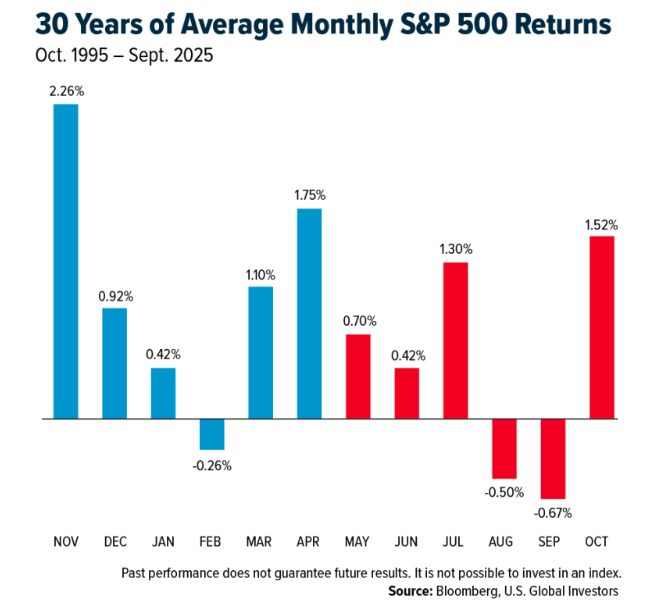
The good news for investors is that history may be on their side. According to the Halloween effect—also known as the Halloween strategy or indicator—stocks have tended to outperform in the six-month period from November to the end of April, compared to the six months from May to the end of October. Since 1945, the stock market has delivered an average return of 7% from November to April, which is three-and-a-half times greater than the 2% average return over the remaining months.
The potential rally kicks off in November, historically the best month for stocks. For the 30-year period, the S&P 500 rose 2.6% on average in November, followed by April’s 1.7%.
But there’s more. Since 1950, when the S&P 500 is up more than 15% year-to-date by the end of October—as it is this year—stocks have finished higher in November and December 95% of the time, according to Carson Investment Research. The S&P 500 gained 2.7% on average in November, 2.0% in December.
That said, I believe investors could be in for more treats than tricks as the year draws to a close. With the market up over 16% year-to-date, history suggests there’s a strong chance of a year-end rally.
That doesn’t mean investors should throw caution to the wind, but it does suggest that, despite the scary headlines, the real fright this Halloween might be missing out on the rally that so often follows.
Airlines and Shipping
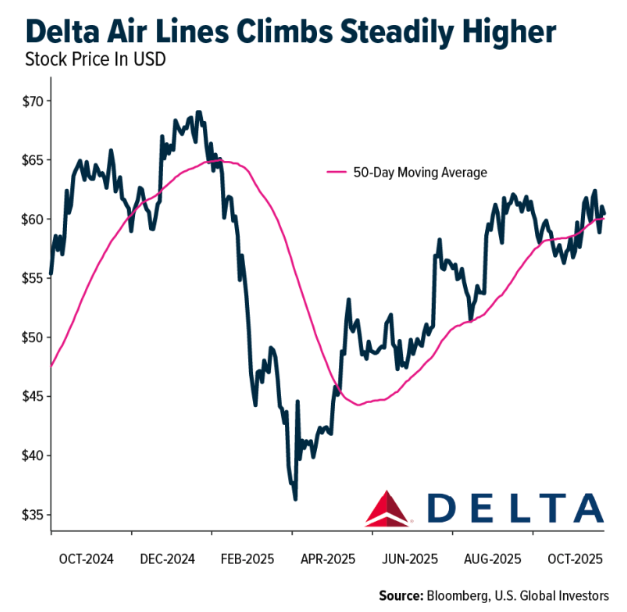
Delta Air Lines is well positioned for continued strong performance. The company’s management team is widely regarded as the highest quality in the U.S. airline industry and has strategically aligned the business for current market conditions. Revenue increased 4% in the most recent quarter, driven by 9% growth in loyalty and premium segments, two enduring structural trends in the sector. Passengers are increasingly favoring carriers with strong loyalty programs and premium seating, while international demand across trans-Atlantic and Pacific routes adds further momentum. Delta also leads the industry in AI-driven pricing optimization, with Basic Economy showing signs of pricing stabilization. Capacity is expected to expand by 2–3%, focused on Boston and Salt Lake City, with 40 new aircraft slated for delivery over the next two years. Stable non-fuel unit costs support the highest EBITDAR margin among major U.S. carriers. With $3–4 billion in free cash flow and investment-grade ratings from Moody’s, S&P, and Fitch, Delta continues to deleverage while offering the potential for increased shareholder returns. The stock remains attractively valued at 10× forward EPS and 6.5× EV/EBITDA.
Luxury Goods and International Markets
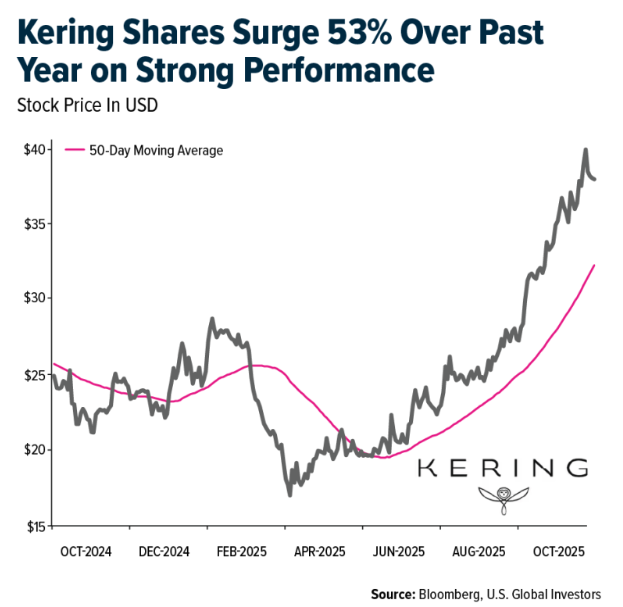
Kering shares are rising after the company reported better-than-expected third-quarter 2025 sales, driven primarily by its flagship brand, Gucci. Although sales declined year over year, the drop was smaller than in previous quarters and showed meaningful sequential improvement, signaling a potential turnaround. Kering’s decision to sell its beauty division to L’Oréal has also boosted investor confidence, allowing the company to refocus on strengthening its core luxury fashion brands under new CEO Luca de Meo. This improving outlook has prompted analysts to raise price targets and fueled a strong rally in the stock, reflecting optimism about a sustained recovery.
Energy and Natural Resources
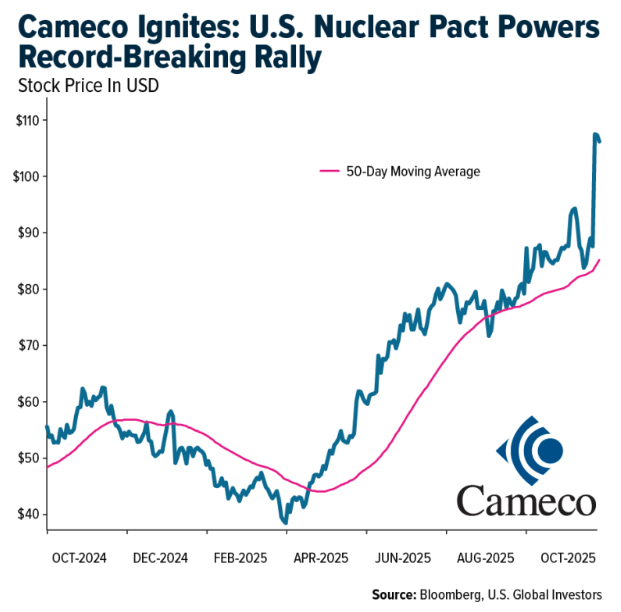
Cameco shares surged 23%, adding nearly $9 billion in market value, following the announcement of a landmark partnership with the U.S. government and Westinghouse Electric to support the development of $80 billion in new nuclear reactors. This historic deal cements Cameco’s role as a cornerstone of the nuclear fuel cycle and positions the company to benefit from decades of high-margin, recurring fuel and maintenance revenues. With global demand for reliable, low-carbon energy rising, driven by AI-driven power needs and the push for energy independence, Cameco stands at the forefront of the next generation of nuclear energy development.
Bitcoin and Digital Assets
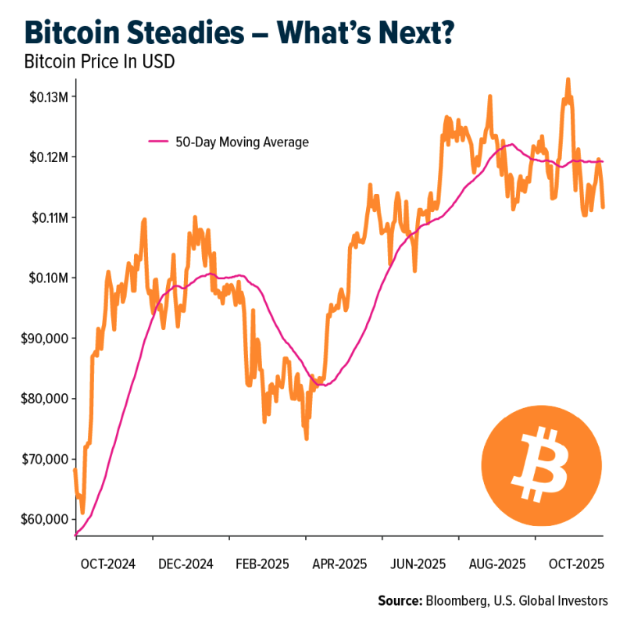
For the week starting October 27, 2025, Bitcoin reflected a tug-of-war between macroeconomic expectations and geopolitical headlines. Early gains toward $115,000 were fueled by optimism around a potential Trump-Xi trade deal, but the Federal Reserve’s 25 basis point rate cut had only a muted effect as Powell signaled further cuts were not guaranteed. By week’s end, Bitcoin was consolidating amid uncertainty over sustained monetary easing and the concrete outcomes of U.S.–China trade talks. Overall, the market weighed upside from trade optimism and rate cuts against headwinds from policy ambiguity and liquidity concerns, with December’s Fed meeting and trade developments as key variables.
Defense and Cybersecurity
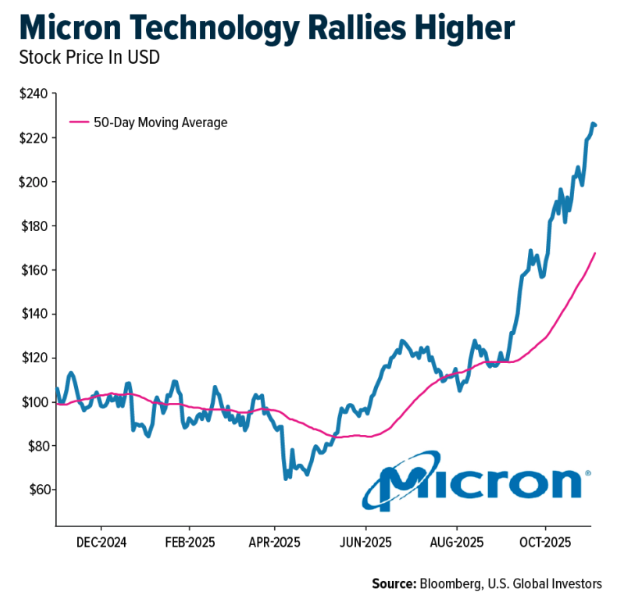
Micron is strengthening its leadership in the global memory market, emerging as a major beneficiary of the AI-driven data center cycle. Its advanced DRAM and NAND technologies, especially HBM and 1-gamma DRAM nodes, provide a clear technological edge as hyperscale and enterprise demand for high-bandwidth memory grows. Management remains upbeat on FY2026, expecting double-digit sequential growth and expanding margins supported by tight DRAM supply and strong pricing. As production ramps for AI and high-performance computing, Micron’s execution and technology roadmap position it at the center of next-generation data infrastructure, reinforcing its role in the global data center expansion. The stock reflects this optimism, trading near its 52-week high with strong upward momentum.
Gold Market
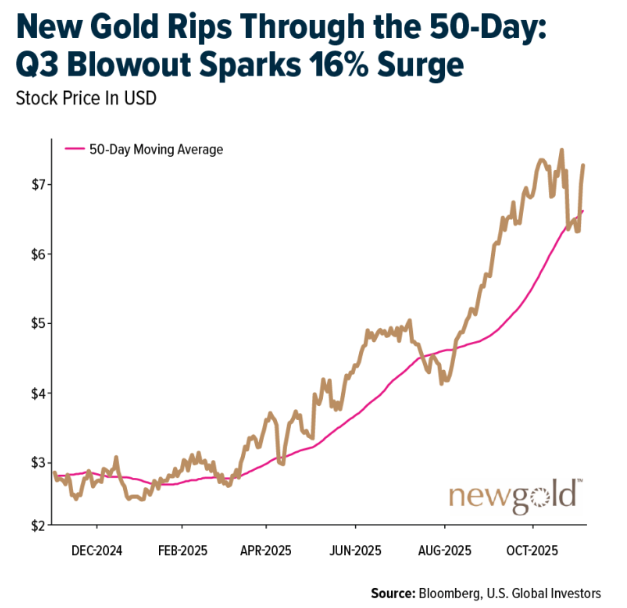
New Gold shares surged 16%, the biggest one-day gain since April, after reporting third-quarter adjusted earnings per share of C$0.25, well above the C$0.18 expected, alongside a 47% increase in gold production to 115,000 ounces. The company also reaffirmed its full-year guidance, signaling a strong fourth quarter ahead. With gold prices holding steady and the Fed pausing Quantitative Tightening, favorable conditions for miners are strengthening, providing additional tailwinds for New Gold and the broader sector.
U.S. Global Investors, Inc. is an investment adviser registered with the Securities and Exchange Commission (“SEC”). This does not mean that we are sponsored, recommended, or approved by the SEC, or that our abilities or qualifications in any respect have been passed upon by the SEC or any officer of the SEC.
This commentary should not be considered a solicitation or offering of any investment product. Certain materials in this commentary may contain dated information. The information provided was current at the time of publication. Some links above may be directed to third-party websites. U.S. Global Investors does not endorse all information supplied by these websites and is not responsible for their content. All opinions expressed and data provided are subject to change without notice. Some of these opinions may not be appropriate to every investor.
Holdings may change daily. Holdings are reported as of the most recent quarter-end. The following securities mentioned in the article were held by one or more accounts managed by U.S. Global Investors as of (09/30/2025):
Delta Air Lines
New Gold
Kering
Cameco
*The above-mentioned indices are not total returns. These returns reflect simple appreciation only and do not reflect dividend reinvestment.
The Dow Jones Industrial Average is a price-weighted average of 30 blue chip stocks that are generally leaders in their industry. The S&P 500 Stock Index is a widely recognized capitalization-weighted index of 500 common stock prices in U.S. companies. The Nasdaq Composite Index is a capitalization-weighted index of all Nasdaq National Market and SmallCap stocks. The Russell 2000 Index® is a U.S. equity index measuring the performance of the 2,000 smallest companies in the Russell 3000®, a widely recognized small-cap index.
The Hang Seng Composite Index is a market capitalization-weighted index that comprises the top 200 companies listed on Stock Exchange of Hong Kong, based on average market cap for the 12 months. The Taiwan Stock Exchange Index is a capitalization-weighted index of all listed common shares traded on the Taiwan Stock Exchange. The Korea Stock Price Index is a capitalization-weighted index of all common shares and preferred shares on the Korean Stock Exchanges.
The Philadelphia Stock Exchange Gold and Silver Index (XAU) is a capitalization-weighted index that includes the leading companies involved in the mining of gold and silver. The U.S. Trade Weighted Dollar Index provides a general indication of the international value of the U.S. dollar. The S&P/TSX Canadian Gold Capped Sector Index is a modified capitalization-weighted index, whose equity weights are capped 25 percent and index constituents are derived from a subset stock pool of S&P/TSX Composite Index stocks. The NYSE Arca Gold Miners Index is a modified market capitalization weighted index comprised of publicly traded companies involved primarily in the mining for gold and silver. The S&P/TSX Venture Composite Index is a broad market indicator for the Canadian venture capital market. The index is market capitalization weighted and, at its inception, included 531 companies. A quarterly revision process is used to remove companies that comprise less than 0.05% of the weight of the index, and add companies whose weight, when included, will be greater than 0.05% of the index.
The S&P 500 Energy Index is a capitalization-weighted index that tracks the companies in the energy sector as a subset of the S&P 500. The S&P 500 Materials Index is a capitalization-weighted index that tracks the companies in the material sector as a subset of the S&P 500. The S&P 500 Financials Index is a capitalization-weighted index. The index was developed with a base level of 10 for the 1941-43 base period. The S&P 500 Industrials Index is a Materials Index is a capitalization-weighted index that tracks the companies in the industrial sector as a subset of the S&P 500. The S&P 500 Consumer Discretionary Index is a capitalization-weighted index that tracks the companies in the consumer discretionary sector as a subset of the S&P 500. The S&P 500 Information Technology Index is a capitalization-weighted index that tracks the companies in the information technology sector as a subset of the S&P 500. The S&P 500 Consumer Staples Index is a Materials Index is a capitalization-weighted index that tracks the companies in the consumer staples sector as a subset of the S&P 500. The S&P 500 Utilities Index is a capitalization-weighted index that tracks the companies in the utilities sector as a subset of the S&P 500. The S&P 500 Healthcare Index is a capitalization-weighted index that tracks the companies in the healthcare sector as a subset of the S&P 500. The S&P 500 Telecom Index is a Materials Index is a capitalization-weighted index that tracks the companies in the telecom sector as a subset of the S&P 500.
The Consumer Price Index (CPI) is one of the most widely recognized price measures for tracking the price of a market basket of goods and services purchased by individuals. The weights of components are based on consumer spending patterns. The Purchasing Manager’s Index is an indicator of the economic health of the manufacturing sector. The PMI index is based on five major indicators: new orders, inventory levels, production, supplier deliveries and the employment environment. Gross domestic product (GDP) is the monetary value of all the finished goods and services produced within a country’s borders in a specific time period, though GDP is usually calculated on an annual basis. It includes all private and public consumption, government outlays, investments and exports less imports that occur within a defined territory.
The S&P Global Luxury Index is comprised of 80 of the largest publicly traded companies engaged in the production or distribution of luxury goods or the provision of luxury services that meet specific investibility requirements.
A message from Advisor Perspectives and VettaFi: Discover something new! Click here to register for our upcoming webcasts.
© U.S. Global Investors
Read more commentaries by U.S. Global Investors