Before we started some recent home renovations, neighbors offered advice: stay patient. Construction projects feature weeks that feel like no progress has been made, and days that feel like everything has changed at once.
Conditions in the housing market have felt stuck, awaiting progress. The persistent dislocation in housing is affordability. Potential buyers are excluded by low supply, high prices and high interest rates. Are reforms possible to help more people achieve the dream of owning their homes?
Most home purchases require borrowing, and mortgage rates have remained stubbornly elevated. After a period of abnormally low interest rates, 30-year mortgages climbed up to 7% in 2022, sapping purchase activity ever since. Lower rates could promote affordability, but may also bring more buyers into the market, bidding up prices. The key to unlocking affordability will be increasing the supply of homes. Greater density is a proven solution to affordability, but proposals to build multifamily or smaller single family homes can encounter hurdles in local zoning requirements.
State mandates can overcome municipal roadblocks. Larger-scope efforts to promote affordable housing and transit-oriented developments (allowing greater density near public transit) can allow developers to bypass local zoning. Builders are also making inroads by replacing derelict commercial properties with residential developments.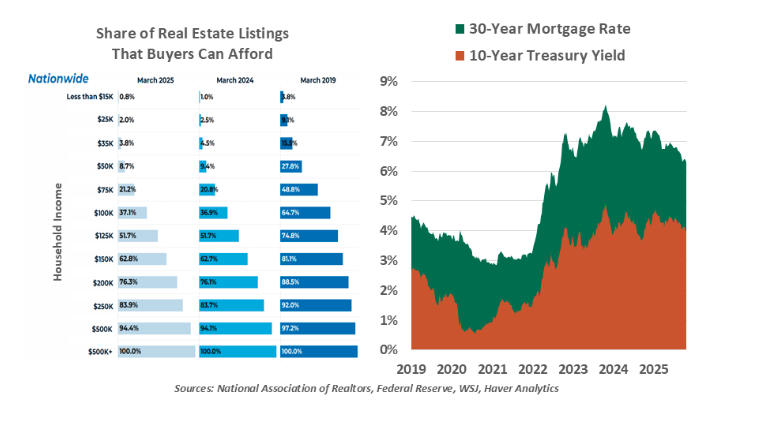
Federal intervention in housing has historically been limited to the mortgage market. However, the White House is attuned to challenges of affordability. Advisers have hinted that President Trump may declare a housing emergency, allowing more rapid executive action. No details were included, but options abound. National permitting reform could expedite faster construction with less overhead cost. Opening federally-protected land to development would create more space to develop, especially on the outskirts of Western cities.












