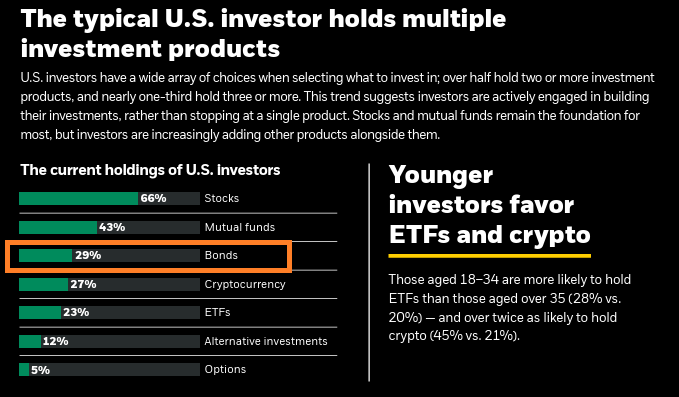
Stocks might still be the preferred investment of choice. But exchange traded funds (ETFs) are quickly gaining ground. According to a "People & Money" survey conducted by BlackRock in conjunction with YouGov, ETF adoption continues to expand while also seeing a shift demographically.
ETFs are already having a record year. They've surpassed the previous year's $1.14 trillion inflows. And adoption is projected to rise, according to the survey. So it could mean more broken records in the coming years.
“ETFs have revolutionized how millions of people invest today,” said Elise Terry, head of U.S. iShares at BlackRock. “These findings reflect growing demand for diversified exposures through efficient, transparent vehicles — and a rising appetite for choice in how Americans seek to grow their wealth. This momentum underscores the need to accelerate innovation, broaden access, and scale education to pursue better outcomes for all investors.”
The Who & Why
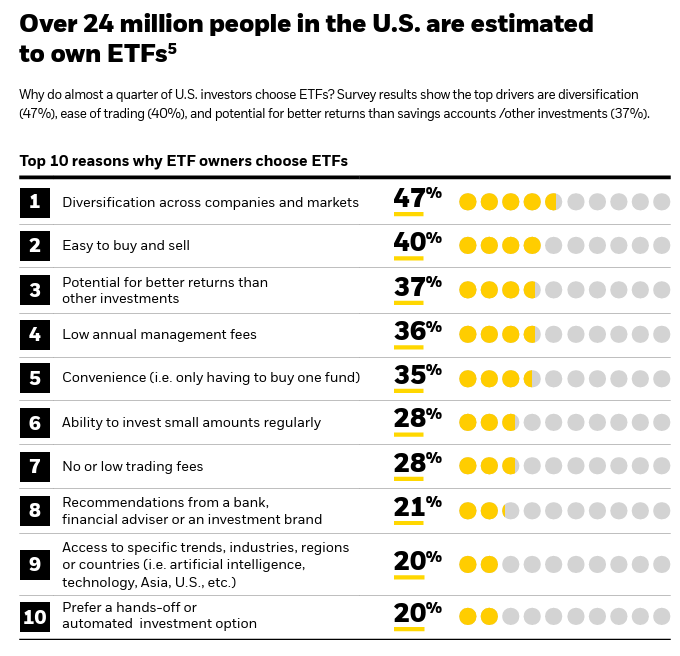
The survey included 5,200 adults who cited various reasons why they prefer ETFs over other investment vehicles. Among them are diversification (47%), ease of buying/selling (40%), the potential for greater alpha compared to other investments (37%), and low costs (36%).

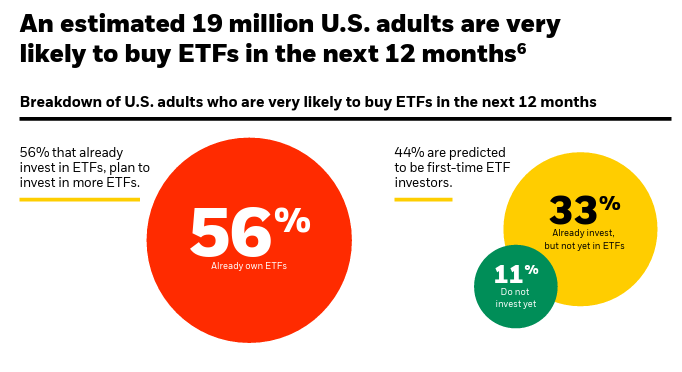
Out of the respondents, 56% already own ETFs, with another 44% predicted to be first-time investors. The youth movement toward ETFs was apparent in the results. Seventy-one percent of those first-time ETF investors were under 45 years of age. Furthermore, even younger investors (ages 18-34) are 50% more likely to take advantage of fractional ownership. That's a potential driver for further ETF adoption in this demographic.
ETF adoption is also starting to spread across various income levels. Sixty-nine percent of first-time investors earn under $100K annually. That proves ETFs aren't relegated to only high-income individuals.
Because ETFs provide exposure to various assets, the types preferred varied among current and first-time ETF investors. Equity ETFs were the preferred investment for current ETF investors (87%). And 47% of first-time investors said they would allocate their capital toward crypto ETFs. That's a sign of the times, as crypto adoption by institutional investors is spawning a variety of crypto-focused ETFs.
Fixed Income Demand Rising
Fixed income ETFs are also seeing record adoption this year, with greater inflows across various bond categories. And fixed income ETFs took in a record $51 billion in October (their highest record ever) and over $350 billion overall this year, according to data from State Street. In relation to the survey, this should appeal to first-time ETF investors who said they would invest in bond ETFs over the next year (38%) versus first-time investors (24%).
An interesting aspect of the survey was assessing the needs of the next wave of prospective ETF investors. In particular, this spoke to those who are still sitting on the sidelines uninvested for various reasons. To the barriers to investing included not having the requisite capital to invest, limited investment acumen, and the number of investment options flooding the market. Additionally, investing requires a certain level of behavior traits — confidence being one of them. Respondents were asked what exactly leads to confidence in investing?
"Current investors say confidence comes from staying calm through market ups and downs (49%), while non-investors, many held back by limited knowledge, believe learning the basics (39%) would make them feel more capable and confident," the survey report said.
Given that the current market environment is fraught with uncertainty due to tariffs, geopolitical tensions, and other macro factors, the hesitance to invest is warranted. However, ETFs could help these investors get off the sidelines. In particular, many of the concerns addressed could be ameliorated with active ETFs.
The Active Option
Active ETFs put investing in the hands of portfolio managers (PMs) who can adjust the holdings of the fund to capture upside and protect downside in the current market environment. This makes them all-weather ETF solutions for investors looking for a set-it-and-forget-it alternative.
Furthermore, investors don't need to worry about lacking market confidence and limited knowledge, as these concerns are addressed through an active ETF's portfolio managers. PMs have the requisite knowledge and experience who know the complexities of the market while harboring the temperament to deal with downturns.
Active ETFs can be sliced and diced for tailored exposure into various corners of the bond market, from municipal bonds to emerging market bonds. For all-encompassing core options, some ETFs to consider include the JPMorgan Active Bond ETF (JBND), the Vanguard Core Bond ETF (VCRB), and the Fidelity Total Bond ETF (FBND).
A message from Advisor Perspectives and VettaFi: To learn more about this and other topics, check out some of our podcasts.
Read more commentaries by VettaFi