Gold versus Bitcoin
When evaluating the integration of gold and bitcoin into their investment strategy, investors should carefully examine both their similar properties and fundamental differences. These assets are frequently positioned as alternative value repositories, particularly valuable during periods of macroeconomic volatility and uncertainty.
Both gold and bitcoin are considered to operate independently of individual currencies and sovereign control, providing potential protection against systemic financial risks while serving as portfolio diversification instruments. Despite these shared characteristics as non-correlated assets, their underlying properties, market dynamics, and associated risk frameworks exhibit variations that suggest the need for distinct analytical approaches.
The assessment of these assets encourages consideration of their volatility profiles, liquidity characteristics, storage requirements, regulatory environments, and long-term value propositions. While gold offers the stability of a time-tested store of value with thousands of years of monetary history, bitcoin presents the potential of a revolutionary digital asset with transformative technological underpinnings.
Understanding these nuanced differences plays an important role for constructing an optimal allocation strategy that aligns with specific investment objectives, risk tolerance levels, and portfolio diversification goals within the broader context of modern asset management principles.
A Historical Perspective
Gold’s legacy as a monetary asset spans centuries, underpinned by its tangible nature, universal recognition, and deeply entrenched role in global finance. In contrast, bitcoin is a digital asset—a decentralized token built on blockchain technology, with a comparatively brief but disruptive history. Gold’s value dynamics appear to be shaped by physical supply and demand, central bank activity, idiosyncratic investor preferences and other global macro phenomenon. Bitcoin’s price, meanwhile, is more directly influenced by market sentiment, technological innovation, regulatory developments, and its algorithmically limited supply.
Liquidity and volatility further set these assets apart. Gold markets are mature, highly liquid, and generally characterized by lower volatility. Bitcoin, on the other hand, is known for significant price swings and may experience reduced liquidity during periods of market stress. Custodial considerations also differ: gold can be held physically or via financial instruments, while bitcoin requires secure digital storage, introducing unique cybersecurity risks. Despite these differences, both assets can enhance portfolio diversification, but investors must assess their own risk tolerance, time horizon, and investment objectives before allocating capital.
Recent years have seen an increasing preference for gold over U.S. Treasuries among global central banks. The rationale is multifaceted: gold offers a robust hedge against currency risk and geopolitical instability, allowing reserve managers to diversify away from dollar-denominated assets. Unlike Treasuries, gold is not exposed to credit risk or policy decisions that could undermine its value, making it a more resilient choice during episodes of global tension or shifting monetary regimes.
As inflation concerns and interest rate volatility persist, gold’s historical role as a protector against the erosion of purchasing power may become even more pronounced. Treasuries may lose value in a rising rate or inflationary environment, while gold tends to retain or even appreciate in value. By incorporating gold into their reserves, central banks improve liquidity, enhance overall portfolio stability, and mitigate exposure to unpredictable shifts in the global financial system.
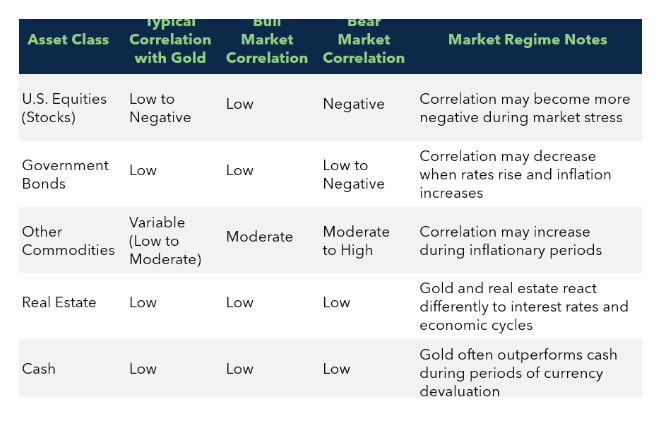
From a portfolio construction perspective, gold offers a suite of strategic advantages that are difficult to replicate with other asset classes. Its correlation with U.S. equities is typically low to negative, a relationship that becomes more pronounced during market downturns or stress events. This non-correlation helps offset losses in risk assets, thereby reducing overall portfolio volatility and smoothing long-term returns.
Gold is also widely recognized as an effective inflation hedge. In periods where fiat currencies lose purchasing power, gold often maintains or increases in value. Historical data demonstrates that gold prices tend to rise during inflationary episodes, making it a valuable tool for capital preservation. In addition, gold’s safe haven status is reinforced during times of geopolitical instability or financial system stress, as investors seek what they may believe to be its timeless value and global liquidity.
Market liquidity is another important attribute: gold is one of the most actively traded assets worldwide, ensuring that investors can enter or exit positions with minimal friction. Its scarcity and durability further support its ability to preserve wealth across generations, unlike paper currencies that may be devalued over time.
The Weeds
An advanced understanding of gold’s role requires attention to its shifting correlations with other major asset classes across different market regimes. During periods of economic expansion and stable markets, gold’s correlation with equities is generally low or slightly negative. However, during recessions or market shocks, this correlation often becomes more negative, highlighting gold’s function as a counter-cyclical asset.

Gold’s relationship with government bonds is also regime-dependent. In environments of stable or declining rates, gold’s correlation with bonds remains low, as both can benefit from risk aversion. However, in rising rate or inflationary settings, gold can outperform bonds, further reducing their correlation. Gold’s correlation with other commodities, such as energy or base metals, may increase during inflationary periods when investors seek real assets to maintain purchasing power.
These dynamic correlations underscore gold’s potency as a portfolio diversifier. By understanding and anticipating how gold interacts with equities, bonds, and other commodities through various market cycles, experienced investors can position portfolios to better withstand volatility and systemic shocks.
Summary
Gold’s centuries-long track record, liquidity, and status as a safe haven asset continue and can make it a foundational allocation for risk management, inflation protection, and capital preservation. Bitcoin offers a new paradigm for alternative value storage but comes with higher volatility and evolving regulatory risks. Ultimately, the optimal mix will depend on individual risk preferences, investment horizons, and strategic objectives, with gold remaining a vital tool for resilience and diversification in modern portfolios.
Originally published October 31, 2025
Originally published on ETF Trends
For more news, information, and strategy, visit the ETF Strategist Content Hub.
A message from Advisor Perspectives and VettaFi: Discover something new! Click here to register for our upcoming webcasts.
This report has been prepared for informational purposes only. It may include content generated or assisted by artificial intelligence (AI) tools. While the information presented is based on sources believed to be reliable, it should not be construed as personalized investment advice, considered a recommendation or solicitation for the purchase or sale of any security or strategy. Strategy Holdings, Attributions and or Sectors mentioned are as of the date indicated, subject to change, and should not be relied upon as current. This does not constitute legal or professional advice and is not tailored to the investment needs of any specific investor. Registration of an investment adviser does not imply any certain level of skill or training. Due to rapidly changing market conditions and the complexity of investment decisions, supplemental information may be required to make informed investment decisions, based on your individual investment objectives and suitability specifications. Investors should seek tailored advice and should understand that statements regarding future prospects of the financial market may not be realized, as past performance does not guarantee and/or is not indicative of future results. Content may not be reproduced, distributed, or transmitted in whole or in part by any means without written permission from Globalt. Regarding permission, as well as to receive a copy of Globalt’s Form ADV Part 2 and Part 3, contact Globalt’s Chief Compliance Officer, 3200 Windy Hill Road SE, Suite 1550E, Atlanta GA 30339. You can obtain more information about Globalt Investments and its advisers via the Internet at adviserinfo.sec.gov, sponsored by the U.S. Securities and Exchange Commission. The opinions and some comments contained herein reflect the judgment of the author, as of the date noted.
Globalt Investments LLC (“Globalt” or the “Firm”) was founded in 1990. It has been registered with the SEC as an Investment Adviser pursuant to the Investment Advisers Act of 1940 since 1991. Effective October 1, 2023, Globalt is a limited liability company owned by the employees and succeeding the “Globalt Investments” which had been a separately identifiable division of Synovus Trust Co. N.A. (its affiliate since 2002). Globalt is no longer affiliated with Synovus. Globalt’s registration with the SEC does not imply any level of skill or training and should not be mistaken for an endorsement.
Read more commentaries by Globalt Investments