Introduction
After a year of broad-based gains, many investors feel both upbeat and uncertain looking toward 2026.
Equities extended their bull run in 2025, but valuations remain historically stretched amid a sharp dispersion of returns across sectors. Cash offered both safety and income for a while, but it no longer seems attractive as the Federal Reserve cuts interest rates. And the U.S. economy appears resilient, yet a K-shaped split shows prosperity for wealthier households diverging from mounting strain for others.
We’ll update our views on the economy and fixed income markets in more detail in our January Cyclical Outlook. For now, we’ll explore select areas of interest across financial markets looking toward 2026 – individual themes that can be brought together in a portfolio – in a way that’s actionable for investors and advisors.
Equities: Expensive on the surface, value beneath
U.S. equities approach 2026 with valuations still near historical highs after a multi-year, technology-driven rally. While AI investment continues to underpin economic growth and market optimism, the concentration of returns in a handful of mega-cap tech stocks raises questions about sustainability.
The tech sector, once celebrated for capital efficiency, has entered a more capital-intensive phase. AI-related spending, previously funded largely by free cash flow, is increasingly fueled by debt issuance. Another notable spending trend: The biggest hyperscalers and chipmakers are funneling billions of their investment dollars into one another through circular deals that amplify sector-specific risks.
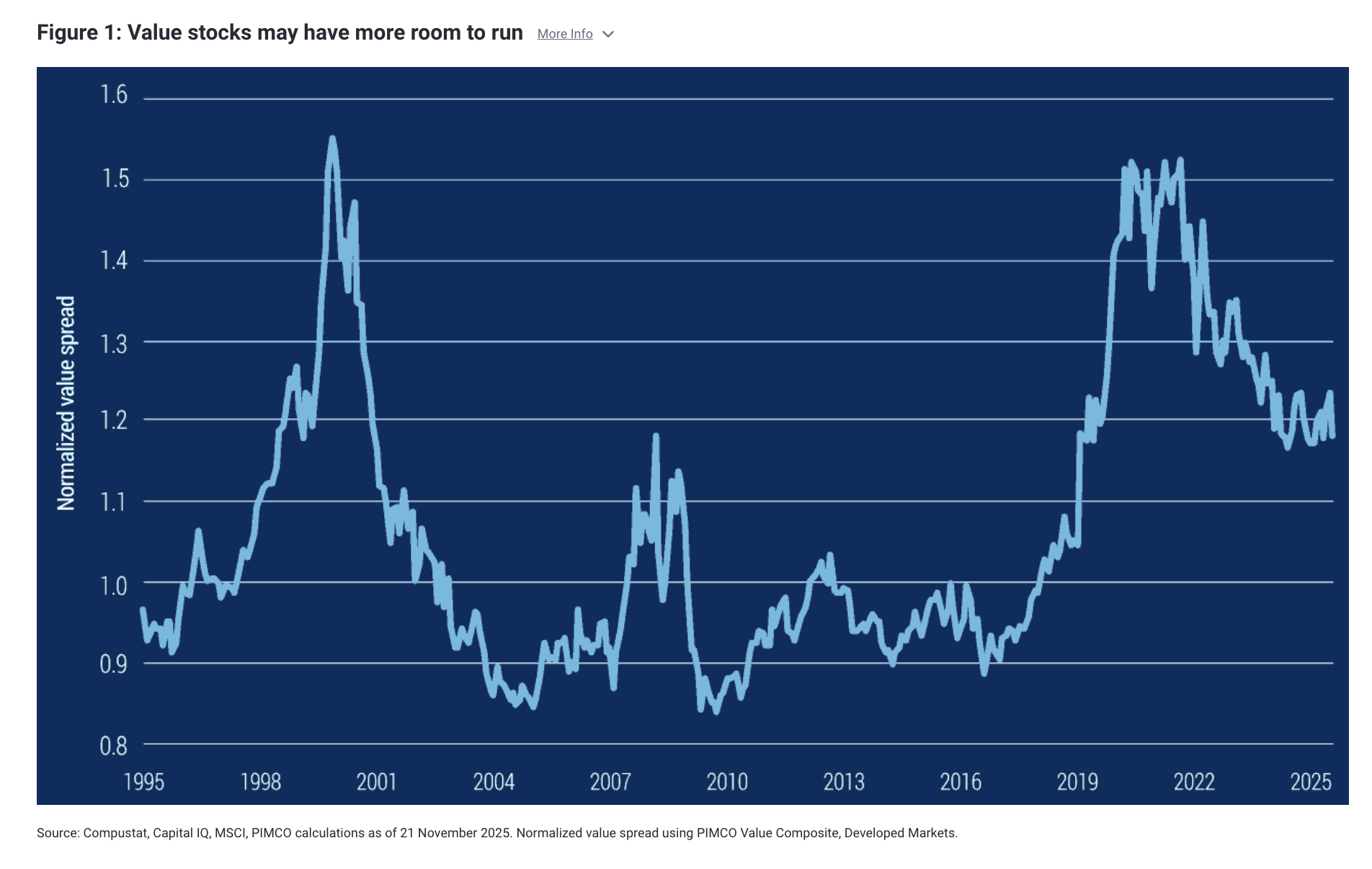
Beneath the surface, however, the story is more nuanced. For example, value-oriented stocks remain attractively priced relative to historical averages (see Figure 1), suggesting potential for mean reversion over time.

Macro conditions could provide a tailwind for value in the near term. An outlook for trend-like U.S. economic growth should help broaden earnings growth across sectors in 2026. In our view, the best scenario for value is if the Fed continues cutting rates into reaccelerating and broadening growth.
We also see opportunities to diversify globally. Central banks in emerging markets (EM), having established stronger monetary policy frameworks, now have more flexibility to ease policy and stimulate domestic demand, potentially supporting EM equities. Specifically, we see attractive opportunities in Korea and Taiwan, which offer exposure to the tech sector at cheaper valuations, and China.
Cash is not a strategy: The case for fixed income
In our view, investors who continue holding excess cash today are missing a potential opportunity.
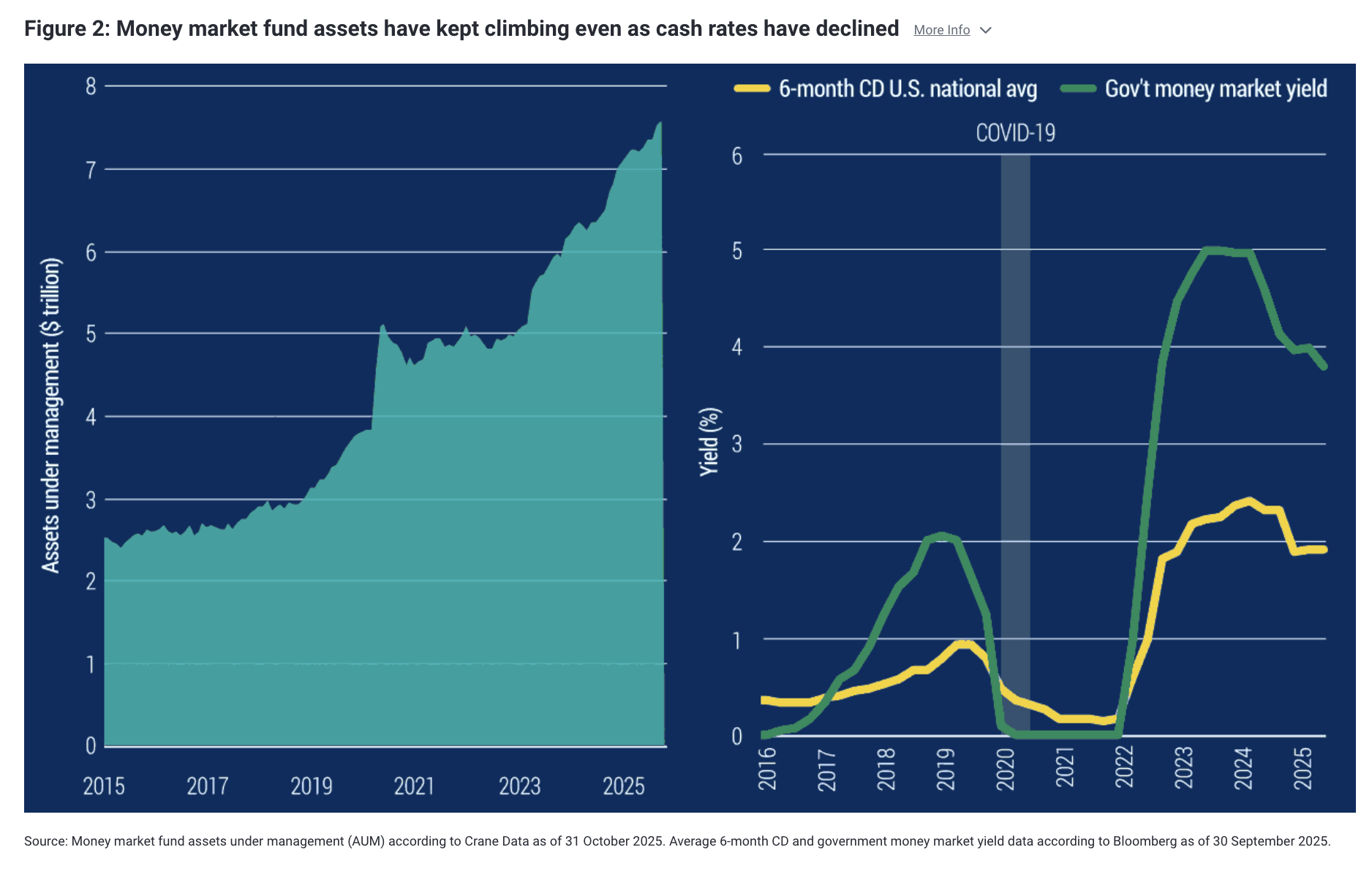
Unusually high returns attracted investors to cash during the post-pandemic period of elevated inflation and Fed interest rate hikes (see Figure 2). But the current Fed rate-cutting phase brings opportunity costs and reinvestment risk, as cash holdings are repeatedly rolled into lower-yielding instruments.
As yield curves have steepened, cash yields have declined relative to a variety of bond maturities. Bonds allow investors the potential to lock in income at more favorable levels over longer horizons.
When interest rates fall, cash earns less, but bonds typically gain in value, enhancing total return potential. At today’s yields, high quality bonds look attractive across many possible economic scenarios. With inflation having moved back toward central bank targets, bonds again provide opportunities for diversification through their traditional negative correlation to stocks, helping portfolios weather equity downturns.
Investors can also take advantage of today’s abundance of global fixed income opportunities, with attractive real and nominal yields available in countries across developed and emerging markets, such as the U.K., Australia, Peru, and South Africa (for more, see PIMCO’s October 2025 Cyclical Outlook, “Tariffs, Technology, and Transition”). We believe diversification across regions and currencies is an effective way to harvest differentiated sources of return while fortifying portfolios.
All that glitters: Gold, crypto, and the search for real assets
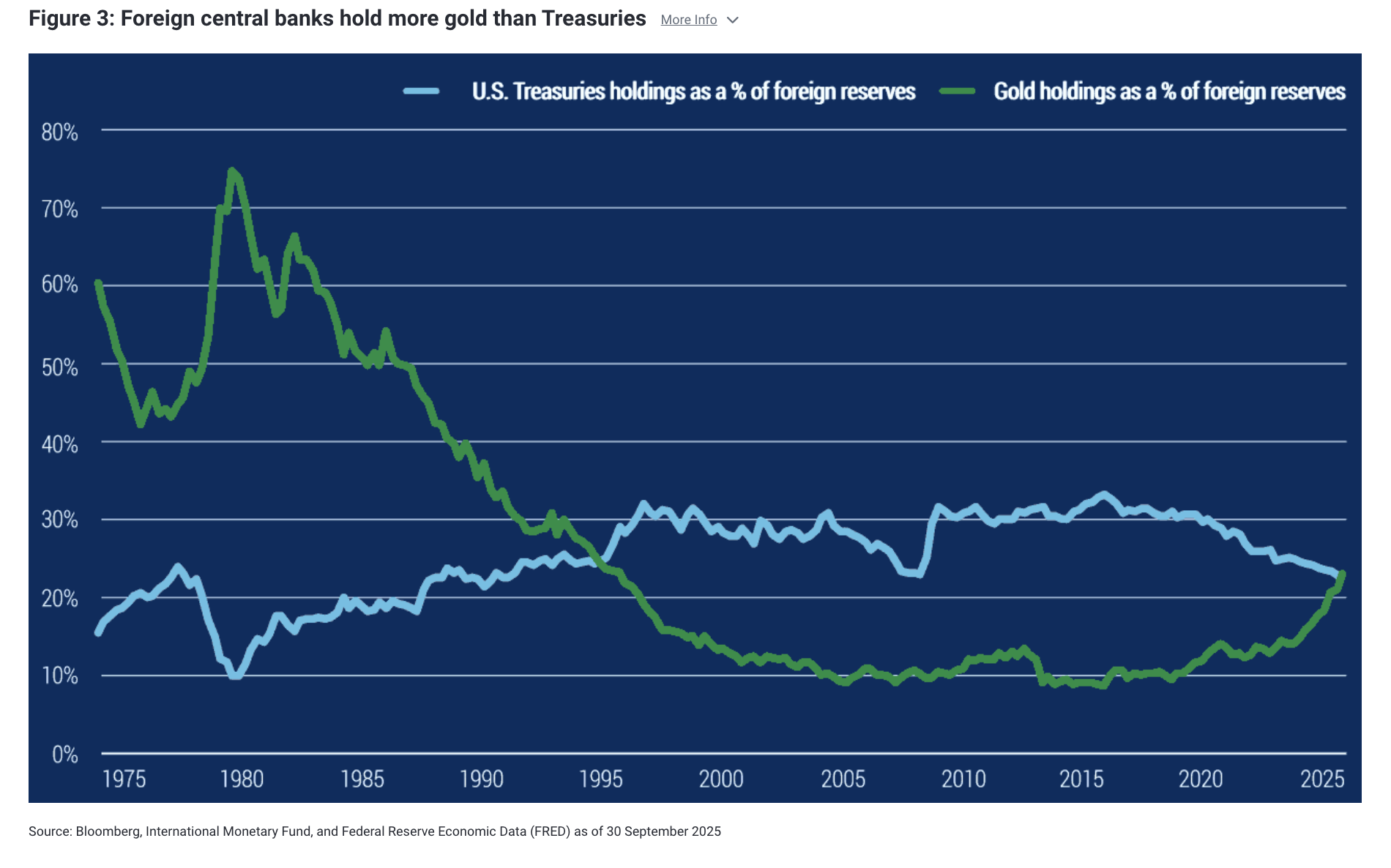
Gold’s extraordinary rally – recently topping $4,300/oz – has captured widespread attention. Prices have soared to all-time highs even in a generally risk-on market environment. Investor demand for inflation protection, geopolitical hedging, and diversification away from the U.S. dollar has reinforced gold’s role as a strategic asset. Central banks now hold more gold than U.S. Treasuries (see Figure 3), reflecting a shift in reserve management.
The geopolitical backdrop remains a key driver. The 2022 seizure of Russian reserves helped catalyze gold accumulation as a politically neutral store of value. This trend, coupled with persistent trade frictions and rising sovereign debt, suggests structural support for gold demand. A potential gold price increase of more than 10% over the next year is feasible, in our view.
However, gold’s recent rally has been fueled by momentum and liquidity as much as by fundamentals, and short-term retracements are possible. While falling interest rates reduce the opportunity cost of holding gold, its valuation appears elevated relative to real yields, warranting careful sizing within portfolios.
Since 2020, commodity indices have delivered returns comparable to global equities but with lower volatility,1 reinforcing their role as diversifiers and inflation hedges. Historical evidence shows that even modest allocations to commodities can improve portfolio efficiency, particularly when inflation runs slightly above central bank targets.
Broad commodities can also provide a potential alternative way to play the AI investment theme, as infrastructure needs drive demand for inputs such as copper, lithium, and energy as well as strategic assets like rare earths.
Crypto assets, led by bitcoin, continue to evolve as digital analogs to gold, appealing to younger investors and those concerned about currency debasement. The recent decline in bitcoin reminds investors that it is a volatile instrument and perhaps not a true store of value. The rise of stablecoins and tokenized assets points to a transformative year ahead for digital finance, though volatility, tax treatment, and regulatory uncertainty remain significant considerations.
Credit markets: Risks and rewards along the credit continuum
Credit spreads remain tight. PIMCO has cautioned throughout 2025 about risks in certain lower-rated credit sectors, particularly within private market areas that have experienced sharp growth. We are now seeing some of those challenges surface, including recent bankruptcies and instances of fraud, which may be symptomatic of broader late-cycle laxity in credit underwriting.
Challenges are showing up in other ways. On average, shares of publicly traded business development companies (BDCs), investment vehicles for corporate direct lending, are trading at roughly a 10% discount to their net asset values. This suggests that the market is cautious about a combination of declining dividends (due to falling short interest rates) and rising credit problems. Indeed, against a strong equity market backdrop, we have also seen share price declines this year for major alternatives firms.
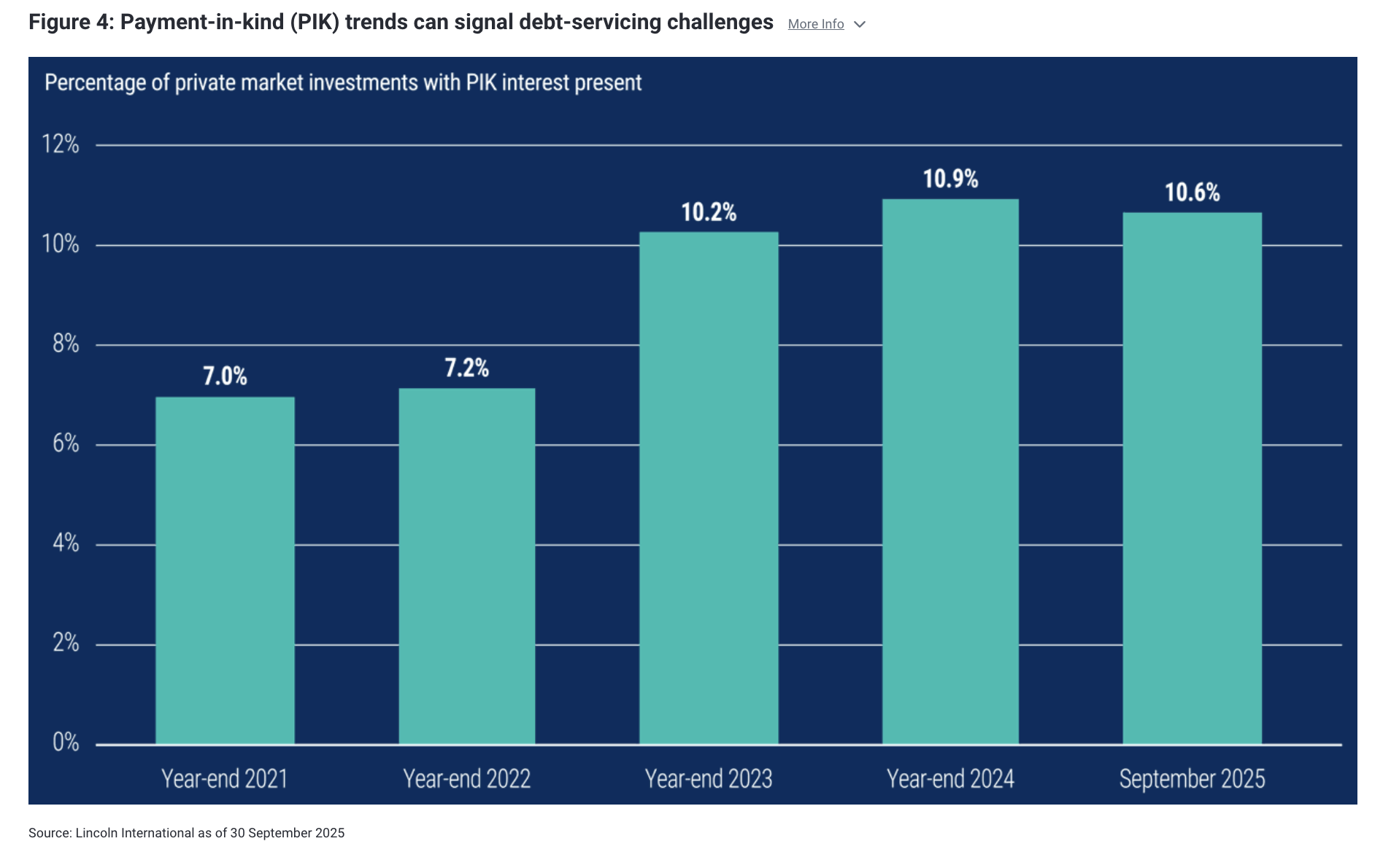
While debt service may become easier with lower interest rates, we have observed more privately financed companies seeking amendments to their loans or paying their debt with additional debt – known as payment-in-kind (PIK) financing – both of which can be signs of debt-servicing challenges (see Figure 4). In fact, using PIK and other data, Lincoln International calculates a “shadow default rate” of 6% as of August 2025, up from 2% in 2021.
Amid these strains in certain areas, PIMCO sees ongoing opportunities in credit markets for investors who can look beyond whether an investment is public or private (for more, see our latest View From the Investment Committee video, “Starting Valuations Fuel 2025 Bond Performance, 2026 Potential”). In our view, the key is to focus on evaluating liquidity and credit risk across both areas and finding where the potential rewards are greatest.
We are seeing opportunities in certain large-scale financings, where competition is limited; in credit linked to lower-risk consumers; and in select real estate lending. Longer-term trends – such as the buildup of home equity among more affluent borrowers, and the expansion of AI and related energy needs – create potential opportunities to provide high quality financing with returns that can rival or exceed those of lower-quality, leveraged corporate credit.
For example, while we have a cautious outlook in general for data centers and AI, many hyperscalers are strong, investment grade companies that need to invest – and borrow – to build out AI infrastructure. We have seen compelling opportunities in recent months in project finance, or lending secured by data centers that are being built with leases in place to investment grade tenants. Such financings do not necessarily reflect a sector-level call but rather represent opportunities with high barriers to entry, which can result in attractive valuations, structures, and tenants.
Municipal bonds: Attractive yields and strong fundamentals
Municipal bonds offer high absolute yields, attractive relative value, and strong credit fundamentals, supported by robust balance sheets strengthened through record tax collections and pandemic-era federal aid. PIMCO’s capital market assumptions expect investment grade and high yield municipals to deliver some of the strongest risk-adjusted returns among public market asset classes over the next five years on a tax- and default-adjusted basis.
While the overall muni market looks healthy, risks persist in certain segments. Many lower-quality high yield deals issued from 2016 through 2021 – particularly in project finance – are highly leveraged and feature weak covenants. These structures could face elevated default rates and low recovery prospects. Despite these risks, spreads remain tight, underscoring the importance of discipline in credit selection and sizing.
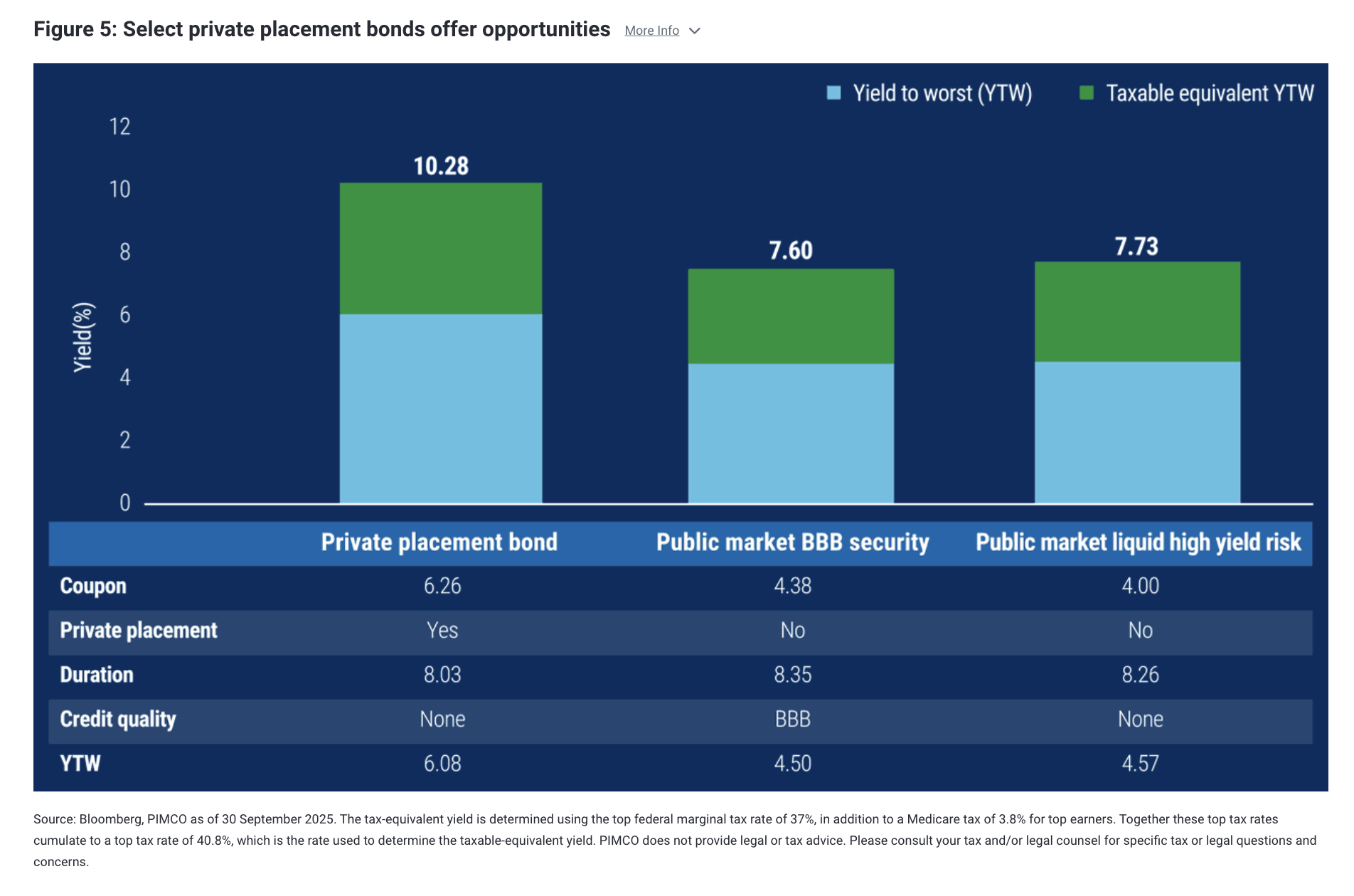
Opportunities are emerging in non-traditional areas as financial institutions retreat from tax-exempt holdings. PIMCO sees value in private placement municipals that are not rated but are backed by high quality assets. When structured appropriately, these securities often carry investment grade characteristics while offering yields comparable to high yield bonds (see Figure 5).
This dynamic allows portfolio managers to build resilient portfolios without taking on excessive credit risk, leveraging PIMCO’s integrated approach across public and private markets. Looking ahead, municipal bonds remain a strategic allocation for U.S. taxpayers seeking tax-efficient income and diversification.
Conclusion
Across asset classes, a common thread is the need for active decision-making in 2026. Dispersion in equity returns, shifting interest rate dynamics, and the evolving interplay of public and private credit markets underscore the importance of independent investment research and risk management. Rather than chasing crowded trades or relying on static allocations, investors should consider strategies that balance liquidity, return potential, and diversification, while remaining flexible enough to seize new opportunities as they emerge.
Ultimately, 2026 may reward investors who embrace today’s macroeconomic environment: leaning into high quality fixed income as rates decline, selectively adding real assets for resilience amid geopolitical and inflation risks, and identifying undervalued equity sectors amid a concentrated market. In a world where uncertainty persists alongside optimism, thoughtful portfolio construction will be key.
Footnotes
1 Source: Bloomberg and PIMCO data from 31 December 2019 through 30 September 2025. Asset class proxy indices are as follows: commodities – Bloomberg Commodity Index Total Return; gold – Bloomberg Gold Total Return Index; global equities – MSCI World Index – Global Equities.
A message from Advisor Perspectives and VettaFi: Discover something new! Click here to register for our upcoming webcasts.
Disclosures
Past performance is not a guarantee or a reliable indicator of future results.
All investments contain risk and may lose value. Investing in the bond market is subject to risks, including market, interest rate, issuer, credit, inflation risk, and liquidity risk. The value of most bonds and bond strategies are impacted by changes in interest rates. Bonds and bond strategies with longer durations tend to be more sensitive and volatile than those with shorter durations; bond prices generally fall as interest rates rise, and low interest rate environments increase this risk. Reductions in bond counterparty capacity may contribute to decreased market liquidity and increased price volatility. Bond investments may be worth more or less than the original cost when redeemed. Income from municipal bonds is exempt from federal income tax and may be subject to state and local taxes and at times the alternative minimum tax. Private credit involves an investment in non-publicly traded securities which may be subject to illiquidity risk. Portfolios that invest in private credit may be leveraged and may engage in speculative investment practices that increase the risk of investment loss. Equities may decline in value due to both real and perceived general market, economic and industry conditions. Diversification does not ensure against loss. Commodities contain heightened risk, including market, political, regulatory and natural conditions, and may not be appropriate for all investors. The value of real estate and portfolios that invest in real estate may fluctuate due to: losses from casualty or condemnation, changes in local and general economic conditions, supply and demand, interest rates, property tax rates, regulatory limitations on rents, zoning laws, and operating expenses.
Forecasts, estimates and certain information contained herein are based upon proprietary research and should not be interpreted as investment advice, as an offer or solicitation, nor as the purchase or sale of any financial instrument. Forecasts and estimates have certain inherent limitations, and unlike an actual performance record, do not reflect actual trading, liquidity constraints, fees, and/or other costs. In addition, references to future results should not be construed as an estimate or promise of results that a client portfolio may achieve.
Statements concerning financial market trends or portfolio strategies are based on current market conditions, which will fluctuate. There is no guarantee that these investment strategies will work under all market conditions or are appropriate for all investors and each investor should evaluate their ability to invest for the long term, especially during periods of downturn in the market. Investors should consult their investment professional prior to making an investment decision. Outlook and strategies are subject to change without notice.
This material contains the current opinions of the manager and such opinions are subject to change without notice. This material is distributed for informational purposes only and should not be considered as investment advice or a recommendation of any particular security, strategy or investment product. Information contained herein has been obtained from sources believed to be reliable, but not guaranteed.
Correlation is a statistical measure of how two securities move in relation to each other.
PIMCO does not provide legal or tax advice.
PIMCO as a general matter provides services to qualified institutions, financial intermediaries and institutional investors. Individual investors should contact their own financial professional to determine the most appropriate investment options for their financial situation. This material contains the current opinions of the manager and such opinions are subject to change without notice. This material has been distributed for informational purposes only and should not be considered as investment advice or a recommendation of any particular security, strategy or investment product. Information contained herein has been obtained from sources believed to be reliable, but not guaranteed. No part of this material may be reproduced in any form, or referred to in any other publication, without express written permission. PIMCO is a trademark of Allianz Asset Management of America LLC in the United States and throughout the world. ©2025, PIMCO. Pacific Investment Management Company LLC, 650 Newport Center Drive, Newport Beach, CA 92660 | 800.387.4626
CMR2025-1121-5013996
Back to top
© PIMCO
Read more commentaries by PIMCO