Big-picture policy debates and long-running risks can be difficult to relate to our everyday lives. But U.S. consumers get a tangible reminder of AI advancement and energy policy in the form of our monthly utility bills, which are on the rise.
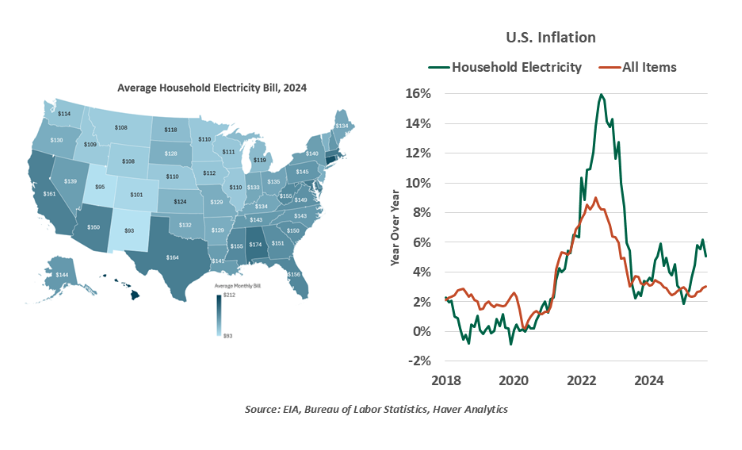
The average residential electricity bill in the U.S. rose to $142 per month in 2024, up from $117 in 2020. The pace of price increases for electricity has been consistently double the general rate of inflation. Commercial and industrial customers are also facing sizeable cost increases.
Higher prices are a tidy illustration of the basic laws of economics. Demand for power is ascendant, while supply is not keeping pace. Prices are responding accordingly. Unfortunately for rate payers, this new equilibrium looks unlikely to ease anytime soon.
Capital expenditures are booming for data centers and the technologies required to support the increasing use of artificial intelligence (AI). The U.S. has over 4,500 data centers in operation, with thousands more coming online in the years ahead.

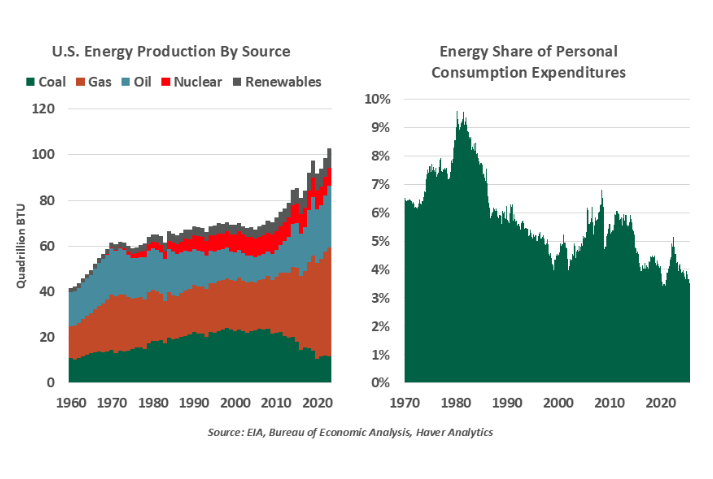
Meanwhile, the nation’s ability to generate electricity is waning. Older coal-fired power plants have reached the end of their lives, with environmental regulations pushing them further out of favor. The number of coal-fired plants in the U.S. fell more than half, from 491 in 2014 to 219 in 2024. Renewable sources like wind and solar are coming online, but they suffer from challenges of intermittency. Natural gas is filling the void.
States and regions each have their own market conditions, but the outcome of higher prices is uniform. Data center sites are selected for their access to power and water, as well as proximity to end users to reduce latency. Northern Virginia, Atlanta and Chicago lead current installed capacity, with major projects underway in Texas, Indiana and North Carolina. The insatiable demand for data centers means that any region offering a resource advantage will soon see their costs bid up.
These changes come on the heels of a prolonged decline in energy demand and prices. Decades ago, utility companies overbuilt their generation capacity based on projections of future demand that were too high. The U.S. economy shifted away from energy-intensive industries, while electric appliances, from light bulbs to refrigerators, became more efficient. Research and investment in new power plants languished, and electricity bills were stable. Changing course from a managed decline to rapid growth is a challenge for any sector, especially regulated utilities.
Policy remedies for this imbalance will be elusive. Reducing demand is a non-starter; AI investment has been too important to market performance and construction employment. An agenda of industrial reshoring will only add to demand in the longer term. The White House has pushed for lighter regulation to support more natural gas-fired power stations; however, a stance against renewable energy will not help supply. Nuclear power has come out of hibernation, but deployment of any new nuclear facilities remains years away. And the aging, regionally-oriented grid will need investment to allow more electricity to be carried over greater distances.
After a run of unfettered growth, some data center projects are now encountering resistance. Local residents have pushed back against the natural resource needs of proposed data centers. Some states like Ohio have forwarded a data center “tariff,” requiring technology firms to absorb more of the strain they place on the electricity supply. Even the oversight body for the PJM Interconnection grid has suggested a halt to new data centers, in the face of rising wholesale prices in its territory. Developers are now adding their own on-site power plants rather than connecting to public grids.
Electricity is not the highest expense for any household, and the value we derive from it is immeasurable. But the monthly utility bill will be a continual reminder of the challenges of affordability. When checking the mail, we will find it harder to keep cool.
Information is not intended to be and should not be construed as an offer, solicitation or recommendation with respect to any transaction and should not be treated as legal advice, investment advice or tax advice. Under no circumstances should you rely upon this information as a substitute for obtaining specific legal or tax advice from your own professional legal or tax advisors. Information is subject to change based on market or other conditions and is not intended to influence your investment decisions.
© 2025 Northern Trust Corporation. Head Office: 50 South La Salle Street, Chicago, Illinois 60603 U.S.A. Incorporated with limited liability in the U.S. Products and services provided by subsidiaries of Northern Trust Corporation may vary in different markets and are offered in accordance with local regulation. For legal and regulatory information about individual market offices, visit northerntrust.com/terms-and-conditions.
A message from Advisor Perspectives and VettaFi: Discover something new! Click here to register for our upcoming webcasts.
© Northern Trust
Read more commentaries by Northern Trust